Does Spray on Ceramic Coating Really Work?
Yes, spray-on ceramic coating works for short-term gloss, water beading, and easier washing, but it is not a substitute for a cured coating if you need months of durability or real scratch resistance. Miss that gap, and you can pay for slick paint that fades after a few washes. This guide explains when spray coatings are good enough, when they are not, and which results prove the product is actually working.
What ceramic spray coating actually is
Ceramic spray coating is a thin hydrophobic layer for paint, and some labels also allow trim or glass-safe use cases. It is a maintenance product, not a permanent shell. Most sprays are commonly described as containing about 5-15% SiO2, while premium spray formulas can reach about 30% and professional coatings are often described at roughly 70-90% SiO2.
How the temporary hydrophobic layer works
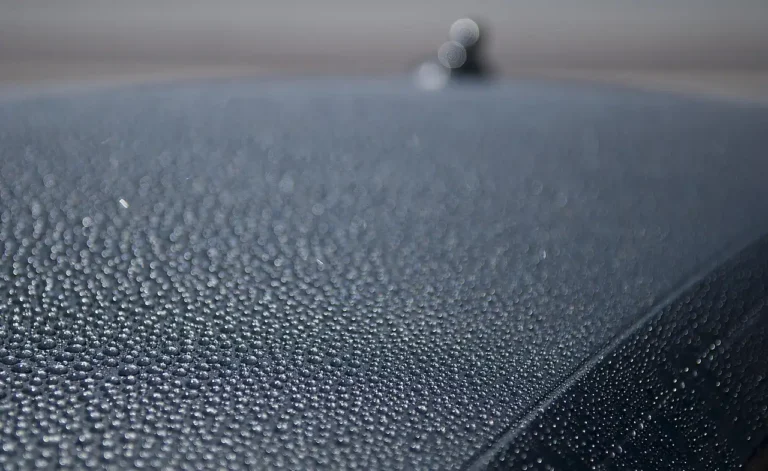
The value comes from how the surface behaves. Water beads tightly, moves off faster, and leaves less grime sitting on the panel. That usually makes washing easier and can add gloss and slickness, but it does not stop road film, hard water, or poor washing technique.
What SiO2 means on the bottle
SiO2 is silicon dioxide, the ingredient most labels use to signal ceramic content. The percentage matters, but only in context. A higher number does not guarantee better real-world durability if the formula wipes off unevenly, bonds poorly to prep residue, or is used on a dirty surface.
What the product can and cannot protect
Spray ceramic coating can help with water behavior, light gloss gain, and short-term contamination resistance. It offers light UV protection and low chemical resistance. It is not a replacement for paint correction, and it is not a cure for rock chips, swirl marks, etched water spots, or neglect.
Does spray on ceramic coating really work?
Yes, it works when you judge it by the right job: temporary hydrophobic behavior, easier washing, and modest short-term protection. It does not work if you expect professional-coating durability, high chemical resistance, or a finish that stays strong through long service intervals and harsh wash cycles.
What real-world performance looks like
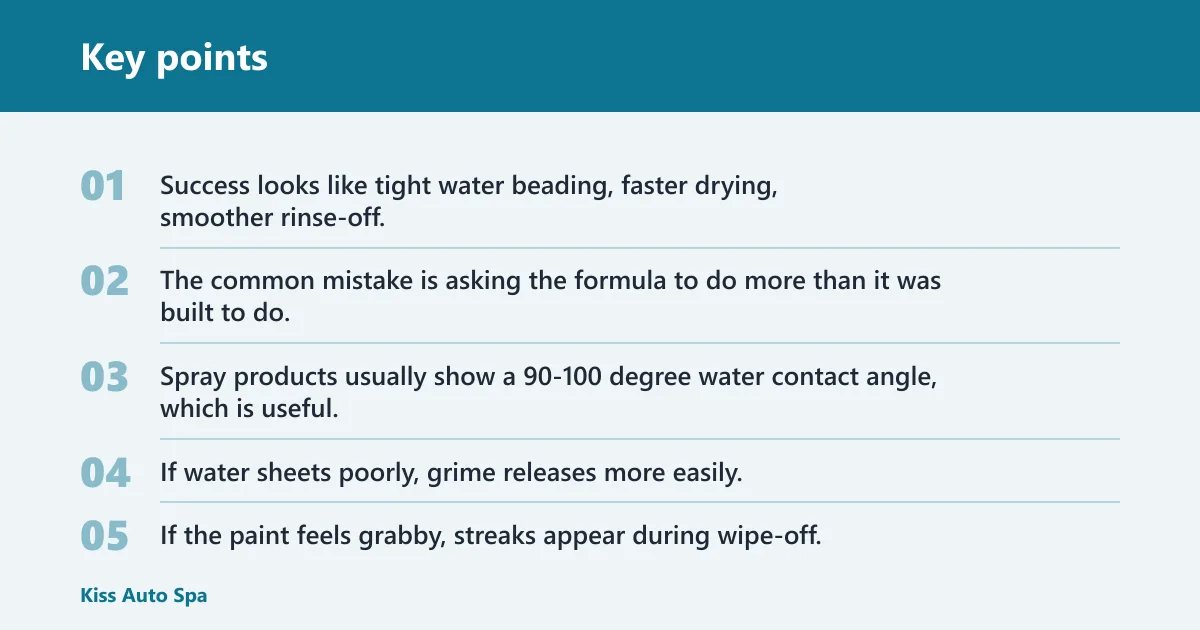
Success looks like tight water beading, faster drying, smoother rinse-off, and a cleaner surface after routine washes. The common mistake is asking the formula to do more than it was built to do. Spray products usually show a 90-100 degree water contact angle, which is useful, but still below professional coatings at 110-120+ degrees.
Which results count as success?
If water sheets poorly, grime releases more easily, and gloss looks improved after a proper wash, the spray is doing its job. If the paint feels grabby, streaks appear during wipe-off, or beading fades after a couple of washes, the product may still be working, just not for long.
When beading is not proof of durability
Beading alone can mislead you. A surface can bead well right after application and still lose protection quickly. Poor prep, leftover polish oils, heavy application, or uneven wipe-off can create flashy water behavior that disappears fast. Say your black sedan beads strongly after one rainstorm but looks patchy two weeks later; that is not durable protection, only temporary behavior.
Ceramic spray coating decision table
Use this as a simple ownership test. If your priorities are low effort and short-term maintenance, spray can make sense. If you need longer service life, stronger chemical resistance, or less frequent reapplication, the numbers favor a professional coating instead.
| Owner type | Expected durability | Wash frequency | Climate exposure | Budget | Spray ceramic coating fit |
|---|---|---|---|---|---|
| Garage queen | 1-4 months, often enough if stored indoors | Every 2-4 weeks | Low | Lower to moderate | Smart buy |
| Weekly driver | 1-4 months, with premium sprays sometimes up to 12 months | Weekly or every other week | Moderate | Moderate | Maintenance only |
| High-mileage daily driver | Often shorter under heavy weather and frequent washing | Weekly to frequent | High | Usually better spent elsewhere | Not enough |
How long does spray on ceramic coating last?
Most spray coatings are listed at 1-4 months of durability, with premium spray formulas said to last up to 12 months. Real life depends on storage, weather, wash chemistry, and how well the surface was cleaned before application. For many drivers, reapplication every 1-4 months is the practical rhythm.
How climate and wash frequency change the answer
Heat, road salt, strong detergents, and frequent tunnel washes shorten life. A garaged vehicle in mild weather may hold beading far longer than a commuter parked outside year-round. That is why the same bottle can feel impressive on one car and disappointing on another.
Reapplication timing that makes sense
If water contact gets slower, slickness drops, or wash drying starts taking more effort, it is time to refresh the layer. For many owners, the best schedule is seasonal or every few months rather than waiting for complete failure. A common first-timer mistake is applying more product on top of a degraded layer without stripping residue first.
Spray ceramic coating vs professional coating
Spray ceramic coating is faster and simpler, but professional coating is built for longer cure time, stronger resistance, and deeper durability. Spray products usually apply in 15-30 minutes. Professional coating application is described as 4-8 hours plus 24-48 hour cure, which is a different commitment and a different result.
Cure time and application effort
Spray coatings are easier to apply and correct if something goes wrong. Professional coatings demand prep, careful leveling, and clean curing conditions. That extra effort is part of why they last longer and resist chemicals better.
Water contact angle and beading
Spray products usually sit around 90-100 degrees, while professional coatings are listed at 110-120+ degrees. Higher contact angle often means more aggressive beading and rolling. That does not make spray useless; it simply places it in a lighter-duty category.
Durability, UV protection, and chemical resistance
Professional coatings are commonly described as lasting around 2-5 years, with some claims reaching about 10 years. They also offer stronger UV protection and high chemical resistance. Spray coatings offer light UV protection and low chemical resistance, so they are better viewed as maintenance support than long-term armor.
What the claims really mean
Marketing language sounds broader than the product usually performs. Beading, gloss, UV protection, and chemical resistance do exist in spray formulas, but at modest levels. The useful question is not whether the bottle mentions those traits; it is how long they remain present after normal washing and weather.
Beading and slickness
Beading is the easiest feature to notice and the easiest one to overrate. Slickness can make drying and towel glide easier, which is helpful. It does not prove that the coating survived detergents, sun, or repeated contact washing.
Gloss and washability
Many owners notice a cleaner, sharper look after application. That is real, and it is part of the appeal. The gloss boost does not equal correction, and it does not keep embedded contamination from returning.
UV and chemical resistance
Spray coatings offer light UV protection, not the stronger protection described for professional coatings. Chemical resistance is similarly limited. If your vehicle sees frequent fallout, aggressive cleaners, or hard water exposure, spray protection can help, but it will not carry the full load for long.
Spray ceramic coating works best as a maintenance layer after proper washing and decontamination. It pairs well with routine care, but only if you prep the surface, avoid over-application, and match your wash soap to the coating. Used that way, it can stretch protection without turning into a weekly chore.
Prep before application
- Wash the vehicle thoroughly and rinse off loose grit.
- Remove leftover polish oils or road film before spraying.
- Work panel by panel on a cool surface out of direct sun if possible.
- Apply a light, even layer and level it promptly with clean towels.
- Inspect for streaking or high spots before moving on.
Detail spray over ceramic coating
You can use a detail spray over ceramic coating if the product label says it is coating-safe or maintenance-safe. That is useful for dust, fingerprints, and light refresh work. Choose a pH-balanced wash soap and avoid oily products that leave residue strong enough to mute beading.
Washing, toppers, and reapplication habits
Use gentle wash media, clean buckets, and a soap that will not strip the layer too aggressively. If beading fades, do not assume the coating failed instantly; first check your wash chemistry and whether the surface was loaded with topper residue. Reapply only after the old layer has clearly weakened or been removed.
When spray is not the same product category
Heat-management ceramic coating is a separate use-case. It is applied to exhaust manifolds, turbo housings, cam covers, and heat shields. That is not paint protection, and it should not be compared with spray detail coatings for gloss or hydrophobic behavior.
Frequently asked questions
How often do you need to reapply ceramic spray?
Many products need reapplication every 1-4 months, depending on washing, storage, and weather. Premium spray formulas can last up to 12 months in easier conditions, but that is not the normal result for daily use. Watch for fading beading and reduced slickness.
What SiO2 percentage should ceramic spray have?
Many spray coatings list 5-15% SiO2, and premium formulas can reach up to 30%. Higher is not automatically better if the application is streaky or the finish is hard to level. Read the whole label, not just the SiO2 number.
What is the difference between ceramic spray and ceramic coating?
Ceramic spray is a thin hydrophobic layer that applies fast and usually lasts 1-4 months. Professional ceramic coating takes 4-8 hours plus 24-48 hour cure and is listed at 2-5 years of durability. The second product is built for longer-term protection.
Can you use detail spray on ceramic coating?
Yes, if the detail spray is coating-safe and used lightly. It can help remove dust and fingerprints without stripping the layer. Avoid greasy formulas that leave residue, because that can dull beading and make the surface look uneven.
Does ceramic coating need to cure?
Professional ceramic coating does, and the cure window is part of why it lasts longer. Spray ceramic coating usually does not need that same long cure, which is why it is faster to use. Faster application is convenient, but it also limits durability.