Why Use a Rinseless Wash on Your Car?
Use a rinseless wash when the car has light to moderate dirt, water is limited, and you can work with plenty of lubricated towels. Skip it for caked mud or heavy grit. Used poorly, it can drag abrasive dirt across the paint and leave swirls. This guide explains how rinseless wash works, when it is safer than traditional or waterless washing, and how to choose it without risking the finish.
What a rinseless wash does
A rinseless wash uses a concentrate mixed into water so dirt can be lifted, lubricated, and wiped away without a full rinse cycle. The goal is controlled contact with enough slip to keep loose contamination moving off the panel instead of grinding into it.
That control depends on two things: the mix ratio and towel discipline. A product such as McKee’s N-914 can be used as a rinseless wash when diluted 1:256, which is a far more diluted wash mix than the same product used for waterless cleaning at 1:128 or as a clay lubricant at 1:128.
How it differs from waterless wash
Rinseless wash and waterless wash are different processes. Waterless washing is used on very light dust with more product concentration and less panel saturation. Rinseless washing uses a larger amount of solution and is better suited to light road film and mildly dirty panels because the extra fluid helps float contamination into the towel.
That difference matters on paint. A waterless wash on a panel with road film can turn into a dry wipe with too little lubrication. A rinseless wash gives you a wider margin, but only if the vehicle is not packed with grit, mud, or hard winter buildup.
Why paint-safe technique matters
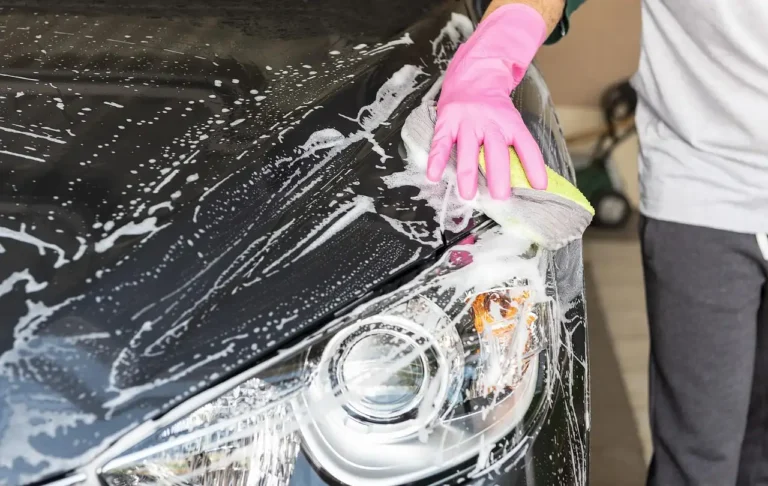
The method is only as safe as the media. A plush microfiber wash towel with multiple clean sides gives the dirt somewhere to go, and a wash bucket acts as a solution reservoir so you can keep fresh liquid ready. If the towel is loaded, rotate it immediately or replace it.
Short, gentle passes are the point. Straight lines across one panel are safer than circular scrubbing, and panel-by-panel work keeps you from dragging contamination from a dirty lower section onto cleaner upper paint.
Why use one instead of a regular wash?
Use a rinseless wash when a full hose-and-rinse wash is impractical, when water access is limited, or when winter conditions make a long rinse less appealing. It is also a good fit for maintained paint protected by wax, sealant, or coating, because those finishes usually shed light dirt more predictably than neglected bare paint.
It is not a replacement for every wash. A conventional wash bay or pre-rinse is still the better call after heavy rain with road spray, after snow that leaves packed slush on the lower panels, or any time mud and grit cling in thick layers.
Water limits and apartment setups
Apartment parking, shared garages, and water restrictions are common reasons to choose rinseless washing. You can work from a single bucket of solution and a stack of towels instead of dragging out hoses, spray nozzles, and a full rinse setup. That smaller footprint can make routine cleaning realistic where a traditional wash would be awkward.
Winter washing and freeze risk
Cold weather is often cited as a strong use case for rinseless washing. In a garage or on a driveway, rinseless washing reduces the amount of water left on the vehicle, which helps limit freeze risk as panels dry. It can also clear fresh salt film faster than waiting for a warm day.
There is a limit, though. If the car is heavily packed with slush, sand, and frozen road grit, a rinseless pass alone is too much contact for too little prep. The dirt load is the problem, not the method.
When protection makes it a better fit
Paint with wax, sealant, or ceramic coating is usually a better candidate because protected surfaces shed contamination more predictably and tend to need less scrubbing. That does not make the wash risk-free. It simply means the finish is less likely to hold onto film that demands aggressive wiping.
What contamination is safe to clean?
Rinseless washing is generally best suited to light dust, soft road film, and lightly dirty panels. Those conditions allow the towel and solution to lift dirt with a lower chance of abrasion. Once contamination becomes gritty, caked, or sticky, the chance of scratching rises fast.
Say your sedan has a week of dust and a thin gray film after highway driving. A rinseless wash is a reasonable choice if you use fresh towels, keep the panel wet, and work top to bottom. Now change one detail: the lower doors are coated with muddy spray. That same method is no longer the safer choice without a pre-rinse.
Mud, grit, and heavy salt buildup
Mud and heavy grit are generally poor candidates for rinseless washing because the particles may not glide easily into the towel. They cut. Caked salt is similar, especially when winter slush dries into crusted edges and wheel-arch residue. These are the jobs where a hose rinse or pressure rinse does real work before any touch wash begins.
When a pre-rinse is the safer call
Choose a pre-rinse if you can feel rough contamination with a gloved hand, if the lower half of the car is visibly packed, or if the vehicle spent time in packed snow. Rinseless washing works by reducing friction, not by removing all need for judgment.
How do you use a rinseless wash correctly?
Mix the concentrate at the label rate for rinseless use, prepare clean towels, and wash one panel at a time with enough liquid to keep the surface wet. The safest process is slow and organized, not fast. Dirt control matters more than speed.
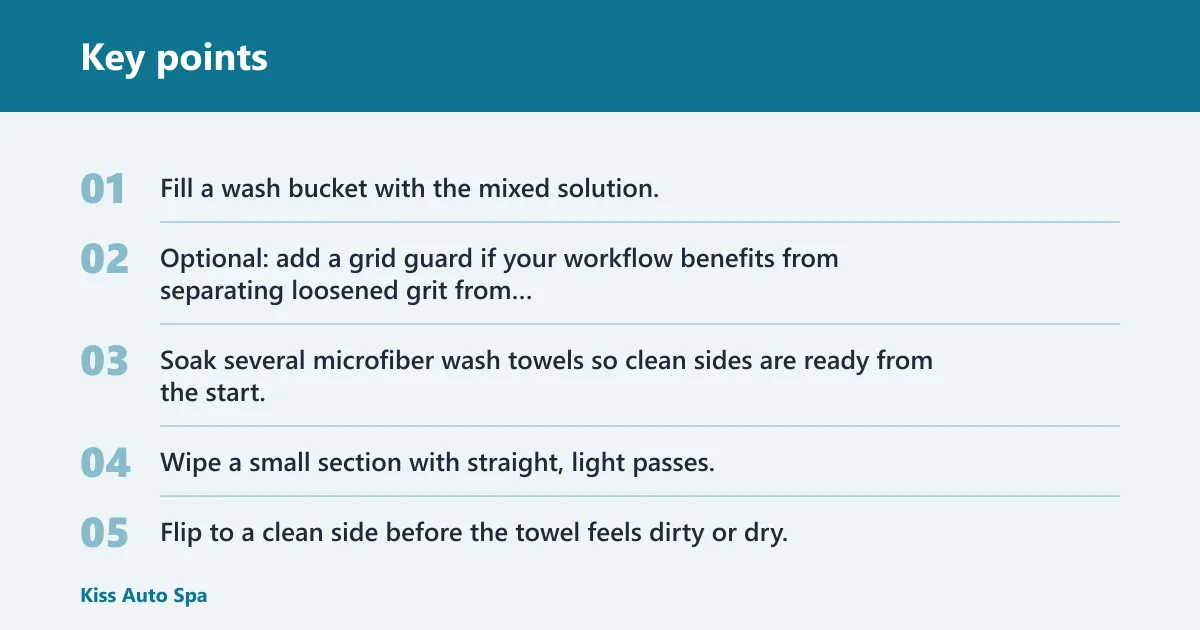
- Fill a wash bucket with the mixed solution. The bucket is a solution reservoir, not a rinse dump.
- Optional: add a grid guard if your workflow benefits from separating loosened grit from the towel.
- Soak several microfiber wash towels so clean sides are ready from the start.
- Wipe a small section with straight, light passes.
- Flip to a clean side before the towel feels dirty or dry.
- Replace the towel when all clean sides are loaded.
- Dry the panel promptly with a clean towel if the product directions call for it.
Bucket setup and dilution ratio
A common starting point is the manufacturer’s rinseless ratio. For McKee’s N-914, that is 1:256 for rinseless use. The same product is also listed at 1:128 for waterless use and 1:128 as a clay lubricant, while 1:8 is listed for paint prep. Those are different jobs, so the dilution should match the job.
Microfiber towel use panel by panel
Choose a microfiber wash towel with a plush pile and multiple clean sides. The pile helps hold loosened dirt away from the paint, while the extra sides let you move to fresh contact before contamination builds up. Panel-by-panel work keeps lower-panel grit from spreading upward.
A common first-timer mistake is trying to do the whole car with one towel. That turns the towel into a dirt carrier. The safer habit is immediate rotation: flip, fold, or swap as soon as a side loses its clean feel.
Dirty-towel management and drying
Do not keep wiping with a loaded towel. That is where marring risk jumps. If the towel picks up visible grit or starts dragging, retire it for the session. Drying too soon is another failure point; if the panel flashes before the dirt is fully lifted, the residue can smear.
Should you use rinseless wash today?
Use this as a quick decision check. The answer changes with contamination, weather, paint condition, and water access. If any row points to heavy grit, packed slush, or mud, a pre-rinse or full wash is the better choice.
| Contamination level | Weather | Paint protection | Water access | Recommended method |
|---|---|---|---|---|
| Light dust | Dry, mild | Wax, sealant, or coating | Limited | Yes — rinseless wash is a good fit because the dirt load is low. |
| Light road film | Cool, overcast | Wax, sealant, or coating | Limited | Yes — use plenty of solution and clean towel sides. |
| Light dust | Hot, sunny | Any finish | Limited | Maybe, only if you work fast enough to keep the panel wet and avoid drying too soon. |
| Road film after rain | Damp but not muddy | Protected paint | No hose available | Yes, acceptable if film is thin and the lower panels are not gritty. |
| Mild snow residue | Cold, driveway or garage | Wax, sealant, or coating | Limited | Yes, practical in winter if slush is not packed into seams. |
| Heavy grit or mud | Any | Any finish | Any | No, pre-rinse first because the abrasive load is too high. |
| Caked winter salt and slush | Freezing conditions | Any finish | Limited | No, use a rinse or wash bay first so you are not grinding crusted debris across paint. |
| Fresh but light grime | Dry, shaded | Bare, maintained paint | Limited | Maybe, use caution; protected paint is the better candidate than neglected bare paint. |
Common yes and no signals
Yes: light dust, thin road film, protected paint, limited water, and enough towels for rotation. No: mud, thick salt, frozen slush, or visible grit sitting on the lower panels. If you are unsure, a pre-rinse is the safer answer.
Can it help with wax, sealant, and coating?
Rinseless washing is generally compatible with wax, sealant, and ceramic coatings when the product directions are followed. It is surface-safe when used as intended, and protected paint often cleans faster because contamination releases more easily. That can help gloss retention by reducing the need for harsher scrubbing.
Where clay lubricant use fits
Clay lubricant use is a separate, light-contamination step, not routine washing. McKee’s N-914 is listed at 1:128 for clay lubricant use, which shows the process needs more glide than a standard rinse wash. Use it only when the paint has light bonded contamination and only on a surface that is already reasonably clean.
Skip clay lubricant use if the vehicle is gritty, muddy, or heavily contaminated. Clay does not replace decontamination prep. If the paint needs a stronger cleanup first, do that before any claying step.
Suppose a coated hatchback has a thin layer of tar-free road film and feels slightly rough after washing. A light clay step with proper lubricant may be reasonable. Now change one variable: the rear bumper has winter slush and sand still hanging in seams. Clay is the wrong next step until the car is cleaned more thoroughly.
What do you need for a rinseless kit?
A basic rinseless kit is simple, but each item matters. You need a rinseless wash concentrate, clean microfiber wash towels with plush pile, a wash bucket or solution bucket, and enough water for the mix. The towel count matters because dirty-towel management is part of the method, not an afterthought.
Wash bucket and optional grid guard
The bucket holds the solution and keeps the workflow organized. A grid guard is optional, but it can help trap heavier debris below the working zone if the session collects more dirt than expected. For most users, the bucket is the workstation, the soak tub, and the supply point all at once.
Plush microfiber towels
Choose towels with a plush pile and several usable sides. That gives you clean contact points as you move across the car. Low-marring handling comes from light pressure, straight passes, and early towel rotation, not from pressing harder to finish faster.
Concentrate, water, and basic setup cost
Rinseless wash concentrates are usually sold in several sizes and formats. McKee’s N-914 is sold in a 32oz size. Walmart lists Optimum No-Rinse Wash and Wax in a 1 gallon size, OPTIMUM No-Rinse Wash & Shine V6 in 128oz format, and Koch-Chemie Rapid Rinseless Wash in a 1 Liter size. Walmart also lists a no-rinse product marketed as safe for all finishes, and one listed product is positioned as eco-friendly. Walmart’s category page groups rinseless products under car wash.
That range matters for setup cost. A smaller bottle lowers the entry cost for a first try. Larger formats make sense when rinseless washing becomes a regular process, but the first decision should still be about contamination level, not packaging.
Frequently asked questions
Why use a rinseless wash on your car?
Use it when you want a low-water method that still uses lubrication and microfiber contact to lift light contamination safely. It suits apartment setups, winter wash days, and maintained paint better than a dry wipe approach. It is not a substitute for a pre-rinse on mud or heavy grit.
What is a rinseless car wash?
A rinseless car wash is a wash method that uses a diluted cleaning solution and towels instead of a full hose rinse. The solution provides lubrication so dirt can be wiped away with less friction. It works best on light dust, road film, and moderately dirty panels.
Is rinseless wash safer than a regular car wash?
It can be safer than some old-school wash methods when used correctly because it reduces the chance of dragging dirty wash water back across the paint. It is not safer than a proper pre-rinse on a heavily soiled car. The contamination level decides the risk.
Can you use a rinseless wash in winter?
Yes, winter is one of its strongest use cases, especially in a garage or driveway where freeze risk matters. It can remove light salt film and road grime with less standing water left on the panels. It should not be used alone on packed slush or heavy road salt buildup.
What’s the difference between rinseless wash and waterless wash?
Rinseless wash uses more solution and is better for light road film and mildly dirty panels. Waterless wash is for lighter dust and uses a stronger product mix with less overall liquid. The same product may have different dilution ratios for each task, such as 1:256 for rinseless and 1:128 for waterless use.
What dilution ratio should you use for rinseless wash concentrate?
Use the manufacturer’s rinseless ratio for the product you bought. For McKee’s N-914, that is 1:256 for rinseless washing, while the same formula is listed at 1:128 for waterless use and 1:128 as a clay lubricant. Always match the dilution to the job, not the habit.