Paint Sealant vs Wax: Which Is Better for Your Car?
Paint sealant is often better for most daily drivers because it usually lasts about 4 to 6 months or more, while wax is better if you want the warmest gloss and do not mind reapplying about every 4 to 8 weeks. Pick the wrong one and you either spend time redoing protection or leave paint exposed longer than needed. This guide compares cost, prep time, durability, and finish so you can pick the right protection for your car.
| Factor | Paint sealant | wax | Winner |
|---|---|---|---|
| Durability | Typically lasts months, not weeks | Typically lasts weeks, not months | Paint sealant |
| Gloss character | Sharper, more reflective finish | Warmer, deeper look | tie |
| Application difficulty | Usually beginner-friendly with thin coats | Also easy, but usually less forgiving when overapplied | tie |
| Reapplication interval | Lower frequency | Higher frequency | Paint sealant |
| Best-fit use case | Daily drivers, commuters, winter cars | Garage-kept cars, show-oriented paint care | Depends on use case |
| Cost per month of protection | Usually lower once spread across months | Usually higher because it wears sooner | Paint sealant |
Paint sealant vs wax: the real trade-off
Paint sealant usually gives you longer protection and lower monthly upkeep, while wax usually gives you a softer, warmer finish with more frequent reapplication. The better choice depends on how often the car sits outside, how much time you want to spend on prep, and whether the finish matters more than the schedule.
Paint sealant decision matrix
This matrix turns the choice into ownership terms rather than product labels. It also shows why a product that looks cheaper at the register can cost more over a season if it needs to be redone far more often.
| Criterion | Paint sealant | wax | Winner |
|---|---|---|---|
| Durability | Usually months of protection | Usually weeks of protection | Paint sealant |
| Gloss character | Bright, crisp reflectivity | Warm, softer depth | tie |
| Application difficulty | Thin coat, then buff | Thin coat, then buff | tie |
| Reapplication interval | About 4 to 6 months for many products | About 4 to 8 weeks for many products | Paint sealant |
| Ideal use case | Daily use, high mileage, bad weather | Weekend car, garage storage, paint show day | Depends on use case |
| Cost per month of protection | Lower because the interval is longer | Higher because the interval is shorter | Paint sealant |
Durability
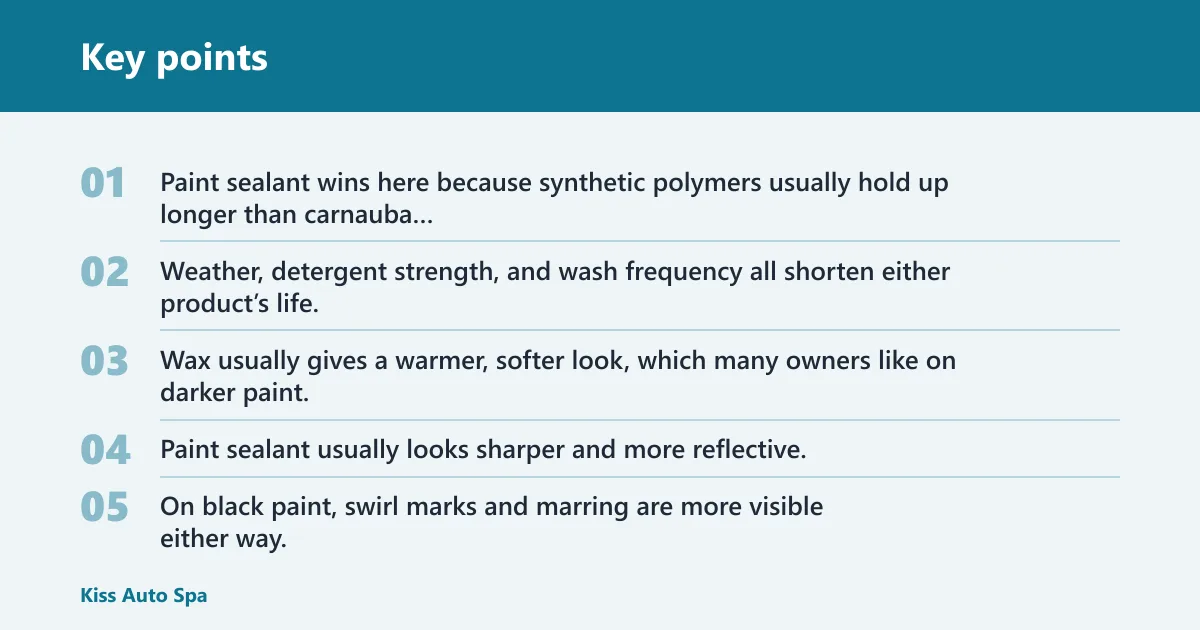
Paint sealant wins here because synthetic polymers usually hold up longer than carnauba wax on a clear coat. Weather, detergent strength, and wash frequency all shorten either product’s life, but the longer baseline is still on the sealant side.
Gloss character
Wax usually gives a warmer, softer look, which many owners like on darker paint. Paint sealant usually looks sharper and more reflective, which can read as cleaner on light colors and metallic finishes. On black paint, swirl marks and marring are more visible either way, so finish prep matters as much as the product.
Application difficulty
Both products are straightforward when you apply a thin, even coat with a foam pad or applicator, then buff off the residue. Sealants often feel easier for beginners because they spread farther and are less fussy about hand pressure, but overapplying either one creates hazing and extra wipe-off work.
Reapplication interval
This is where sealant pulls ahead in real ownership cost. A product that lasts months cuts how often you need to wash, decontaminate, reapply, and buff the same panels again, which matters more than a small difference in bottle price.
Best-fit use case
Daily drivers benefit from sealant because the car sees rain, road film, UV exposure, and frequent washing. Wax still makes sense for a garage-kept car that is cleaned carefully and only needs short-term beauty before a show, meet, or weekend drive.
Cost per month of protection
The monthly cost is the number to compare. If one product lasts six months and another lasts six weeks, the longer-lasting product often wins even if the bottle costs a little more at checkout, because you buy fewer applications over the same period.
What wax and sealant do on clear coat
Both products sit on top of clear coat paint, not inside it, and both work best on a surface that is fully clean. Carnauba wax is a natural wax used on paint for a warm gloss and short-term protection. Synthetic paint sealant is a man-made polymer protection product that usually brings more slickness, better UV resistance, and better contamination resistance than wax.
Clear coat prep matters first
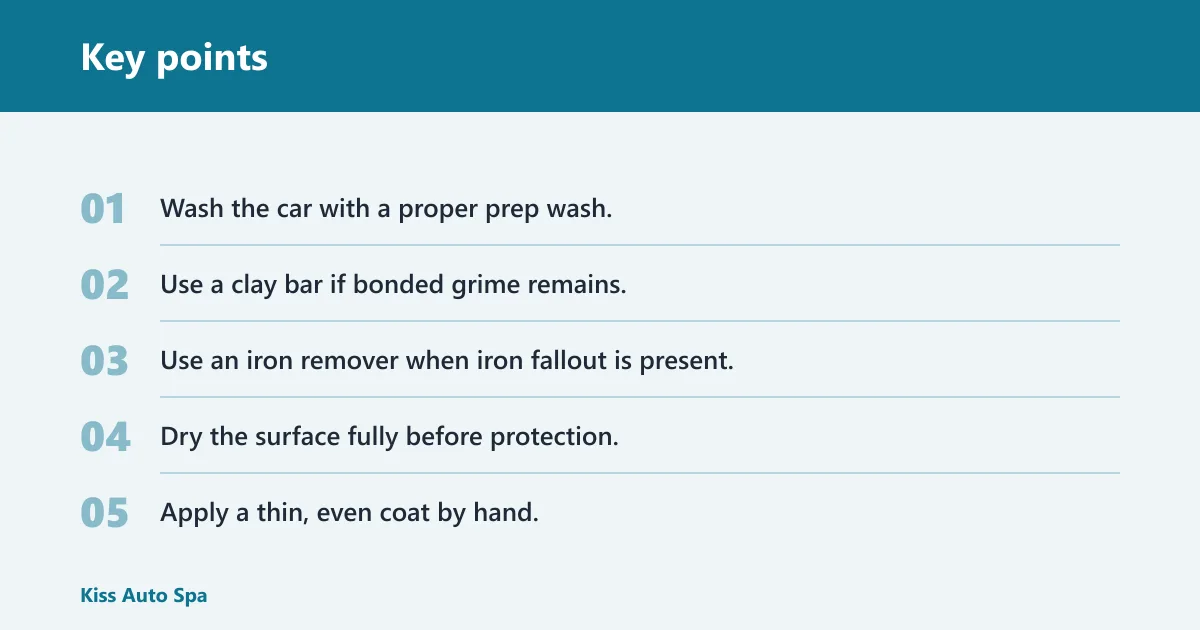
Clear coat should be washed free of dirt, old residue, and bonded contamination before either product goes on. If the paint has embedded grit or old wax buildup, the new layer will not bond as well and will wear unevenly. On dark colors, leftover swirls also become easier to see after protection is applied.
- Wash the car with a proper prep wash.
- Use a clay bar if bonded grime remains.
- Use an iron remover when iron fallout is present.
- Dry the surface fully before protection.
- Apply a thin, even coat by hand.
- Buff off residue with a clean microfiber towel.
How long does paint sealant last compared with wax?
Paint sealant usually lasts longer than wax, with many products lasting about 4 to 6 months under normal use, while wax often needs renewal about every 4 to 8 weeks. Heat, rain, detergents, and frequent washing shorten both, but sealant is built to resist wear longer.
Weather and washing change the interval
Cars that sit outside, see harsh winters, or get washed often lose protection faster. Strong soaps and repeated friction remove wax more quickly than a well-cured sealant, though no coating is permanent on a daily-driven clear coat.
Does wax give a better shine than paint sealant?
Wax often gives the more appealing look if you want warmth and depth, especially on dark or solid-color paint. Paint sealant usually looks brighter and more reflective, which can make light colors and metallic flake pop differently. The “better” shine depends on the paint color and the lighting.
Paint color changes the result
On black or dark metallic paint, wax can soften the surface and add visual depth, but only if the paint is already well corrected. On white, silver, and light gray, sealant can read as cleaner and more mirror-like because reflectivity stands out more than warmth.
Say your sedan is black and parked under LEDs in a garage. A waxed finish may look deeper at close range, but if the hood still has swirls, those marks remain obvious. The finish choice cannot hide poor prep.
How hard is it to apply and remove?
Both are beginner-friendly when you work on clean paint and keep the layer thin. Sealant can take a little longer to cure, but buff-off effort is usually low if you do not overload the pad. Wax is straightforward too, though thick application makes removal harder and wastes product.
Prep wash and decontamination
Start with a prep wash that removes dirt and old residue. If the paint feels rough after drying, use clay. If you see bonded metallic contamination, an iron remover can help before the final protection step.
Hand application and buff-off
A foam pad or applicator works for either product. Spread a thin, even coat, let the product set according to its label, and wipe residue with a clean towel. More product does not equal more protection, it usually means more streaking and more cleanup.
Choose wax or sealant for your car
For a daily driver, choose Paint sealant. For a garage-kept show car or weekend toy, wax can be the better fit if you value warmth over interval length. For a winter commuter, Paint sealant is usually the safer pick because longer wear matters when salt, slush, and road film hit the finish often.
Daily driver
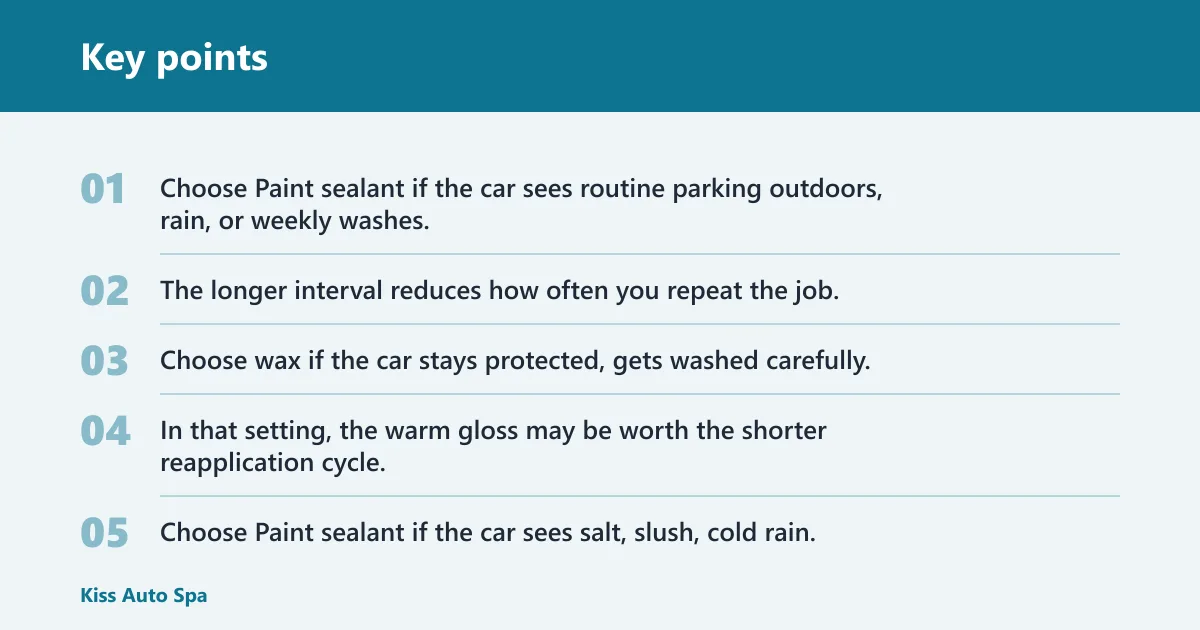
Choose Paint sealant if the car sees routine parking outdoors, rain, or weekly washes. The longer interval reduces how often you repeat the job, which matters more than a slightly warmer finish that fades quickly.
Garage-kept car
Choose wax if the car stays protected, gets washed carefully, and does not need long-haul durability. In that setting, the warm gloss may be worth the shorter reapplication cycle.
Winter commuter
Choose Paint sealant if the car sees salt, slush, cold rain, and more frequent contact with grime. Reapplying less often is a real advantage when conditions keep stripping surface protection.
Can you apply paint sealant over wax?
Usually no, not for best results. Sealant needs a clean surface to bond properly, and wax residue can block that bond. If wax is already on the paint, wash and decontaminate first, and remove old residue before applying sealant.
Picture a hatchback that was waxed six weeks ago and now has streaky residue around the badges. If sealant goes over that film, it bonds to leftover product, not to the clear coat, and the new layer will wear unevenly. Cleaning first fixes that.
Verdict: Paint sealant or wax?
Choose Paint sealant if your car is a daily driver, commuter, winter car, or winter commuter that sees routine parking outdoors, rain, weekly washes, salt, slush, cold rain, and road film.
Choose wax if you have a garage-kept car, weekend toy, or show-oriented paint care routine and you want the warmest gloss for a garage-kept show car or weekend drive.
Frequently asked questions
Is paint sealant better than wax for my car?
For most daily drivers, yes. Paint sealant usually lasts longer, handles weather better, and lowers how often you need to redo the job. Wax can still be the better pick if your top priority is a warm, classic look and you do not mind frequent reapplication.
Is paint sealant easier to apply than wax?
Usually they are close, but sealant is often a little more forgiving for beginners because it spreads thinly and wipes clean when applied correctly. Wax is easy too, but thick coats can haze and take more effort to remove. Thin application matters most with both.
Do I need to polish before using paint sealant?
Not always, but clean paint is non-negotiable. Wash and decontaminate first, then polish only if you want to remove swirls, oxidation, or dullness before sealing. On dark colors, polishing can matter more because defects stay visible even under fresh protection.
How often should I reapply wax or sealant?
Reapply wax every 4 to 8 weeks if you want steady protection. Reapply paint sealant every 4 to 6 months for most products, or sooner if water no longer beads and the surface feels less slick. Wash habits and weather can shorten those intervals.