What Is Ceramic Spray Coating for a Car?
Ceramic spray coating is a silica-based paint protectant you wipe on and buff off; for most owners, it is a maintenance-first product, not a true long-term coating. Used badly or ignored, it can leave paint less protected, still collect grime, and waste money on a layer that will not stop wash marring or bonded contamination. This guide defines ceramic spray, shows when it is enough, when it is not, and what you trade for a true ceramic coating.
How ceramic spray bonding and prep work
Ceramic spray coating is a spray-on protectant built around silicon dioxide (SiO2), the same main ingredient used in many ceramic formulas. Some products also use titanium dioxide (TiO2) as part of the blend. It is designed as an easier, lower-commitment way to add protection and water behavior without the prep and cost of a professional coating.
Unlike a wax that mainly sits on top and wears off faster, ceramic spray is meant to bond to the clear coat surface. That bond is still thin. It works with the clear coat’s microscopic texture, so surface condition matters more than many owners expect. Clear coat thickness is typically 40 to 120 microns, which leaves little room for careless polishing or heavy abrasion.
How ceramic spray bonds to clear coat
According to the chemistry used in ceramic products, ceramic coating chemically bonds to the clear coat. In spray form, that bond is lighter and less durable than a professional coating. The product needs a clean surface so it can grab the clear coat instead of bonding over old wax, road film, or dust.
Prep matters because contamination blocks contact. If the paint is dirty, the coating can streak, flash unevenly, or leave high spots that look patchy under bright light. Thickness matters too: ceramic spray is not a thick shell. It is a thin layer that follows the surface beneath it, so it cannot hide swirls, etched spots, or rough paint.
What SiO2 and TiO2 do
SiO2 is the primary ceramic ingredient in spray and liquid coatings. It helps create the hydrophobic effect owners look for: water beads, sheets off faster, and carries dirt away more easily. TiO2 appears in some formulas as a hardening agent. It can support the finished film, but it does not turn a spray product into a professional coating.
What ceramic spray coating does
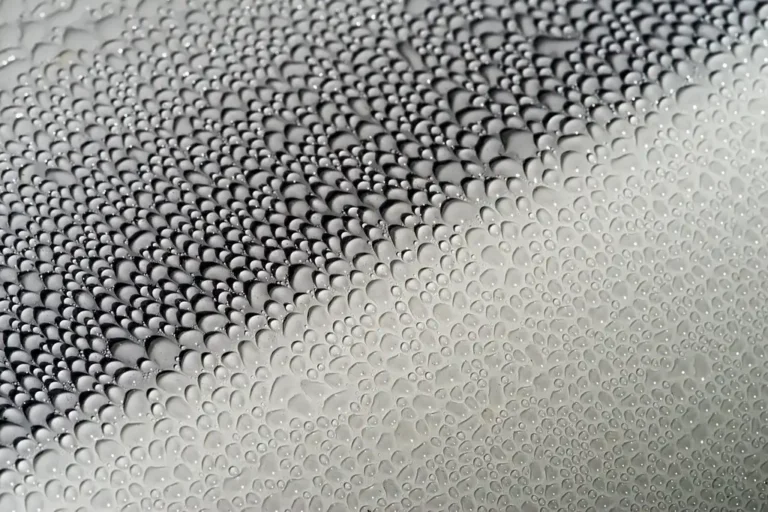
Ceramic spray coating helps water bead and run off the surface faster, so rinse water and rain are less likely to cling. It also adds a slicker feel and can make dirt release easier during washing. For many owners, that means faster cleaning and less time spent scrubbing the same panel.
It also adds UV resistance that can slow fading and oxidation on exposed paint. Ceramic coatings can protect against UV rays, road salt, bird droppings, and other contaminants. That does not mean those contaminants can sit there safely. It means the surface is more resistant and usually easier to clean if you act promptly.
Say your black sedan sits outside near trees. After a storm, bird droppings and tree sap land on the hood. Ceramic spray can make the cleanup simpler than bare clear coat, but the residue still needs prompt removal. Waiting turns a small cleanup into a stain risk.
Contaminants it helps resist
- Bird droppings: easier to remove if you clean them quickly.
- Tree sap: less likely to bite in as fast, but still time-sensitive.
- Bug splatter: usually releases with less scrubbing.
- Road salt: helps the surface clean up more easily in winter.
What ceramic spray coating does not do
Ceramic spray coating does not stop rock chips, deep scratches, or damage from poor wash technique. It is a protectant, not armor. It can reduce friction and help with contamination release, but it cannot fix sanding marks, hide swirl-heavy paint, or survive neglect without visible wear.
It also does not perform well when applied to dirty paint. If the panel has road film, old wax, or bonded contamination, the product can bond unevenly. That often shows up later as weak beading, streaking, or dull patches. When a spray coating fails early, the cause is often prep, not the label.
A common first-timer mistake is applying spray coating in direct sun on a dusty hood, then buffing too late. The result is usually high spots or streaks that take more work to level than the product saved in application time.
Use it during a wash and protect routine. Do not treat it as a substitute for proper washing, decontamination, or paint correction.
Ceramic spray decision matrix
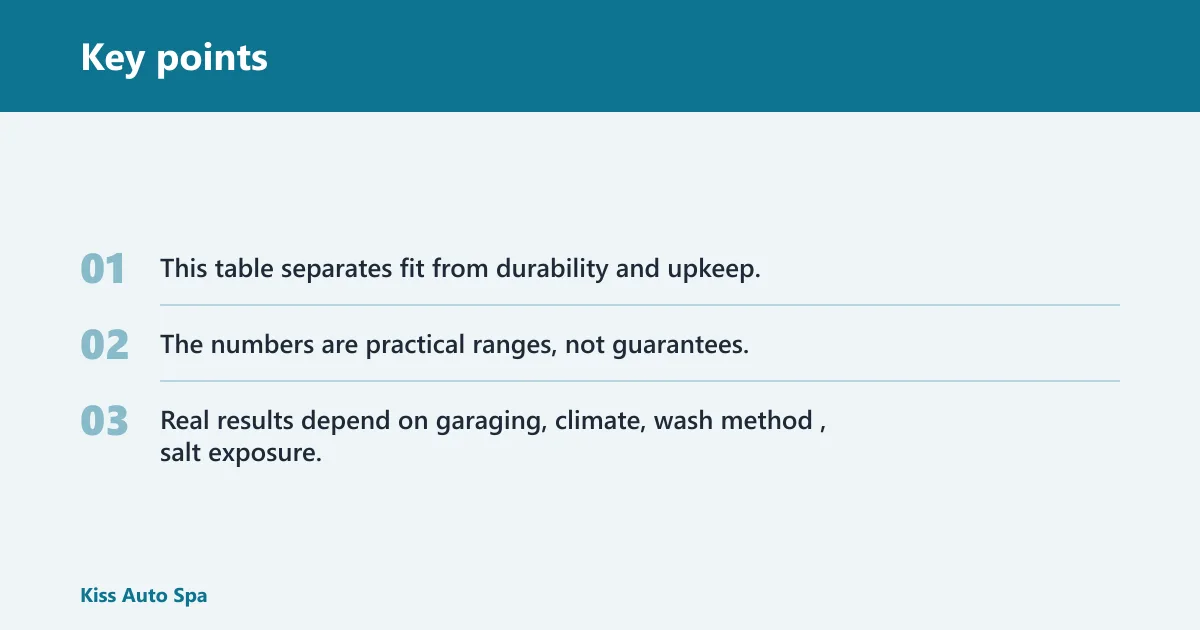
This table separates fit from durability and upkeep. The numbers are practical ranges, not guarantees. Real results depend on garaging, climate, wash method, salt exposure, and how well the paint was prepped before application.
| Use case | Fit for ceramic spray | Expected durability | Maintenance frequency | Main failure risk |
|---|---|---|---|---|
| Daily driver | Yes, if you want easier washing and short-term protection | 3 to 9 months | Wash every 1 to 2 weeks | Road film buildup and faster wear from frequent washing |
| Garage queen | Yes, especially for gloss and dust control | 6 to 12 months | Wash monthly or after storage dust | Uneven performance if dust, pollen, or old wax is left on the paint |
| Black paint | Yes, but prep and wipe-off technique matter a lot | 3 to 9 months | Gentle wash every 1 to 2 weeks | Streaking, high spots, and visible marring from poor towel choice |
| Leased car | Yes, if you want easy cleanup without a major spend | 3 to 6 months | Wash every 2 weeks | Overinvesting in a short ownership window |
| Winter road-salt car | Yes, but expect faster wear than in mild weather | 2 to 6 months | Wash weekly during salt season | Salt buildup, tunnel-wash abrasion, and weak durability in harsh conditions |
DIY ceramic spray vs professional coating
DIY ceramic spray is the entry-level option. It is quick to apply, usually less expensive, and easier to refresh. Professional ceramic coating takes more prep and lasts longer, but it costs more and usually requires a detailer. Ceramic coating can be a less expensive alternative to paint-protection wrap, but that comparison still leaves a wide cost gap between spray and pro coating.
Professional ceramic coating is commonly priced at $250 and up, and it can last 2 to 5 years when professionally applied. DIY spray products generally last only a few months to about a year. DIY ceramic coating kits are priced from $50 to $150, while DIY ceramic spray coatings and waxes are priced under $50.
If you want maximum durability and are willing to pay for prep, professional coating makes more sense. If you want easier upkeep and a lower entry cost, spray coating usually fits better. The tradeoff is simple: less prep and lower price in exchange for shorter life.
When the pro option makes more sense
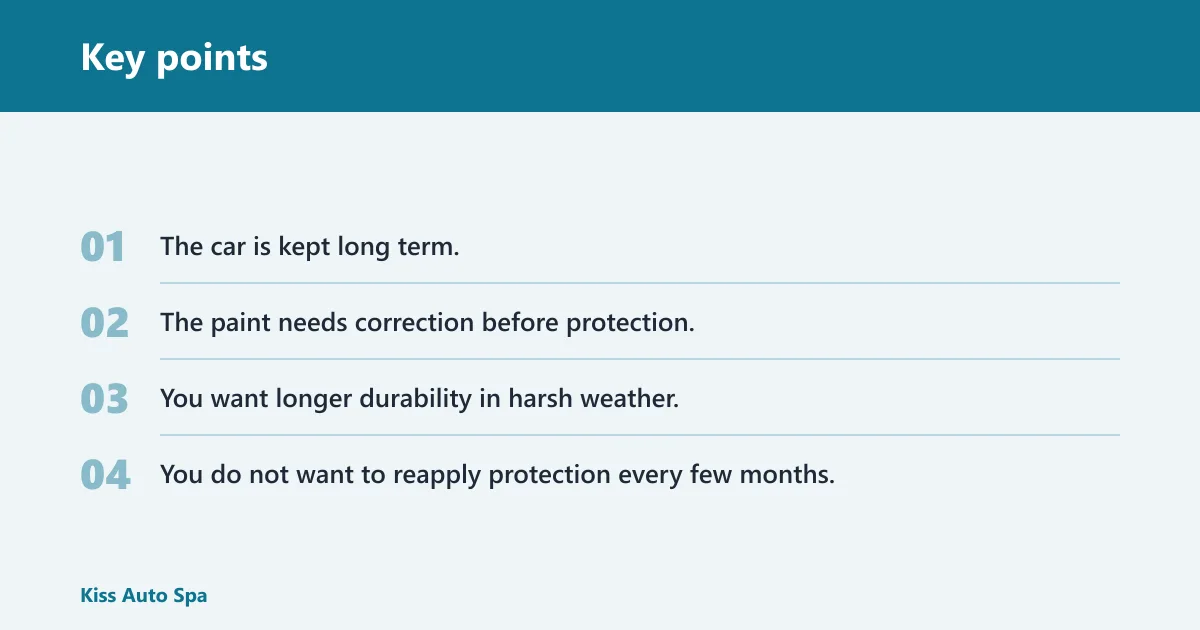
- The car is kept long term.
- The paint needs correction before protection.
- You want longer durability in harsh weather.
- You do not want to reapply protection every few months.
Maintenance is what keeps ceramic spray useful. A pH-neutral car shampoo is recommended for ceramic-coated cars because it is gentler on the coating than harsher cleaners. Use a microfiber wash mitt and microfiber drying towel to reduce abrasion. Tunnel washes, dirty sponges, and rough towels shorten the life of any spray coating.
- Rinse loose grit before touching the paint.
- Wash with a pH-neutral car shampoo.
- Use a clean microfiber wash mitt, not a sponge.
- Dry with a microfiber drying towel.
- Inspect for streaking, dull spots, or weak beading.
- Refresh the spray coating when water behavior fades.
Suppose a leased SUV gets weekly tunnel washes in winter. The coating may still help with road salt cleanup, but the brushes and detergents will wear it down faster than hand washing would. In that case, a spray product may still be useful, but only if the owner accepts more frequent reapplication.
Watch for failure signs. Streaking usually means too much product or poor leveling. High spots show up as oily patches or hazy marks under light. Uneven beading often points to poor prep, contamination, or partial wear. None of these problems are fixed by adding more product on top.
How much ceramic spray coating costs
Cost depends on the product type and the size of the vehicle. DIY ceramic spray coatings and waxes are priced under $50, and DIY ceramic coating kits are priced from $50 to $150. Professional ceramic coating is priced at $250 and up. The real cost is not just the bottle or invoice. It also includes prep time, wash supplies, and how often you need to reapply.
If your goal is low-cost maintenance protection, spray coating is usually the easiest fit. If you want a longer service life and are ready to pay for prep, professional coating is the higher-durability path.
Can ceramic spray coating be applied to glass?
Some ceramic spray products can be applied to glass, but it depends on the product directions. Glass is a harder surface than paint, so use only products that specifically list glass as an approved surface. If the label does not include glass, do not assume it is safe there.
Even when glass is approved, test one small area first and follow the cure and wipe instructions closely. Glass can show streaking quickly, especially in direct light, so careful application matters.
Frequently asked questions
What is ceramic spray coating for cars?
Ceramic spray coating for cars is a spray-on silica-based protectant that leaves a thin hydrophobic layer on the clear coat. It is aimed at easier washing, water beading, and short-to-medium-term protection. For most owners, it is a maintenance product rather than a substitute for a professional coating.
What does ceramic spray coating do?
It helps water bead and run off, adds some UV and contamination resistance, and makes dirt easier to release during washing. It can help with bird droppings, tree sap, bug splatter, and road salt, but those still need prompt cleaning. It does not stop scratches or chips.
How long does ceramic spray coating last?
DIY spray products generally last only a few months to about a year. Real-life durability depends on prep quality, garaging, climate, salt exposure, and wash method. A hand-washed garage-kept car will usually hold the finish longer than a daily driver that sees harsh weather and frequent tunnel washes.
Is ceramic spray coating good?
Yes, if you want easier maintenance, better water behavior, and a lower-cost product than a professional coating. It is good for owners who are willing to reapply it on schedule and keep up with proper washing. It is not the right pick if you want the longest possible durability.
What is the best ceramic spray coating for cars?
The best ceramic spray coating is the one that matches your use case and the product directions. Look for SiO2-based formulas, clear instructions for paint or glass if needed, and a product that fits your upkeep habits. For frequent washing, easier wipe-off and simple application matter more than bold marketing claims.
What is the difference between ceramic spray and wax?
Ceramic spray usually lasts longer than wax, beads water more strongly, and gives better resistance to UV and contaminants. Wax is cheaper and simpler, but it wears away faster. Ceramic spray is still a maintenance product, though, so it needs proper washing and reapplication when performance drops.