How Ceramic Spray Works on Car Paint: What It Does
Ceramic spray lays a very thin silica-based film on clean clear coat, then bonds and cures into a sacrificial layer that adds water beading, slickness, and some UV and soil resistance, but typically for months rather than years. Used on dirty paint or expected to stop chips, it fails fast and can leave you with wasted time and a false sense of protection. This guide explains how it bonds, how it differs from wax and true ceramic coating, and where its real protection ends.
What ceramic spray is and what it is not
Ceramic spray is a liquid silica-based protectant, usually built around SiO2 polymers, that leaves a bonded barrier layer on paint. It is closer to a sprayable sealant than to a professional coating, and it does not turn paint into armor. The useful benefit is light sacrificial protection, easier cleaning, and better water behavior.
Ceramic spray versus wax
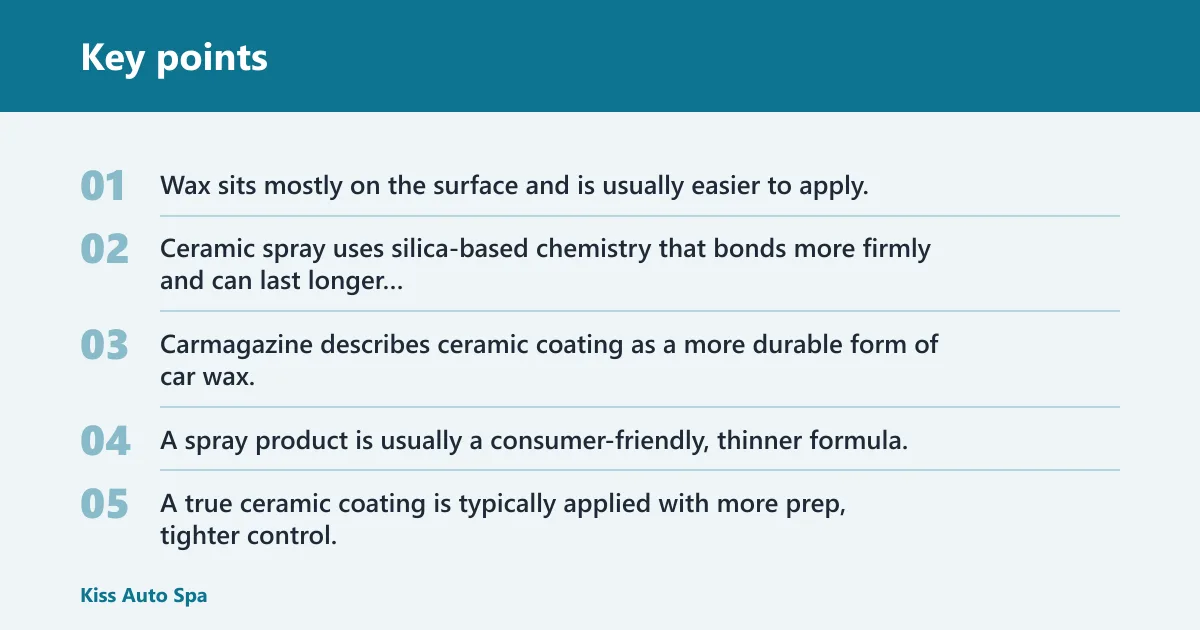
Wax sits mostly on the surface and is usually easier to apply, but it tends to wear faster. Ceramic spray uses silica-based chemistry that bonds more firmly and can last longer than car wax. Carmagazine describes ceramic coating as a more durable form of car wax, which is a fair shorthand for the protection gap, not a promise of the same product.
Ceramic spray versus true ceramic coating
A spray product is usually a consumer-friendly, thinner formula. A true ceramic coating is typically applied with more prep, tighter control, and a longer cure window. That difference matters because the spray version is designed for convenience and maintenance support, while a coating is aimed at longer-term paint protection and usually stronger durability claims.
What “protection” means in practice
Protection here means reduced dirt adhesion, better wash-off, and a barrier that can help with UV light and acidic contamination such as bird droppings. It does not mean scratch proof, chip proof, or stain proof. Water beading is a sign the surface is active, but it is not proof that the panel is fully protected.
How ceramic spray bonds to paint
Ceramic spray bonds by leaving liquid silica chemistry on the clear coat, then curing into a thin film that crosslinks and forms long molecular chains. The result is a bonded barrier layer on paint, not a thick shell. That film performs best on clean, dry, decontaminated clear coat with residue removed before the product sets.
Why SiO2 chemistry matters
SiO2 means silicon dioxide chemistry, the same silica family associated with quartz in nature. In detailing products, that silica-based chemistry is used because it can form a hard-wearing surface film after application. The chemistry is useful, but the finish only works when it is spread thinly and allowed to cure correctly.
Why clean clear coat matters
Paint surface preparation makes the difference between a stable layer and a weak one. If the panel still has road film, polishing oils, wax residue, or moisture, the spray cannot bond as well. That usually leads to streaking, weak water behavior, and short durability because the product is sitting on contamination instead of clear coat.
What crosslinking and adhesion mean for daily use
Crosslinking is the curing step where the film sets into a more stable network on the paint. For daily use, that matters because the layer resists being washed away as quickly as wax and keeps some slickness between washes. It still remains a sacrificial layer, so it should be treated as maintenance protection, not a permanent finish.
How ceramic spray is applied to cars
Ceramic spray is applied panel by panel after the paint is cleaned, dry, and decontaminated. Use a small applicator pad to control dosing, spread a thin film, then buff the residue with a separate microfibre towel. The goal is even coverage before flash-off begins, not heavy product loading.
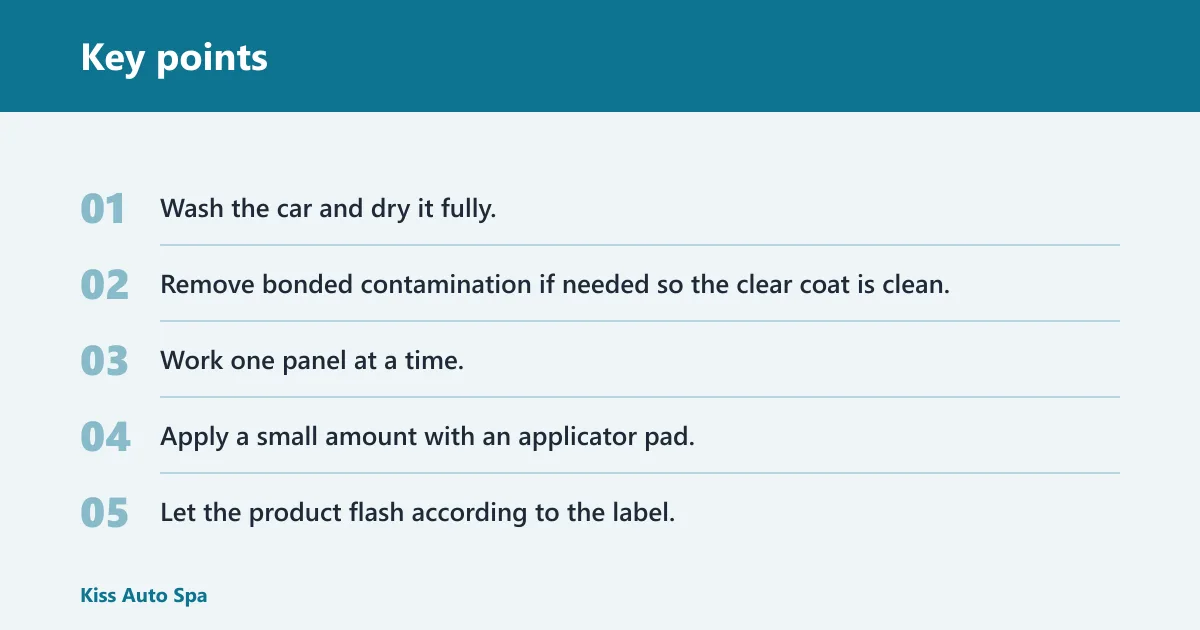
- Wash the car and dry it fully.
- Remove bonded contamination if needed so the clear coat is clean.
- Work one panel at a time.
- Apply a small amount with an applicator pad.
- Let the product flash according to the label.
- Buff the residue with a clean microfibre towel.
- Keep the panel dry through the curing window.
Say your hood still carries polishing oil from a weekend correction. The spray may wipe on easily, but the finish can smear or haze because the chemistry is trying to bond through residue. On a properly cleaned hood, the same product usually levels more evenly and leaves less drag during buff-off.
Panel control and towel choice
A dedicated applicator pad helps prevent overuse, which is one of the main causes of high spots. A separate microfibre towel is used after application because it lifts the residue without re-spreading as much product. If the towel loads up quickly, switch to a fresh side or a second towel.
Indoor and outdoor limits
Some kits must be applied indoors, and that restriction is sensible. Heat, humidity, and wind can change flash-off time and make residue harder to level. Hot panels can grab too fast, while damp outdoor conditions can interfere with curing and leave the film patchy or streak-prone.
What ceramic spray does on the road
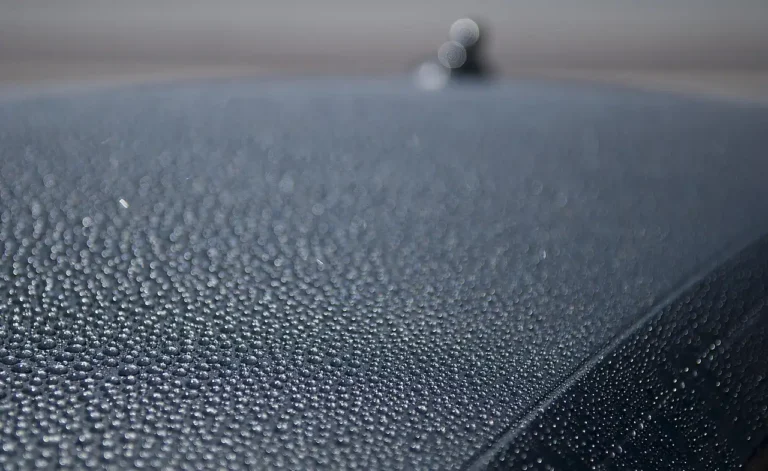
On the road, ceramic spray mainly changes how water and grime sit on the clear coat. It creates hydrophobic behavior, so rain tends to bead or sheet away, and dirt usually releases more easily during washing. The coating still needs proper care, but the surface should feel less grabby between washes.
Water beading and sheeting
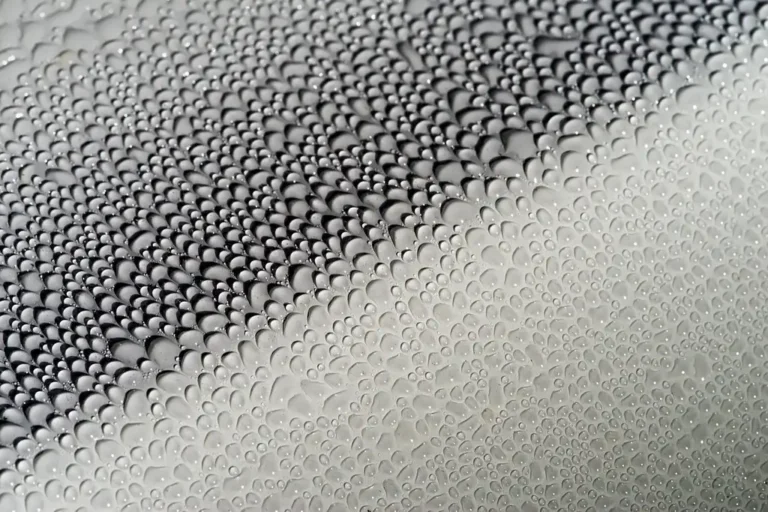
The hydrophobic effect is one of the clearest signs the layer is working. Water beads into tighter droplets and can sheet off more readily, which helps reduce standing moisture and slows the way grime clings to the paint. Beading is useful, but it is not a stand-in for physical impact protection.
UV and contamination resistance
Manufacturers and product descriptions commonly tie ceramic protection to help against UV light and acidic substances such as bird poo. That help is real, but limited. It is best understood as reduced attack on the clear coat during normal exposure, not a guarantee against staining if contamination sits for too long.
Dirt release during washing
The slicker surface can make washing easier because contamination has less grip. That does not eliminate the need for safe wash technique, but it can reduce the force needed to rinse and wipe away road film. For a daily driver, that usually means faster wash cycles and less residue left behind.
Picture a black commuter sedan that sits outside in winter. After a week of slush and road salt, a ceramic spray finish may still bead water, but the bigger value is that rinse water and shampoo foam can clear grime with less scrubbing than bare clear coat. That is maintenance help, not armor.
Ceramic spray failure checklist
This checklist shows common symptoms, where they tend to show up, and what to do next. The common thread is prep, dose control, and cure conditions. Most failures are application failures first, product failures second.
| Symptom | Likely cause | Panel condition that usually triggered it | Fix |
|---|---|---|---|
| Streaking | Too much product, uneven leveling, or slow wipe-off during flash-off | Warm panel, direct sun, or a panel with leftover polish oils | Work smaller sections, apply less product, and level immediately with a clean microfibre towel |
| High spots | Residue left to cure unevenly | Edges, body lines, or textured trim where excess product pooled | Inspect under angled light and level high spots before full cure |
| Smearing | Surface contamination, overapplication, or towel saturation | Paint that was damp, dusty, or not fully decontaminated | Dry the panel fully, prep again if needed, and switch to a fresh towel |
| Weak water behavior | Poor bond from residue, expired product, or incomplete cure | Dirty paint, wax residue, or a panel exposed too soon to water | Strip contamination, reapply on clean paint, and respect the curing window |
| Short durability | Thin bond layer, harsh wash habits, or outdoor cure compromise | Panels washed too soon, left in humidity, or maintained with strong detergents | Improve prep, follow cure instructions, and use pH-appropriate wash chemistry |
How long ceramic spray lasts on a daily driver
Durability ranges from months to years because formulations and prep vary. Some products claim up to five years’ protection for paint, with a 12 hours cure, while others are rated for up to a year, up to 24 months, or up to three years. Daily-driver wash habits usually decide whether the finish lands near the lower or upper end of that range.
Why claims vary from months to years
Different kits use different concentrations, cure systems, and intended use levels. A beginner kit may claim up to 24 months, while a professional kit may claim up to three years of protection. Those numbers are not interchangeable, and none of them mean much if the surface was poorly prepped or exposed too soon.
What prep changes longevity
Clean, dry, decontaminated paint gives the film something stable to bond to. If residue remains, the coating cannot anchor evenly and will usually lose performance faster. Panel-by-panel application also matters because it prevents missed spots and reduces the chance of oversaturation on edges and body lines.
How wash frequency changes performance
Frequent contact washes, aggressive chemicals, and dirty wash media wear the layer down faster. A daily driver that gets regular, gentle washing usually keeps its slickness and beading longer than a car that is scrubbed hard every weekend. Maintenance is part of durability, not separate from it.
Can ceramic spray replace wax or coating?
Ceramic spray can replace wax for drivers who want easier maintenance and longer-lasting water behavior, but it does not replace every protection product. It makes sense as a consumer-friendly step up from wax, while a true coating is better when the goal is longer service life and stronger surface uniformity. For chip resistance, paint protection film is the better fit.
Where spray products make sense
Choose ceramic spray if you want simple application, a cleaner wash feel, and better durability than traditional wax without committing to a pro-style coating process. It is a practical choice for leased cars, weekend maintenance, and owners who refresh protection more often than every few years.
Where a true coating is better
A true ceramic coating makes more sense when the car is freshly corrected, the owner wants a longer cure and a longer service window, and the paint will be kept in controlled conditions during installation. That route is better for longevity, not for quick weekend convenience.
When PPF is the better fit
If the concern is road rash, stone chips, or repeated impact on the front bumper, ceramic spray is the wrong tool. Paint protection film is designed for physical impact scenarios, while ceramic spray is a thin sacrificial layer for gloss support, easier washing, and chemical resistance.
How do you maintain paint after using ceramic spray?
Maintenance is straightforward: wash gently, avoid harsh residue-heavy products, and keep the surface clean so the hydrophobic layer can keep working. The finish should stay slick longer when you reduce friction, rinse contamination early, and dry with clean towels that do not drag grit across the clear coat.
Use wash methods that preserve the layer
Choose a careful wash routine with clean media and mild cleaners. Avoid strong solvents or aggressive abrasion unless you are intentionally removing the layer before reapplication. If water behavior drops off, that is usually the signal to inspect prep quality, wash chemistry, and remaining contamination.
Can you layer ceramic spray for more protection?
Some products allow layering after the first coat cures, but more layers do not automatically mean more real-world protection. If the base layer is uneven, adding another coat can trap streaks rather than improve durability. Follow the label, and only layer on clean, fully cured paint.
Frequently asked questions
How does ceramic spray work on car paint?
It leaves a thin silica-based film on clean clear coat, then crosslinks as it cures into a bonded sacrificial layer. That layer helps water bead, reduces dirt adhesion, and offers basic resistance to UV light and acidic contamination, but it does not stop chips or deep scratches.
How is ceramic spray applied to cars?
Wash and dry the paint first, then apply the product panel by panel with a small applicator pad. Let it flash, then buff residue with a separate microfibre towel. Keep the panel dry during the curing window, and avoid heavy application that can create streaks or high spots.
What makes ceramic spray bond to paint?
Silica-based chemistry bonds best to clean, dry, decontaminated clear coat. The liquid film sets during cure time and forms long chains of molecules that anchor the barrier layer to the surface. Residue, moisture, and heat reduce that bond and shorten durability.
How long does ceramic spray last on a daily driver?
That depends on the formulation, prep quality, and wash habits. Published claims range from up to a year to up to five years, with other kits listing up to 24 months or up to three years. Real-world life is usually shorter when prep is poor or washing is harsh.
Can ceramic spray replace car wax?
For many owners, yes, because it usually lasts longer than wax and is easier to maintain. It is not the same as a true ceramic coating, and it will not match PPF for impact protection. Think of it as a better maintenance layer, not a universal replacement for every protection product.
Can you apply ceramic spray to a wet car as a drying aid?
Some products are made for use as a drying aid, but the label should be checked. If the formula is designed for wet-panel use, it can help reduce friction during drying. If not, applying it to a wet surface can weaken bonding and leave smear marks or uneven coverage.