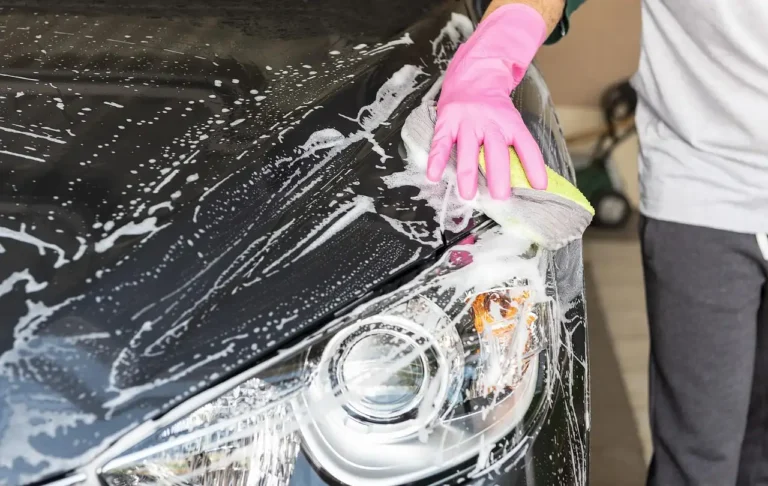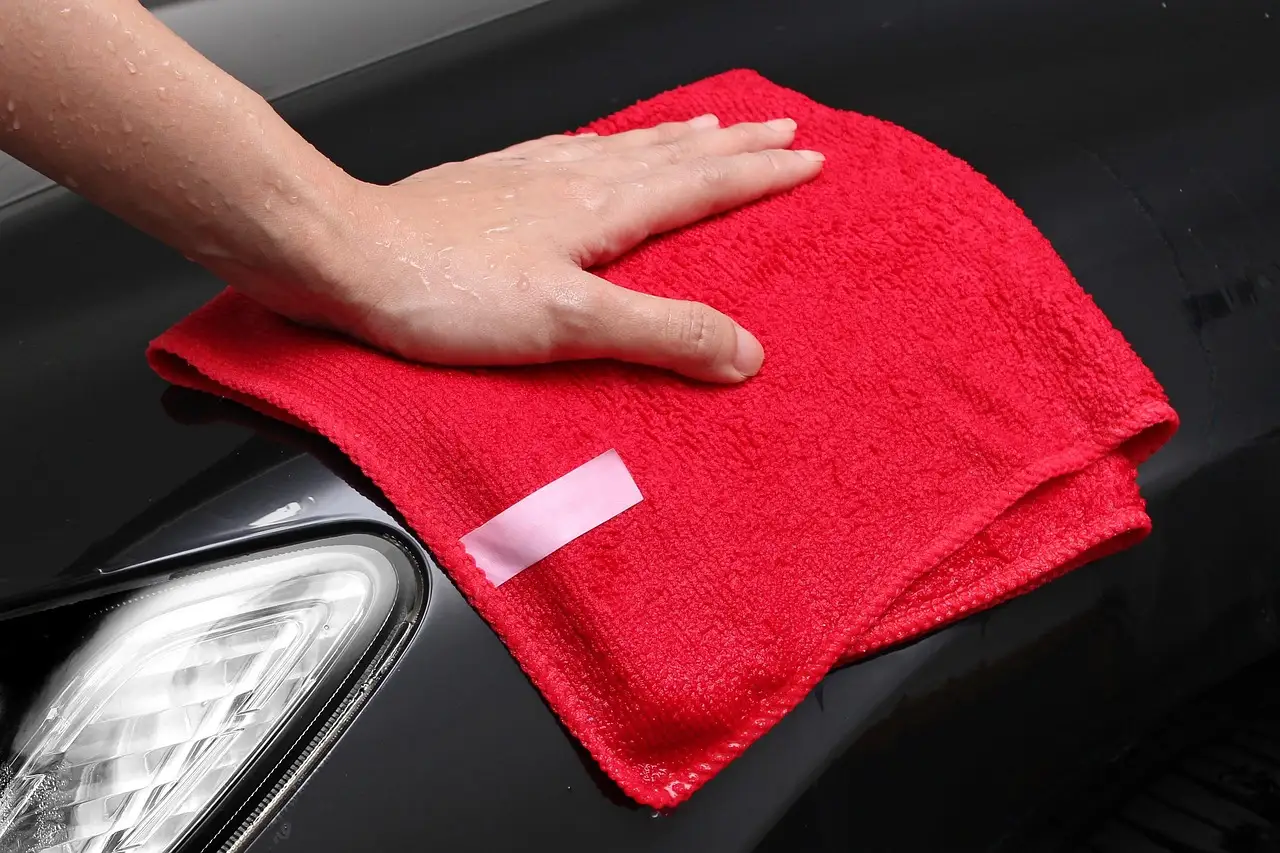
Is Waterless Wash Safe for Your Car’s Paint?
Yes, waterless wash is safe for paint only when the panel is lightly dusty, the surface is well lubricated, and you use a clean towel for each pass; if grit is stuck on the panel, skip it. Otherwise, trapped dirt can leave swirl marks, haze, or fine scratches, especially on dark paint. This guide explains the safety checklist, when waterless wash becomes abrasive, and how technique changes the risk.
Is waterless wash safe for paint?
Waterless wash is generally safest on lightly soiled paint, not on panels with grit, mud, or caked road film. It is a pre-mixed spray solution used without a hose and bucket, so it fits quick cleanups when the surface has only minor dirt buildup and the towel can lift contamination instead of dragging it.
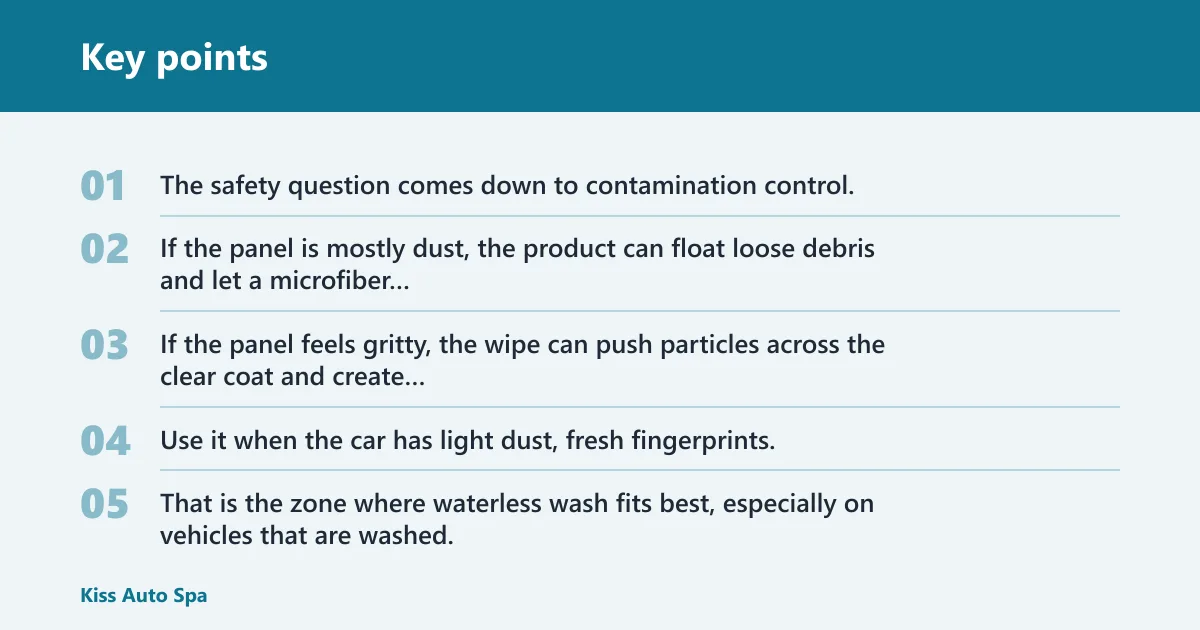
The safety question comes down to contamination control. If the panel is mostly dust, the product can float loose debris and let a microfiber towel remove it. If the panel feels gritty, the wipe can push particles across the clear coat and create micro-scratches, which may show up as swirl marks on dark finishes.
When waterless wash is safe to use
Use it when the car has light dust, fresh fingerprints, or a thin film after regular washing. That is the zone where waterless wash fits best, especially on vehicles that are washed, waxed, and serviced regularly. In that condition, the product can work as a fast, efficient, and paint-safe solution.
It is also a practical option when traditional washing is not possible, such as in an apartment lot or during a short stop. The key is that the panel still needs to be clean enough that a towel can pick up residue rather than grind it in.
Why paint risk changes
Risk rises when contamination becomes physical, not just visible. Dust is one thing. Embedded grit is another. Once the panel holds sand-like particles, any pressure, repeated passes, or circular wiping can move those particles across the clear coat and scratch the surface.
That risk is higher on black paint and softer clear coats because light marks stand out sooner. It is not that those finishes are fragile by default. They reveal poor technique faster.
Paint safety decision checklist
Use this checklist before spraying anything on the car. It gives you a clean rule for when to use waterless wash, when to switch to rinseless wash, and when a traditional wash is the better call.
| Condition | Safe | Caution | Avoid | Best choice |
|---|---|---|---|---|
| Dirt level | Light dust or minor dirt buildup | Visible road film, but no grit feel | Heavy grime, mud, caked contamination | Waterless wash / rinseless wash / traditional wash |
| Towel condition | Clean microfiber, folded to fresh sides | One side used, needs turning often | Dirty, dropped, or linty towel | Waterless wash only if clean; otherwise stop |
| Panel temperature | Cool to the touch | Warm panel in shade | Heated surface or direct sunlight | Waterless wash only when cool; otherwise wait |
| Surface type | Gloss paint, well-kept clear coat | Black paint, soft clear coat, PPF, ceramic coating | Matte finish with unknown product compatibility | Waterless wash with extra care, or another method |
| Wash choice | Waterless wash for minor dirt buildup | Rinseless wash for moderate contamination | Traditional wash or automatic wash needed | Switch methods when grit is present |
Safe
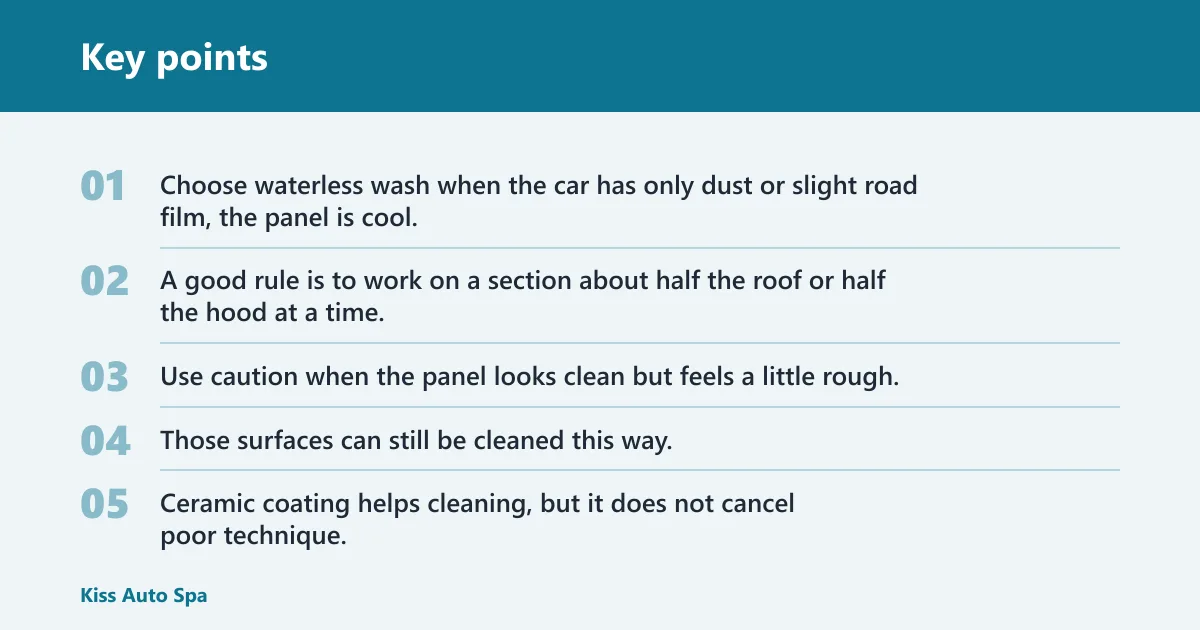
Choose waterless wash when the car has only dust or slight road film, the panel is cool, and the towel is clean and folded to expose fresh sides. A good rule is to work on a section about half the roof or half the hood at a time, then swap towel sides before the wipe loses lubrication.
Caution
Use caution when the panel looks clean but feels a little rough, when the finish is black, or when the car has a ceramic coating or PPF. Those surfaces can still be cleaned this way, but they need careful product choice and a lighter touch. Ceramic coating helps cleaning, but it does not cancel poor technique.
Avoid
Avoid waterless wash when there is mud, heavy grime, caked salt, or grit that you can feel with a fingertip. Avoid it on hot panels and in direct sunlight, because the product can dry too fast and leave streaking. In those cases, rinseless wash or a traditional wash is the safer next step.
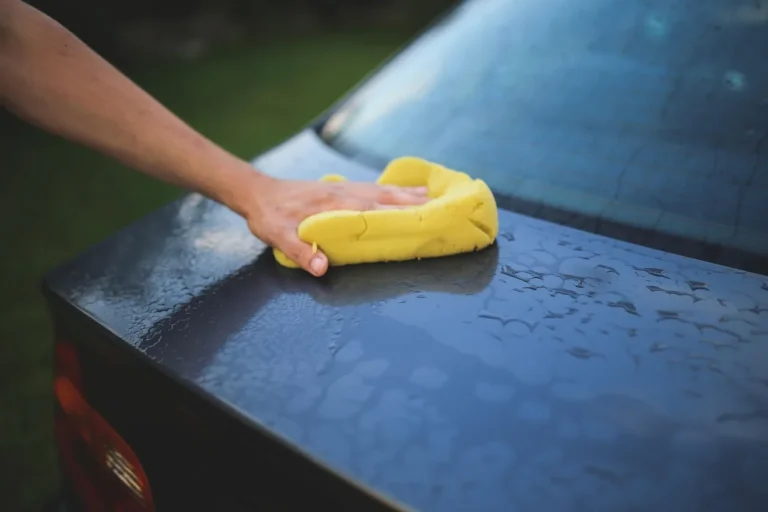
Safe use depends more on method than on the bottle label. Start on the roof or upper panels, spray enough to keep the area lubricated, and wipe lightly in one direction. The goal is to lift dirt away from the paint, not sweep it around the panel.
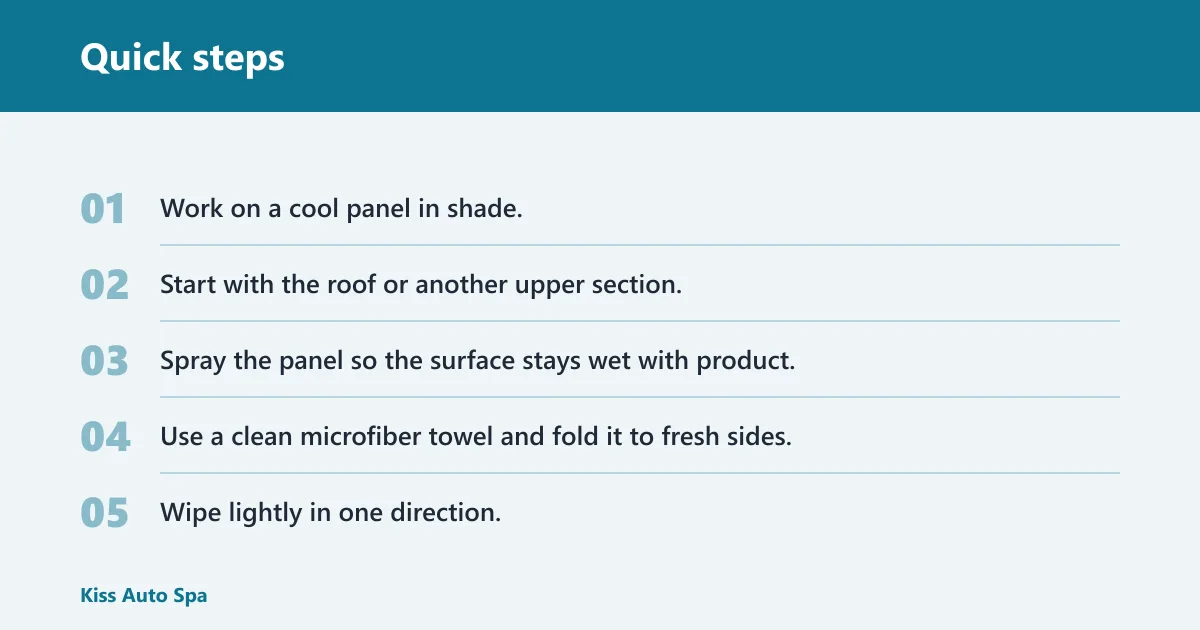
- Work on a cool panel in shade.
- Start with the roof or another upper section.
- Spray the panel so the surface stays wet with product.
- Use a clean microfiber towel and fold it to fresh sides.
- Wipe lightly in one direction.
- Flip to a new towel side after each small section.
- Stop as soon as the towel shows visible dirt.
Start on the roof
The roof and upper panels usually carry less heavy contamination than lower doors, rocker panels, and bumpers. That matters because lower areas collect more grit from the road. If you begin low, you are more likely to drag that contamination across the car as you work upward.
Use light, one-direction wipes
Light pressure is not optional. REREV advises wiping lightly in one direction, and that is the right habit for all waterless products. Circular motions and aggressive back-and-forth passes raise the chance of trapping grit under the towel and leaving fine scratches.
Suppose a sedan has a thin layer of dust after sitting in a garage for three days. A clean microfiber towel, a cool hood, and a single light pass can be a good match. If the same hood also has gritty specks near the windshield base, the safer move is to skip waterless washing there and use a rinseless or traditional wash.
Flip the towel often
REREV recommends folding the towel so you have eight usable sides. That detail matters because each fresh side gives you a cleaner surface to pull dirt away from the paint. Once a side picks up visible grime, turn it before the towel starts re-depositing contamination.
Do not treat the towel as a single-use cloth. It is the main tool that decides whether the finish stays smooth or picks up swirls. A dirty towel can turn a light cleanup into a scratch risk very quickly.
When does waterless wash scratch paint?
Waterless wash scratches paint when the panel is dirty enough that the towel has to move trapped grit. Common failure points are dirty towels, too much pressure, repeated passes, and circular wiping. Those habits can drag contamination across the clear coat and leave micro scratches that show up as swirl marks.
Dirty towels and trapped grit
A clean microfiber towel is the standard here. Not a cotton rag. Not an old shop towel. Microfiber is used because it can hold debris better, but only if the towel starts clean and gets turned frequently. Once the fabric is loaded, it stops being safe for paint.
Picture a hatchback with pollen on the roof and a towel that already picked up road dust from the front bumper. The first pass may look fine. The next pass can grind that dust into the clear coat, especially if the towel is not folded to a fresh side.
Pressure and circular wiping
Heavy pressure increases friction, and friction increases the chance of micro-scratches. REREV warns that heavy pressure may cause micro scratches, which is why the wipe should stay light. Keep the motion straight, short, and controlled. No swirling. No polishing-style circles.
Heavy grime on the panel
If the panel has heavy dirt, waterless wash is the wrong method. A quick spray cannot safely replace rinsing when the contamination is thick enough to feel sandy. At that point, a rinseless wash or a traditional wash is the better choice.
What towels and panels matter most?
The towel and the panel surface control most of the risk. A clean microfiber towel, used with light pressure and changed often, reduces the chance of dragging grit. Panel temperature also matters because heat can make the product dry too fast and leave streaks before the dirt is fully lifted.
Clean microfiber only
Microfiber towels should be clean, folded, and ready before you spray. If a towel hits the ground, replace it. If it feels loaded, turn it. If it starts dragging, stop. The towel should always have fresh sides available.
Hot panels and sunlight
Do not use waterless wash on a heated surface, and avoid using it in direct sunlight. The same warning applies in direct sunlight, because the product can dry too quickly and leave residue or streaking. Shade and a cool panel give you more working time and better control.
Black paint, PPF, and matte finishes
Black paint needs extra care because swirls are easier to see. Soft clear coats also need a lighter hand. PPF and ceramic coating can help with cleaning, but neither one makes bad technique safe. Matte finishes need special product guidance because shine-producing residue can change their appearance.
Waterless wash vs regular washing
Waterless wash is not a replacement for every wash. It is best for minor dirt buildup, not for a filthy car. Rinseless wash sits between waterless and a full hose-and-bucket wash, so it is the better switch when the car is dirtier than a light dusting but not covered in mud.
When to choose rinseless wash
Choose rinseless wash when the car has moderate contamination and you still want to avoid a full hose setup. It gives you more lubrication and more cleaning margin than a waterless spray, which makes it a better step up when dirt is more than minor but not extreme.
When to choose a traditional wash
Choose a traditional wash when the lower panels are gritty, there is caked contamination, or the finish needs a full reset after bad weather. That choice may cost more over time than quick maintenance washing, but it is the safer call when the paint is too dirty for a wipe-only approach.
Why automatic washing is not the default answer
Automatic or tunnel washing can remove heavy dirt quickly, but it can also add swirl marks and strip wax. It should be a comparison baseline, not the default answer for paint safety. When the vehicle is only lightly dusty, careful hand washing is often the gentler option.
Say your coupe has a ceramic coating and sits under a carport. The hood is cool, the dust layer is thin, and a folded microfiber towel still has fresh sides. That is a good waterless use case. If the same coupe drove through a wet, gritty highway splash, the method changes fast. Switch to rinseless or traditional washing.
Frequently asked questions
Are waterless car washes safe for my paint?
Yes, when the paint has only light dust or minor dirt buildup and you use a clean microfiber towel with light pressure. Safety drops fast when the panel is gritty, hot, or dirty enough to feel abrasive. In those cases, use rinseless wash or a traditional wash instead.
Does a waterless car wash scratch paint?
It can, if dirt, pressure, repeated passes, or a contaminated towel drag grit across the clear coat. That is why the method matters as much as the product. Used on lightly dusty panels with fresh towel sides, the scratch risk is much lower.
How do you use a waterless car wash without causing damage?
Work on a cool panel, start at the roof, spray enough product to keep the area lubricated, and wipe lightly in one direction. Fold the towel to fresh sides and turn it often. Stop using a section once the towel starts to load with visible dirt.
Can I use waterless wash on a dirty car?
Not if the car is truly dirty. Waterless wash is for minor dirt buildup, not heavy grime, mud, or caked contamination. If the panel feels gritty or the lower body is packed with road film, move to rinseless wash or a traditional wash.
Is waterless wash safe in direct sunlight?
No, it is better to avoid direct sunlight and heated surfaces. The product can dry too fast, which raises streaking and residue risk. Shade and a cool panel give you more time to wipe cleanly and reduce the chance of dragging residue back across the paint.
What towels should I use with a waterless wash?
Use a clean microfiber towel folded to expose fresh sides. The same source recommends eight usable sides, and that idea is practical because it limits re-depositing grime. Avoid old, dirty, or linty cloths. Turn the towel often and replace it if it hits the ground.