Why Does Streak-free Glass Cleaner Leave Streaks on Car Windows?
Streak-free glass cleaner leaves streaks on car windows when residue stays on the glass, the towel is contaminated, or the window has a bonded film; fix the cause, not the label. Left untreated, the haze cuts visibility and makes later cleaning harder. This guide shows how to identify each failure and match it to the right fix.
Why does glass cleaner leave streaks on my car windows?
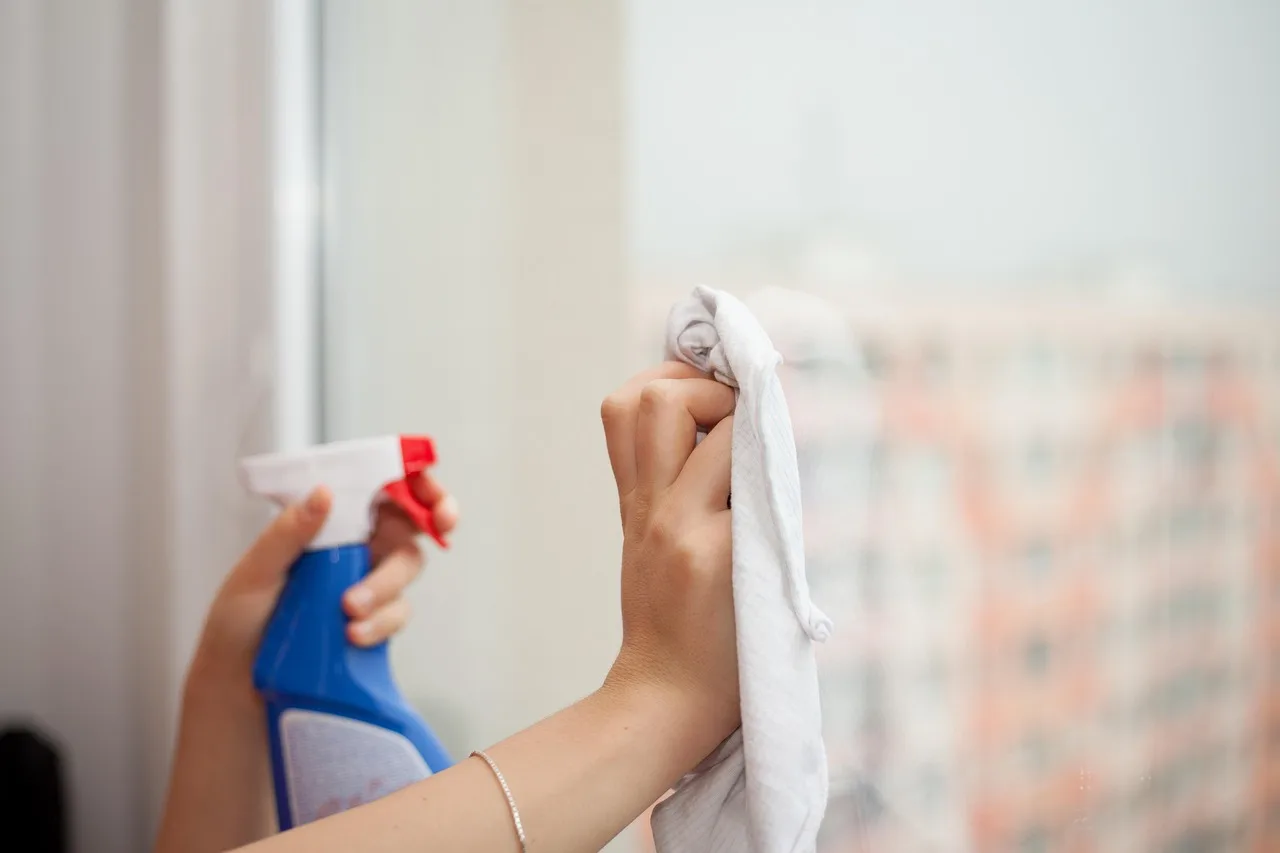
Most streaks come from product film, towel contamination, or a surface deposit that the cleaner did not remove. The cleaner may evaporate cleanly on one panel and leave haze on another because the glass dried too fast, the wipe missed residue, or the window already had mineral spotting or interior film.
Residue left after evaporation
Glass cleaner residue is product film left behind after evaporation. It shows most clearly in direct light, especially on large panes such as windshields and front doors, and it often appears when too much product was sprayed or the wipe did not fully remove the wet film before it flashed off.
Why direct light exposes the problem
Streaks often look mild indoors and more obvious in sunlight because glare can light up haze, missed spots, and uneven residue. That is why a window can seem finished in the garage and still look cloudy outside. The cleaner did not suddenly fail; the lighting made the leftover film visible.
When the cleaner is not the main cause
If a streak reappears after a few minutes or comes back after one drive, the issue is often not the spray itself. A dirty towel can redeposit oils, hard water spotting can mimic cleaner streaks, and interior windshield film can keep bleeding haze back onto the inside glass.
Glass streak troubleshooting matrix
Use the symptom first. Then match it to the likely cause and the fastest fix. That prevents you from chasing residue with more product when the real problem is a towel, mineral deposit, or interior film.
| Symptom | Likely cause | Fastest fix |
|---|---|---|
| Hazy film after drying | Glass cleaner residue from over-application or incomplete wipe-off | Reclean a small section with less product, then dry buff with a clean microfiber glass towel |
| Streaks only in sunlight | Light is exposing residue, missed spots, or thin surface film | Move the car out of direct light and inspect with angled shade before re-wiping |
| Linty smears | Dirty or saturated towel, detergent residue, or fabric softener on the cloth | Switch to a fresh, dry microfiber glass towel and reserve it for final buffing |
| Streaks returning after one day | Interior windshield film, remaining contamination, or repeated towel redepositing | Clean the inside glass in small sections and address the source of the film, not only the surface haze |
| Tint-safe cleaning failures | Cleaner not compatible with tinted window film or label not checked before use | Stop using the product, verify tint-safe labeling, and switch to an ammonia-free glass cleaner if approved for that film |
What cleaner residue looks like
Residue usually looks like a thin haze, wavy smear, or faint patch that appears after the glass dries. It may not show while the surface is wet. Over-application leaves more liquid than the towel can remove, and weak wipe-off leaves the same film behind on the pane.
Over-application and weak wipe-off
Use a small amount of cleaner. A light spray is easier to remove than a soaked panel. Too much spray can spread across trim, collect at the edges, and dry into visible film. If the towel glides without grabbing the liquid, the residue stays on the glass instead of coming off with the cloth.
When to re-clean versus switch methods
If the streak appears immediately after drying and wipes off with a second dry pass, residue is likely the issue. If the mark resists fresh passes, changes shape in sunlight, or returns after a day, the window may have mineral spotting, interior film, or towel contamination that needs a different approach.
Can dirty towels cause streaks?
Dirty or saturated towels can transfer lint, oils, and grime to the glass and may smear cleaner film instead of lifting it. A towel loaded with previous product, body oils, or dust stops absorbing well and starts dragging contamination across the window during the final pass.
How lint and oils transfer to glass
Microfiber works because a low-lint weave can pick up fine residue without leaving fibers behind. That changes when the towel is dirty or has been washed with fabric softener. Softener leaves a coating that reduces absorbency and increases smearing on auto glass.
Why saturated towels smear instead of clean
Once a towel is wet with cleaner and grime, it stops buffing and starts redepositing. The cloth may feel slippery and spread a dull film across the surface. Turn to a clean dry side often, and replace the towel when it no longer lifts the last trace of moisture.
When to turn to a fresh dry side
Use one side for applying or loosening contamination, then switch to the dry side for final buffing. The two-towel method reduces drag and redepositing residue, especially on windshields, which hold larger spans of glass and show towel marks more clearly than small side windows.
Tinted glass and cleaner choice
Tinted window film can be damaged by harsh chemicals, so checking the label before use matters. Ammonia-free glass cleaner is a common automotive choice because it reduces tint-film risk versus ammonia-heavy products, but it is not a universal pass. Compatibility still depends on the film and the product label.
How tint film changes the risk
Film can react differently than bare glass. Some cleaners leave marks on tint that look like streaks, while harsher formulas may cloud or stress the film over time. If the vehicle has aftermarket tint or an unknown film, treat the label as part of the repair, not an afterthought.
Label checks before spraying
Before cleaning tinted glass, confirm that the bottle says it is safe for tinted windows or automotive use. If the label is vague, skip it until you have a product that states compatibility. That is safer than treating any glass cleaner as equal on film-covered windows.
Interior glass film and spotting
Inside the windshield, streaks often come from interior windshield film rather than the cleaner alone. Off-gassing from plastics, vinyl, and dash materials leaves a thin haze that can return after one wipe if the source remains. That film usually needs repeated removal, not just one pass.
Hard water spotting versus cleaner residue
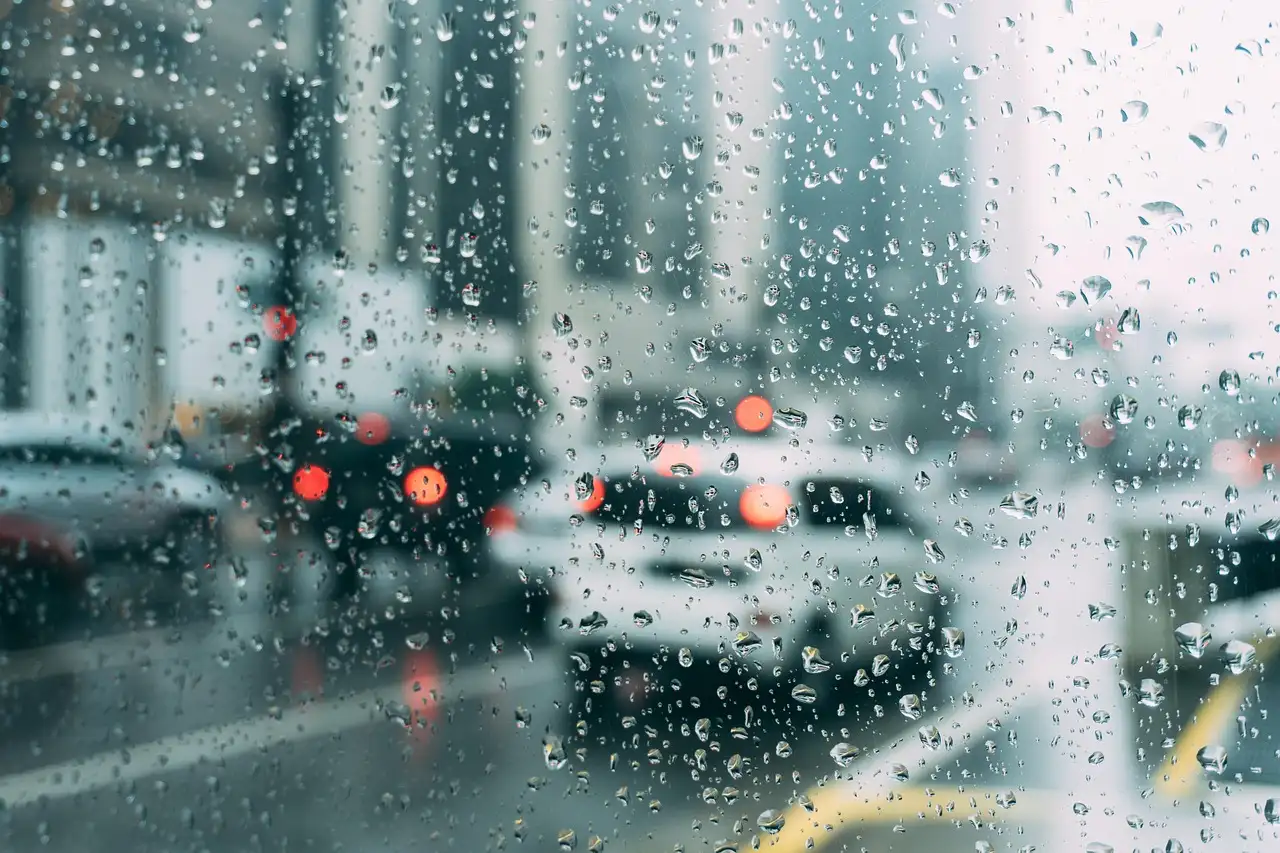
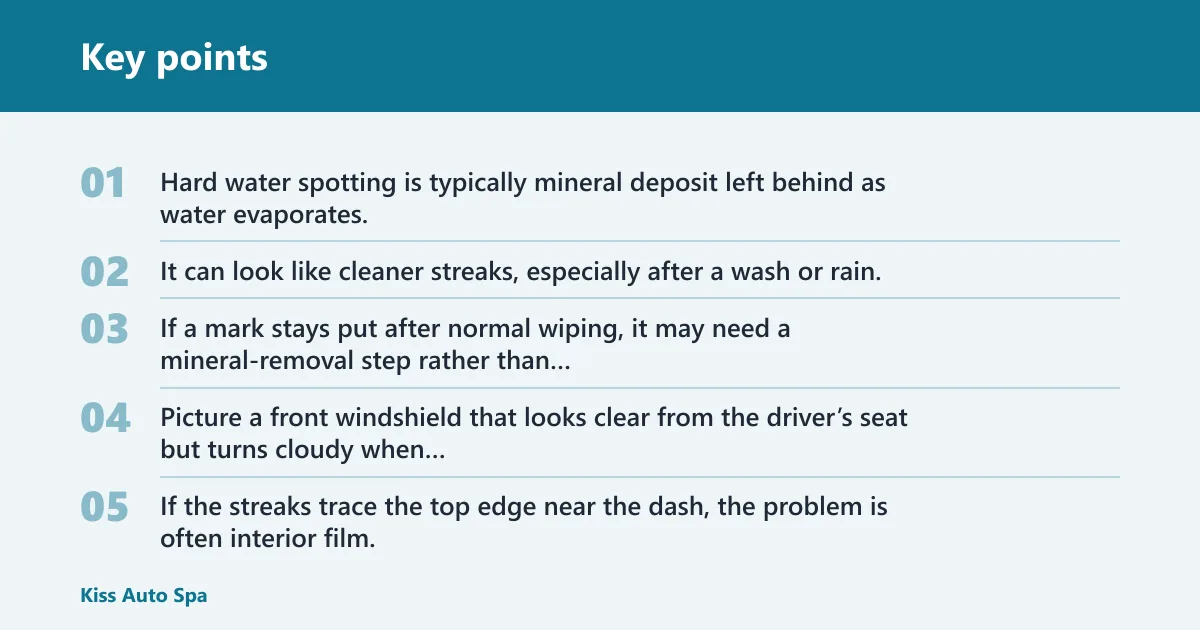
Hard water spotting is typically mineral deposit left behind as water evaporates. It can look like cleaner streaks, especially after a wash or rain, but it often does not behave like product film. If a mark stays put after normal wiping, it may need a mineral-removal step rather than more glass cleaner.
Picture a front windshield that looks clear from the driver’s seat but turns cloudy when the afternoon sun hits it. If the streaks trace the top edge near the dash, the problem is often interior film. If the marks sit in round dots after a wash, hard water spotting is more likely.
Why some streaks come back fast
Fast return usually means the source is still present. Interior film can keep migrating from dashboard materials. Mineral spotting can remain bonded to the surface. In both cases, repeated sprays on the same section may only spread the problem across a wider area.
How do you fix streaky car windows?
Start small and isolate the cause. Clean one section at a time with a light spray, then finish with a dry microfiber glass towel. If the streak persists, adjust the method based on whether it looks like residue, towel contamination, tint-film risk, or bonded surface film.
Use the two-towel method in small sections
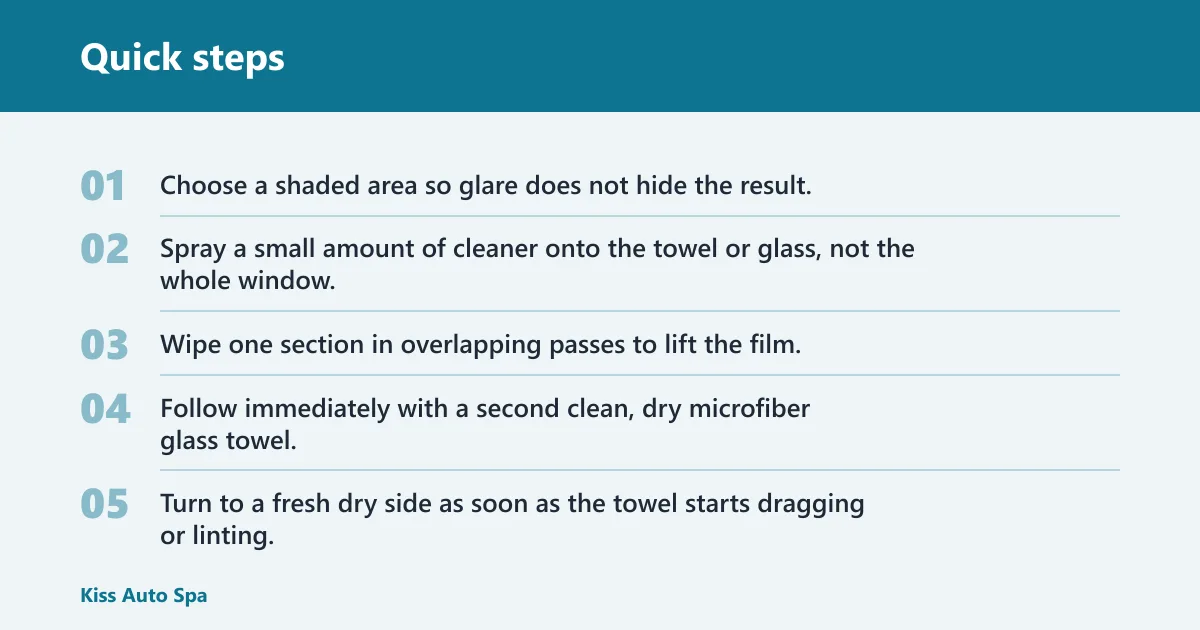
- Choose a shaded area so glare does not hide the result.
- Spray a small amount of cleaner onto the towel or glass, not the whole window.
- Wipe one section in overlapping passes to lift the film.
- Follow immediately with a second clean, dry microfiber glass towel.
- Turn to a fresh dry side as soon as the towel starts dragging or linting.
Buff with a clean microfiber glass towel
A microfiber glass towel with a low-lint weave is best for final buffing because it pulls away fine residue without leaving fuzz behind. Keep it clean and dry. If it has picked up interior dust, old cleaner, or fabric softener residue, it can create the same haze you were trying to remove.
Repeat only after identifying the cause
Do not keep adding cleaner to the same spot if the mark is from hard water, tint-film reaction, or interior off-gassing. Suppose a rear side window looks streaky only in sun after a car wash. That points more toward water spotting than cleaner failure, so the fix should change with the symptom.
Frequently asked questions
Why are my car windows still streaky after I clean them?
If the windows are still streaky after cleaning, the likely issue is incomplete wipe-off, towel contamination, or a bonded deposit on the glass. Direct light can make the finish look worse than it is. Recheck in shade, then switch to a clean dry towel and a smaller work area.
Does glass cleaner work differently on tinted car windows?
Yes. Tinted window film can react differently than bare glass, and some products are not safe for every tint type. Ammonia-free glass cleaner is a common automotive choice, but the label still matters. Check compatibility before spraying, especially on aftermarket or older tint film.
Can dirty towels cause streaks on auto glass?
Yes. Dirty or saturated towels transfer lint, oils, and grime, and they can smear cleaner residue instead of lifting it. Fabric softener residue can also reduce absorbency. Use a clean microfiber glass towel for final buffing and replace the cloth when it starts to drag or leave lint.
Why do streaks show up more in sunlight?
Sunlight and glare expose what indoor light hides. Thin residue, missed wipe marks, and haze stand out when the glass is backlit. That does not always mean the cleaner failed. It often means the finish needs one more dry pass or a different fix for the surface film.
What should I use if glass cleaner keeps leaving residue?
First, cut back the amount of product and use a clean dry microfiber glass towel for the last pass. If residue keeps returning, check for a dirty towel, hard water spotting, or interior windshield film. On tinted glass, confirm that the cleaner is labeled safe before continuing.