What to Use on the Inside of Your Windshield
Use a clean microfiber towel for light dust, a glass cleaner made for automotive glass for normal haze, a 50/50 mix of distilled water and isopropyl alcohol for oily film, and a plastic-safe interior cleaner or glass polish for stubborn residue. Bad cleaning leaves streaks, glare, and a windshield that looks worse in sun or night traffic. This guide shows which product fits each problem and how to wipe the inside glass without leaving film behind.
Quick answer
Match the cleaner to the residue. Light dust needs a dry microfiber towel. Haze from off-gassing, smoke, sunscreen, or HVAC residue usually needs a glass cleaner made for automotive interiors. Oily film is often cleaned with a roughly 50/50 mix of distilled water and isopropyl alcohol. Stubborn residue may need a glass-specific interior cleaner or a plastic-safe interior cleaner near trim.
Interior windshield film is usually oily, not dusty. That matters because dry wiping can spread the film and make glare worse. Start with the mildest cleaner that fits the problem, then move up only if the glass still looks cloudy under bright light.
What you’ll need
- Two clean microfiber towels are a common setup, one for cleaning and one for dry finishing.
- Ammonia-free glass cleaner for interior automotive glass
- Glass-specific interior cleaner for residue on glass, plastics, and bezels
- Isopropyl alcohol solution, commonly mixed 50/50 with distilled water for spot treatment
- Reach tool for curved glass with a long handle and swivel head or pivoting pad
- Optional waffle-weave or plush microfiber towel for the final dry pass
A tint-safe cleaner should be labeled ammonia-free and should not require abrasive pads. That matters near tinted film edges, camera housings, and sensor areas where harsh scrubbing can leave marks.
Interior windshield decision table
What to Use for Each Interior Windshield Problem
| Problem type | Recommended product | Dilution or application method | Towel type | When to escalate to a deeper clean |
|---|---|---|---|---|
| Light dust and fingerprints | Ammonia-free glass cleaner | Light mist on the towel, not the glass | Clean, dry microfiber; waffle-weave or plush | If streaks remain after one dry buff |
| Oily film or haze | Glass-specific interior cleaner | Apply to the towel in sections; clean one panel, then the next | Microfiber finishing towel | If haze returns in bright sun or at night |
| Stubborn greasy residue | 50/50 distilled water and isopropyl alcohol | Spot-treat only; test near tint and plastics first | Fresh microfiber towel | If the spot stays tacky after two passes |
| Fog from humidity or condensation | Clean glass first, then defogging steps | Use HVAC fresh air, A/C, and cabin air filter checks | Dry microfiber towel for the glass | If fog returns quickly after the glass is clean |
| Residue near tint, sensors, or bezels | Tint-safe cleaner | No ammonia, no abrasive pads, no soaking | Soft microfiber towel | If residue sits on the edge or corner after careful passes |
How to clean light dust and fingerprints
For light dust, use an ammonia-free glass cleaner and a dry microfiber towel. Mist the towel rather than the windshield. Wipe in overlapping passes, then switch to a second clean towel to buff the section until it looks dry and clear. A waffle-weave or plush towel both work well if they are lint-free.
- Fold a clean microfiber towel into quarters.
- Lightly mist the towel with glass cleaner.
- Wipe the glass in overlapping horizontal or vertical passes.
- Flip to a dry face of the towel and buff until no haze remains.
- Move to the next section and repeat.
Suppose the windshield is dusty after a week of parking outside, but the glass still looks clear in sun. One damp towel pass and one dry pass are usually enough. If the towel grabs instead of gliding, the surface likely has oily residue and needs a stronger cleaner.
How do you remove oily film and haze?
Use a glass-specific interior cleaner first, because interior windshield film usually comes from off-gassing, smoke, sunscreen, cleaners, or HVAC residue. If that does not cut the haze, spot-treat stubborn patches with a 50/50 distilled water and isopropyl alcohol solution. Finish with a clean, dry microfiber towel so the film does not reappear in sunlight.
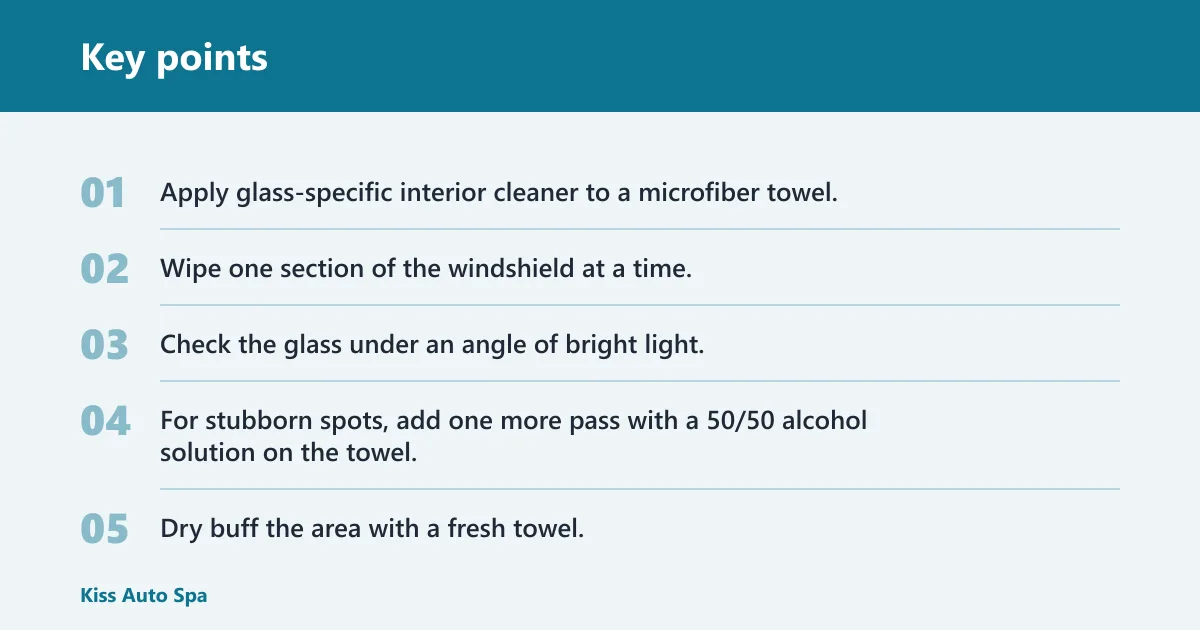
- Apply glass-specific interior cleaner to a microfiber towel.
- Wipe one section of the windshield at a time.
- Check the glass under an angle of bright light.
- For stubborn spots, add one more pass with a 50/50 alcohol solution on the towel.
- Dry buff the area with a fresh towel.
Do not soak the glass. A light application works better than a heavy one, especially around tint edges and the area under the mirror. If a patch still smears after two careful passes, treat it as residue, not dust, and step up to a deeper clean.
What if the windshield stays foggy?
Fog is a humidity problem first, so clean the glass before changing HVAC settings. If the inside of the windshield fogs again after wiping, check cabin humidity control, use fresh air or defrost mode, and inspect the cabin air filter. A dirty filter can reduce airflow and make condensation stick around longer.
- Clean the windshield fully with glass cleaner and a dry microfiber towel.
- Set the HVAC to defrost or windshield mode.
- Switch to fresh air instead of recirculation if the cabin feels damp.
- Turn on the A/C to remove moisture from the air.
- Check the cabin air filter if fog returns quickly.
Picture a car that fogs up every cold morning, but the glass also has a faint oily sheen. Clean glass first, then use the defog setting. Fog on dirty glass clings faster and looks worse, so the fix needs both clean glass and dry cabin air.
What to avoid on tinted or sensor-equipped glass
Skip ammonia on tinted windows and film edges. Avoid abrasive pads, harsh scrubbing, and any cleaner that leaves a heavy residue. Keep spray off cameras, rain sensors, buttons, trim, and infotainment bezels. A tint-safe cleaner should be no-ammonia, low-residue, and safe around plastics.
- Do not spray directly onto electronics or trim.
- Do not use ammonia-based cleaner on tinted glass.
- Do not scrub with rough pads or paper towels.
- Do not flood the area around sensors or mirror mounts.
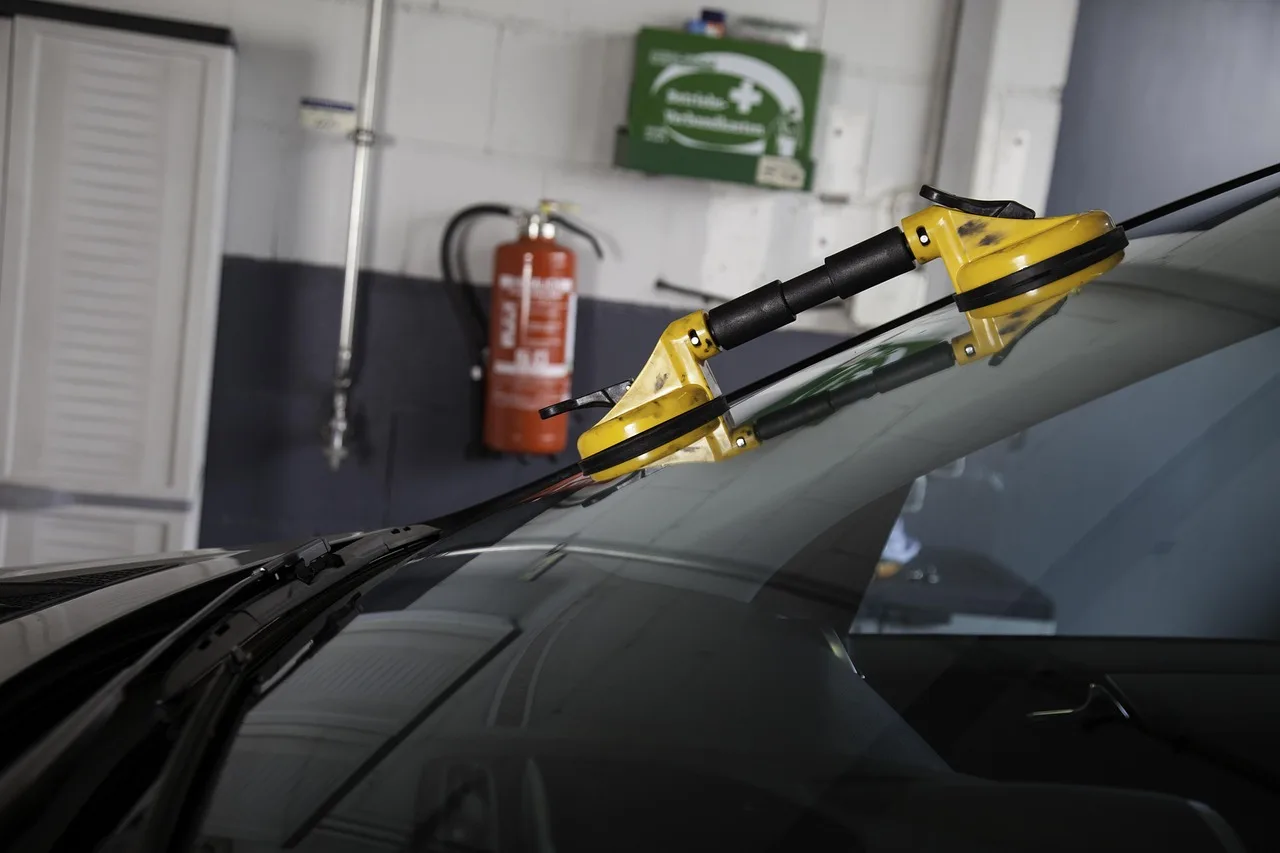
A reach tool for curved glass helps here. Choose a long-handled applicator with a swivel head or pivoting pad so you can reach the lower corners and the area under the mirror without dragging a wet towel across the dash.
Common mistakes
Most streaking comes from a few avoidable errors. One towel becomes loaded with residue and starts smearing the next section. Too much cleaner leaves a film. Corners under the mirror stay dirty when the tool cannot reach them. Stopping before the panel is fully dry leaves haze in bright sun.
- Use one towel for cleaning and one fresh towel for drying.
- Clean a section, then move to the next one.
- Check the top edge, lower corners, and mirror area with a light.
- Keep wiping until the glass is dry and clear.
Say your windshield looks clean head-on, but night traffic creates a halo around headlights. That usually points to leftover film, not simple dust. Reclean the same area with a fresh towel and a glass-specific interior cleaner before adding more product.
Frequently asked questions
What to use to clean the inside of your windshield?
Use an ammonia-free glass cleaner for normal dirt, a microfiber towel for the wipe and dry pass, and a 50/50 distilled water and isopropyl alcohol mix only for oily spots. If the glass has tint or sensor edges, choose a tint-safe cleaner and keep the spray on the towel instead of the glass.
What is the best thing to use on the inside of your windshield?
The best option depends on the residue. For basic haze, a glass cleaner made for automotive interiors is the safest starting point. For oily film, a diluted alcohol solution works better. For stubborn residue near plastic trim, a plastic-safe interior cleaner is the better choice.
What is the best cleaner to use on the inside of your windshield?
A glass-specific interior cleaner is the best all-around choice for most interior windshields because it is made for automotive residue and usually leaves less streaking on nearby plastics and bezels. Use it with a clean microfiber towel and finish with a dry towel until the glass is clear.
What can I use on the inside of my windshield?
You can use an ammonia-free glass cleaner, a microfiber towel, a 50/50 distilled water and isopropyl alcohol mix for spot treatment, and a reach tool for the lower corners. Avoid rough pads, heavy soaking, and any cleaner that is not labeled safe for tinted or interior automotive glass.
What to do when the inside of your windshield is foggy?
Clean the glass first, then use defog mode, fresh air, and A/C to pull moisture out of the cabin. If fog keeps coming back, check the cabin air filter and look for humid air trapped by recirculation. Dirty glass fogs faster, so the first step should still be cleaning.
What’s the best thing to clean the inside of a windshield with?
A clean microfiber towel and an ammonia-free automotive glass cleaner will handle most jobs. If the windshield has greasy haze, step up to a glass-specific interior cleaner or a diluted alcohol spot treatment. Clean a section, then dry buff that area before moving on.