How to Remove Water Stains From Car Upholstery
Identify the mark first. A white mineral ring needs an acidic or chelating cleaner, a sticky residue halo needs a surfactant cleaner, and a dark moisture shadow often clears as the material dries with air movement and gentle heat. Using the wrong fix can spread the stain, leave a hard ring, or soak padding and backing. This guide shows how to sort each type and use the least-wet method for cloth, leather, vinyl, and headliners.
What you’ll need
- Microfiber towel or clean, lint-free white cloth
- Distilled water for rewetting and feathering edges
- White vinegar, diluted before use
- Mild dish soap
- Soft-bristle detailing brush for fabric only
- Wet/dry vacuum or extractor
- Leather cleaner and conditioner for sealed leather only
How do you tell what kind of mark it is?
Read the mark before you clean it. A pale ring often points to mineral residue, a tacky halo can mean cleaner or spill residue, and a gray or darker shadow may be trapped moisture that still needs to dry out. Material matters too, because cloth, leather, vinyl, and headliners take very different amounts of liquid.
Quick sort before you clean
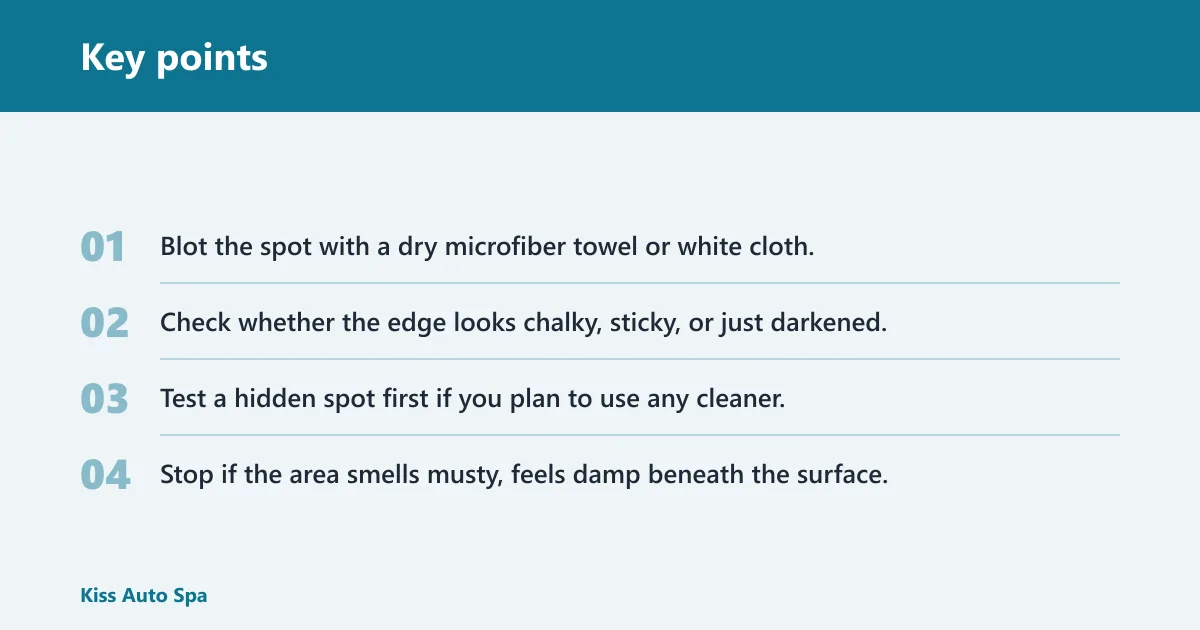
- Blot the spot with a dry microfiber towel or white cloth.
- Check whether the edge looks chalky, sticky, or just darkened.
- Test a hidden spot first if you plan to use any cleaner.
- Stop if the area smells musty, feels damp beneath the surface, or shows spreading discoloration.
Say your cloth seat has a bright white ring after a drink spills and dries. That usually calls for mineral removal, not more water alone. Suppose the mark sits on sealed leather and feels slightly slick. That often points to residue on the finish, which needs a different cleaner and far less moisture.
When it is not plain water residue
Water marks are different from mildew, dye transfer, flood residue, and salt water damage. Mildew often has a musty odor and spreads in soft specks. Dye transfer looks tinted, not chalky. Flood or salt water usually leaves a larger, dirtier edge and can wick back after drying, which means the material may need professional cleaning.
How to remove water stains from cloth seats
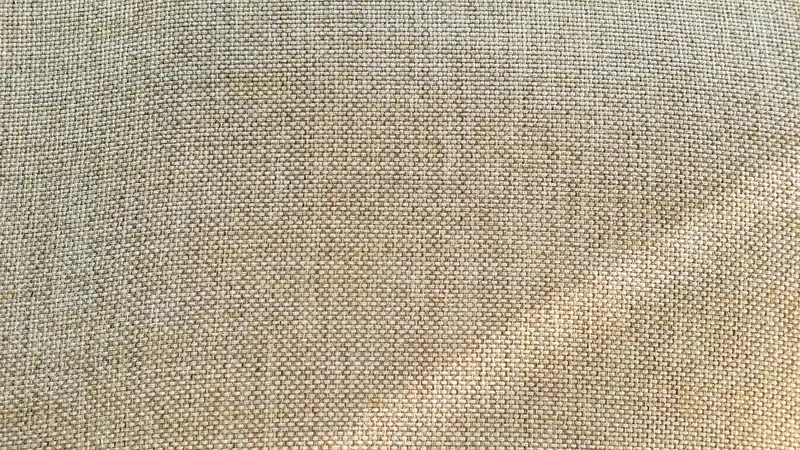
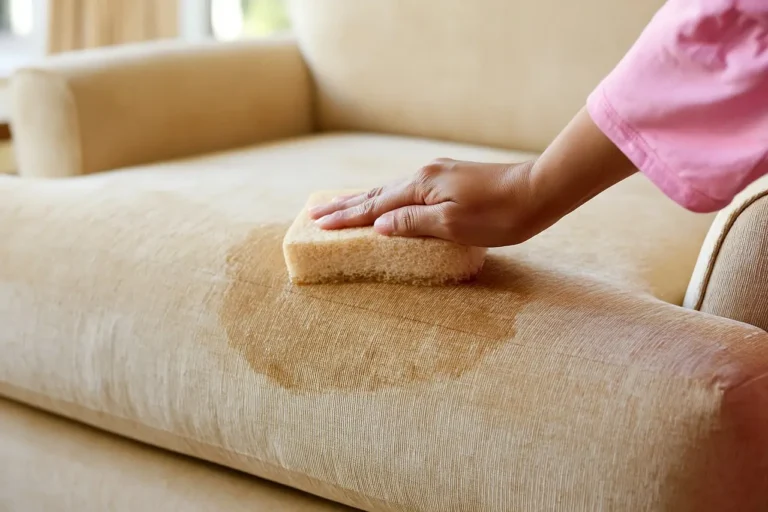
For cloth, start with the least-wet option and move outward from the stain edge toward the center only if the mark is active. Blot first, then rewet only the ring edge with distilled water if mineral redeposit is the problem. Use diluted vinegar or a small amount of soap only when the mark still shows grime or mineral residue.
Step-by-step on cloth
- Vacuum loose grit so you do not grind it into the fibers.
- Blot with a dry white cloth; do not rub.
- Lightly mist distilled water on the outer edge of the ring to feather it.
- If residue remains, apply the vinegar mix: 1 tablespoon of dish soap and 2 teaspoons of white vinegar in water. (Wikihow)
- Let the mix sit for about 10 minutes, then wipe with cold water.
- Use a soft-bristle detailing brush with light pressure only if the fabric can handle agitation.
- Extract moisture with a wet/dry vacuum or extractor and dry fully.
The vinegar step should not be the last step. Any cleaner left behind can dry into a new outline. A wet/dry vacuum or extractor pulls dissolved residue out before it shows up as a tide mark.
If that didn’t work, try this next
If the ring still remains after rinsing and extraction, try about 90% isopropyl alcohol on a hidden test spot first; 70% can be used if needed. Do not use alcohol on acetate, rayon, or triacetate. Work with a white cloth, blot only, and stop once the ring lifts instead of chasing every trace with more liquid.
Sealed leather needs a drier approach than cloth. Use a leather cleaner made for finished surfaces, keep liquid off seams and perforations, and avoid soaking the grain. After wiping away residue, condition the leather so the cleaned area does not dry unevenly or feel stiff.
Step-by-step on sealed leather
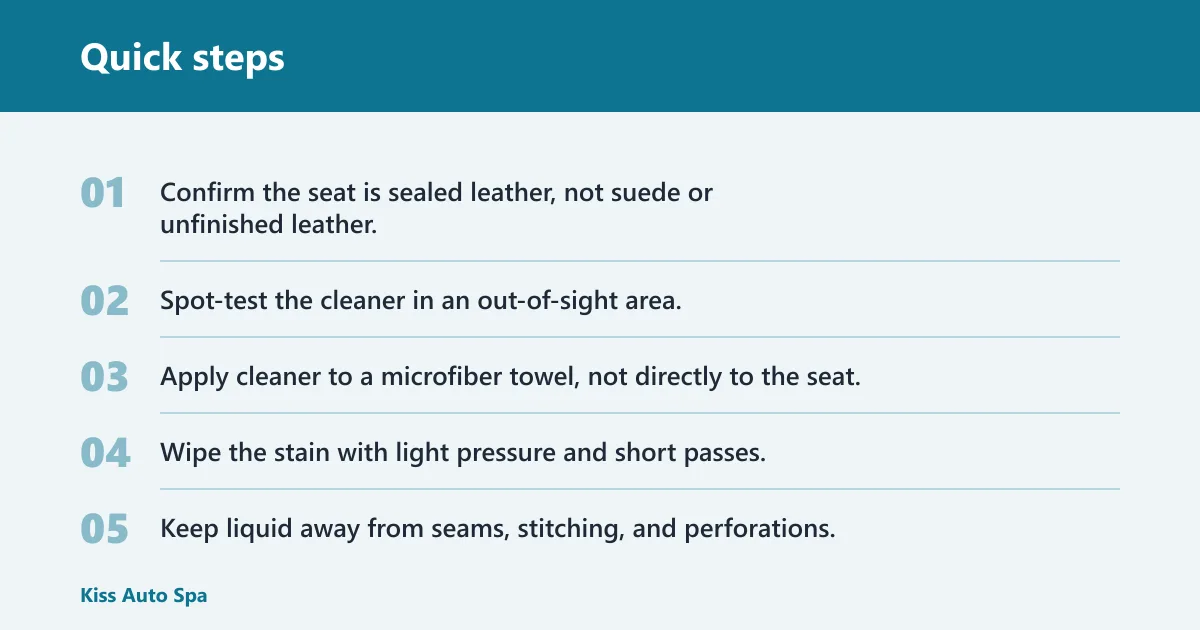
- Confirm the seat is sealed leather, not suede or unfinished leather.
- Spot-test the cleaner in an out-of-sight area.
- Apply cleaner to a microfiber towel, not directly to the seat.
- Wipe the stain with light pressure and short passes.
- Keep liquid away from seams, stitching, and perforations.
- Follow with a dry wipe to remove residue.
- Apply conditioner after the area is clean and dry, if conditioning is part of the care routine.
For leather, less liquid is the safer choice. White vinegar and heavy water use can dry the finish or creep into seams. Hairspray is sometimes mentioned for cloth and leather, but a purpose-made leather cleaner is the better first choice here because it is easier to control and less likely to leave a film.
If that didn’t work: if the mark still shows
If the mark still shows after cleaning and conditioning, stop before adding more fluid. A persistent ring, roughened grain, or darkening around seams suggests the stain is deeper than the finish layer. That is the point to have the panel re-cleaned professionally instead of repeating wet cycles.
Headliners are the most fragile surface in this group. Headliners commonly use adhesive-backed material, so too much moisture can loosen the bond and make the fabric sag. Use only minimal moisture, a soft cloth, and short blotting passes. Do not saturate the panel.
Step-by-step on the roof liner
- Blot the spot with a dry white cloth.
- If needed, dampen the cloth with distilled water only.
- Press lightly and lift straight off; do not scrub.
- Repeat with a fresh dry section of cloth to pull out moisture.
- Stop if the liner feels soft, warped, or loose to the touch.
- Let it dry with steady air flow.
A common first-time mistake is to treat the headliner like cloth upholstery and keep adding cleaner. That can leave a larger stain than the original mark, then create sagging that cannot be fixed with more drying alone.
Common mistakes
- Over-wetting the area: too much fluid spreads mineral residue deeper into foam, padding, or adhesive-backed material.
- Scrubbing instead of blotting: rubbing pushes the mark outward and can fuzz cloth fibers.
- Leaving cleaner behind: soap or vinegar residue can dry into a new halo.
- Using the wrong material method: leather, vinyl, cloth, and headliners need different moisture levels.
- Skipping the spot test: a hidden check avoids color change or finish damage.
Suppose a cloth seat gets a white ring after a hard-water spill, then the area is scrubbed with a wet towel. The original mark may fade, but a larger outline can appear once the residue dries at the edges. That is why controlled rewetting and extraction matter more than stronger rubbing.
Which water-stain fix matches your interior?
| Material | Stain type | Safe cleaner | Moisture level | Drying method | Stop signs | When to stop and re-clean professionally |
|---|---|---|---|---|---|---|
| Cloth seats | Mineral ring | Distilled water first; diluted white vinegar mix if needed | Low to moderate, never soaked | Blot, then wet/dry vacuum or extractor | Ring gets larger, fabric stays dull, backing feels damp | When the ring returns after two careful rinse-and-extract cycles |
| Cloth seats | Residue halo | Very small amount of mild dish soap, then rinse | Low | Extract and dry with air flow | Sticky feel remains or soap line appears | When cleaner residue keeps outlining the stain |
| Leather seats | Mineral ring or moisture shadow | Leather cleaner and conditioner for sealed leather only | Very low | Dry microfiber wipe, then dry naturally | Seams darken, grain looks swollen, finish dulls | When the mark reaches seams or the finish changes texture |
| Vinyl | Residue halo or mineral ring | Mild soap solution, then rinse with clean water | Low | Dry microfiber towel | Film remains or sheen turns blotchy | When the mark persists after a wipe and rinse |
| Headliners | Moisture shadow | Distilled water on cloth only, minimal use | Very low | Blot dry, then ventilate | Liner softens, sags, or feels detached | At the first sign of sagging or adhesive failure |
Frequently asked questions
How to remove water stains from car interior roof
Use the least moisture possible. Blot with a dry white cloth, then touch the area with a cloth dampened with distilled water only if needed. Stop immediately if the liner softens or sags, because the adhesive-backed layer can loosen and the mark can turn into a repair issue.
How do I get water stains out of car upholstery?
Start with a spot test on an out-of-sight area, then blot instead of rubbing. For cloth, distilled water and a diluted vinegar solution are the usual next steps; for leather, use a leather cleaner; for headliners, keep moisture very low. Rinse or extract after cleaning so no new ring forms.