How to Remove Pet Hair from a Car Trunk Liner Fast
Remove the liner first if it’s removable, then loosen the hair with a rubber tool and finish seams with a crevice tool; if the cargo carpet is fixed, loosen the hair first and vacuum afterward. If you skip that order, hair packs deeper into seams and can scuff plastic trim with the wrong tool. This guide gives the exact sequence for removable liners, carpeted cargo floors, and seam buildup, plus safe tool choices for each surface.
What you’ll need
- Rubber pet hair brush
- Slightly damp rubber glove
- Squeegee with a firm edge
- Vacuum with brush attachment
- Crevice tool
- Damp microfiber towel
- Pumice-like pet hair stone for durable carpet only
- Trash bag or container for loose debris
How pet hair sticks to a trunk liner
Dry pet hair often clings to synthetic trunk materials, and static can make it harder to remove, especially in dry conditions. On carpet, the weave traps strands in the nap, so friction often pushes hair deeper before suction can remove it. That is why agitation has to come before vacuuming.
Why the surface matters
Rubber cargo mats are easier to clean, but hair can still cling because of static. Fabric trunk liners trap hair in a similar way to upholstery. Carpeted trunk floors are the hardest surface, because the fibers hold the hair in place and the hair can pack into seams, corners, and trim gaps.
What should you use on removable cargo liners?
Take removable cargo liners out first and clean them flat outside the vehicle. Shake out loose debris before any brushing, then choose a rubber brush, glove, or squeegee based on how much hair is packed on the surface. For heavy buildup, use the glove or brush first; for lighter residue, a towel may be enough after vacuuming.
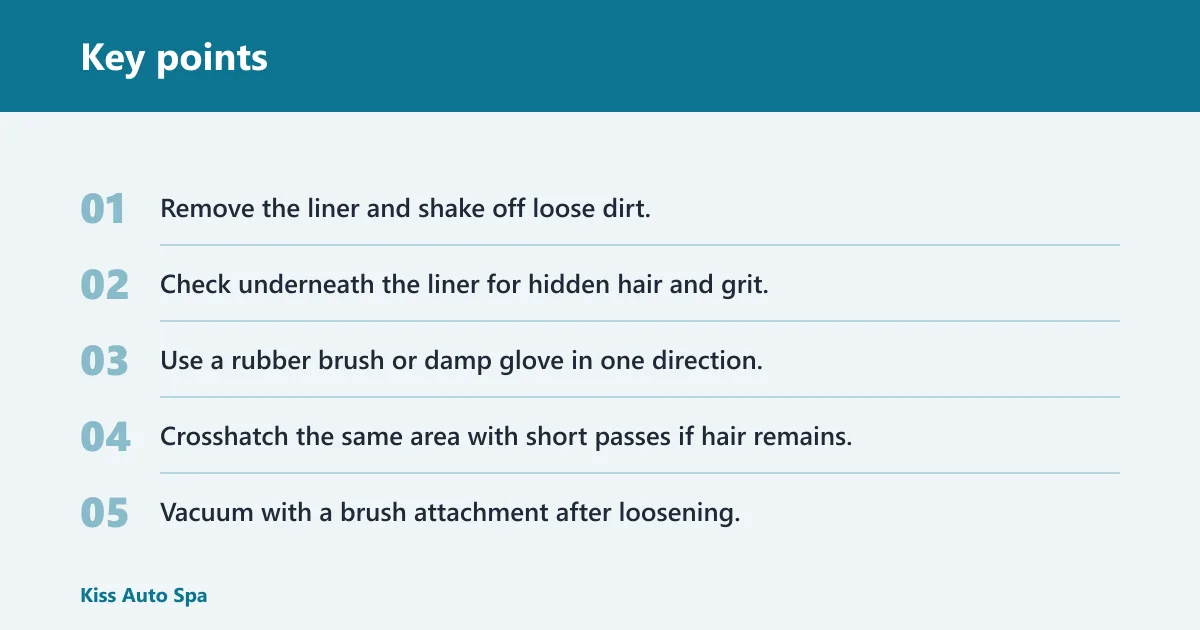
- Remove the liner and shake off loose dirt.
- Check underneath the liner for hidden hair and grit.
- Use a rubber brush or damp glove in one direction.
- Crosshatch the same area with short passes if hair remains.
- Vacuum with a brush attachment after loosening.
- Wipe fine strands with a lightly misted microfiber towel.
Tool order for removable liners
Start with the least aggressive tool that still moves the hair. A rubber glove works well on heavy buildup, while a brush or squeegee is often better for broad, flat areas. Standard vacuuming alone is not enough for embedded hair, so use suction after the hair is already lifted.
How do you remove pet hair from fixed trunk carpet?
For fixed trunk carpet, use agitation before suction and finish with the crevice tool at the edges. Then vacuum with slow overlapping passes, keeping the head low and steady so loosened strands are picked up instead of pressed deeper into the trunk carpet weave. Finish with the crevice tool at the edges.
- Brush one direction to lift the top layer of hair.
- Crosshatch with short strokes to expose more fibers.
- Vacuum slowly with the brush attachment.
- Repeat the loosen-and-vacuum cycle on packed spots.
- Use the crevice tool along the floor edges and trim.
Short hair, long hair, and mixed mud-and-hair buildup
Short dog hair often sits low in the nap and responds well to a rubber brush plus vacuum. Long hair tends to wrap and clump, so a damp glove or squeegee can pull it into visible bundles first. Mixed mud-and-hair contamination needs extra drying time; brushing wet grit can smear it deeper into the fibers.
How do you clean seams, corners, and cargo-hook areas?
Work the brush or glove along seam lines first, then switch to the crevice tool for narrow gaps around latch areas, cargo hooks, and weather seals. A damp microfiber towel can catch fine strands after the larger clumps are gone. These areas hold more hair than flat carpet because bristles and suction do not reach them cleanly.
Use the right tool in the tightest spots
For trim pieces and weather seals, a vacuum brush attachment and crevice tool are the safest starting points. Use short, controlled movements. If hair remains packed in a fold or corner, lift it out with the edge of a squeegee or the corner of a rubber glove before vacuuming again.
What is the right tool order for each trunk surface?
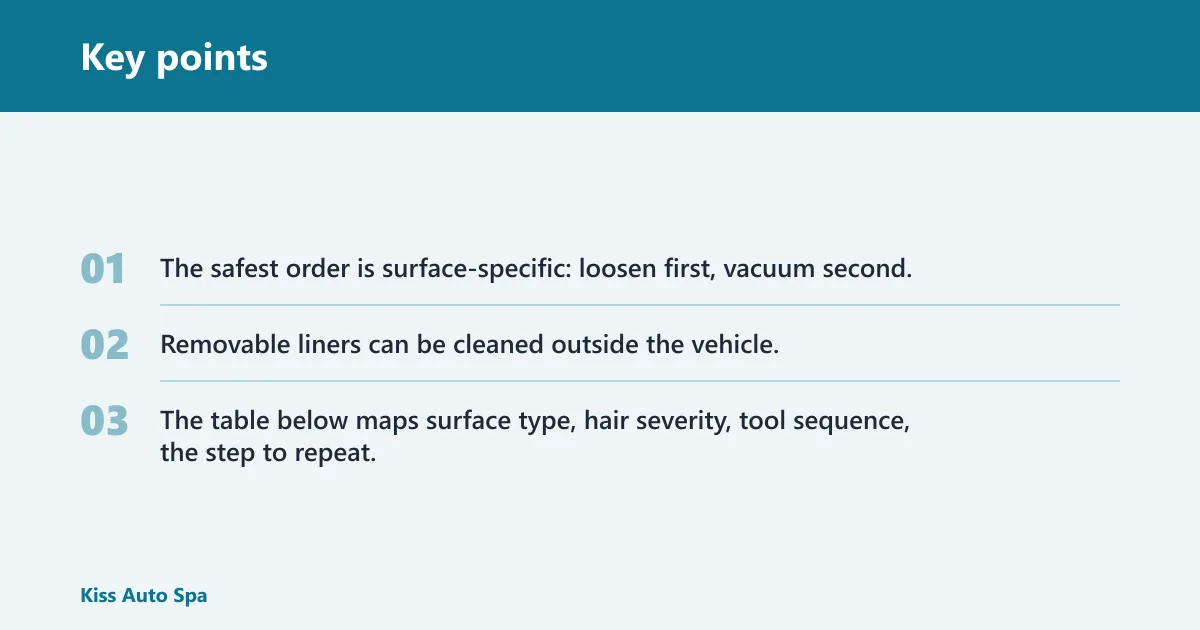
The safest order is surface-specific: loosen first, vacuum second, then detail seams and corners. Removable liners can be cleaned outside the vehicle; fixed carpet needs slower passes and more repeat work. The table below maps surface type, hair severity, tool sequence, the step to repeat, and what to avoid.
| Surface type | Hair severity | Tool sequence | Repeat step | Tools to avoid |
|---|---|---|---|---|
| Removable cargo liner | Light | Shake out → rubber brush → vacuum → damp microfiber towel | Brush pass | Soaking the liner; heavy abrasion on soft fabric |
| Removable cargo liner | Heavy | Shake out → damp glove → crosshatch brush → vacuum → crevice tool underneath | Glove pass | Pumice stone on soft or textured fabric |
| Fixed carpeted cargo floor | Light | Rubber brush → vacuum with brush attachment → microfiber towel | Vacuum pass | Lint roller as the main tool for embedded hair |
| Fixed carpeted cargo floor | Heavy | Damp glove → squeegee in short strokes → vacuum → crevice tool | Squeegee pass | Vacuuming first; soaking the carpet |
| Durable carpet only | Deeply embedded | Glove → medium-grit pet hair stone → vacuum | Stone pass | Delicate fabric, trim, weather seals, synthetic panels |
| Plastic side panels | Any | Damp microfiber cloth or vacuum brush attachment → crevice tool | Wipe pass | Pumice stone; aggressive scrubbing |
What should you do when pet hair is deeply embedded in cargo carpet?
Start with agitation, not suction. Deeply embedded hair needs friction because standard vacuuming alone is not enough. If a first pass barely changes the surface, repeat the rubber glove or brush in one direction, then crosshatch, then vacuum again. That sequence breaks hair free from the trunk carpet weave.
If that didn’t work, try this next
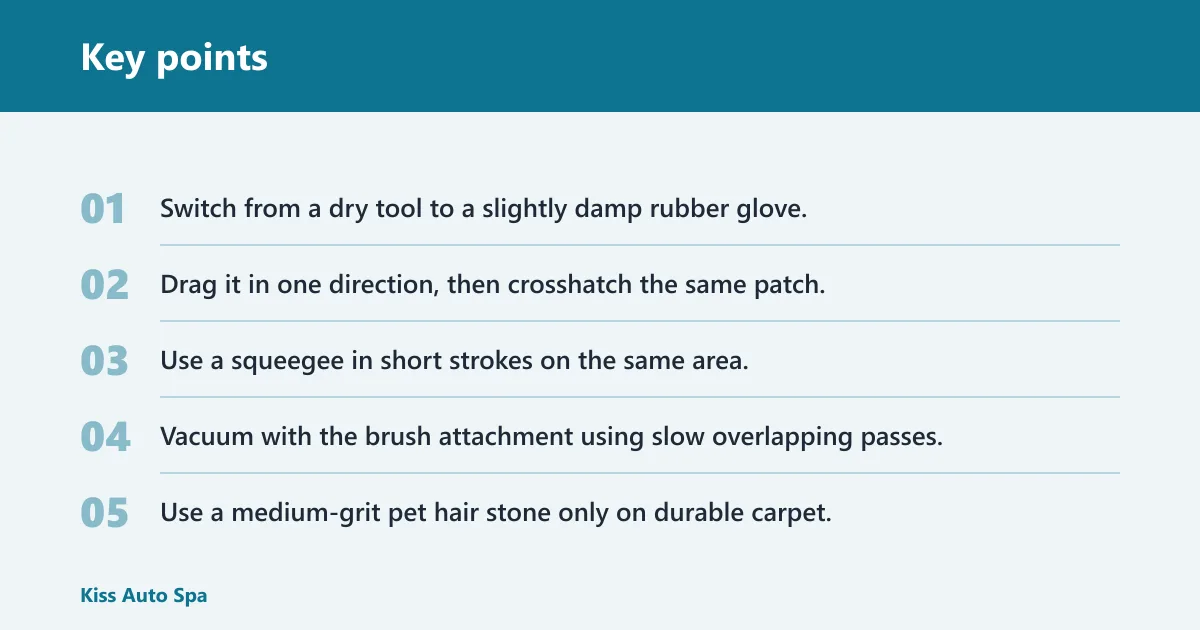
- Switch from a dry tool to a slightly damp rubber glove.
- Drag it in one direction, then crosshatch the same patch.
- Use a squeegee in short strokes on the same area.
- Vacuum with the brush attachment using slow overlapping passes.
- Use a medium-grit pet hair stone only on durable carpet.
Say your cargo floor has a 2-foot square patch of long white hair after a muddy park trip. A glove pass may gather the clumps quickly, but the remaining fine strands can still sit in the nap. That is the point where a second agitation pass matters more than extra vacuum time.
Can I use a pumice stone on a car trunk liner safely?
Yes, but only on durable carpet. A pumice-like pet hair stone can pull embedded hair from carpeted cargo areas, yet it can fuzz or scuff delicate fabrics, rubber cargo mats, trim pieces, and synthetic surfaces. Use it gently, test a small hidden area first, and stop if the carpet starts to pill.
Safe-use checklist for pet hair stones
- Use on durable carpet only.
- Keep pressure light and strokes short.
- Move in one direction first.
- Vacuum immediately after the stone pass.
- Do not use on plastic, leather-like trim, or weather seals.
Common mistakes to avoid
Vacuuming before loosening hair wastes time and can leave embedded strands behind. Over-wetting carpet or fabric can spread dirt and make hair harder to lift. A pumice stone belongs only on durable carpet, and seams, corners, cargo-hook areas, and trim gaps should never be skipped.
- Vacuuming first. Loosen hair first, then vacuum after.
- Soaking the liner. Use a lightly misted microfiber towel, not a wet one.
- Using the wrong abrasive. Keep pumice off delicate fabrics and trim.
- Ignoring hidden zones. Clean seams, corners, hooks, and latch areas.
- Stopping after one pass. Repeat the loosen-and-vacuum cycle when needed.
A common first-timer mistake is using tape on a full cargo floor and expecting clean results. Tape can lift a few loose strands, but it struggles with woven-in hair. A rubber brush or glove is more effective on carpeted cargo areas because it creates friction and clumping before suction.
How do I clean pet hair from removable cargo mats?
Remove the mat, shake it out, and clean it flat outside the vehicle. For rubber mats, a glove or brush usually works well because static can make hair cling to the surface. For fabric mats, use a rubber brush, then vacuum, then a lightly misted microfiber towel for the fine strands left behind.
Prevention
Use a cargo liner that can be removed quickly and vacuum the trunk before heavy buildup starts. Hair is easier to lift when it has not been packed into the nap, and a quick brush pass after each trip can keep seams and corners from collecting a stubborn layer.
Frequently asked questions
How do I remove dog hair from car boot carpet?
Start with a rubber brush, slightly damp glove, or squeegee to loosen the hair, then vacuum with slow overlapping passes. Finish with the crevice tool along seams and edges. On carpeted cargo floors, the key is friction first and suction second, because vacuuming alone leaves embedded strands behind.
What is the best way to get pet hair out of a trunk liner?
For a removable liner, take it out, shake it off, and clean it flat outside the vehicle. For fixed cargo carpet, use a rubber brush or damp glove first, then vacuum. A lightly misted microfiber towel is useful at the end for fine strands, especially near seams and trim.
Should I vacuum pet hair before or after loosening it?
After loosening it. Standard vacuuming alone is not enough for embedded hair, especially on trunk carpet weave. Use a brush, glove, or squeegee first, then vacuum with slow overlapping passes. That order lifts the strands so the vacuum can collect them instead of flattening them deeper.
Do rubber brushes work better than lint rollers on trunk carpet?
Yes, for embedded hair on carpeted cargo areas. Rubber brushes create the friction needed to pull hair out of the nap, while lint rollers are better for light surface debris. When hair is packed into seams or weave, a rubber brush or glove followed by vacuuming works more reliably.
How do I clean seams and corners in a trunk liner?
Use a brush or damp glove along the seam lines first, then switch to a crevice tool for the narrow gaps around cargo hooks, latches, and trim. A damp microfiber towel can pick up the fine strands that remain. These spots usually need a separate pass from the main carpet area.