What Do You Need to Hand Wash a Car at Home?
To hand wash a car at home, you need two buckets with grit guards, car wash soap, a wash mitt, clean microfiber drying towels, and access to hose water; add wheel tools and a drying aid if you want faster, safer results. Bad supplies or one-bucket washing can grind dirt into paint and leave scratches. This guide separates must-have items from optional upgrades and explains what each one does.
What you need first
Start with the smallest safe kit: dedicated car wash soap, a microfiber wash mitt, hose water, two buckets, and microfiber drying towels. Add wheel-only tools if you plan to clean rims and tires yourself. Park in shade, under a carport, or on a cool driveway so soap and rinse water do not dry too fast.
Must-have basics
- Car wash soap made for automotive paint
- Large, soft wash mitt or sponge
- Two buckets, one for wash solution and one for rinse water
- Hose water for pre-rinsing and bucket filling
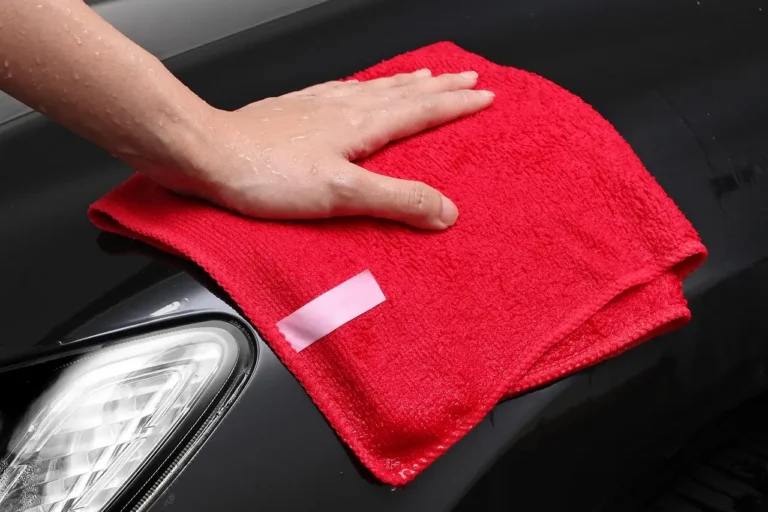
- Microfiber drying towel
Optional upgrades
- Third bucket for cleaner rinse control
- Separate stiff brush for wheels and tires
- Bug-and-tar remover for stubborn lower-body grime
- Wax for seasonal protection after washing
- Drying aid for quicker towel work
Hand wash car at matrix
| Item | Must-have or optional | Exact job in the wash |
|---|---|---|
| Dedicated car wash soap | Must-have | Lifts dirt from paint without the harsher behavior of household cleaners; follow the dilution directions on the bottle. |
| Large soft wash mitt or sponge | Must-have | Moves soap across paint with less scratch risk when kept clean and free of grit. |
| Body bucket | Must-have | Holds soapy wash water for painted panels. |
| Rinse bucket | Must-have | Lets you rinse dirt from the mitt before it returns to the body bucket. |
| Hose water | Must-have | Pre-rinses loose dirt and fills buckets. |
| Microfiber drying towel | Must-have | Dries paint with less scratching risk than rough bath towels. |
| Wheel brush | Optional | Scrubs tires and rims; keep it off painted panels. |
| Wax | Optional | Adds seasonal protection and a cleaner-looking finish after the wash. |
How many buckets do you need?
The minimum safe setup is two buckets: one for soap solution and one for rinsing the mitt. The best-practice upgrade is three buckets if you clean wheels yourself, because wheel grime should stay out of the body wash bucket. A separate rinse bucket matters most when the car is dusty or muddy.
Two-bucket setup
Use one bucket for the body wash mix and one bucket with plain water for rinsing the mitt between passes. This is the simplest starter setup and fits most driveway washes. It cuts the chance that grit rides back onto paint.
Three-bucket setup
Add a third bucket for wheel work or extra rinse water. That keeps brake dust and road grime from entering the body wash bucket. wikiHow’s setup uses two buckets with soap and one with clean water; the practical result is the same idea: separate wash and rinse water.
When a rinse bucket matters most
If the car has heavy dust, winter salt, or lower-body grime, rinse water becomes more valuable. It removes debris before the mitt returns to paint. Picture a compact hatchback parked near a busy street: the lower panels load up fast, so one rinse bucket can prevent repeated grit transfer.
Can you use dish soap to wash a car?
No. Dish soap is not the safer regular choice for paint, and Consumer Reports warns against hand soap, dishwashing detergent, and glass cleaner on painted surfaces. Use a dedicated car-wash product instead, because it is made for automotive paint and is milder than household cleaners. (Consumerreports)
Why car wash soap is different
Car wash soap is intended to lift road film without stripping paint protection as aggressively as household cleaners can. Consumer Reports recommends a dedicated car-wash product for paint. That is the right starting point for a beginner kit.
How to read dilution directions
Use the directions printed on the bottle. Follow the exact label instructions rather than guessing; for example, if the label says 1 ounce per gallon, measure that amount before adding water. (Wikihow)
Where household soap fails
Household soap can leave paint protection weaker and can create residue that takes more rinsing to remove. It is also not made for the dirt pattern on a vehicle. Save it for dishes, not panels.
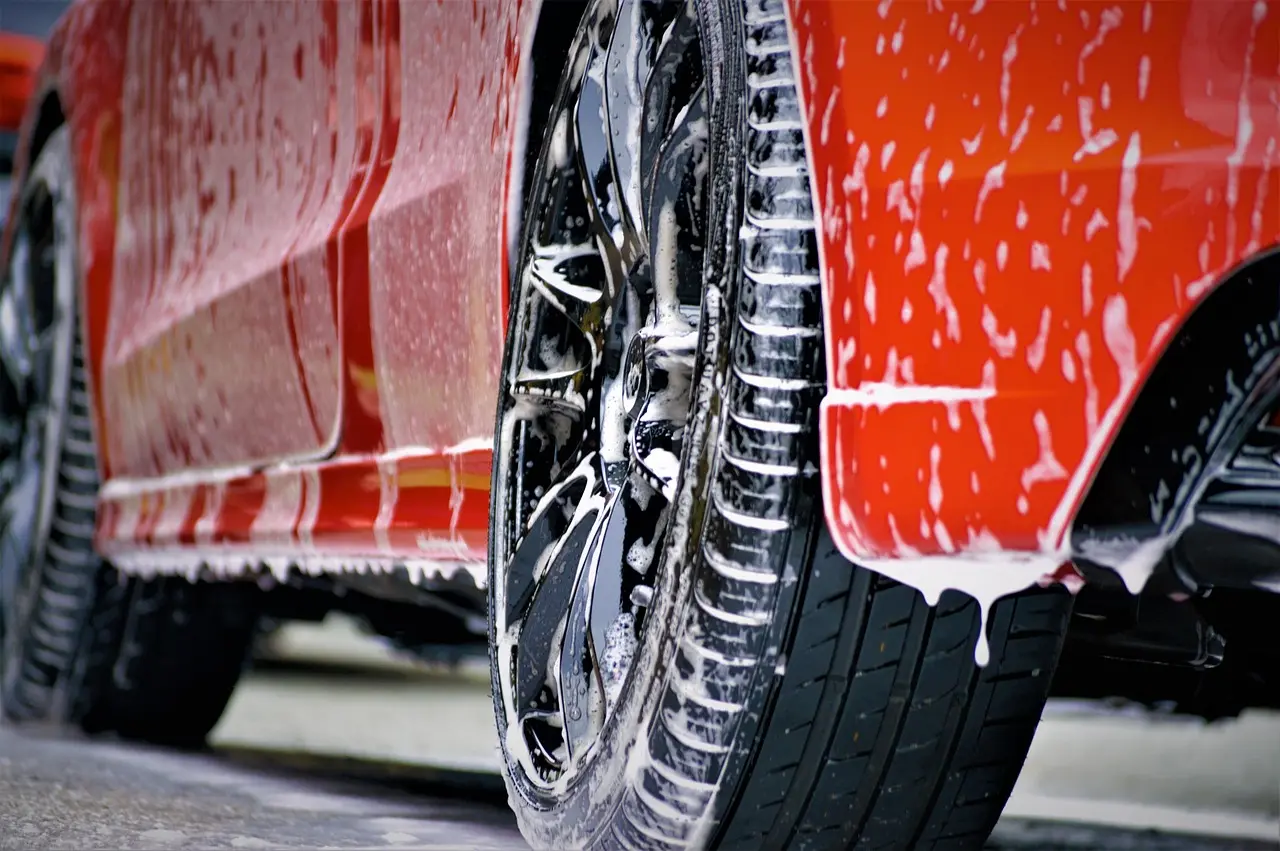
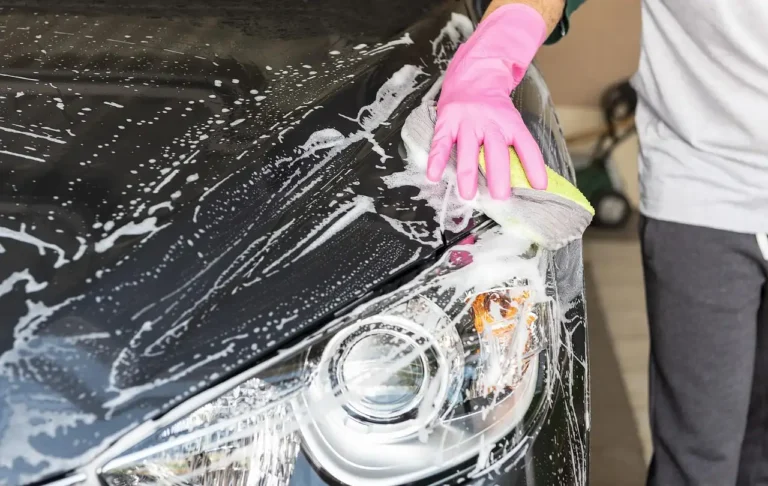
Pre-rinse the car, wash one section at a time, and rinse before the soap dries. Keep the mitt clean in the rinse bucket and do not move it in circles. Circular motion can create swirl marks, so straight, gentle passes are often safer.
- Park under shade, in a carport, or on a cool surface.
- Rinse the body, wheels, and lower panels with hose water to remove loose dirt.
- Fill the body bucket with water and the measured car wash soap from the bottle.
- Load the mitt in the body bucket, wash one panel, then rinse the mitt in the rinse bucket.
- Repeat panel by panel from top to lower sections.
- Use the wheel-only brush and wheel bucket on tires and rims.
- Rinse the car thoroughly before any water or soap can dry.
- Dry with clean microfiber towels, changing towels if they become damp or dirty.
Suppose a sedan has light dust on the roof and heavier grime around the rocker panels. Wash the roof and upper doors first, then move down the car. That order keeps the dirtiest areas for last and lowers the chance of dragging grit onto the paint you already cleaned.
Can you wash in direct sunlight?
It is generally better not to wash when the body is hot or in direct sunlight. Consumer Reports advises not to wash when the body is hot or in direct sunlight, and wikiHow recommends a shady spot without direct sunlight. Hot panels dry soap and rinse water too quickly, which raises the chance of spots and residue.
Hot-panel risks
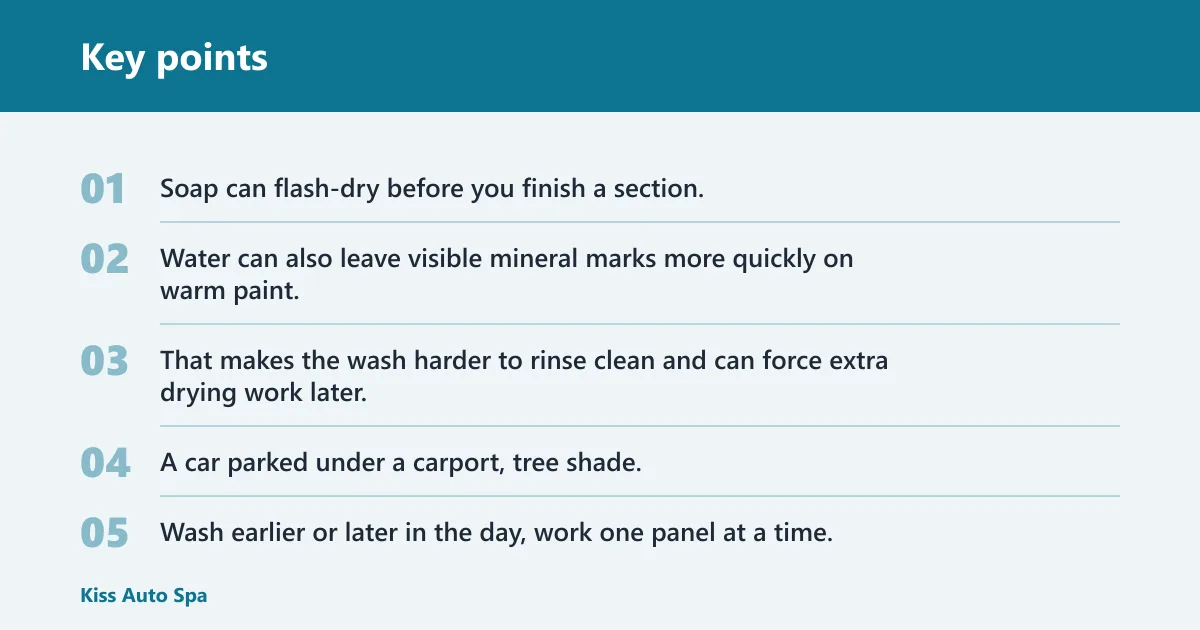
Soap can flash-dry before you finish a section. Water can also leave visible mineral marks more quickly on warm paint. That makes the wash harder to rinse clean and can force extra drying work later.
Shade and cool-surface checks
Before you start, touch the hood and roof. If they feel hot, wait. A car parked under a carport, tree shade, or on the shaded side of a building is a better choice than a sunny driveway.
Fast fixes if shade is limited
Wash earlier or later in the day, work one panel at a time, and keep a second rinse available. If a section starts to dry, rinse it immediately rather than scrubbing harder. That is the point where spotting and residue begin.
Wheel-only and drying-only tools
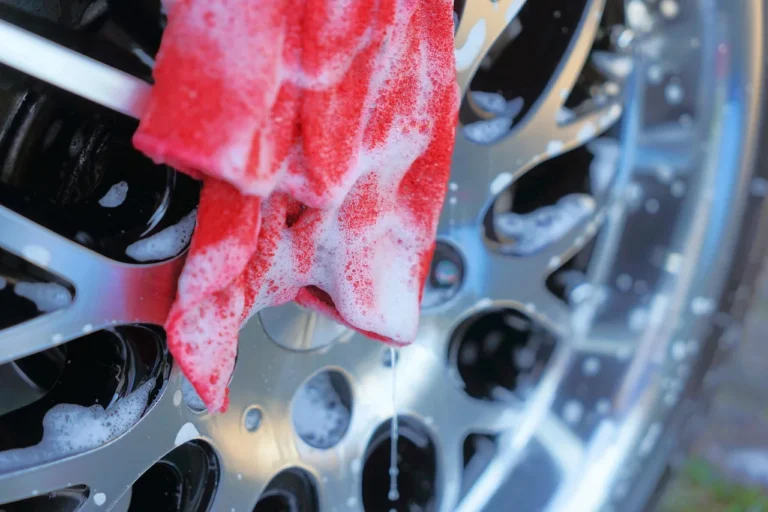
Wheel tools should stay separate from body tools. The same source says to use a separate sponge for wheels and tires, and the same rule applies to brushes and buckets. For drying, use clean microfiber towels only; rough bath towels are more likely to mark paint.
| Tool group | Use on | Keep away from |
|---|---|---|
| Body-only mitt | Painted panels, glass if desired | Wheels, tires, brake dust |
| Wheel-only brush or sponge | Rims, tires, wheel barrels | Paint, roof, doors |
| Drying towel | Clean paint and glass after rinsing | Wheel grime, ground contact, exhaust soot |
Body-only vs wheel-only storage
Store wheel tools in their own bin or corner of the garage. If you live in an apartment or condo, use a sealed tote with labels for body, wheel, and drying items. That simple separation prevents a dirty mitt from touching paint on the next wash.
Common mistakes
The most common problems are dirty mitts, towel lint, soap residue, and cross-contamination from wheels to paint. Those mistakes are avoidable. Keep the wash tools clean, rinse often, and stop when the car surface is drying too quickly.
- Dirty mitts: Rinse the mitt after each panel and replace it if grit gets trapped.
- Soap residue: Use the bottle’s dilution directions and rinse thoroughly before drying.
- Towel lint: Choose clean microfiber towels and keep them away from wheel work.
- Wheel-to-body transfer: Never move a wheel brush or wheel sponge to painted panels.
- Direct sun: Work in shade or pause until the surface cools.
A common first-timer mistake is using one bucket and one sponge for everything on a midsize SUV. The lower panels load the sponge with grit, then the same tool is dragged across the hood. Separate buckets and separate wheel tools stop that chain reaction.
Frequently asked questions
What do you need to hand wash a car at home?
You need car wash soap, two buckets, a soft mitt or sponge, hose water, and microfiber drying towels. Add a wheel brush if you plan to clean tires and rims. If your parking spot is exposed, a shaded area or cool surface should be part of the setup too.
What to use when washing a car at home?
Use a dedicated automotive soap, a microfiber wash mitt, clean water for rinsing, and microfiber towels for drying. For wheels, use a separate stiff brush. That combination keeps body care and wheel grime apart.
What soap can you use to hand wash a car?
Use a dedicated car-wash product made for paint. Consumer Reports advises against hand soap, dishwashing detergent, and glass cleaner on paint. If the bottle lists a dilution ratio, follow that label rather than guessing.
Do you need 2 or 3 buckets to wash a car by hand?
Two buckets are enough for a basic safe wash: one for soap and one for rinsing the mitt. Three buckets make more sense when you clean wheels yourself or want a separate clean-water rinse. That extra bucket helps keep grit out of the body wash.
What kind of towel should you use to dry a car after washing?
Use a clean microfiber towel. wikiHow recommends microfiber towels for drying, and they are gentler than rough bath towels. Keep one set only for paint and glass so wheel debris does not end up on the body.
Should you wash wheels with the same mitt as the body?
No. Use separate wheel tools, including a separate sponge or brush, for tires and rims. Consumer Reports specifically recommends a separate sponge for wheels and tires, because brake dust and road grime can scratch paint if they are carried to body panels.
Can you wash a car in direct sunlight?
It is better not to. The same source says not to wash when the body is hot or in direct sunlight, and a shady spot is safer. Shade slows drying, reduces spotting, and gives you more time to rinse before soap leaves residue.
What is the best way to avoid scratching paint while hand washing?
Use a soft mitt, rinse the car first, rinse the mitt often, and keep wheel tools separate. Avoid circular scrubbing on paint, because Consumer Reports warns that circles can create swirl marks. Dry with microfiber towels only after a full rinse.