How to clean polished aluminum wheels safely at home
Clean polished aluminum wheels with pH-neutral car-wash soap, microfiber mitts, and plenty of rinse water. If the finish is bare polished aluminum, skip acids, strong alkaline wheel cleaners, and abrasive pads. Spot-test first.
Wrong cleaners can etch the metal, darken the surface, or leave permanent staining that needs repolishing.
This guide shows how to identify the finish, then choose the least aggressive safe cleaning method for polished aluminum wheels.
How do you tell what finish you have first?
Start by identifying whether the wheel is bare polished aluminum, clear-coated polished aluminum, or painted aluminum. Bare polished aluminum looks metallic through and through, often with a brighter edge on scratches. Clear-coated wheels usually feel smoother and may show dulling, peeling, or milky spots where the coating has failed.
Bare polished aluminum vs clear-coated polished aluminum
Bare polished aluminum is a bare-metal finish, so it can be prone to oxidation and scratches. It usually responds to non-acid cleaning, then polishing if the surface looks hazy or stained. Clear-coated polished aluminum is often cleaned like painted surfaces until the coating fails, because the clear layer is what you are cleaning rather than exposed metal.
Signs of painted aluminum and damaged clear coat
Painted aluminum often has uniform color, a more obvious coating edge, and no visible metal grain. Clear-coat damage can show as flaking, chalking, cloudy patches, or a rough edge where the coating lifts. If the wheel face has those signs, treat it as a coating-failure case before using any polish.
When oxidation means cleaning is not enough
Oxidation on bare polished aluminum appears as dull gray haze, blotches, or a smeared look that cleaning alone does not remove. Pitting, black staining, and etched marks usually need polishing after washing and drying. If the wheel has deep corrosion or clear-coat failure, cleaning is only the first step.
What tools and products are safe for polished aluminum?
The safest setup is simple: use a non-acidic cleaner, a soft-bristled brush, a microfiber towel, and an aluminum polish for bare metal that needs restoration. Wax or sealant belongs at the end, after the wheel is clean and dry. Acidic cleaners and heavy alkaline products can attack polished surfaces fast.
Non-acidic cleaner choices
A non-acidic wheel cleaner is often the safer default for polished aluminum wheels. Dish soap mixed with water is one option for light soil, and a dedicated non-acidic wheel cleaner is better when brake dust or road film is heavier. Avoid acid cleaners and strong degreasers unless the wheel maker explicitly allows them.
Soft-bristled brush and microfiber towel
A soft-bristled brush is recommended for faces, spokes, lug areas, and crevices because it reduces scratching risk compared with stiff nylon or abrasive pads. A microfiber towel is used for drying and for buffing polish residue off the surface. Both tools are simple, but they matter on scratch-sensitive metal.
Aluminum polish, wax, or sealant
Use aluminum polish only when the finish needs restoration after washing and drying. Apply a high-quality metal polish by hand or machine, then buff off excess polish with a dry towel or microfiber cloth. Finish with wax or sealant to slow oxidation and make later cleaning easier.
How do you clean polished aluminum wheels safely?
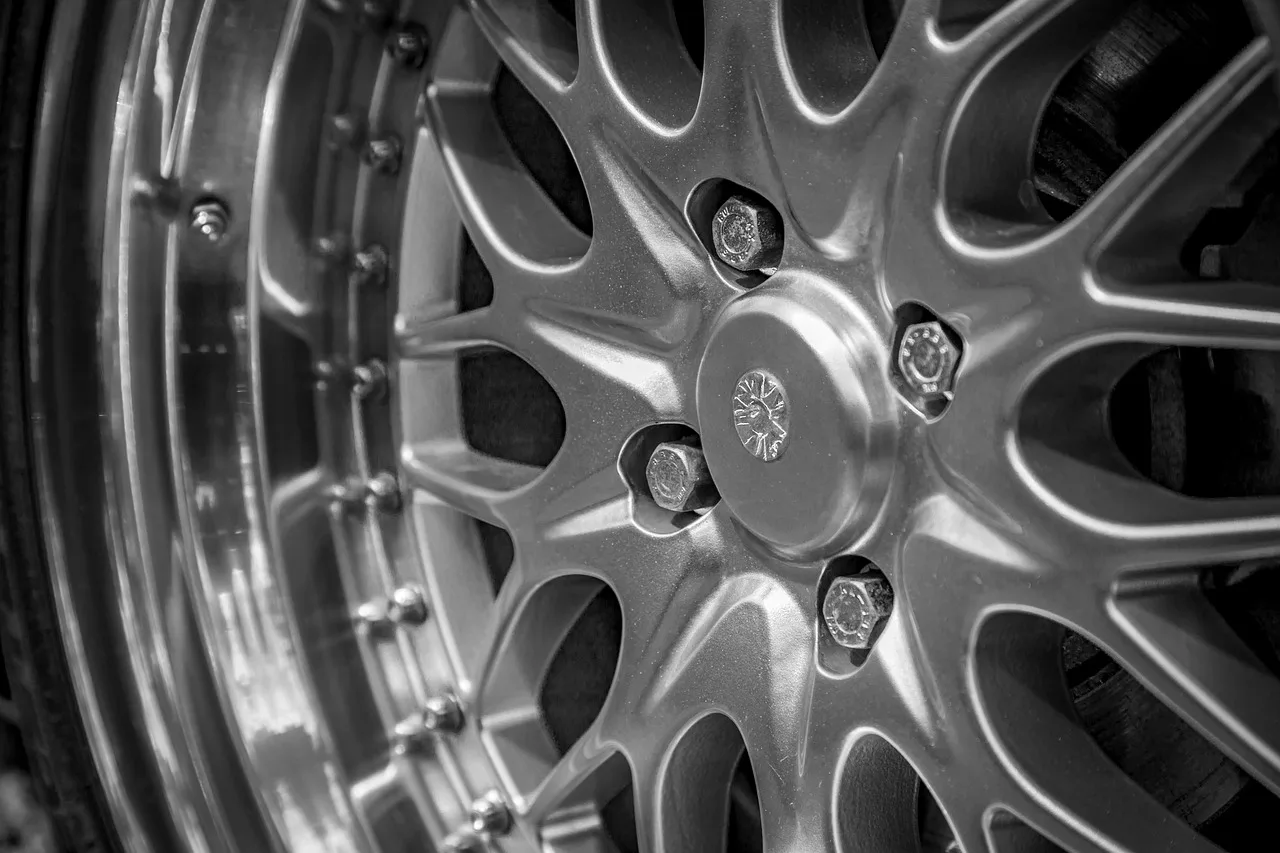
Rinse loose grit off first, then wash with the mildest effective cleaner and a soft brush, and dry the wheel completely before any polish or protectant. That order matters. It keeps abrasive debris from being dragged across the metal and reduces the chance of water spots, streaks, and residue.
Rinse loose grit first
Use a pressure washer as the first rinse step if available. The goal is to remove sand, brake dust, and road film before touching the wheel. That quick rinse lowers scratch risk and helps the cleaner reach the actual residue instead of grinding debris into the finish.
Wash with the mildest effective cleaner
For routine soil, a pH-neutral car-wash soap or dish soap mixed with water is often enough. If brake dust is heavier, move up to a non-acidic wheel cleaner, then use a soft-bristled brush on spokes, lug holes, and crevices. Let the cleaner sit long enough to loosen the grime, then rinse it off instead of forcing it with heavy pressure.
Dry fully before any polish or protectant
The wheels should be dried completely before polishing. Use a microfiber towel and work methodically around edges, pockets, and lug areas so water does not sit in seams. Drying matters because trapped moisture can leave spots and interfere with polish or protectant adhesion.
Suppose a 19-inch polished aluminum wheel still has dark dust around the lug recess after rinsing. A soft brush and non-acidic cleaner usually remove that residue without needing stronger chemistry. If the same wheel still looks cloudy after drying, that is a polishing question, not a washing problem.
When should you polish instead of just washing?
Wash only when the wheel is dirty but still bright after drying. Polish when you see light haze, water spotting, oxidation, or a dull cast that cleaning does not fix. Hand polishing is often the safer starting point because it gives more control and can reduce the risk of cutting through a thin finish.
Light haze and water spotting
Light haze often comes from mineral spots, road film, or leftover cleaner. If washing removes the grime but the finish still looks cloudy, a small amount of aluminum polish can restore clarity. Start with the least aggressive method and stop as soon as the shine returns.
Oxidation and dulling
Oxidation on polished aluminum is common because the finish is bare metal. When the surface turns gray, patchy, or chalky, cleaning alone is not enough. Polish removes the oxidized top layer, but only if the damage is still superficial; pitting or deep staining may not fully disappear.
Why hand polishing is the safer starting point
Hand polishing means physically buffing with a cloth or sponge. It is slower, but it gives more feedback and reduces the chance of heat buildup or uneven cutting. For beginners, that extra control is worth more than speed. Machine polishing uses an electric buffer or polisher and demands more caution.
Should you polish aluminum wheels by hand or with a machine?
Hand polishing is the better choice for most DIY owners because it is slower, more controllable, and less likely to remove too much material. Machine polishing can be faster and useful for larger areas, but misuse may leave swirl marks, heat damage, or an uneven shine on polished aluminum.
Control and risk with hand polishing
Hand polishing works best for small spots, moderate oxidation, and wheels that already look good after washing. It lets you focus on stains, lip edges, and spoke fronts without forcing a buffing pad into corners. For first-time users, that control reduces the chance of damage.
Speed and caution with machine polishing
Machine polishing can save time on large, open wheel faces. It also helps when oxidation is widespread and the finish needs uniform correction. But the tool must stay moving, the pad must match the surface, and the least aggressive polish should be chosen first. Too much pressure can mar the finish quickly.
Who should avoid machine polishing
Avoid machine polishing if the wheel has peeling clear coat, deep pitting, unknown previous repairs, or sharp edges that can catch a pad. Those conditions increase the risk of uneven correction. In those cases, cleaning, careful hand polishing, or professional refinishing is the safer path.
How do you protect polished aluminum after cleaning?
After polishing, protect the wheel with wax or sealant to slow oxidation and make future cleaning easier. Keep drying habits tight, because standing water invites spots and contamination. On polished aluminum, protection does not replace cleaning, but it does buy you more time between corrections.
Wax or sealant after polishing
Apply wax or sealant after the wheel is clean, dry, and free of polish residue. That barrier helps defend against brake dust, road salt, and moisture. Reapply as needed, especially on daily-driven vehicles that see rain, winter roads, or frequent washing.
Drying habits that help prevent spots
Microfiber drying is part of protection, not an extra step. Water left on the wheel can leave mineral deposits that make the finish look dull. Dry the barrel edge, spoke pockets, and lug recesses, not only the face. That simple habit cuts down on repeat polishing.
Cleaning frequency for easier upkeep
How often should polished aluminum wheels be cleaned? For daily-driven vehicles, clean them regularly enough that brake dust does not harden. A regular weekly wash can be a practical target for many owners, with quicker rinses after wet or salty driving. The longer contamination sits, the more likely it is to stain.
Finish-ID checklist and product-selection matrix
Use the checklist first, then match the cleaner, brush, drying method, and protectant to the finish. The goal is to start with the least aggressive safe option. If the finish is damaged or uncertain, stop and inspect before reaching for stronger products.
Finish-ID checklist
- Look for visible bare metal versus a coated surface.
- Check for peeling, chalking, or milky patches that suggest clear-coat failure.
- Note whether scratches expose a different color layer underneath.
- Inspect for gray haze, black staining, or pitting after washing.
- Test one small area with the mildest cleaner first.
| Finish type | Cleaner | Brush | Drying method | Protectant | Red flags |
|---|---|---|---|---|---|
| Bare polished aluminum | Non-acidic wheel cleaner or dish soap mixed with water | Soft-bristled brush | Microfiber towel, dried completely | Wax or sealant after polishing | Gray oxidation, pitting, black staining, scratch marks |
| Clear-coated polished aluminum | pH-neutral car-wash soap or non-acidic cleaner | Soft-bristled brush for crevices | Microfiber towel, dry all seams | Wax or sealant on the coating if allowed | Peeling, cloudiness, blistering, flaking edges |
| Painted aluminum | pH-neutral soap or non-acidic wheel cleaner | Soft-bristled brush | Microfiber towel | Wax or sealant for painted finishes | Coating damage, exposed metal, corrosion around chips |
Red flags for oxidation and clear-coat damage
If oxidation is visible after washing, move to polish rather than repeating harsher cleaning. If the clear coat is peeling or cloudy, polishing the exposed area can make the damage more obvious and may not fix it. At that point, refinishing is often a better solution than repeated scrubbing.
Frequently asked questions
How do you clean polished aluminum wheels without damaging the finish?
Rinse first, wash with a non-acidic cleaner or pH-neutral soap, and use a soft-bristled brush only where dirt collects. Dry completely with a microfiber towel. If the wheel still looks dull after washing, polish it instead of scrubbing harder.
What cleaner is safe for polished aluminum wheels?
A non-acidic wheel cleaner is the safest dedicated option for polished aluminum. For light grime, dish soap mixed with water is also acceptable. Avoid acid cleaners and harsh alkaline products unless the wheel maker specifically approves them for that finish.
Can you use dish soap on aluminum wheels?
Yes, dish soap mixed with water can be used for light cleaning, especially on delicate polished finishes. It is best for routine dirt and road film, not baked-on contamination. Rinse well and dry the wheel afterward so residue and spots do not remain.
How do you remove oxidation from polished aluminum wheels?
Wash and dry the wheel first, then use a high-quality metal polish on the oxidized area. Work by hand for more control, or use a machine only if you know how to keep the pad moving and pressure light. Severe pitting may need professional refinishing.
How do you clean old aluminum wheels at home?
Start with a careful rinse, then use a non-acidic cleaner and a soft-bristled brush to remove old brake dust and road film. Dry with microfiber, inspect for oxidation or clear-coat damage, and polish only the areas that still look dull after washing.