How to Clean Car Detailing Brushes After Washing a Car
Rinse detailing brushes in clean water, wash them with a small amount of car shampoo, then dry them bristles-down or flat before storage. Skip that, and trapped grit, soap film, and dressing residue can scratch trim, stiffen bristles, and spread contamination to the next panel. In most cases, a quick rinse and wash after each session is enough; the exception is wheel or engine-bay brushes, which need a stronger cleanup and longer dry time. This guide covers residue removal by soil type, odor control, drying, storage, and simple checks that keep brushes in shape.
What you’ll need
- Warm water
- Mild car shampoo
- Diluted APC
- Microfiber towel
- Drying rack or hanging hook
- Clean rinse bucket or sink
How do you clean detailing brushes after washing a car?
Start with a warm water rinse, then wash the brush with mild soap or diluted APC based on the residue on the bristles. Work from the ferrule to the tip, flush the base until the rinse water runs clear, then blot and reshape the bristles so they dry straight instead of fanning out.
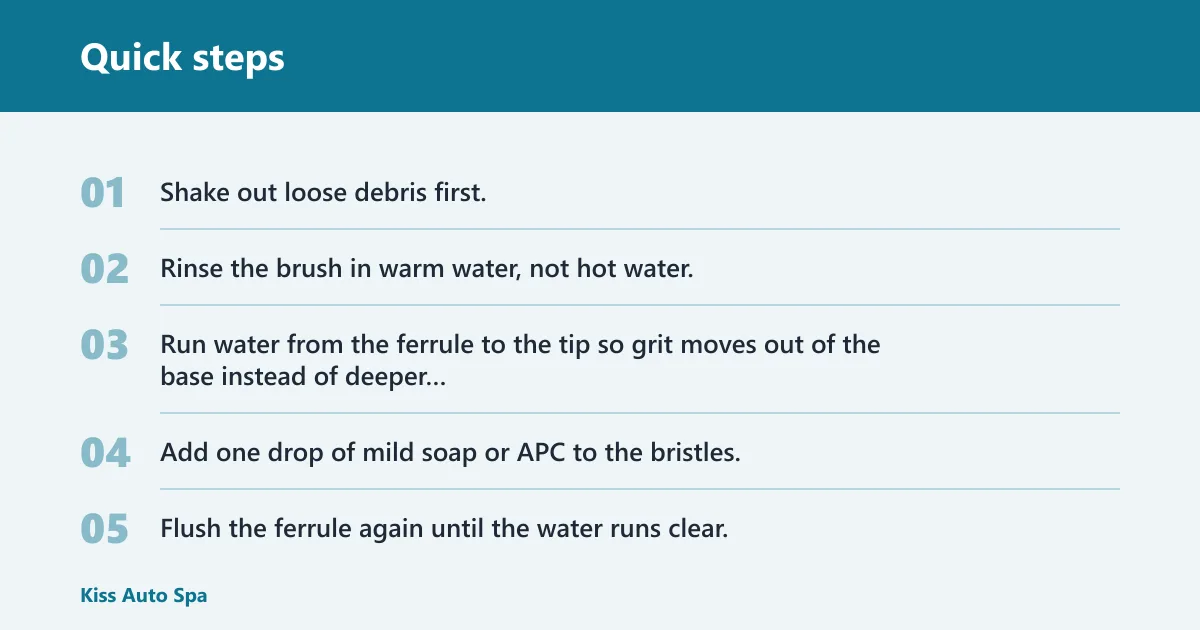
- Shake out loose debris first.
- Rinse the brush in warm water, not hot water, to help loosen fresh shampoo and dust without softening the bristles more than needed.
- Run water from the ferrule to the tip so grit moves out of the base instead of deeper into the bundle.
- Add one drop of mild soap or APC to the bristles, then massage the fibers with your fingers until the residue releases.
- Flush the ferrule again until the water runs clear.
- Blot with a microfiber towel and pinch the bristles back into shape.
For routine care, published brush-care guidance from manufacturers is consistent on two points: wash soon after use, and let the fibers dry fully before putting the tool away. For example, Wooster’s brush-care guide recommends cleaning brushes promptly and drying them completely before storage, while brush-care notes from Zibra emphasize keeping bristles clean and maintaining their shape after washing. These basics are what keep detailing brushes usable for longer: https://www.woosterbrush.com/painting-tips/brush-care-and-cleaning.html and https://www.zibrabrush.com/pages/paint-brush-care.
Say your wheel brush picked up dark brake dust and feels gritty near the ferrule. A warm rinse and mild soap may remove the loose dirt, but a second flush from the base outward keeps metallic grit from staying trapped in the deepest part of the bundle.
Should you use soap or APC?
Mild soap is the default for most post-wash cleanup because it lifts shampoo, road film, and light dressing residue without leaving a harsh film behind. Use diluted APC when the brush has oily residue, wheel cleaner, or engine bay soil that soap alone does not fully remove. After either one, rinse until no slickness remains.
When mild soap is enough
Use mild soap for paint-safe brushes, interior brushes, and any brush that only touched shampoo or light dust. It is also the safer choice for soft synthetic bristles, which are easier to deform if they are scrubbed too hard. Add a drop first, then recheck after the rinse.
When diluted APC is the better choice
Choose diluted APC for wheel brushes, engine bay brushes, and brushes that touched oily cleaner residue or road film. APC can cut through heavier grime, but it needs a thorough rinse because leftover cleaner can make bristles feel stiff. That stiffness often shows up first at the tips and in the ferrule.
How to rinse out chemical residue completely
After soap or APC, keep rinsing until the water looks clear and no foam or slick feel remains in the bristles. If the brush still smells sharp or feels tacky when pinched, repeat the rinse. A common first-timer mistake is stopping once the outer tips look clean while the base still holds cleaner.
Brush wash recovery checklist
Use this as a post-wash decision table. The right cleaning step depends on what the brush touched, because wheel dust, interior dust, shampoo, and engine residue do not behave the same way in the ferrule or the bristle bundle.

| Brush type | Residue source | Cleaning solution | Rinse method | Dry time trigger | Storage position | Retire/keep decision |
|---|---|---|---|---|---|---|
| Wheel brush | Brake dust, road film, wheel cleaner, metallic grit | Diluted APC, then mild soap if needed | Rinse from ferrule to tip, then flush base until clear | Keep drying until no dampness remains at the ferrule and no odor lingers | Hang bristle-down or place head-down | Retire if bristles stay splayed, smell persists, or shedding starts |
| Interior brush | Dust, dressings, cabin cleaner, skin oils | Mild soap | Gentle rinse from ferrule to tip | Dry before the base feels cool or damp to the touch | Stand upright with bristles clear of contact | Keep if shape returns after blotting; retire if tips stay bent |
| Engine bay brush | Degreaser, oily film, grime, citrus APC residue | Diluted APC, then a full soap rinse if residue remains | Long rinse through the ferrule and a second pass through the tips | Do not store until the ferrule is fully dry and odor-free | Hang bristle-down in open air | Retire if the ferrule holds odor or if bristles keep flaring |
| Soft paint-safe detailing brush | Shampoo, light dust, trim cleaner | Mild soap only unless a stronger residue is present | Low-pressure rinse from base to tip | Dry before any clumping or tip bend sets in | Lay flat or hang with bristles down | Keep if the bundle returns to shape; retire if shedding begins |
Brushes used on wheels should stay out of the same rinse path as interior and paint-safe brushes. Separate brushes for wheels and interior are the simplest way to avoid brake dust transfer, and that separation matches standard brush-care advice on keeping tools dedicated to a single task.
How do you dry and store detailing brushes?
Blot with a microfiber towel, reshape the bristles, and let the brush air dry or hang bristle-down until it is fully dry. Full dry means the ferrule feels dry, the base does not smell damp, and the bristles spring back instead of staying flat. That prevents mildew, odor, and ferrule rust. In a typical garage, thin paint-safe brushes often dry in about 30 to 60 minutes under moving air, while denser wheel brushes can take several hours; higher humidity stretches both times noticeably.
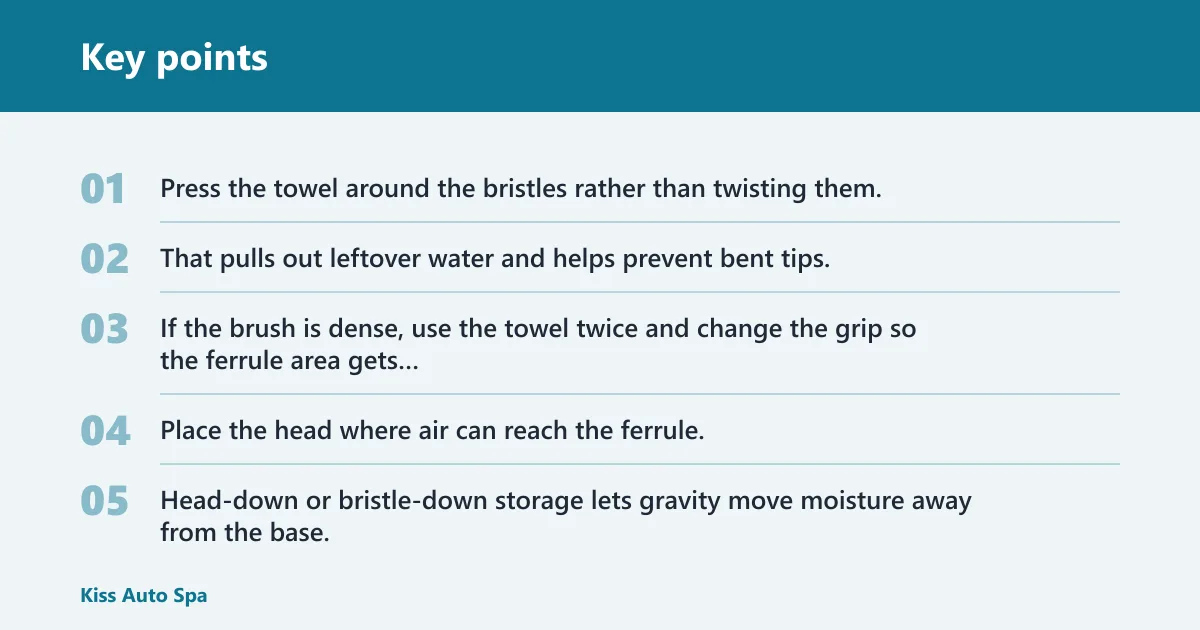
Blot with a microfiber towel
Press the towel around the bristles rather than twisting them. That pulls out leftover water and helps prevent bent tips. If the brush is dense, use the towel twice and change the grip so the ferrule area gets extra attention.
Air dry or hang bristle-down
Place the head where air can reach the ferrule. Head-down or bristle-down storage lets gravity move moisture away from the base, which is where dirt and water sit longest. Do not cap the brush or trap it in a closed drawer while it is still damp.
Wait for full dry before storage
A brush that feels dry at the tips can still hold water in the ferrule. That trapped moisture is what leads to odor and corrosion. If the brush was used with APC or wheel cleaner, give it extra time before putting it back with paint-safe tools.
Picture a 16 mm badge brush that was used on both lettering and a wheel logo in the same session. If it is stored upright while still damp, the cleaner and grit can settle at the ferrule overnight. A separate dry rack keeps that residue from moving to the next panel.
Common mistakes
The biggest failures come from heat, trapped grit, damp storage, and mixed-use brushes. They are easy to avoid, but once the ferrule holds dirt or the bristles flare, the brush starts doing the wrong kind of work.
- Using hot water. Warm water is enough for most detailing brushes, and hot water can deform softer synthetic bristles.
- Leaving grit in the ferrule. Always rinse from ferrule to tip and keep flushing until the base runs clear.
- Storing brushes while damp. That creates odor and can leave the ferrule wet long enough to corrode or smell stale.
- Mixing wheel and interior brushes. Brake dust and metallic grit do not belong anywhere near vents, screens, or trim.
- Keeping worn brushes in service too long. If the bristles stay splayed, shed, or hold odor, the brush is past its useful life.
Soft, medium, and stiff bristles all need the same basic recovery routine, but they do not fail the same way. Soft synthetic fibers flare first, medium brushes often trap dirt in the base, and natural fibers can hold odor longer if they stay wet.
How often should you clean your detailing brushes?
Clean them after every use. A quick rinse and wash prevents shampoo, APC, wheel cleaner, and dust from hardening in the bundle. If a brush touched brake dust, degreaser, or a strong wheel chemical, give it the full soap or diluted APC routine before storage.
For heavy use, inspect the brush every time you dry it. If the bristles do not return to shape after blotting, or if the ferrule still smells after drying, treat that as a replacement warning rather than a cleaning problem.
Frequently asked questions
What is the fastest way to tell if a detailing brush is fully dry?
Check three things: the ferrule feels dry, the brush no longer smells damp, and the bristles spring back instead of clumping. If any one of those is off, the brush still needs air time before storage.
When should a detailing brush be replaced instead of cleaned?
Replace it when the bristles stay splayed after drying, the brush sheds fibers, the ferrule holds odor, or the shape no longer recovers after blotting. Those are wear signs, not just leftover residue.
Can you use hot water on detailing brushes?
Warm water is the safer choice for most detailing brushes. Hot water can soften or warp delicate synthetic bristles and can make the brush lose shape faster. If residue is stubborn, increase the rinse time first, not the water temperature.
How do you dry detailing brushes so they last longer?
Blot them with a microfiber towel, reshape the tips, and hang them bristle-down or lay them flat in open air. Do not store them until the ferrule is dry and the brush no longer smells damp. That keeps mildew and bent tips from setting in.
How should you handle brushes that were used on wheels?
Wash wheel brushes separately from interior and paint-safe brushes, then give them extra rinse time because brake dust and metallic grit collect near the ferrule. If the brush still feels gritty after rinsing, repeat the flush before it goes back into storage.
Should you keep separate brushes for wheels and interior?
Yes. Wheel brushes collect brake dust and metallic grit, and that contamination does not belong on vents, trim, or paint-safe surfaces. Keep separate brushes for wheels, interior, engine bay, and paint-safe work so residue does not move between jobs.