When Is a Car Too Dirty for a Waterless Wash?
A car is too dirty for a waterless wash when loose grit, mud, or heavy road film covers the surface, or when a clean microfiber on a damp test spot picks up visible particles; if the paint feels gritty, switch to a rinse first. Skipping that cutoff can grind grit into clear coat and leave micro-scratches. Use this panel-by-panel checklist by contamination type to see what passes and what needs a hose, rinse, or touchless prewash.
What waterless wash can safely handle
Waterless washing is a spray-and-wipe method that cleans an exterior without a water source. It fits light dust, pollen, fingerprints, and very light road film on cool paint, where the surface is smooth enough to wipe without dragging grit across it. It is generally not the right tool for mud, caked grime, sand, or heavy winter residue.
The safe zone is thin and uniform. If you can see a light film but do not feel grit when you touch a small test spot with clean fingers or a clean microfiber face, the panel may qualify. If the panel feels rough, stop. That rough feel is the warning that loose contamination is already sitting on the paint.
Why cool paint matters before you start
Cool panels give you more time to lift contamination before the product flashes away. Hot paint can dry the lubricant too fast, which leaves less slip under the towel and raises the chance of dragging debris. Work in shade when possible, and let the panel cool before you spray.
What a safe panel feels like under a clean hand
A safe panel should feel smooth, not sandy. A clean microfiber pressed lightly against the paint should glide without snagging, and a damp test spot should not leave visible particles on the towel. That check matters more than how glossy or dull the car looks.
When is a car too dirty for a waterless wash?
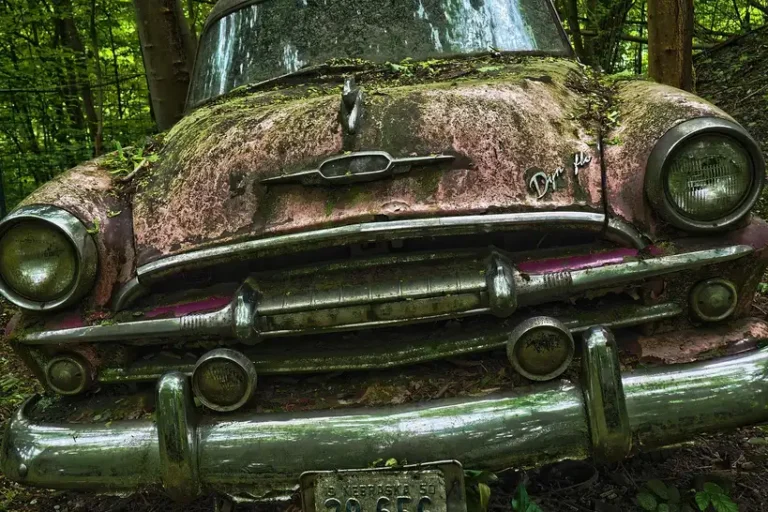
A car is too dirty for a waterless wash when contamination is thick enough that the towel would have to move grit across the paint instead of lifting it. Loose sand, embedded debris, mud, caked grime, and heavy road film are stop conditions. Lower panels usually fail first because they collect the worst contamination.
Grit, sand, and embedded debris
If you can feel grit, see specks that do not release with a light pass, or notice particles in the towel after a single wipe, stop. Car and Driver warns against using waterless wash on a heavily soiled car and says to avoid cars that feel gritty to the touch. That guidance fits the basic rule: no grit on paint, no waterless wipe. (Caranddriver)
Mud, caked grime, and heavy film
Mud and caked grime are not light contamination. They load the towel too quickly and can smear abrasive dirt across the finish. Heavy winter film has the same problem because it often contains road salt, slush residue, and embedded grit. Those conditions call for a rinse-based wash, a rinseless wash, or a touchless prewash first.
Why lower panels fail first
Rocker panels, wheel arches, bumpers, and the lower doors take the brunt of splashback. They are often the first areas to disqualify a waterless wash, even when the roof and hood still look acceptable. Treat those zones as separate decisions, not as proof that the whole car is clean enough.
Contamination decision checklist
Use this checklist panel by panel. Go means waterless wash is reasonable. Caution means the panel may work only if the contamination is thin and the towel stays clean. Stop means switch methods, starting with a rinse or a rinseless wash. When a vehicle is mixed, clean the safe panels and skip the rest.
| Panel or contamination | Decision | Action note |
|---|---|---|
| Roof dust | Go | Thin, even dust on a cool roof is a strong candidate; saturate generously and wipe straight-line. |
| Hood pollen | Go | Light pollen usually wipes clean if the surface feels smooth and the towel stays free of grit. |
| Glass with light film | Go | Works if the film is light; use one towel face to lift, then a second dry towel for finish. |
| Door handles and fingerprints | Go | Localized grime is fine when the rest of the panel is clean; use a fresh towel face fast. |
| Bug splatter on front bumper | Caution | Local spot only; pretreat if the label allows it, then wipe gently. Stop if residue resists release. |
| Bird droppings | Caution | Treat only the spot. Soften per label if allowed, then lift gently without scrubbing. |
| Rocker-panel film | Stop | Usually carries grit and road film; skip and rinse before any paint-safe wipe. |
| Road salt | Stop | Heavy or substantial salt film should not be wiped dry with a waterless method. |
| Wheel arches | Stop | Typically too dirty and abrasive for direct waterless wiping. |
| Dry mud on lower doors | Stop | Use a rinse-based wash or prewash first; mud is outside the method’s safe zone. |
How to read mixed conditions on one vehicle
Do not let one clean panel qualify the whole car. A hood with light pollen may pass while the rear quarter and rocker panel fail. Clean the good panels, then stop at the first area that feels gritty or shows embedded debris. Mixed-condition cars are common after rain, slush, or a long highway drive.
Start with the safest panels first
Start from the top and move downward. Roof, glass, and hood usually carry the lightest contamination, while lower panels, rocker panels, wheel arches, and bumpers usually carry the heaviest. That order lets you use your cleanest towels on the cleanest surfaces before you reach the risky ones.
Top-down sequence for roof, glass, and hood
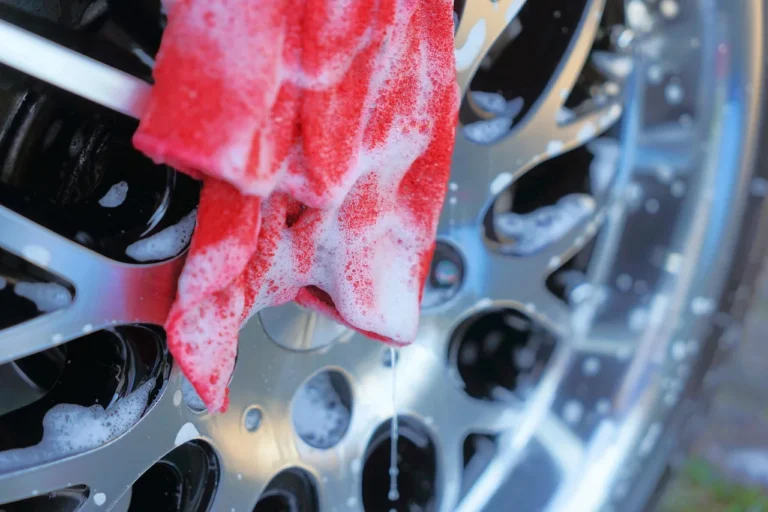
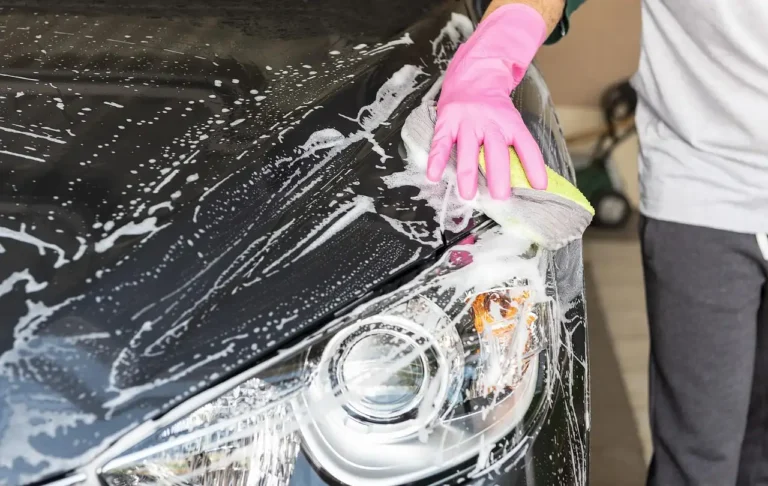
Saturate one area or panel generously, then wipe in one direction rather than circular motions. Use a clean microfiber towel and flip to a clean face after the first pass. Adam’s recommends one towel to lift dirt and a second dry towel for a streak-free finish, which is a practical way to reduce smearing.
Why rocker panels and wheel arches are last
Those zones collect the most abrasion. Even a car that looks clean from a few steps away can hide heavy contamination down low. If the lower section fails inspection, do not keep working downward with the same towel. Move to a fresh towel if needed, or stop and switch methods.
What to skip when one area fails inspection
If a panel feels gritty, skip it. Clean panels do not cancel out dirty ones. Say your roof and hood have a thin dust layer, but the passenger-side rocker panel has visible road film and tiny stones. Clean the roof and hood, then leave the lower side for a rinse or rinseless wash later.
What should you do with bugs, bird droppings, or salt?
Bug residue, bird droppings, and salt need local judgment, not a full-car verdict. A small spot may be manageable if the label supports pretreating and the residue releases gently. If the spot resists, feels gritty, or smears dirt across the towel, stop and switch to a rinse-based method.
When a label-supported pretreat is enough
For a small bug patch on a bumper or a fresh bird dropping on a hood, a gentle pretreat can soften the spot if the product label allows it. Then use light pressure and a clean microfiber towel. The goal is to lift, not scrub. Wipe away only what releases without force.
When residue means stop and switch methods
If the residue does not break loose quickly, do not keep rubbing. That is especially true for dried bugs and bird droppings on hot paint, where the material can bond more tightly. A common first-timer mistake is to keep scrubbing because the spot is small; small does not mean safe.
When should you switch to rinseless or hose washing?
Switch methods when contamination is beyond a thin surface film. Winter road film, heavy salt, bonded grit after rain, mud, and any panel that feels gritty are better handled with a rinse-based wash or a rinseless wash. Waterless washing is a maintenance tool, not a replacement for a full wash on dirty cars.
Winter road film and heavy salt
Cold-weather grime usually carries more abrasive matter than summer dust. If the car has substantial salt on the lower body, do not wipe it directly with a waterless method. The safer move is to rinse first, then wash with a method that carries dirt away instead of dragging it.
After rain when grit has bonded to the panel
Rain can turn loose dust into sticky film. That film often traps sand and road residue, especially on doors and behind the wheels. If a clean microfiber picks up visible particles on the first pass, stop right away. That is your cutoff, even if the car looks only moderately dirty.
If the towel picks up visible dirt
The towel is part of the inspection. A clean microfiber towel should lift soil into the fibers, not drag visible grit across the paint. Replace or change towels when grit appears. Use a second dry towel for finish work only after the dirt is already off the panel.
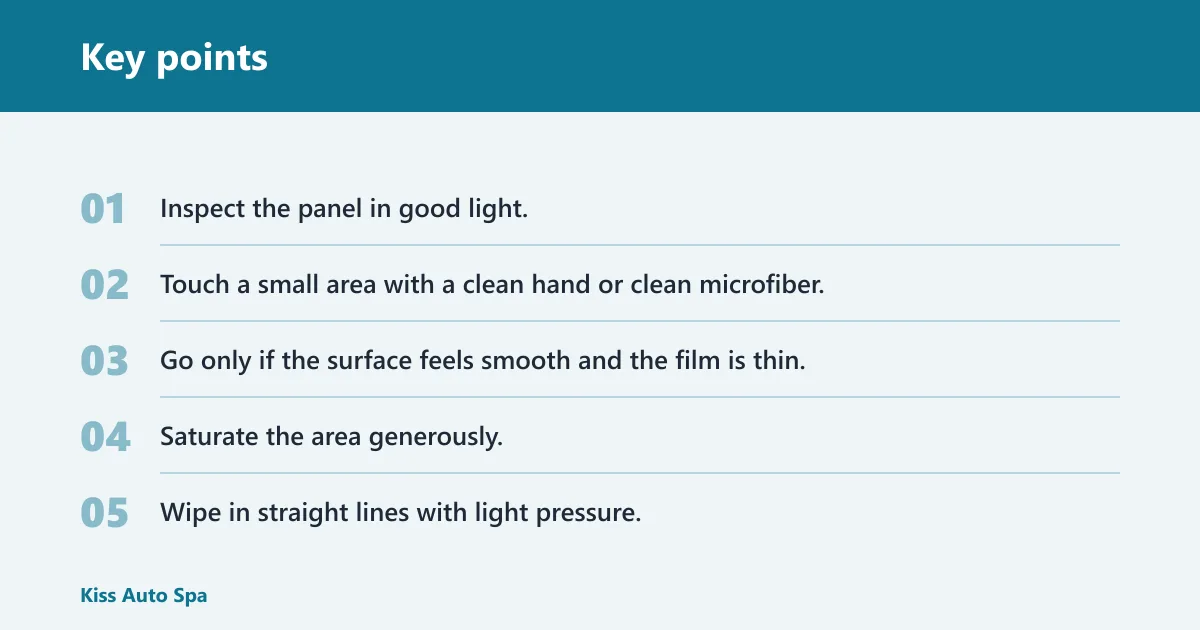
- Inspect the panel in good light.
- Touch a small area with a clean hand or clean microfiber.
- Go only if the surface feels smooth and the film is thin.
- Saturate the area generously.
- Wipe in straight lines with light pressure.
- Flip to a clean towel face as soon as dirt loads up.
- Stop if the towel, paint, or residue feels gritty.
Suppose a sedan has dust on the roof, pollen on the hood, and a dark, gritty strip on both rocker panels after a wet commute. The roof and hood can pass the checklist. The rocker panels do not. Clean the upper panels, then leave the lower strip for a rinse or rinseless wash.
Frequently asked questions
How dirty can a car be before waterless wash will scratch it?
There is generally no safe dirt level once the surface holds grit or embedded debris. Light dust and pollen on cool paint are the intended use case. Heavy film, sand, or a rough feel under the towel means the risk rises fast and the method should stop.
Is waterless car wash safe on a dusty car?
Yes, if the dust is thin, uniform, and dry to the touch, and the panel does not feel gritty. That is the safe zone. If dust has mixed with moisture, road film, or sand, switch to a rinse-based wash instead of wiping it directly.
Can I use waterless wash on mud, salt, or bugs?
Use caution with bugs and stop with mud or heavy salt. Bug spots may be treated locally if the label allows it and the residue releases gently. Mud and substantial winter salt are stop conditions because they are too abrasive for direct waterless wiping.
What does a car need to look like before using a waterless wash?
It should have a thin, even layer of dust, pollen, or light surface film on cool paint. The clean hand test should feel smooth, not sandy. Roofs, hoods, glass, and clean upper doors usually pass first; lower panels often fail sooner.
Should I stop using waterless wash if the towel feels gritty?
Yes. A gritty towel means contamination is present and the panel is no longer in the safe zone. Replace the towel or switch methods at once. Continuing to wipe can grind particles into the paint and leave micro-scratches.
Can I use waterless wash on lower panels and wheel arches?
Usually no, or only with extreme caution on a very lightly soiled vehicle. Lower panels and wheel arches collect the heaviest dirt, road film, and splashback. They are often the first areas to disqualify the method and should be rinsed instead.