Why Does the Inside of My Windshield Get Dirty So Fast?
The inside of your windshield usually gets dirty fast because cabin plastics off-gas, HVAC pulls oily dust onto the glass, or previous cleaners left residue. If haze returns within about a week, the cause is likely a source problem rather than a cleaning problem. Ignore it and you lose night visibility, add glare, and keep wiping a film that keeps coming back. This guide shows how to identify the cause, then fix each one with the right cleaner, technique, and maintenance interval.
Common sources of cabin film and haze

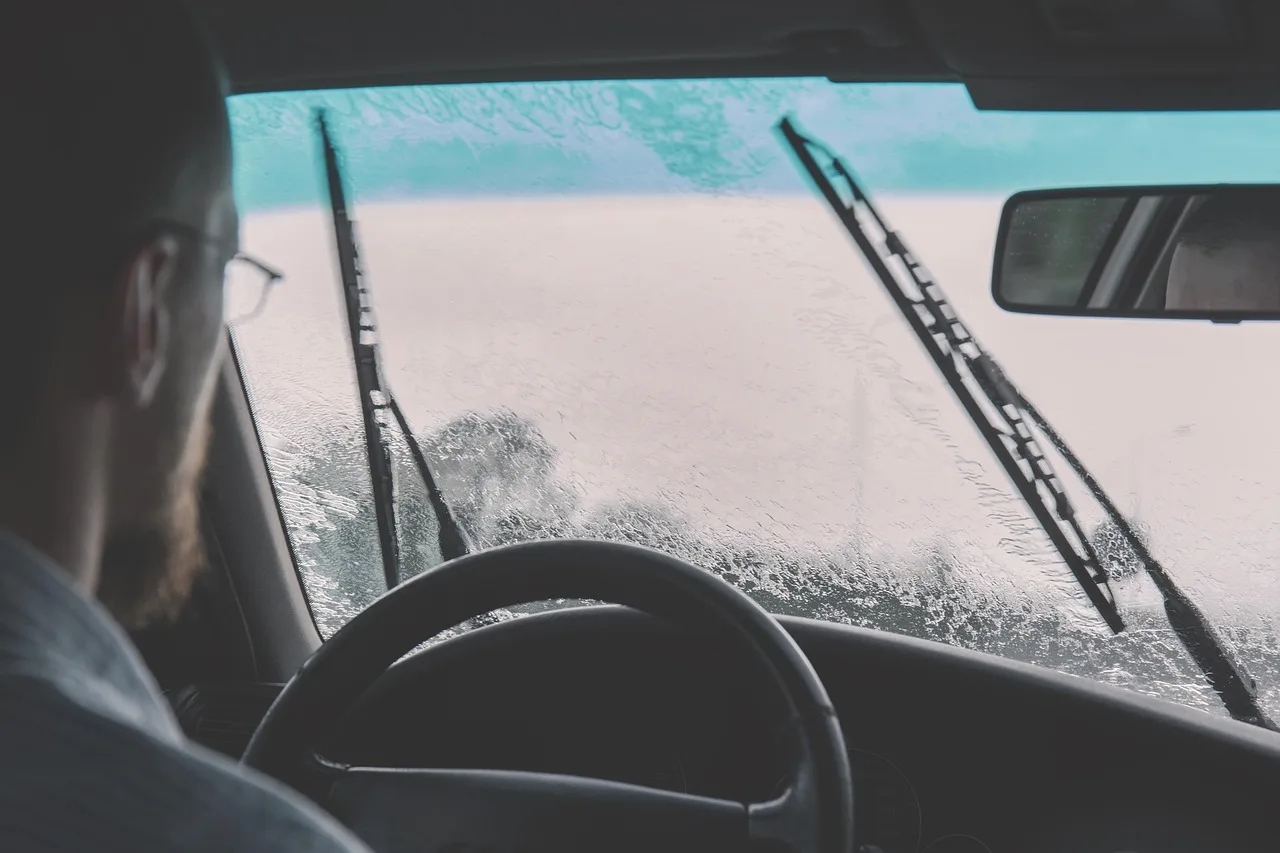
Interior windshield film is usually an oily haze on the cabin side of the glass. It stands out in sunlight, at night, and in damp or cold weather because the coating scatters light instead of letting it pass cleanly. That is why the same glass can look fine in shade and smeared two minutes later on the road.
Dashboard off-gassing and cabin dust
Dashboard off-gassing is a major source of recurring inside-film buildup. Plastics, trim, and other interior materials release vapors that settle on cooler glass, then catch dust and skin oils. If the film returns even after a careful wipe, the source is often still active inside the cabin.
Smoke, vape, humidity, and product residue
Smoke and vape residue may leave an oily film that often needs pre-treatment before a normal glass cleaner. Humidity and condensation can make the windshield look dirty again even after cleaning, while interior dressings and household cleaners can leave slick streaks that behave like fresh haze. One symptom can have several causes.
Suppose a sedan looks clear after cleaning on Friday, then shows a milky band across the driver’s line of sight by Monday morning. If the cabin was parked in a cool garage and the glass was not touched again, that return points more toward off-gassing or residue than new dirt from the outside.
Interior windshield diagnosis table
Use the symptom first, then match it to the fastest test. That keeps you from repeating the same wipe-down when the real fix is moisture control, a different cleaner, or a reset of the product used on the dash and trim.
| Symptom | Likely cause | Fastest test | Best cleaner or setting | How often it typically returns |
|---|---|---|---|---|
| Oily haze that is worst in sun or at night | Dashboard off-gassing and cabin dust | Wipe a small patch; if it clears briefly and then reappears after driving, the source is inside the cabin | Ammonia-free automotive glass cleaner on a microfiber towel | Often within days to a few weeks if the source stays active |
| Thick, sticky film that smears easily | Smoke or vape residue | Rub a test spot with a damp microfiber towel; if it drags brown or gray residue, smoke film is likely | White vinegar solution pre-treatment, then automotive glass cleaner | Often every few days in a smoke-heavy cabin |
| Fog that appears after rain, cold mornings, or passengers | Humidity and condensation | Turn on front defrost; if the glass clears quickly, moisture is the main issue | Front defrost or front defog, warm temperature, high fan, AC on, recirculation off | Returns whenever cabin moisture rises |
| Streaks that show up right after cleaning | Residue from the wrong products | Wipe a small area with clean water on a fresh towel; if the streak pattern changes, leftover product is the problem | Ammonia-free automotive glass cleaner with a dry buffing towel | Returns after each use of the same product |
How do you clean the film on the inside of the windshield?
Start with the right tools and the right surface. Use at least two clean microfiber towels, one for applying cleaner and one for dry buffing. Clean in shade or with the glass cool, because heat makes product flash too quickly and leaves streaks. Spray the towel, not the windshield, then wipe and buff.
Choose the right towel and cleaner
Microfiber towel is the right main tool here because it lifts film without the lint left by paper towels. Paper towels can leave lint and scratch glass over time, so they should not be the main wiping tool. An automotive glass cleaner is the better fit than a household product, and ammonia-free formula is preferred for interior glass.
Household glass cleaner is not ideal for car windshields because it can leave a film. For vertical glass, a foam cleaner can cling longer before it runs. Sprayway Glass Cleaner is one automotive option that comes out as foam and is described as ammonia-free.
Clean in shade on cool glass
Move the car out of direct sunlight before cleaning. Park in a garage, under a covered area, or on the shaded side of a building if that is available. Warm glass makes cleaner evaporate unevenly, which leaves the same smear you are trying to remove. If the windshield feels hot, wait until it cools enough that the cleaner stays wet for a few passes.
A common first-timer mistake is cleaning only the middle of the glass and missing the top edge near the headliner. That upper band is where off-gassing film often collects first, then drips or smears downward when the cabin warms up.
Spray the towel, then wipe and buff
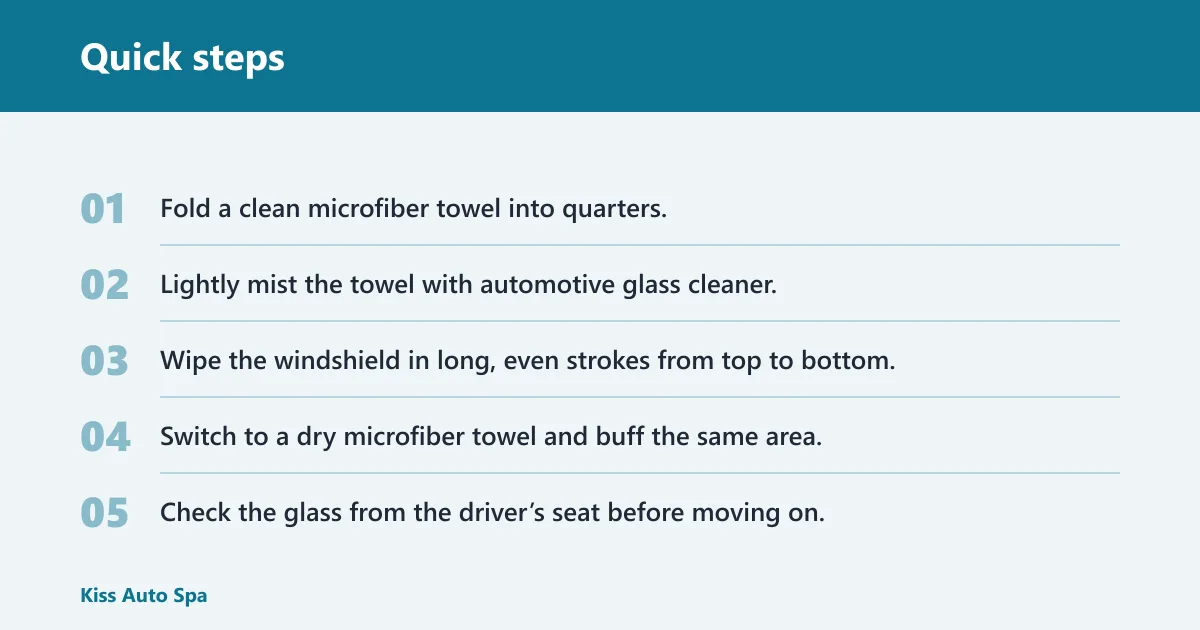
- Fold a clean microfiber towel into quarters.
- Lightly mist the towel with automotive glass cleaner.
- Wipe the windshield in long, even strokes from top to bottom.
- Switch to a dry microfiber towel and buff the same area.
- Check the glass from the driver’s seat before moving on.
That top-to-bottom pattern matters because it keeps removed film moving in one direction instead of spreading it back across the glass. Buffing after wiping removes the last trace of cleaner and cuts glare at night.
What if smoke or vape residue is the cause?
Smoke and vape residue is usually heavier than ordinary cabin haze. It coats the glass with an oily layer that a single pass of standard cleaner may only smear. If the windshield smells stale or feels slick after wiping, start with a vinegar pre-treatment before using an automotive glass cleaner.
Use vinegar pre-treatment first
Mix about one part vinegar to ten parts water. Lightly dampen a microfiber towel with that solution and work the smoke film before switching to glass cleaner. This step helps cut the oily layer that keeps standard cleaner from reaching the glass evenly.
Do not flood the glass. A damp towel is enough. Too much liquid can run into the dash, switchgear, or sensor areas and create a new cleaning problem.
Follow with automotive glass cleaner
After the vinegar pass, follow with ammonia-free automotive glass cleaner on a fresh towel. Wipe in long strokes, then buff dry with the second towel. If the film is thick, repeat the process rather than pressing harder, since pressure alone tends to move residue around instead of removing it.
Picture a compact SUV with vape use in the cabin and a gray band at eye level on the windshield. The quick wipe removes the first layer, but the haze returns under headlights at night. That is a smoke-film pattern, so the vinegar pre-treatment and a second clean towel matter more than extra sprays.
Expect faster re-clean intervals
Smoke and vape residue typically comes back faster than ordinary dust film. In a smoke-heavy cabin, the glass may need attention every few days. With lighter exposure, it may stretch longer, but it still tends to return more often than off-gassing alone.
How do you clear interior fog with climate controls?
If the windshield looks dirty only when it fogs up, the main issue may be cabin moisture rather than contamination. Use front defrost or front defog, set the temperature to warm, raise the fan to high or at least medium-high, keep the AC on, and turn recirculation off. Outside air helps lower cabin moisture.
Use front defrost or front defog
Front defrost or front defog directs airflow toward the windshield and helps remove the moisture layer on the inside glass. If wipers clear the mist, the problem is outside fog. If the inside clears with the climate system, you are dealing with condensation, not a dirty glass surface.
Set warm temperature and high fan
Warm air holds moisture better than cold air, and a stronger fan moves it across the glass faster. That is why the recommended setting combines warm temperature with high fan or at least medium-high. Slow airflow leaves the fog in place longer.
Turn AC on and recirculation off
Keep the AC on even in winter. The AC helps dry the air passing through the system. Turn recirculation off so the cabin can draw outside air instead of reusing moist interior air, which often keeps fog hanging on the inside of the windshield.
How to stop fast return of interior film
Fast return usually means the source is still present. Control cabin moisture, reduce interior residue from dressings and cleaners, and keep windshield maintenance on a short interval. If the film comes back within a week, look at what is being sprayed, what is off-gassing, and whether the climate system is moving damp air through the cabin.
Cut moisture sources in the cabin
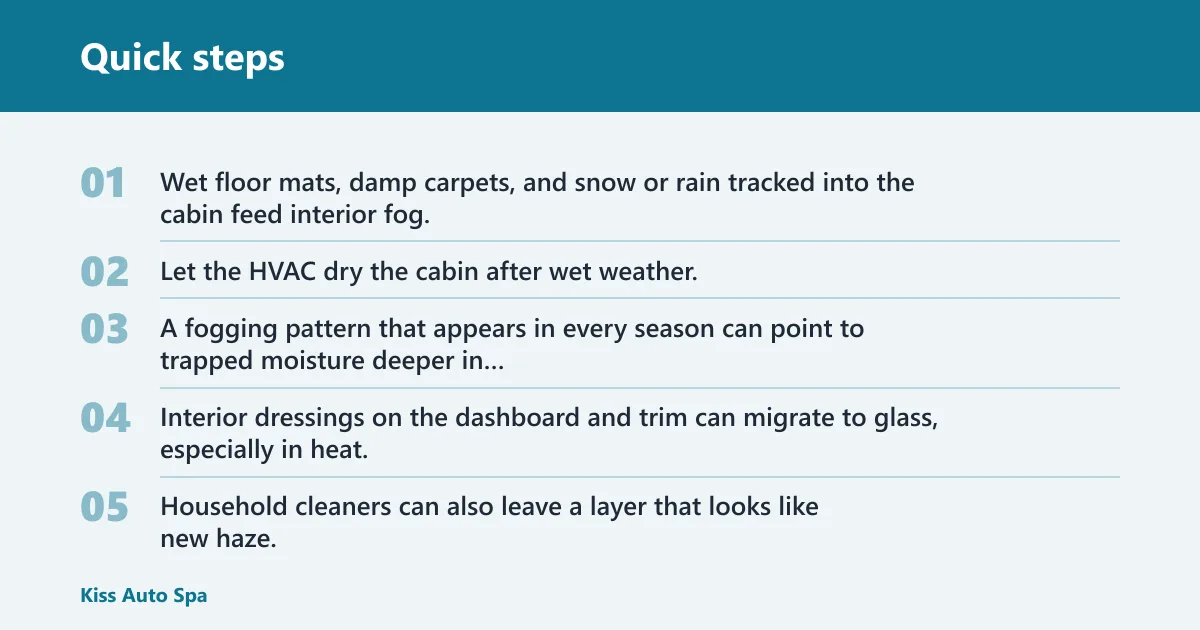
Wet floor mats, damp carpets, and snow or rain tracked into the cabin feed interior fog. Let the HVAC dry the cabin after wet weather, and check for leaks if the windshield fogs up repeatedly on dry days. A fogging pattern that appears in every season can point to trapped moisture deeper in the car.
Reduce residue from dressings and cleaners
Interior dressings on the dashboard and trim can migrate to glass, especially in heat. Household cleaners can also leave a layer that looks like new haze. If the film got worse after a detail or after a product change, stop that product and clean the windshield with an automotive glass cleaner and fresh towels.
Keep glass maintenance on a short interval
A light maintenance wipe can keep residue from building into a glare problem. Recurring smoke exposure may need very frequent cleaning. A cabin with modest off-gassing may only need periodic attention, but the exact interval should track how quickly the haze returns, not a fixed calendar alone.
Traffic at dusk can make a thin film feel much worse because headlights turn haze into glare. That is why poor visibility from interior film or fog is a safety issue, not a cosmetic one.
Frequently asked questions
Why does the inside of my windshield get dirty so fast?
It usually gets dirty fast because cabin plastics off-gas, dust and skin oils collect on the glass, or a previous cleaner left residue. If the haze returns within days, the problem is still producing film inside the vehicle. Cleaning helps, but source control matters more than repeated wiping.
Why does my windshield get so dirty?
On the inside, the windshield gets dirty from airborne vapors, moisture, smoke residue, and cleaning products that do not rinse cleanly. On the outside, road film and weather play a bigger role. If the inside looks worse in sun, at night, or in damp weather, the cabin is usually the source.
What causes film on inside of windshield?
The most common causes are dashboard off-gassing, smoke or vape residue, humidity, and residue from interior dressings or household cleaners. Each one leaves a different pattern. Oily haze points to plastics and dust, while sticky smear often points to smoke, and repeated streaks point to the wrong product.
Why do I get a film on the inside of my windshield?
You get film because the cabin is depositing something on the glass faster than you are removing it. Plastics release vapors, moisture condenses, and some cleaners leave a thin coating behind. If the film returns quickly after a good cleaning, the source is still active somewhere in the cabin.
How do I clean the film on the inside of my windshield?
Use at least two clean microfiber towels, an ammonia-free automotive glass cleaner, and a cool windshield in shade. Spray the towel, not the glass, wipe in long top-to-bottom strokes, then buff dry with the second towel. If smoke residue is present, pre-treat with a one-to-ten vinegar solution first.