Why Does My Car Still Look Dirty After Hand Washing?
Your car can still look dirty after hand washing when the wash leaves film, the rinse leaves residue, or the drying step leaves water spots; dull film points to leftover grime, while spots point to rinse or dry failure. Left alone, that residue hides gloss and makes swirl marks easier to spot. This guide matches each symptom to the failed step and fix.
What you’ll need before you wash
- Two buckets: one for wash solution and one for rinsing the mitt.
- Grit guards: one inserted at the bottom of each bucket to help trap dirt below the mitt.
- pH-balanced car shampoo: made for automotive paint and designed to rinse clean.
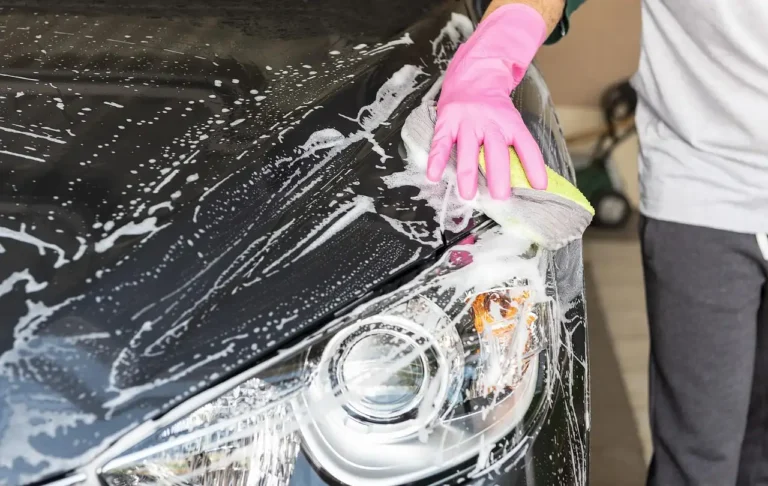
- Microfiber wash mitt: plush, soft, and dedicated to car care.
- Microfiber drying towel or blower: clean and soft, or a blower for mirrors, badges, grilles, and panel gaps.
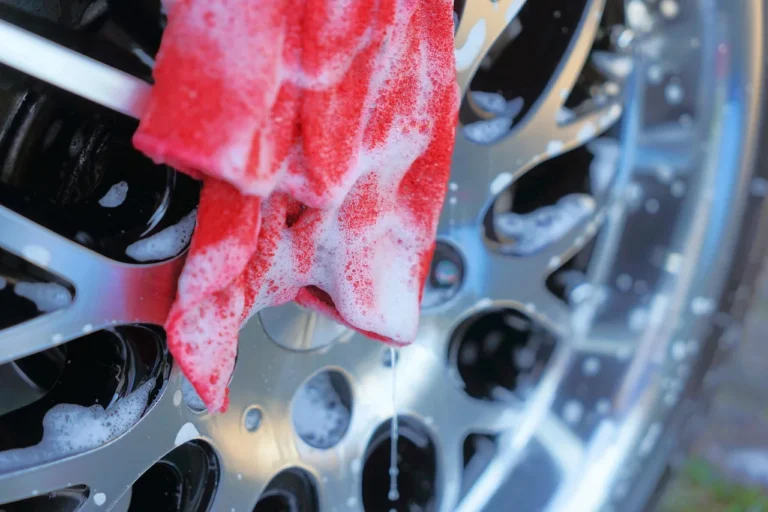
- Separate wheel-cleaning tools: brushes, mitts, and towels kept away from paint.
- Clean hose or pressure rinse: for knocking off loose dirt and road film before contact.
Why your car can still look dirty after hand washing
The usual failure point is not the soap alone. Loose dirt and road film need a strong pre-rinse before any mitt touches paint, especially on lower panels, rocker panels, and the rear bumper. If that grime is not lifted, the wash just spreads it around or leaves it behind as a dull layer.
Other common break points are the rinse and dry steps. A dirty mitt can re-deposit grit, hard water can dry into spots, and a rough towel can leave streaks or fresh marks. Swirl marks are very small scratches in the clear coat and are often easiest to see in bright light.
How to tell residue from true paint damage
Residue usually changes with water, light cleaning, or touch. Paint defects do not. Oxidation, bonded contamination, and old swirl marks can still make a car look dull even after a careful wash, and they may need clay, polishing, or a paint-safe decontamination step rather than another full wash.
Which visible problem are you seeing?
Match the look of the surface to the failed step before repeating the wash. Dusty residue usually points to an incomplete pre-rinse or poor agitation. Streaking often comes from rinse water or towel drag. Water spots point to drying or water quality. A greasy look usually means traffic film was never fully removed.
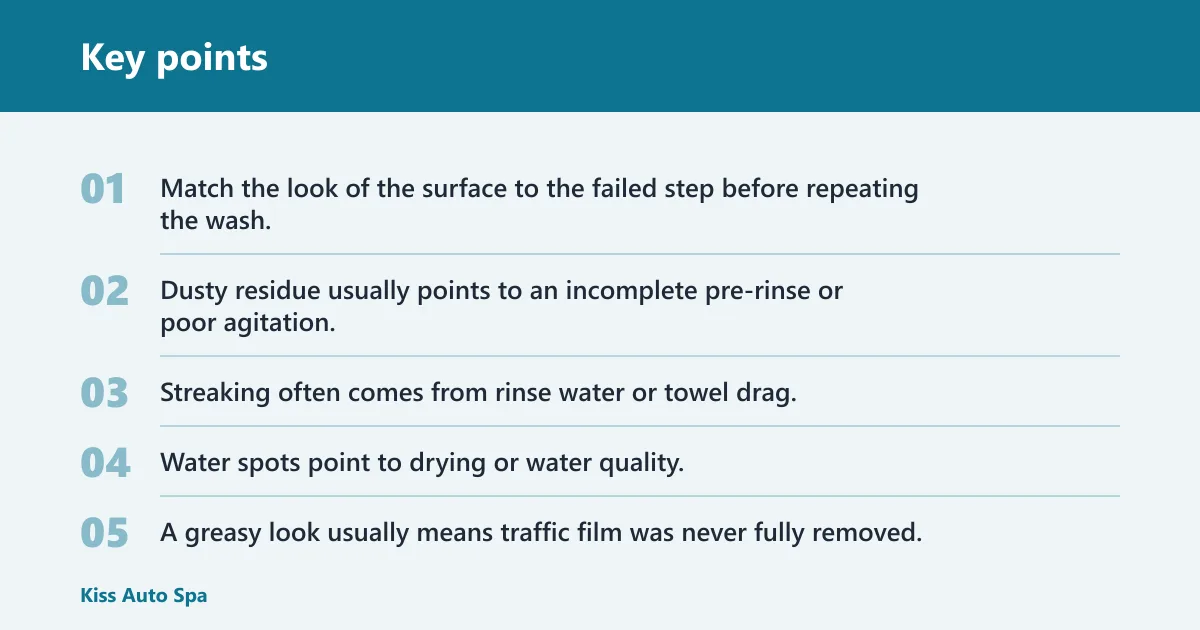
Symptom-to-cause diagnosis table
| Visible issue | Likely cause | How to test it in under 60 seconds | Fix |
|---|---|---|---|
| Dusty residue | Loose dirt and road film were not fully lifted before contact, especially on lower panels and the rear bumper. | Wipe a damp white microfiber on the panel. If it turns brown or gray, the grime is still on the surface. | Pre-rinse longer, then wash top to bottom with lubrication and a clean mitt. |
| Streaking | Rinse water, soap residue, or a dirty drying towel left a trail as the panel dried. | Spray the area with clean water. If the streak fades, it may be residue or a drying issue rather than paint damage. | Rinse again, then dry with a clean microfiber towel or blower. |
| Water spots | Minerals in tap water dried on the paint after the rinse or during slow drying. | Look at the spots in direct light. If they appear as white rings or crusty dots, they are likely hard-water deposits. | Dry sooner, use filtered or softened rinse water if available, and treat fresh spots before they bake on. |
| Greasy film | Traffic film, bug residue, or oily road grime was not broken down enough by the shampoo and mitt. | Rub one panel with a clean microfiber and a little shampoo solution. If the slick feel remains, the film is still there. | Do a stronger pre-rinse, reload the mitt often, and clean the panel again with fresh suds. |
What you’ll need to wash a car without scratching it
A safe hand wash depends on tools that hold dirt away from paint. A microfiber wash mitt traps more debris than a sponge and releases it better in the rinse bucket. A pH-balanced shampoo gives the mitt glide, and grit guards help keep settled dirt at the bottom of each bucket instead of back on the paint.
Wheel tools need their own set. Brake dust is abrasive, so separate brushes, mitts, towels, and often a separate bucket keep that contamination away from body panels. That separation matters more than brand names or foam thickness.
What each tool does
- Pre-rinse: removes loose dirt and road film before touch.
- Wash bucket: holds shampoo and clean solution for the mitt.
- Rinse bucket: clears debris from the mitt before it returns to the wash bucket.
- Grit guard: traps grit at the bottom of each bucket.
- Drying towel or blower: removes water without rough rubbing.
- Wheel tools: keep brake dust away from paint.
How do you wash a car so dirt does not come back?
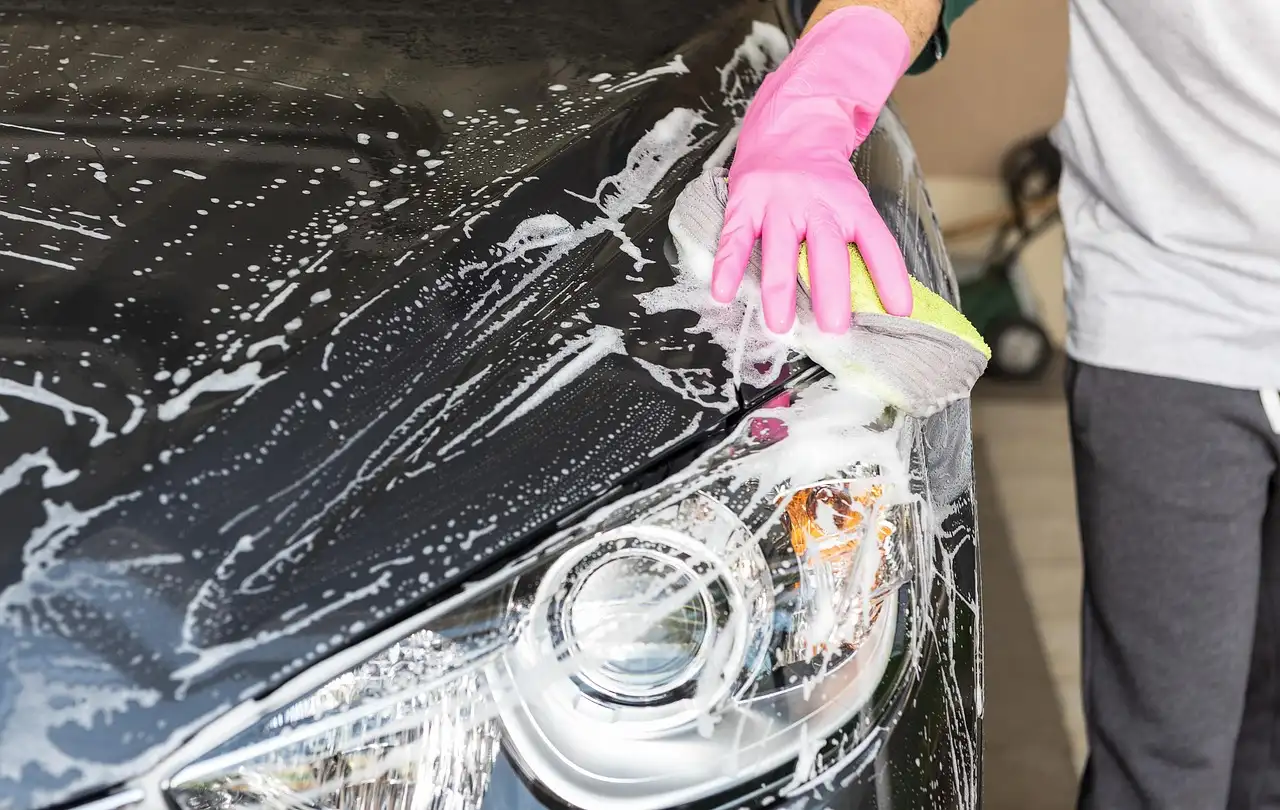
Start with a long pre-rinse, then use two buckets so dirt leaves the mitt instead of returning to the paint. The goal is to strip loose grime off the car, keep grit trapped in the rinse bucket, and leave the surface slick while you work. Do not scrub harder.
- Rinse from top to bottom until the lower panels look visibly cleaner.
- Fill one bucket with pH-balanced shampoo and water, and the second with plain rinse water.
- Set a grit guard in the bottom of each bucket.
- Load the microfiber mitt with suds and wash one small panel at a time.
- Rinse the mitt in the rinse bucket before returning to the wash bucket.
- Work from roof and glass down to doors, then finish with the dirtiest lower panels.
Why the two-bucket method matters
The two-bucket method reduces the chance of reintroducing dirt onto paint. One bucket carries clean wash solution. The other removes trapped grit from the mitt. A grit guard works best when it sits at the bottom of a bucket with enough water to let debris fall below the guard after each rinse.
How do you dry a car after washing without leaving marks?
Dry with a clean microfiber drying towel or a blower before mineral-laden water can sit and spot the finish. Pat or glide lightly, do not rub hard, and pay attention to mirrors, badges, grilles, and panel gaps where water hides and later streaks down the paint.
Drying order that reduces marks
- Open the blower first for badges, mirrors, grilles, and trim seams.
- Lay the drying towel flat on the panel and lift or glide it gently.
- Swap to a dry side as soon as the towel loads up with water.
- Check lower panels last, since they collect the most runoff.
- Use a separate towel for wheels and door jambs.
Suppose a dark sedan sits under hard garage lights after a wash. The paint looks clean while wet, then dries with white dots on the hood and mirror caps. That usually points to water quality or slow drying, not a need for another full wash.
Should I wash my car again if it still looks dirty after hand washing?
Wash again only if the first round left visible dirt, film, or missed panels. A second wash helps when the problem is contamination on the surface. A second wash usually will not fix oxidation, etched water spots, or bonded contamination that may need a clay bar, spot treatment, or polishing.
Escalation ladder
- Rinse the panel and inspect it in shade.
- Repeat a light wash on the affected area only.
- Use a spot treatment for fresh mineral spots or greasy residue.
- Move to clay bar treatment if the surface still feels rough after washing.
- Consider polishing if swirl marks or dull oxidation remain visible.
What causes swirl marks after a hand wash?
Swirl marks come from tiny scratches in the clear coat, usually when dirt gets dragged across the paint during washing or drying. They show best in direct sun or bright lights. Dirty mitts, one-bucket washes, rough towels, and hard pressure are the usual causes.
How to lower the risk
Use a plush microfiber wash mitt, rinse it often, and keep wheel tools away from body panels. Dry with a clean microfiber towel or a blower instead of pressing hard with a used towel. Loose grit on the paint is the real problem; the tool is only part of it.
Common mistakes that leave a car looking dirty
Most poor results come from moving contamination around, not from weak soap. A car can look hazy, spotted, or greasy even after a full wash if the pre-rinse, rinse, or dry step fails. The fix is to isolate the break point and correct that step first.
What goes wrong and how to avoid it
- One bucket for the whole wash: dirt stays in the solution and returns to the paint.
- Touching paint too soon: loose road film stays on lower panels and gets smeared.
- Using wheel tools on paint: brake dust can scratch and leave a gray haze.
- Drying with a dirty towel: old grit creates streaks and new marks.
- Rushing the rinse: soap and minerals are left behind as residue or spots.
A common first-timer mistake is washing a white crossover in full sun, then drying it slowly with one damp towel. The hood looks clean at first, but the lower doors still show gray film and the mirrors leave white rings. In that case, more scrubbing is not the answer; a faster rinse and safer drying are.
Frequently asked questions
Why does my car look streaky after washing?
Streaks usually come from soap film, dirty rinse water, or a towel that is no longer clean and absorbent. Rinse the panel again with clean water, then dry with a fresh microfiber towel or a blower. If the streaks vanish when wet, the issue is residue, not paint damage.
Why are there spots on my car after washing?
White dots or rings are usually hard-water deposits left when water dries on the surface. Dry sooner, move the car out of direct sun, and use a clean drying towel or blower. Fresh mineral spots are easier to remove than ones that sit overnight.
How do I wash my car without leaving dirt behind?
Use a pre-rinse, a two-bucket wash method, a plush microfiber mitt, and a pH-balanced shampoo. Rinse the mitt after each panel, and keep wheel tools separate from paint tools. That setup keeps grit out of the wash solution and off the clear coat.
How do I dry a car after washing so it stays clean?
Use a clean microfiber drying towel or a blower as soon as rinsing ends. Pat or glide lightly, then dry seams, mirrors, and badges first so trapped water does not run back down the panels. Keep one towel for paint and another for wheels or jambs.
What is the safest way to hand wash a car?
The safest method is a pre-rinse, two-bucket wash, and gentle drying with clean microfiber tools. Wash from top to bottom, keep grit guards in both buckets, and use separate wheel brushes and towels. That order lowers the chance of dragging abrasive dirt across the finish.