How to Get Rid of Used Car Smell in 5 Practical Steps
To get rid of used car smell, find the source first: surface residue, moisture-driven mildew, or deep contamination; clean that source, dry the cabin fully, and replace cabin filters if odor still lingers after one thorough treatment. Skip diagnosis, and you can waste money on sprays that cover the smell while mildew, spills, or smoke residue keep coming back. This guide shows how to test the odor source, choose the cheapest fix that reaches it, and know when professional cleaning is worth it.
How do you identify the source of used car smell?
Start by matching the smell to a likely source. In many cases, a musty odor points to moisture, smoke can linger on hard surfaces and in vents, food or milk odors may come from spills in carpets or seat foam, and a sour exhaust-like smell can suggest HVAC or exterior leaks worth inspecting.
Smell clues that point to a source
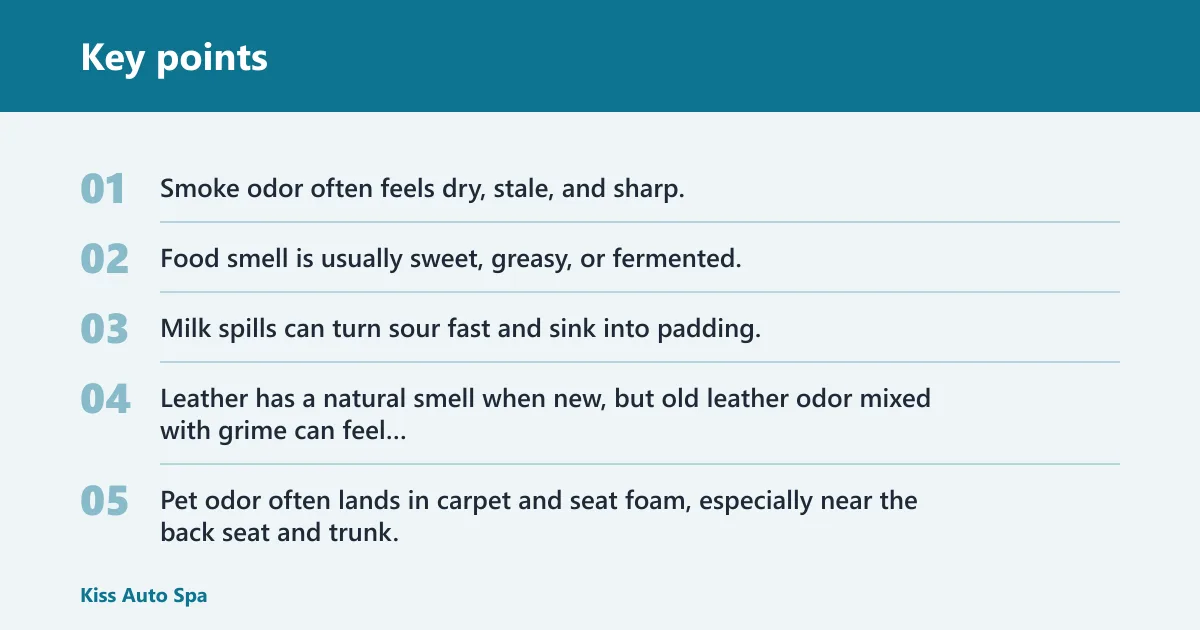
Smoke odor often feels dry, stale, and sharp. Mildew is damp, earthy, or basement-like. Food smell is usually sweet, greasy, or fermented. Milk spills can turn sour fast and sink into padding. Leather has a natural smell when new, but old leather odor mixed with grime can feel dusty and stale.
Pet odor often lands in carpet and seat foam, especially near the back seat and trunk. An exhaust-like smell inside the cabin is a warning sign, not a simple deodorizing job. If the odor is strongest with the HVAC on, inspect the vents and air intake path early.
Where to inspect first
CarSwitch recommends inspecting the interior, including seats, floor mats, and trunk, to find the odor source. Extend that check to carpets, under carpets, headliner, cup holders, storage bins, and the cabin air filter area. Those spots often hold residue that a quick spray will not touch.
Lift removable mats, press on carpet edges, and feel for dampness near door sills and the trunk floor. Look under seats for spilled food, forgotten drinks, and wet debris. Check the HVAC outlets for smoke film and stale dust, especially if the smell rises when the fan turns on.
When the smell suggests moisture damage or hidden contamination
If the odor gets stronger in humid weather, returns after drying, or comes with a soft floor feel, suspect trapped moisture. If the smell is sour, moldy, or still present after vacuuming, the problem may be in underpadding, seat foam, or insulation where cleaner cannot reach easily.
Say your used sedan smells fine with the doors open, then turns musty after rain. That pattern usually means water is sitting below the carpet or in the trunk liner, not just on the surface. In that case, deodorizer comes after moisture removal and leak checks, not before.
What should you clean first in a used car?
Clean the cabin in this order: remove trash and food, vacuum loose debris, wipe hard surfaces, then treat fabric and odor sources. That sequence saves time because loose residue feeds odor, while grime on plastic, cup holders, and seams can keep holding smell even after the cabin looks clean.
Remove trash, old food, and loose debris
Pull out wrappers, napkins, drink containers, spare mats, and anything that may be trapping odor. Old food and spills matter more than a generic “used car” smell because they keep producing odor until they are removed or cleaned at the source.
Vacuum seats, carpets, mats, trunks, and seams
Use a vacuum cleaner to pull out crumbs, dust, and dry residue from upholstery, carpets, and seams. A wet-dry vac matters after spills or mildew because it can pull moisture from upholstery and carpets before the smell sinks deeper. If rugs or mats are removable, let them dry in the sun after cleaning.
Get into seat rails, trunk corners, and the crease where carpet meets plastic trim. Debris in those spots often holds odor long after the main floor looks clean. If a spill is still damp, vacuuming liquid out early is better than waiting for it to sink into underpadding.
Wipe hard surfaces and storage areas
Use a mild detergent or car upholstery cleaner on the dashboard, door panels, cup holders, and storage areas. These surfaces trap oily film, drink residue, and dust that hold smell. Wiping them down also prepares the cabin for deeper odor treatment later.
For sticky residue, change your cloth often so you do not spread the odor around. Cup holders and center consoles are common hiding spots for old coffee, milk, soda, and food crumbs. Those areas can smell bad even when the seats are clean.
How do you remove smell from smoke, food, or milk residue?

Use a cleaner that matches the residue type, not a cover-up spray. White vinegar and water can cut smoke film on hard surfaces, baking soda can pull odor from fabric, and spills such as milk or food need spot cleaning at the source before the smell becomes embedded in foam or padding.
Use white vinegar and water on smoke residue
wikiHow recommends a 1:1 mixture of white vinegar and water for smoke residue. Apply it with a rag to hard interior surfaces where tar and film collect, including trim, dash plastics, and other wipeable panels. It helps remove the residue that keeps smoke smell active.
Do not soak sensitive materials. Wipe, let the surface dry, and repeat only where residue remains. Smoke can also sit in vent and air intake areas, so surface cleaning alone may not solve an HVAC-driven odor.
Use baking soda on carpets and upholstery
CarSwitch says baking soda can sit for a few hours or overnight before vacuuming. Sprinkle it on carpets and upholstery, leave it long enough to absorb odor, then vacuum it off fully. It works best when the fabric is already dry and free of loose debris.
Baking soda is useful for food, milk, and general stale odors, but it is not a fix for wet padding or mold. If the smell comes from a spill that soaked through, pair baking soda with moisture removal and spot cleaning at the source.
Treat spills before the odor returns
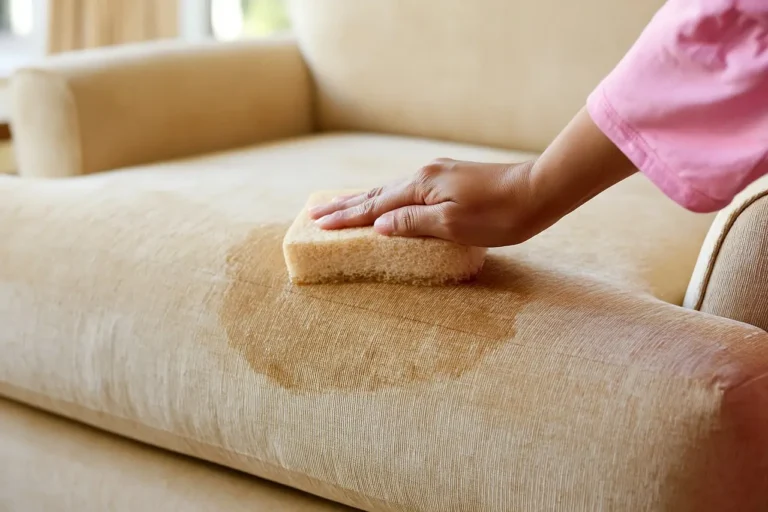
Milk, food, and drink spills often return as odor after the top layer dries because the liquid moved into seams or foam. Clean the visible stain, blot what you can, and inspect beneath the seat cover edge or carpet edge if the smell lingers after drying.
A common first-timer mistake is spraying fragrance over a spilled latte in the back seat and calling it done. The smell may fade for a few minutes, then return when the cabin heats up. That means the spill is still in the material, not gone.
When do moisture and mildew require a different approach?
Moisture problems need drying first, then deodorizing. If the cabin has mildew, a wet floor, or a damp trunk, remove standing moisture with a wet-dry vac, ventilate the car, and inspect underpadding and foam. Odor returns quickly when water remains hidden below the surface.
Dry the cabin fully
wikiHow recommends using a wet-dry vac to remove moisture from upholstery or carpets, then leaving windows open for 8-10 hours after vacuuming moisture for mildew. That combination helps move damp air out of the cabin and slows odor from settling back into fabric. (wikihow.com)
Drying matters because mildew lives where air does not reach well. If weather allows, remove floor mats and let them dry in the sun. The cabin should feel dry before you add deodorizing products, since they may only mask a still-wet source.
Check underpadding, trunk liners, and seat foam
Inspect carpet edges, trunk liners, and seat foam for trapped water or organic residue. These are common failure points because surface cleaning does not reach them. If the underpadding stays damp, the smell can return even after a careful vacuum and wipe-down.
If the odor is strongest near the rear floor or spare tire well, check for leaks around seals, tail lamps, or the trunk lid. Hidden water damage often starts there. Once padding and insulation stay wet, home cleaning usually becomes slow and uncertain.
What should you do about vents and the cabin air filter?
Check the cabin air filter and the vent path if the odor seems tied to the HVAC system. Smoke, stale air, and dust can collect in those areas and keep releasing smell every time the fan runs. Clean the source first, then use deodorizing treatment if needed.
Replace a dirty cabin air filter
CarSwitch says regular maintenance includes changing the cabin air filter. If the filter smells dirty, sour, or smoky, replacement is a sensible first step. A clogged or odor-filled filter can keep recirculating bad air even after the rest of the cabin is cleaned.
If the car sat with a strong odor before purchase, the filter may already hold that smell. Replacing it is often cheaper than layering multiple fragrances over a contaminated HVAC path.
Clean vent and air intake areas
Smoke odor can cling to vents and air intake areas. Clean accessible vent surfaces and use a deodorizing spray only after the main residue has been removed. If the smell is strongest with the blower on, the HVAC path deserves attention before you assume the carpet is the problem.
Do not rely on air fresheners as a fix. CarSwitch notes they are a quick and temporary solution. They can reduce noticeability for a short time, but they do not remove smoke film, mildew, or spill residue.
What is the best proof-based cleanup path for each odor type?
The best path is the cheapest one that reaches the source. Clean visible residue first, dry moisture next, absorb lingering odor with baking soda or charcoal, and stop DIY when the smell is inside foam, underpadding, headliner, or vents. At that point, professional detailing is usually the better value.
| Odor type | Likely source location | Best first-step cleaning method | Expected drying time | When to stop DIY and book detailing |
|---|---|---|---|---|
| Musty | Underpadding, carpet edges, trunk liner, seat foam | Wet-dry vac, then ventilation; inspect for leaks | 8-10 hours or longer if padding stayed wet | Smell returns after drying, or carpet feels damp again |
| Smoke | Headliner, vents, air intake, dash plastics, fabric | White vinegar and water on hard surfaces; clean vents | Several hours after wiping and airing out | Odor persists in vents or headliner after repeated cleaning |
| Food | Seats, seams, cup holders, storage bins, trunk | Vacuum, then mild detergent or upholstery cleaner | Several hours, depending on fabric and spill depth | Sticky residue remains in foam or seams |
| Milk | Seat foam, carpet underlay, cup holders, rear floor | Blot, clean the spill source, then vacuum moisture | Several hours to overnight for hidden damp areas | Any sour odor returns after the cabin heats up |
| Leather | Seats, trim, old conditioner residue, dust film | Wipe with a mild interior cleaner, then dry fully | 1-2 hours for surface wipe-downs | Odor seems mixed with mildew or grime in seat foam |
| Exhaust-like | HVAC path, vents, air intake, or possible leak points | Check filter and vent path first; inspect for leaks | Depends on diagnosis, but do not assume it is cosmetic | Any exhaust smell remains after filter and vent cleaning |
How to choose between cleaning, drying, deodorizing, inspecting, or detailing
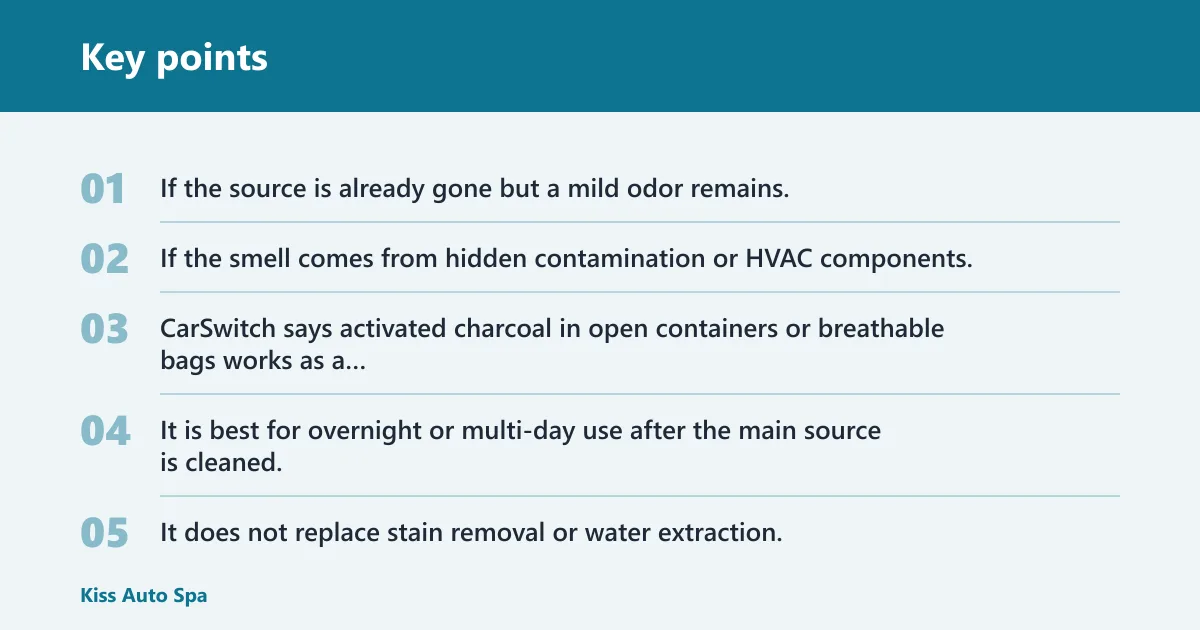
If the problem is visible grime, clean it. If the smell follows moisture, dry it. If the source is already gone but a mild odor remains, use baking soda or activated charcoal. If the smell comes from hidden contamination or HVAC components, inspect further or book detailing.
CarSwitch says activated charcoal in open containers or breathable bags works as a passive odor absorber. It is best for overnight or multi-day use after the main source is cleaned. It does not replace stain removal or water extraction.
Pre-purchase versus post-purchase priorities
Before buying, use your nose as a warning tool. Strong musty, smoke, or sour milk odor often means extra work or a detail bill after purchase. Check carpets, trunk, vents, and the cabin air filter area before you agree to the car.
After purchase, start with the cheapest fix that can reach the source. A basic vacuum and wipe-down may solve stale residue. If the odor survives a thorough cleaning, it often means the cause is deeper than the visible interior.
When should you book professional detailing for a car odor?
Book professional detailing when the odor returns after drying or vacuuming, when it is embedded in foam, headliner, underpadding, or HVAC parts, or when water damage and heavy smoke have soaked into the interior. At that point, home cleaning often reaches only the surface and leaves the source behind.
Signs DIY is not enough
If the smell gets stronger when the cabin warms up, if the floor feels dry on top but damp underneath, or if smoke odor keeps coming back from the vents, stop chasing it with sprays. Those signs usually point to deeper contamination that needs specialist equipment and a more thorough cleaning path.
CarSwitch says professional detailing should be scheduled periodically to deep clean the interior. That advice matters most after heavier odor events, long storage, flood exposure, or a used-car purchase with a stubborn smell that ordinary cleaning cannot move.
What professional detailing adds
Detailing can reach places that home tools miss, such as deep carpet extraction, vent treatment, and interior deep cleaning. It is especially useful when the odor source is old, spread through multiple surfaces, or hidden under trim where moisture and residue keep cycling back.
Frequently asked questions
how to get rid of old car smell
Start by identifying whether the smell comes from residue, moisture, or hidden contamination. Clean the source, vacuum the cabin, wipe hard surfaces, dry the interior fully, and replace the cabin air filter if the odor is still present after one thorough treatment. Covering the smell rarely solves it.
how to get smell out of used car
Remove trash and loose debris, then vacuum seats, carpets, mats, seams, and the trunk. After that, wipe hard surfaces with a mild interior cleaner and use baking soda or activated charcoal for leftover odor. If the smell comes back after drying, inspect for moisture or embedded residue.
how to get rid of old musty car smell
Musty odor usually means moisture is trapped in carpet, underpadding, trunk liner, or seat foam. Use a wet-dry vac, ventilate the cabin, and leave windows open for 8-10 hours after moisture is removed. If the odor returns, inspect for leaks or water-damaged padding.
how to get rid of old smoke smell in car
Smoke smell often sticks to hard surfaces, vents, the air intake path, and the headliner. Clean residue with a 1:1 mix of white vinegar and water on wipeable surfaces, replace the cabin air filter if needed, and treat vents separately. Strong smoke in foam may need professional detailing.
when should you use professional detailing for a car odor
Use professional detailing when the odor survives a full cleaning, when it is strongest in the HVAC system, or when you suspect embedded contamination in foam, underpadding, or the headliner. Heavy smoke, old milk spills, and moisture damage often move beyond normal DIY methods.
what is the best way to get rid of used car smell
The best method is source-first cleaning. Inspect seats, carpets, trunk, vents, and the cabin air filter area, then clean the actual cause before adding deodorizer. Baking soda and activated charcoal help after cleaning, but they work best as follow-up steps, not as the main fix.