How to Get Rid of Odor in Car: Step by Step
To get rid of odor in a car, locate the source first, then clean or replace the contaminated part; if the smell returns after about 24 hours, treat it as embedded contamination or HVAC-related rather than surface dirt. Skipping the source wastes time and can let mold, spills, or a clogged cabin filter keep spreading the smell. This guide walks you through a step-by-step odor diagnosis, DIY removal for seats, carpets, drains, and vents, and the stop points for professional help.
Why odor keeps coming back
Air fresheners and spray deodorizers only cover odor for a short time. Car interiors hold smell in carpet, seats, and door panels, so a quick wipe rarely reaches the material where the odor sits. The split is simple: surface residue can often be cleaned, but odor in foam, padding, or HVAC parts needs deeper treatment.
Surface smell vs. embedded contamination
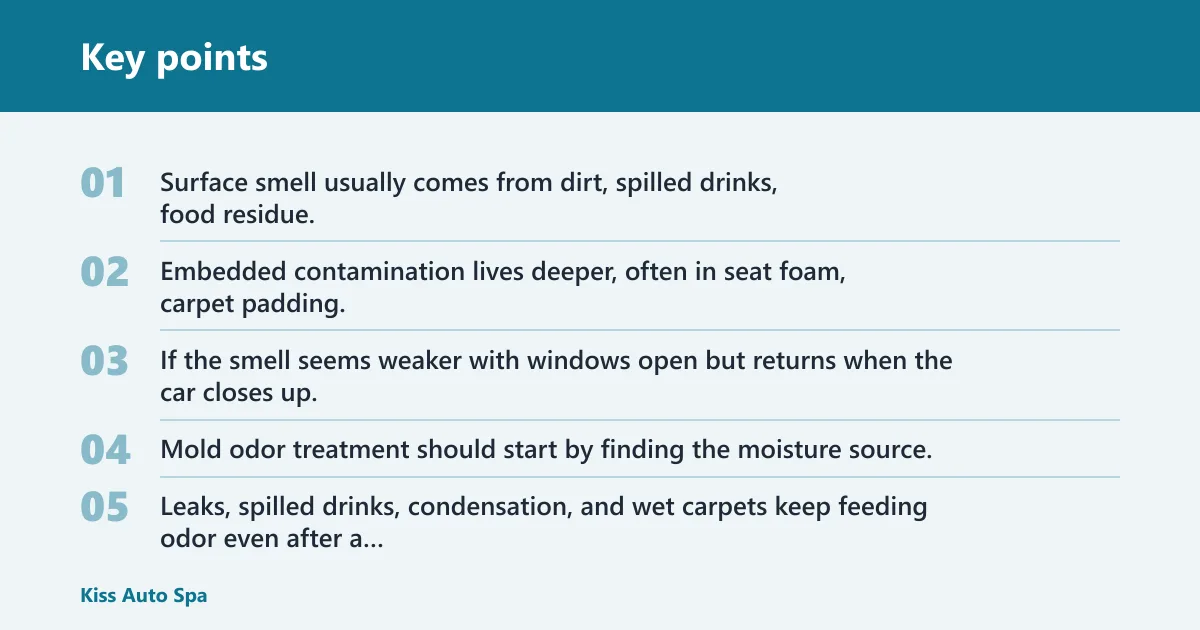
Surface smell usually comes from dirt, spilled drinks, food residue, or smoke film on plastic and fabric. Embedded contamination lives deeper, often in seat foam, carpet padding, headliner backing, or the evaporator case. If the smell seems weaker with windows open but returns when the car closes up, contamination is likely still inside the materials.
Why moisture makes odors return
Mold odor treatment should start by finding the moisture source. Leaks, spilled drinks, condensation, and wet carpets keep feeding odor even after a thorough wipe-down. If the cabin smells worse after rain or humidity, dry the interior fully and fix the leak before repeating any cleaner.
When a smell points to a safety issue
Gas or rotten-egg odors are not normal detailing jobs. A fuel smell can mean a leak, and a rotten-egg smell can point to a mechanical issue outside the cabin. In either case, stop running the car with the windows closed and have it checked before you keep cleaning.
What you’ll need
- Vacuum with crevice and upholstery tools
- Microfiber towels
- Interior brushes for seams and vents
- Baking soda
- Activated charcoal bags or loose charcoal in breathable containers
- Enzyme cleaner for biological odors
- Hard-surface cleaner or degreaser
- Access to the cabin air filter
- Trim tool or screwdriver for filter access, if needed
- Hot water extraction machine, if fabric odor is embedded
What is the odor source?
Start by matching the smell to its location and type. A sour smell from vents points you toward the HVAC system. A sweet or stale smell from seats or carpet usually points to spilled food, drink, or biological residue. The goal is to avoid cleaning the wrong part of the car first.
Smell location clues
Check seats, carpets, headliner, vents, and the area under floor mats. Odor near one seat often means a spill or pet accident. Odor strongest at startup and from the dash often points to the HVAC path. If the whole cabin smells stale, inspect the cabin air filter and any damp padding.
Smell type clues
Smoke odor can come from tar, nicotine, and thousands of other compounds. Mildew odor is linked to compounds known as geosmin. Pet odor can persist because uric acid crystals form as urine dries. Those differences matter because each source needs a different first treatment.
Quick checks for seats, carpets, headliner, and vents
Press a clean towel onto the seat base and carpet edge. If it comes back damp or discolored, work that area first. Open the glove box and inspect the cabin air filter if the vents smell sour. If odor grows stronger with the fan on, treat the HVAC path before you keep scrubbing the cabin.
Step 1: Remove loose contamination
- Vacuum carpets, seats, mats, and seams with a crevice tool.
- Lift floor mats and vacuum the backing and the floor beneath them.
- Remove trash, old food, and wet items from the cabin and trunk.
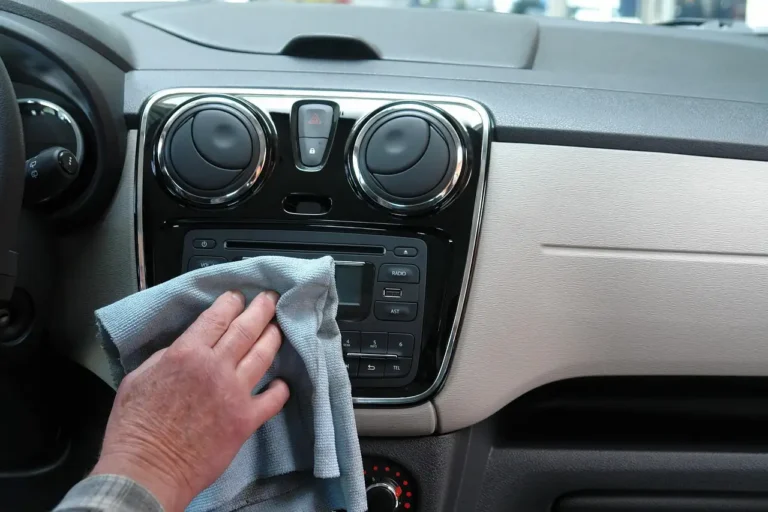
- Wipe dashboards, door panels, and other hard surfaces with a cleaner or degreaser.
Loose debris can keep odor active even after deeper cleaning. A hard-surface cleaner or degreaser matters because residue on plastic, vinyl, and trim can hold smell and spread it back into the cabin.
Step 2: Treat the odor by source
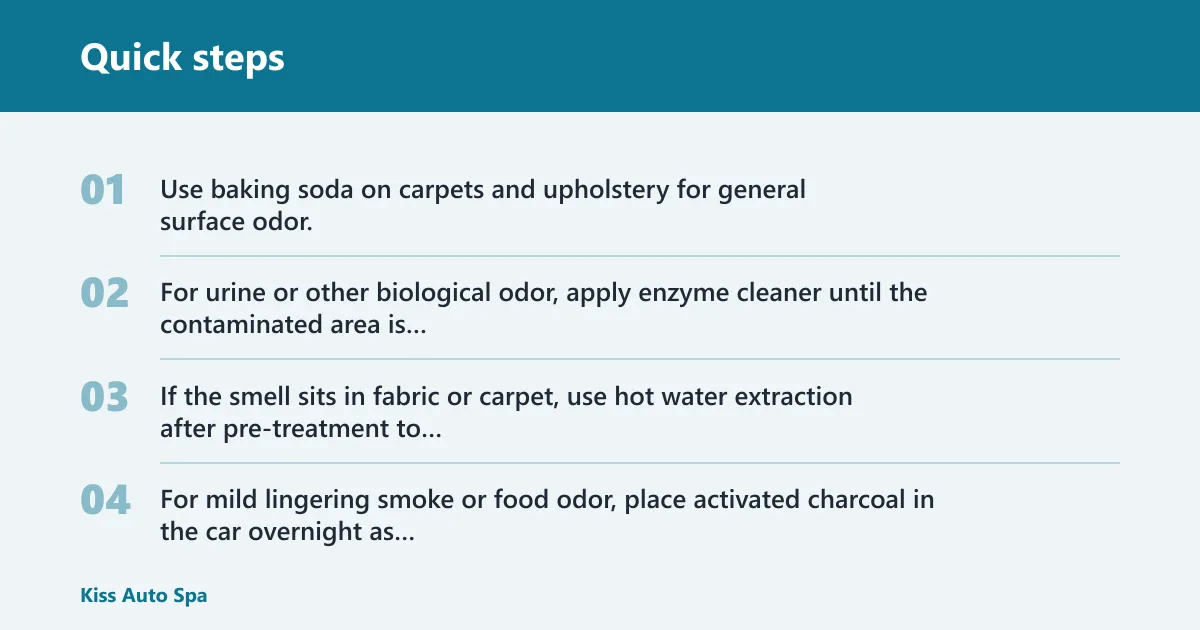
- Use baking soda on carpets and upholstery for general surface odor, then leave it for a few hours to overnight and vacuum it up.
- For urine or other biological odor, apply enzyme cleaner until the contaminated area is fully reached, then leave it in contact for about 20-30 minutes.
- If the smell sits in fabric or carpet, use hot water extraction after pre-treatment to pull out dissolved contamination.
- For mild lingering smoke or food odor, place activated charcoal in the car overnight as a passive deodorizer.
Say your rear seat smells faintly of spilled coffee after a 20-minute school run. Baking soda may help if the spill stayed near the surface, but if the cushion still smells after drying, the residue is deeper and extraction is the next step.
Suppose a pet accident soaked the lower seat cushion. A top-up step matters here: apply enough enzyme cleaner to wet the full stain area, then recheck after 20-30 minutes. If odor remains, the cleaner did not reach the contamination depth.
Step 3: Check the vents and filter
If the smell comes from the dash or gets stronger with the fan on, inspect the cabin air filter and the HVAC path. HVAC treatment is essential because the A/C evaporator is a chronic mold growth location. Smoke and mold odors often need treatment inside the air path, not just in the cabin.
- Remove the cabin air filter and inspect it for dust, moisture, and odor.
- Replace a dirty or damp filter before you run more odor treatment.
- Run the fan on fresh air, not recirculation, while the interior dries.
- Use an HVAC cleaning product on the intake path if the odor stays in the vents after filter replacement.
DetailXPerts recommends opening the windows on a dry day for perfume odor, and that same dry-air step helps after vent cleaning. Let the car dry fully before you close it up and rely on recirculation again.
Car odor diagnosis table
| Smell | Likely source | First safe test | Correct DIY treatment | Failure signal | Stop DIY and book help when |
|---|---|---|---|---|---|
| Smoke | Tar, nicotine, HVAC residue | Does the smell get stronger with the fan on? | Vacuum, wipe hard surfaces, replace filter, use charcoal overnight | Odor returns after 24 hours or after humidity | The smell stays in vents or headliner after repeated cleaning |
| Mold or mildew | Moisture in carpet, padding, or evaporator area | Check for damp floor mats, leaks, or foggy windows | Fix moisture source, HEPA vacuum, wet clean, dry fully | Odor gets stronger after rain or AC use | You cannot find the leak or the smell keeps returning |
| Pet urine | Uric acid crystals in fabric and foam | Is the smell strongest when the seat warms up? | Enzyme cleaner, dwell 20-30 minutes, then extraction | Smell remains after drying or comes back in heat | Urine reached seat foam or padding and odor persists |
| Food spill | Residue in carpet, seams, or under seats | Lift mats and inspect seams for dried residue | Vacuum, spot-clean, then extract if the stain soaked in | Sweet or sour odor remains after surface cleaning | The spill reached padding or a spill was left wet too long |
| Fuel or gas | Possible leak or spill | Does the odor appear near fuel fill-up or while driving? | Do not use odor products first; ventilate and inspect | Any persistent fuel smell | Immediately, because this is a safety issue |
Common mistakes
Masking the smell instead of cleaning the source only buys time. A single pass of deodorizer often fails because the residue is still there. Skipping drying after wet cleaning can also make the smell worse, especially if padding stays damp under the carpet.
Another miss is treating the wrong layer. A surface wipe will not remove odor trapped in foam, and charcoal will not fix urine in the cushion. If the smell returns after humidity, assume moisture or embedded contamination is still present and repeat the deeper step, not the air freshener.
When should you stop DIY?
Stop DIY if the smell is fuel, rotten egg, or anything that suggests a safety problem. Stop as well if mold odor persists after the cabin is fully dry, or if smoke, pet urine, or HVAC odor keeps returning after cleaning and filter replacement. Those cases usually need more invasive work than a home detail can reach.
If that didn’t work, try this next
If surface cleaning fails, move to extraction or HVAC cleaning before you buy another deodorizer. If extraction still leaves odor in the car after drying, the contamination may be in foam, padding, or the evaporator case. At that point, professional detailing or a repair inspection is the next practical step.
Frequently asked questions
How to get odor out of vehicle
Diagnose the odor location first, then choose the right fix for that zone. Seats and carpets usually need vacuuming, spot cleaning, or extraction; vents and the cabin air filter need HVAC attention. Safety-related smells such as gas or rotten egg should be checked mechanically, not treated as a detailing problem.