
How to Defog the Interior Windshield
Turn the defroster to high, switch to outside air, and run the A/C. If glass is fogged inside, keep recirculation off. If you ignore it, visibility drops fast and you can miss pedestrians, lane markings, or stopped traffic. This guide shows the fastest emergency sequence, how to dry the cabin glass, and how to stop repeat fogging.
Quick way to clear fog
Use this when the windshield fogs suddenly in cold or humid weather. Interior fog is condensation: warm, moist cabin air hits colder glass and turns into droplets. The fastest fix is to dry the air in the cabin, push that dry air toward the glass, and stop recirculating the same moisture.
- Defrost mode
- Air conditioning on
- Fresh air intake setting
- Clean microfiber towel
- Glass cleaner
- Anti-fog spray or shaving foam
How do you defog the windshield step by step?

Start with defrost mode, turn the A/C on, and switch recirculation off so the system pulls in dry outside air. Aim airflow at the windshield, then crack a window if fog stays heavy and weather allows. Do not keep driving if visibility is too poor to read lanes or traffic ahead.
- Press Climate > Front Defrost or the windshield defrost button.
- Turn A/C on; the air conditioning system acts as a dehumidifier because it removes moisture as air passes through the evaporator.
- Switch recirculation off so fresh outside air can enter.
- Set the fan to high and aim vents upward at the windshield.
- Lower the visor if the airflow is getting blocked; Family Handyman notes that this can help redirect air toward the glass.
- If fog remains thick and outside conditions allow, crack one window about 1 to 2 inches so humid cabin air can escape.
- Wipe any remaining edge haze with a clean microfiber towel only after the glass starts clearing.
Say your sedan fogs at a stoplight in 35-degree weather, with the cabin set to recirculation from the last drive. Switching to front defrost, turning A/C on, and opening the fresh air intake usually clears the center of the glass first. The corners often take longer because they trap stagnant humid air.
Why does the inside windshield fog?

Warm, moist cabin air condenses on cold glass, so the problem is moisture in the cabin, not frost on the outside. Passenger breath, wet clothing, damp mats, and a dirty glass film all add moisture or give droplets something to cling to. Summer fogging can also happen when the cabin is colder than the air outside.
Exterior fog and interior fog are different problems. Exterior fog forms on the outside surface; interior fog forms on the cabin side, and that is the one that usually blurs the driver’s view first. Dust and grease on the inside windshield make fog stick faster and clear more slowly.
If the interior windshield keeps fogging: 7 likely causes and the fastest fix
| Symptom | Likely cause | Immediate action | Prevention |
|---|---|---|---|
| Fog returns within a minute after clearing | Recirculation stuck on | Switch to outside air in Climate > Air Source or the fresh air button | Leave recirculation off in damp weather unless you need a brief cooldown |
| Lower corners haze up first after rain | Wet carpet or floor mats | Remove mats, blot standing water, and run front defrost on high | Dry mats before parking overnight and fix leaks fast |
| Glass looks cloudy or smeared even when dry | Dirty glass film | Clean the inside windshield with glass cleaner and a microfiber towel | Clean regularly so dust and grease do not hold moisture |
| Airflow feels weak at the windshield | Cabin filter restriction | Check Climate > Cabin air filter service status or inspect the filter housing | Replace a clogged filter on schedule so airflow stays strong |
| Fog spikes with passengers in the car | Passenger breath humidity | Turn on A/C and outside air, then crack a window if safe | Use fresh air intake sooner when the cabin is full |
| Fog gets worse after getting in from rain or snow | Rain-soaked clothing | Run defrost and A/C, and shake off wet outer layers before driving | Keep wet gear out of the cabin when possible |
| Fog forms instantly on a cold morning | Cold-soaked glass | Run defrost on high with A/C on so the glass warms and dries together | Start the HVAC before driving off when conditions allow |
Suppose an SUV has three passengers, snow on their coats, and a cabin filter that has not been changed in months. That combination can fog the windshield again even after a quick wipe. In that case, the fix is not more wiping; it is stronger airflow, outside air, and better drying of the cabin itself.
How do you keep it from coming back?
Prevention works best when you reduce moisture before it reaches the glass. Clean the inside windshield, keep the floor dry, and use anti-fog coatings before fog starts. The goal is to leave less water vapor in the cabin and make the glass less likely to hold droplets.
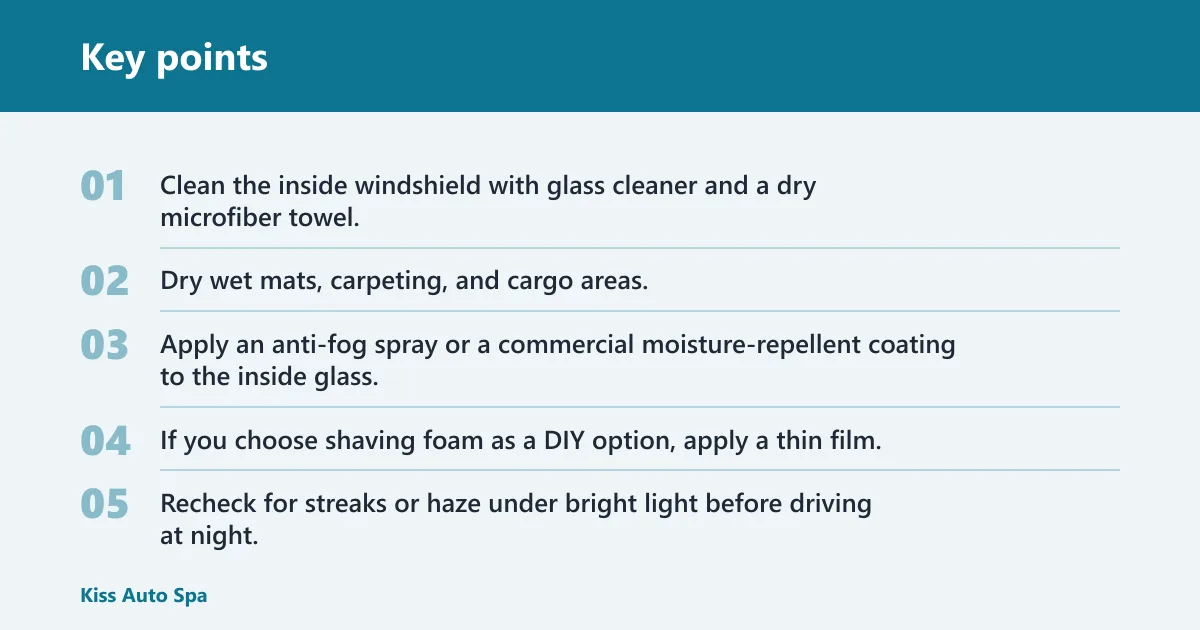
- Clean the inside windshield with glass cleaner and a dry microfiber towel.
- Dry wet mats, carpeting, and cargo areas.
- Apply an anti-fog spray or a commercial moisture-repellent coating to the inside glass.
- If you choose shaving foam as a DIY option, apply a thin film, then wipe it off until the glass is clear.
- Recheck for streaks or haze under bright light before driving at night.
Anti-fog products work as prevention, not as a fast cure after the glass is already fogged. Poor application can leave glare, streaks, or reduced visibility, which is a bad trade on a dark road. Use the thinnest film that still clears cleanly.
When to pull over instead of pushing
If the fog blocks lane lines, signs, pedestrians, or brake lights, pull over in a safe place and finish clearing the glass before continuing. Do not try to guess through a hazy windshield. On vehicles with aggressive auto-defrost, including EVs and camera-heavy windshields, let the system run while you stay stopped if the view is still poor.
Common first-timer mistake: leaving recirculation on because the cabin feels warmer. That choice traps humid air, so the windshield can fog faster even though the heater is running. The quicker fix is usually outside air plus A/C, not heat alone.
Common mistakes
A lot of bad advice mixes up warmth and drying. Heat can help, but heat alone does not remove moisture from the cabin air. If the air stays humid, the windshield can fog again as soon as the glass cools or the car stops moving.
- Wiping the fog away while driving: it distracts you and often smears the film wider. Use defrost first, then wipe only when the glass is already clearing.
- Leaving recirculation on: this keeps humid air in the cabin. Switch to fresh air intake.
- Using heat without drying the air: warm moist air still condenses on cold glass. Run A/C with defrost mode.
- Using too much anti-fog product: heavy application can streak and reflect glare. Apply a thin layer only.
- Ignoring a weak cabin filter: restricted airflow makes defogging slower. Replace the filter if vents feel weak.
Family Handyman notes that the defroster can help keep the car warmer than using AC alone, and the air can still be dried at the same time. That combination is usually faster than trying to solve fog with heat by itself.