Wheel Cleaner vs Car Soap: Do You Need It?
Wheel cleaner is often not necessary for well-maintained wheels; pH-balanced car soap is usually enough unless there is brake dust buildup, neglected barrels, or bonded grime. Use the wrong product and you waste time, leave residue, or reach for harsher chemistry than the wheel finish needs. This guide explains when soap is enough, when wheel cleaner earns its place, and how to choose the least aggressive option.
| Factor | Wheel cleaner | Car soap | Winner |
|---|---|---|---|
| Cleaning strength | Made to cut brake dust, road grime, tire residue, tar, and salt | Good for loose dirt, film, and routine wash contamination | Wheel cleaner |
| Finish safety range | Depends on formula; pH-neutral is safer on more finishes, acid formulas need caution | Generally gentle on maintained clear-coated and painted surfaces | Car soap |
| Best use case | Heavily contaminated wheels, neglected barrels, bonded brake dust | New, maintained, lightly dirty, or coated wheels | Tie |
| Agitation needed | Still needed for spokes, barrels, and lug recesses | Still needed for effective cleaning | Tie |
| Routine cost and residue risk | Higher product cost and more chemistry to manage | Lower cost and simpler rinse profile | Car soap |
What wheel cleaner does
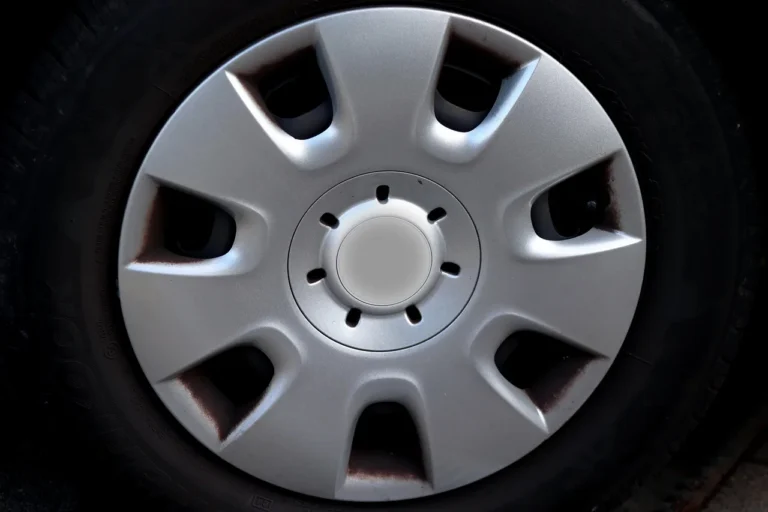
Wheel cleaner targets grime that wash soap often leaves behind. It is generally used for brake dust, road grime, tire residue, tar, and salt. Brake dust matters most because it is abrasive and can cling hard enough to need chemical help before brushing can finish the job.
Why brake dust needs different chemistry
Brake dust is a common reason wheels need dedicated cleaner. Modern wheel cleaners are described as safer than the acidic wheel cleaners used in the early 2000s, and reactive formulas can target bonded iron contamination on wheels. That gives them an edge when dust has worked into the finish instead of sitting on top of it.
Car soap can remove loose road film, light dust, and fresh splash contamination. It is good at routine washing. It falls short when the wheel has bonded grime in the barrel, dust in lug recesses, or residue that has sat through several drives.
What car soap can remove on wheels
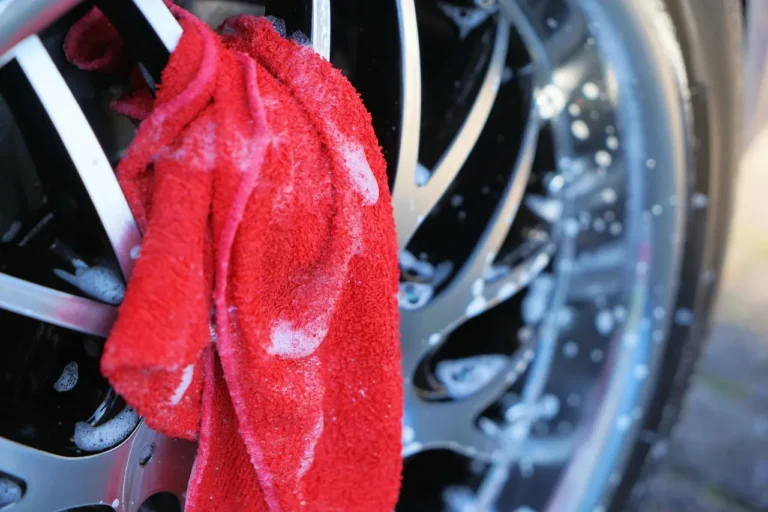
Car soap is often enough for wheels that get regular attention. It can clean the face, spokes, and outer barrel when contamination is fresh and light. R3 Auto Detailing also notes that if you clean weekly, a bucket of soap and water is enough.
Soap still needs a brush, mitt, or sponge, because wheel grime lives in corners and recesses. Use soap for maintenance. Save stronger chemistry for buildup that refuses to move.
Where wheel cleaner has the edge
Wheel cleaner earns its place when contamination outpaces simple washing. It is the better option for heavy brake dust, winter salt, tar spots, and barrels that have not been cleaned in a while. For really dirty wheels, one writer recommends a pre-rinse before applying wheel chemicals.
If a wheel has a coating or sealant, soap may be enough for a longer stretch because grime releases more easily. The coating does not remove contamination, though. It only changes how much effort you need to lift it off.
When soap is enough
Soap is enough when the wheels are maintained, the dust is light, and the finish is already protected. It is also the safer first move for new or well-kept wheels, especially when you are not seeing bonded contamination. In those cases, stronger chemistry adds little and can add risk.
Maintained wheels with light film
Weekly or regular washing keeps contamination from hardening. A forum reply on a new 2014 Mazda 6 with clear-coated wheels says weekly maintenance and sealing can make soap and water sufficient. Another reply says wheel cleaners are mostly for really bad wheels.
That is the practical split. If the wheel still looks clean after a rinse and a normal soap wash, there is no reason to move up. If it still looks brown, gray, or speckled after agitation, then soap has reached its limit.
Why regular washing lowers chemical demand
Regular washing keeps brake dust from baking into the finish. The less time contamination has to sit, the less chemical force you need later. That lowers the chance you will reach for a harsher product than the wheel finish really needs.
It also cuts hidden cost. More aggressive cleaners can mean more product, more dwell control, and more rinse work. On maintained wheels, soap avoids that overhead.
How coatings and sealants change the job
Sealant or ceramic coating makes future cleaning easier by keeping grime from anchoring as hard. It does not mean you can skip agitation or ignore buildup. It does mean your first choice should usually be soap, then a soft brush, before you reach for a dedicated wheel cleaner.
Wheel cleaner decision matrix
| Wheel state | Soap only | Soap + brush | Wheel cleaner | Recommended choice | Why | Failure signs that mean escalate |
|---|---|---|---|---|---|---|
| New or maintained | Recommended | Recommended | Not needed | Soap only | Light film and fresh dust usually release with gentle washing | Brown staining remains after rinsing and brushing |
| Lightly dirty | Possible | Recommended | Optional | Soap + brush | Brush reaches spoke edges, lug recesses, and barrel lip without stronger chemistry | Dust clings after two passes, or the barrel still feels gritty |
| Heavily contaminated | Not enough | Helpful but limited | Recommended | Wheel cleaner | Bonded brake dust and road film need chemical decon before agitation can finish the job | Dark specks remain, bleeding color appears, or residue returns after rinse |
| Coated | Recommended | Recommended | Only if needed | Soap only | Coatings reduce bonding, so routine wash chemistry usually clears the surface | Winter salt film, tar, or baked-on dust survives a standard wash |
When should you switch to wheel cleaner?
Switch when soap and brushing stop changing the result. If the wheel still shows brown brake dust, stubborn road film, or a rough, gritty feel after a normal wash, the contamination has moved past routine cleaning. That is the point where a dedicated wheel cleaner is justified.
Signs soap is losing the fight
Look for a wheel face that stays gray after rinsing, a barrel that still looks dark behind the spokes, or dust that smears instead of lifting. Those are signs the contamination has bonded. At that stage, more soap usually gives you more work, not a better result.
What bonded contamination looks like
Bonded contamination often shows up as peppered specks, dull patches, or brown film around the lug holes and spoke bases. The forum note that wheel cleaners can also indicate iron particles in brake dust by bleeding color is useful here. Color bleed tells you the product is reacting with embedded iron, not just moving loose dirt.
Picture a silver, clear-coated wheel after a winter commute. The outer face looks mostly fine, but the inner barrel still has a dark ring near the spoke roots. Soap will improve it, but a reactive wheel cleaner is the faster path once the dust has stuck that hard.
When barrels and lug recesses need help
R3 Auto Detailing says the wheel has two main cleaning areas: the face and the inner barrel. That matters because the face often looks clean before the barrel does. If the outer surface responds to soap but the barrel and lug recesses still hold grime, move up to wheel cleaner and a proper brush.
Which wheel cleaner type fits the finish?
Wheel cleaner should be matched to wheel finish. Clear-coated, powder-coated, chrome, painted, anodized, polished aluminum, and uncoated alloy do not all tolerate the same chemistry. A safer starting point for many finishes is a pH-neutral wheel cleaner, especially in no-scrub formulas.
pH-neutral wheel cleaner
pH-neutral wheel cleaner is often the safer choice for many finishes. It is often used when you want more cleaning power than soap without moving into harsh acid territory. That makes it a sensible first step for clear-coated, painted, powder-coated, and chrome wheels that are maintained but need a little more bite.
It still needs proper dwell time and agitation. The label may say no-scrub, but real-world wheel cleaning still benefits from brushing because spokes, barrels, and lug nut recesses trap grime.
Acid wheel cleaner
Acid wheel cleaner has more aggressive cleaning action and can work faster on heavy buildup. That same strength is why it needs caution on delicate finishes. It should not be treated as a universal wheel cleaner, and it should not be the default for every wheel.
Use extra care on polished aluminum, anodized surfaces, and any finish you are unsure about. When in doubt, start with the least aggressive cleaner that still matches the contamination level.
No-scrub and heavy-duty formulas
No-scrub formulas are usually built for convenience, but convenience still depends on contamination level. Heavy-duty formulas make more sense for neglected barrels, winter buildup, or repeated brake dust loading. One product example often cited in detailing circles is P&S Brake Buster, described as a non-acid cleaner that can double as a tire cleaner.
That overlap is useful, but it does not make every wheel product interchangeable. Tire sidewalls and wheel faces are different surfaces, and the cleaner choice should respect that split.
Finish-by-finish caution points
- Clear-coated: usually a good match for pH-neutral formulas and regular agitation.
- Powder-coated: typically durable, but still benefits from finish-safe chemistry.
- Chrome: use the mildest effective cleaner and avoid harsh acids unless the label specifically allows it.
- Painted: often responds well to soap first, then pH-neutral wheel cleaner if needed.
- Anodized: use caution; strong acid cleaners can be a bad fit.
- Polished aluminum: extra sensitive; test carefully and avoid aggressive chemistry.
- Uncoated alloy: can stain quickly, so routine maintenance matters more than forceful cleaning.
How do you clean wheels without scratching them?
Rinse first, use the right brush, work on cool surfaces, and do not drag grit across the finish. That sequence lowers scratch risk more than any one product choice. Even strong wheel cleaner still needs careful agitation, especially on barrels and lug recesses.
Use the right brush
Road & Track’s expert tip says agitation improves results even with strong wheel cleaner. It also advises soft-bristle brushes for faces and barrel brushes for inside spokes. That is the right split because the face needs gentle contact, while the barrel needs reach.
A wheel cleaning brush should have soft bristles or microfiber. Use one brush for the wheel face and a different shape for the barrel if the design allows it. That helps avoid dragging embedded grit back across the finish.
Work from the coolest surface possible
Hot wheels can dry cleaner too quickly and make residue harder to remove. Let the wheel cool before applying anything. If the car just came off the road, give the wheels time before you spray.
Rinse, agitate, rinse again
- Rinse the wheel to remove loose grit.
- Apply car soap for routine dirt or wheel cleaner for heavier contamination.
- Agitate the face, spokes, and barrel with a soft brush.
- Rinse thoroughly.
- Inspect lug recesses and the inner barrel for missed dirt.
A common rookie mistake is scrubbing the car body with shampoo and assuming the same suds will safely remove baked-on brake dust from the wheels. That leaves the dirtiest part untouched, then sends grime back onto the wheel during the next rinse. Clean both areas, or the job is only half done.
Wheel cleaner vs tire cleaner
Wheel cleaner and tire cleaner are not the same product. Wheel cleaner is made for metal or coated wheel surfaces, while tire cleaner is used to remove embedded dirt from rubber sidewalls. The overlap can be convenient, but the target surface is different.
What each product is made
Wheel cleaner is generally aimed at brake dust, road grime, and residue on the wheel itself. Tire cleaner focuses on the sidewall, where dressing buildup and embedded grime can collect. Some non-acid formulas can work on both, but that does not mean they should be used the same way.
Why sidewalls need a different cleaner
Rubber holds onto brown residue and old dressing differently than painted or coated wheel surfaces. That is why a tire cleaner is often used before applying fresh dressing. If you spray wheel cleaner on the sidewall, you may clean it, but you are using the wrong tool for the job.
Common mix-ups to avoid
Do not treat a heavy wheel cleaner as a tire dressing prep step unless the label says it is suitable. Do not assume a tire cleaner will safely remove bonded brake dust from the wheel face. The two products can complement each other, but they are not interchangeable.
Choose Wheel cleaner if…
Choose Wheel cleaner if your wheels have bonded brake dust, winter salt, tar, or grime in the barrel that car soap does not remove. It is the better choice for neglected wheels, heavy contamination, or a decontamination reset. Start with a pH-neutral formula unless the finish and contamination level clearly justify a stronger product.
Choose car soap if…
Choose car soap if the wheels are maintained, lightly dirty, or already coated and you wash them often. It is also the better choice when you want the gentlest effective method for clear-coated or painted wheels. For many daily drivers, soap plus a brush is the right default.
Maintenance cadence helps decide the line. Weekly for daily drivers in bad weather, monthly for fair-weather cars, and extra attention in winter keeps contamination from hardening into a wheel-cleaner job. The less buildup you allow, the less chemistry you need later.
Frequently asked questions
Do I really need wheel cleaner or is car soap enough?
Car soap is enough for most maintained wheels. If the wheels are washed often, sealed, or coated, soap plus agitation usually handles the job. Wheel cleaner becomes useful when brake dust, salt, or road film is bonded enough that soap leaves visible residue behind.
What does wheel cleaner do that car soap doesn’t?
Wheel cleaner is made to break down brake dust, road grime, tire residue, tar, and salt more aggressively than car soap. That matters when contamination has bonded to the wheel surface. Soap is better for routine maintenance, while wheel cleaner is the step-up tool for tougher buildup.
Can I use car soap on wheels safely?
Yes, car soap is generally safe on wheels, especially on clear-coated, painted, powder-coated, or coated wheels. It is a sensible first step for routine washing. You still need a brush for spokes, barrels, and lug recesses, because soap alone will not reach every corner.
When should I use wheel cleaner instead of regular car shampoo?
Use wheel cleaner when you see bonded brake dust, heavy winter grime, tar spots, or contamination that survives a normal soap wash and brush. If the wheel still looks dirty after rinsing and agitating, regular shampoo has reached its limit. That is the point to escalate.
Are acid wheel cleaners safe for all wheel finishes?
No. Acid wheel cleaners have stronger cleaning action, but they need careful finish matching and are not a safe default for all wheels. Clear-coated, chrome, anodized, polished aluminum, and uncoated alloy wheels can require extra caution. pH-neutral wheel cleaner is the safer starting point for many finishes.
Do wheel cleaners also work on tires?
Some do, but wheel cleaner and tire cleaner are different tools. Tire cleaner is made for rubber sidewalls, while wheel cleaner is aimed at the wheel face and barrel. If the product label says it can do both, use it only where the manufacturer says it is appropriate.