Can You Clean Wheels Without Water or a Hose?
Yes, you can clean wheels without water or a hose, but only for light dust and road film; if you have caked mud, heavy brake dust, or grit, use a rinse or wait, because dry wiping can scratch clear coat and painted finishes. Ignore that, and you can grind abrasive debris into the wheel surface. This guide gives a clear no-hose decision tree and the safest method for each dirt level.
Wheel cleaning decision table
This table gives the decision rule first. Use the visible condition of the wheel, not guesswork. If the contamination is light, a spray-on waterless wheel cleaner can work. If the wheel has more than a thin film, switch to a rinseless method with a pump sprayer. If grit, mud, or heavy brake dust is present, stop.
| Contamination level | Visible signs | Safe method | Minimum tools | Rinse substitute | When to abort |
|---|---|---|---|---|---|
| Light | Fine gray dust, light road film, minor water spotting, no loose grit | Waterless wheel cleaner on a cool wheel, then wipe before it dries | 2-3 microfiber towels, soft wheel brush, small lug brush | None needed if soil is truly light; use a damp towel if residue remains | Abort if you feel sand, see loose grit, or the towel loads up fast |
| Moderate | Darker brake dust, visible film on spokes, dirt in lug recesses, but no caked mud | Rinseless wash product with a pump sprayer, then wipe and dry | 3-4 microfiber towels, soft wheel brush, small lug brush, barrel brush | Pump sprayer with rinseless solution | Abort if the barrel has packed grit or the wheel feels gritty after the first pass |
| Heavy | Caked brake dust, mud, sand, thick black buildup, dried road grime | Stop and wait for a proper wash | None for cleaning; gather wash supplies for a full rinse-based wash | None safely substitutes a proper rinse here | Abort immediately; do not wipe dry contamination |
Light contamination: the no-hose method that is acceptable
For light dust, a waterless wheel cleaner is acceptable because it is made for spray-on use and relies on lubricating agents to help lift thin contamination. It works best on light brake dust, environmental dust, and minor water spotting. Let it sit too long, and it dries on the surface. It is not the right choice for heavy brake dust or mud.
Moderate contamination: switch to rinseless cleaning
When the wheel shows more than a thin film, a rinseless wash product is safer than a plain waterless spray. It is not the same as a waterless wash. It uses some water, gives more lubrication than regular car shampoo, and fits garage or indoor wheel cleaning where a hose is unavailable.
Heavy contamination: stop and wait
If you see loose grit, sand, mud, or heavy brake dust, do not wipe the wheel. That contamination is abrasive when dry, and a towel can drag particles across the finish. Repeated no-hose passes only load the towel with grime and raise the scratch risk.
What can I use instead of a hose?
The best no-hose substitutes are a waterless wheel cleaner for light contamination, a rinseless wash product for moderate contamination, and a pump sprayer to create a steady rinse stream without a hose. Use microfiber towels for final wipe-off and drying, and use wheel brushes for the face, spokes, lug area, and barrel.
Waterless wheel cleaner versus rinseless wash product
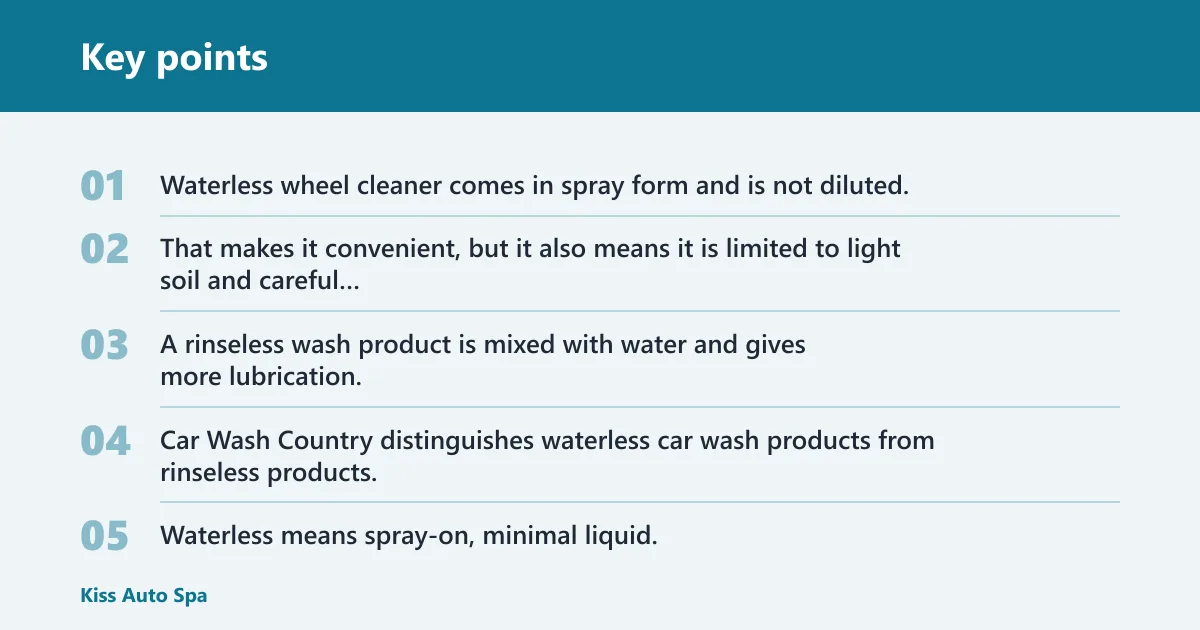
Waterless wheel cleaner comes in spray form and is not diluted. That makes it convenient, but it also means it is limited to light soil and careful towel management. A rinseless wash product is mixed with water and gives more lubrication, so it is the better no-hose choice when the wheel carries more grime.
Car Wash Country distinguishes waterless car wash products from rinseless products, and that distinction matters here. Waterless means spray-on, minimal liquid, and a stronger need to keep the towel moving on clean sides. Rinseless means a water-based solution that can be applied with a pump sprayer or a wash mitt for more controlled removal.
Pump sprayer as a rinse substitute
A pump sprayer gives you a controlled rinse stream without a hose. That matters after loosening grime, especially inside garages or apartment spaces where running water is not available. It helps remove loosened residue before you wipe the wheel dry, which lowers the chance of towel loading and streaks.
Some detailers use a bucket of clean water in the basic setup, and that is still useful for rinsing tools and refreshing towels. Drive Freshly’s basic wheel-cleaning setup includes a pH balanced wheel cleaner and a bucket of clean water, while its professional setup includes an iron remover and a barrel brush for the inner surface.
Microfiber towels and wheel brushes
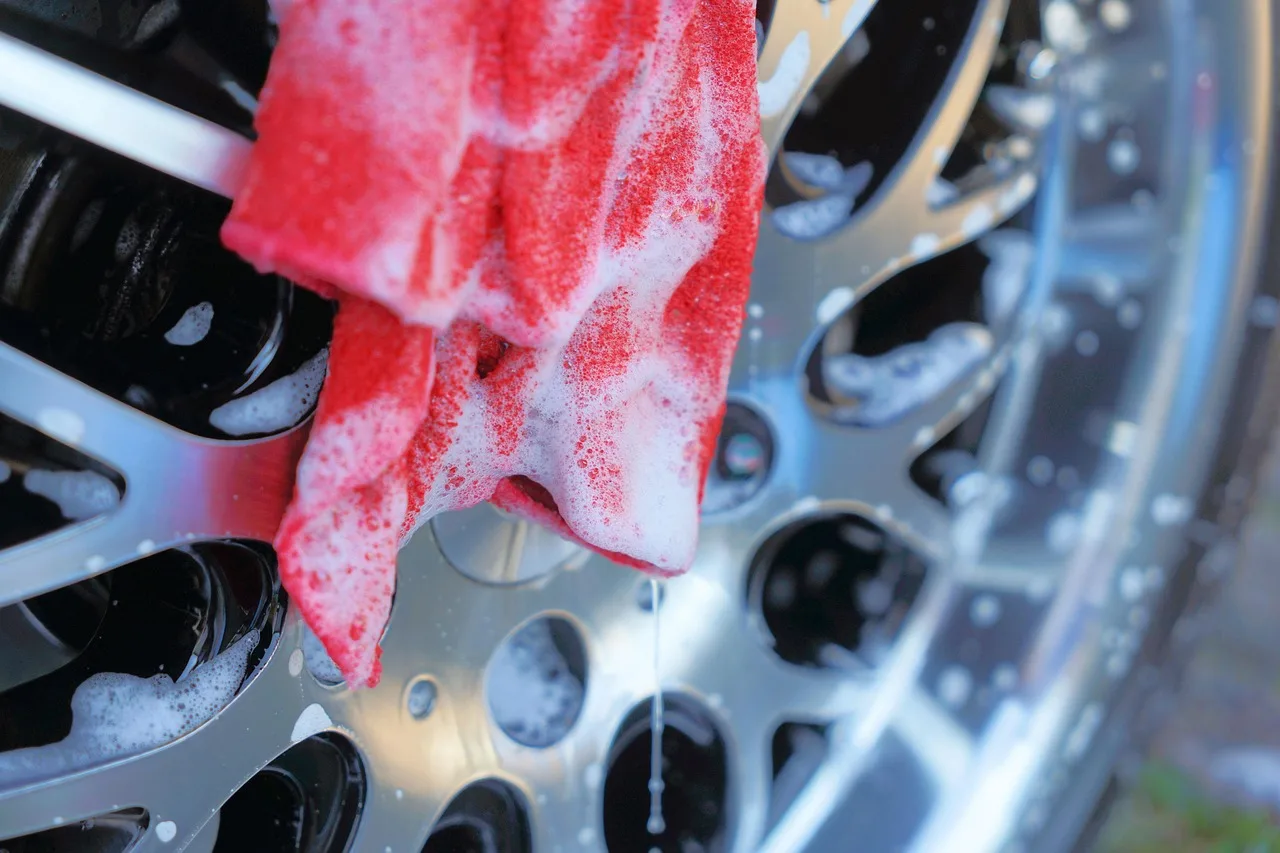
Microfiber towels do the final wipe-off and drying work. Rotate them often and switch to fresh sides, because a loaded towel can trap abrasive particles and leave residue behind. For agitation, use a soft brush for the wheel face and spokes, a smaller brush for tight lug areas, and a barrel brush for the inner wheel surface.
Say your sedan has a light gray haze on the front wheels after a short commute. A spray-on waterless wheel cleaner and two clean microfiber towels may be enough, but only if the wheel stays cool and no grit is present. If the towel starts dragging, stop and switch methods.
How do you clean wheels without scratching them?
Start with a wheel that is cool to the touch, clean one section at a time, and never let product dry on the wheel. Use a soft brush where needed, then wipe with clean towel sides before the grime has time to reattach. The main danger is not the spray itself; it is dry contamination and towel loading.
Work on a cool wheel surface
Dr. Beasley’s says work on cool wheels when using waterless cleaning. That lowers evaporation and gives the product more working time. Hot wheels can flash-dry product too fast, which leaves streaks and residue. If the wheel is warm from driving, wait.
A cool surface also helps the lubricating agents do their job before the towel touches the finish. That matters on polished aluminum, chrome, matte, and coated wheels, where dried residue is more visible and repeated wiping can create uneven appearance.
Wipe one section at a time
Clean the wheel face in small sections instead of misting the entire wheel at once. Apply product, agitate lightly if needed, then wipe before moving on. That limits dwell time and prevents product from drying in tight spoke corners or around lug holes.
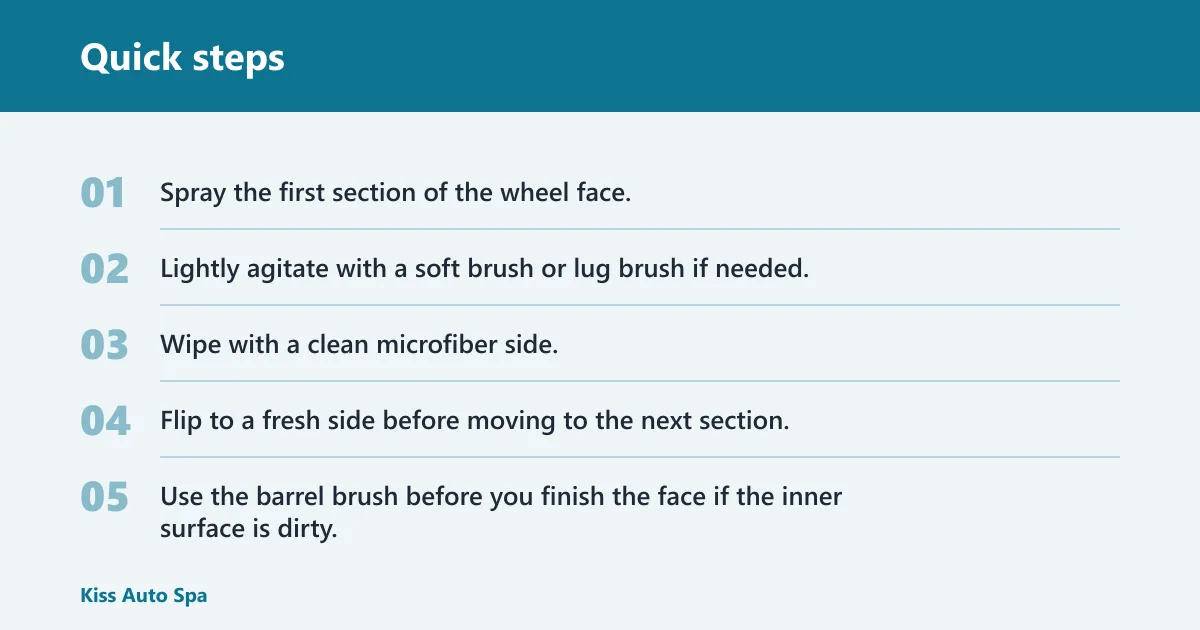
- Spray the first section of the wheel face.
- Lightly agitate with a soft brush or lug brush if needed.
- Wipe with a clean microfiber side.
- Flip to a fresh side before moving to the next section.
- Use the barrel brush before you finish the face if the inner surface is dirty.
Brush the barrel before wiping the face
The wheel barrel collects the most brake dust and is harder to reach than the face. If you wipe the face first and ignore the barrel, loose contamination can move back onto the wheel during the final wipe. A barrel brush helps remove that buildup before you finish the visible areas.
Picture a compact car parked in an underground garage after a wet week. The wheel face may look only dusty, but the barrel can hold darker brake dust and grit. If the wheel barrel feels gritty when brushed dry, stop and use a proper wash later instead of forcing a no-hose cleanup.
What should you do about brake dust and mud?
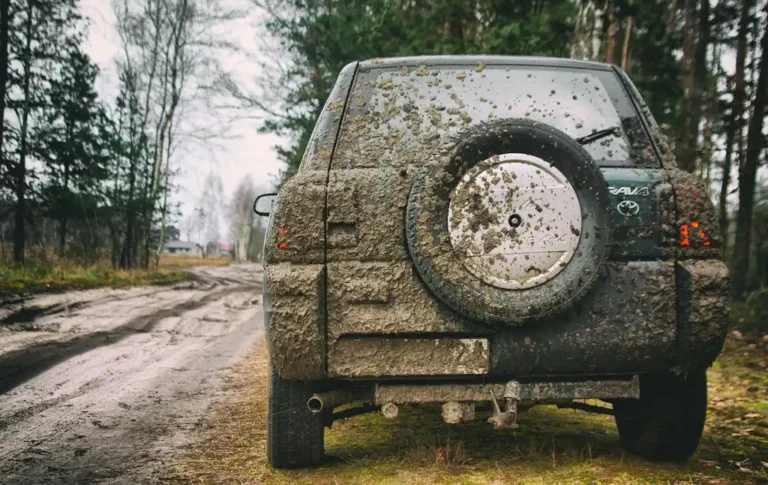
Brake dust is often the main concern because it can be abrasive when dry. Mud and sand are even worse for no-hose cleaning, because they bring larger particles that scratch more easily. If you see caked dirt, the answer is not more spray. The answer is to stop wiping and wait for a real rinse.
Why dry brake dust is the main risk
Brake dust can sit on the face, spokes, lug area, and barrel. Once dry, it behaves like fine abrasive grit. That is why a towel pass can turn into a scratch event if the wheel is not actually light-soiled. A clean-looking wheel can still hide gritty residue in the barrel and lug recesses.
Why caked mud is a stop sign
If mud is caked on, a waterless cleaner is the wrong tool. The product can soften the surface layer, but it does not give you enough flush action to remove packed contamination safely. Heavy buildup also loads towels quickly, which increases the chance of streaking and dragged particles.
When to abort the no-hose method
Abort if you see loose grit, sand, mud, or heavy brake dust. Abort if the towel grabs instead of gliding. Abort if the wheel barrel is packed. Abort if product is drying before you can wipe it. Those are signs that the contamination level has moved beyond no-hose cleaning.
Wheel cleaning tool count
Tool count matters because no-hose work is towel-heavy. You need enough clean sides to avoid re-depositing dirt, plus brushes sized for the face, lug area, and barrel. The table below gives a practical per-wheel estimate for light, moderate, and heavy dirt.
| Dirt level | Estimated microfiber towels per wheel | Product use per wheel |
|---|---|---|
| Light | 2 | About 3-5 sprays of waterless wheel cleaner |
| Moderate | 3-4 | Enough rinseless solution to mist the section and refresh the brush as needed |
| Heavy | 0 for cleaning; use a full wash later | No safe no-hose amount; do not keep adding product to a dirty wheel |
Minimum tools by wheel area
For the face, use a soft wheel brush. For the lug area, use a smaller brush that can reach around bolt recesses. For the barrel, use a barrel brush. For wipe-off and drying, keep multiple microfiber towels ready and rotate them often so you always have fresh sides.
Drive Freshly recommends a barrel brush for the wheel’s inner surface, and that is sensible because the barrel traps the dust that the face hides. Auto Geek forum user Mike Phillips described an indoor wheel wash with a pressurized sprayer filled with water, a Wheel Woolies boar’s hair wheel brush, and a TUF SHINE tire brush. The key idea is the same: controlled liquid, soft tools, and a way to rinse away loosened grime.
Can you clean tires without a hose too?
Yes, but with the same limits. Tire cleaner can be used without a hose if you can wipe up residue and remove the loosened brown film, but you still need a way to collect runoff and refresh towels. Tires often hold more embedded grime than the wheel face, so do not assume a quick spray is enough.
Use a separate tire brush, and do not cross-contaminate the wheel towels. If the sidewall sheds heavy brown residue or the cleaner looks muddy after the first pass, treat that as a sign to stop and finish the tire later with proper rinse water.
Wheel finish considerations
Finish matters because the same no-hose method does not behave the same way on every surface. Polished aluminum, chrome, matte, and coated wheels all show residue differently, and some finishes are less forgiving if product dries or a towel drags on grit.
Polished aluminum
Polished aluminum can show streaks fast. Keep the surface wet with product only long enough to wipe it clean, and avoid repeated dry passes. If the wheel has heavy oxidation or thick brake dust, no-hose cleaning is not the right first step.
Chrome
Chrome can handle careful wipe cleaning, but it also makes residue obvious. Use clean microfiber towels and stop if the towel starts dragging. Any grit left on the towel can leave visible marks on a bright chrome finish.
Matte wheels
Matte wheels need extra care because dried residue can leave a blotchy appearance. Do not overwork one spot. Use a light touch, keep the wheel cool, and avoid products that leave gloss or heavy residue unless the label says they are safe for matte finishes.
Coated wheels
Coated wheels are often easier to maintain, but they are not scratch-proof. A dry towel and trapped debris can still mar the surface. If brake dust is heavy enough that the towel is loading fast, switch to a proper wash instead of trying to power through it.
Frequently asked questions
Can you clean wheels without water or a hose?
Yes, but only for light contamination. A waterless wheel cleaner can handle thin brake dust and road film on a cool wheel. If you see grit, sand, mud, or heavy dust, stop and use a rinseless method or wait for a proper wash.
What can I use to clean car wheels if I don’t have a hose?
Use a waterless wheel cleaner for light dirt and a rinseless wash product for moderate dirt. Add microfiber towels, a soft wheel brush, a small lug brush, and a pump sprayer. That gives you controlled application, wipe-off, and a rinse substitute without a hose.
Is waterless wheel cleaner safe on all wheel finishes?
No product is safe on every finish in every condition. Waterless cleaner is better for light dust on most finishes, but polished aluminum, chrome, matte, and coated wheels need careful wiping and immediate towel rotation. If the wheel is gritty or heavily soiled, do not use it.
Can I use a rinseless wash on wheels instead of water?
Yes. A rinseless wash product is the better no-hose option when contamination is more than light dust. It is more lubricated than regular car shampoo and works well in garages or indoors. It is not the same as a waterless spray, and it still needs wipe-off.
How do you clean heavily dirty wheels without running water?
You generally do not. Heavy brake dust, caked mud, sand, and loose grit are stop signs. At that point, dry wiping is risky and repeated spray passes can load the towel with abrasive debris. Wait for a proper wash with real rinse water.
What tools do I need to clean wheels without a hose?
Keep microfiber towels, a soft wheel brush, a smaller lug brush, a barrel brush, and a pump sprayer on hand. For tires, add a separate tire brush. Those tools let you clean the face, spokes, lug area, and barrel without dragging dirty towels across the finish.