What Is a Waterless Wash for Cars?
A waterless wash for cars is a spray-and-wipe cleaner for light dust and fresh grime, and it is generally used only when the paint is smooth rather than gritty or muddy. Used on heavier dirt, it can grind contaminants into the finish and leave scratches. This guide explains where it works, when to stop, and how it compares with a quick detailer and a traditional wash.
What is a waterless wash?
A waterless car wash spray is a spray-on cleaning chemistry that works without a hose or bucket. It is meant for quick cleaning on lightly dusty paint, pollen, and small bug residue, not for a full reset after heavy road film or dried mud. (Caranddriver)
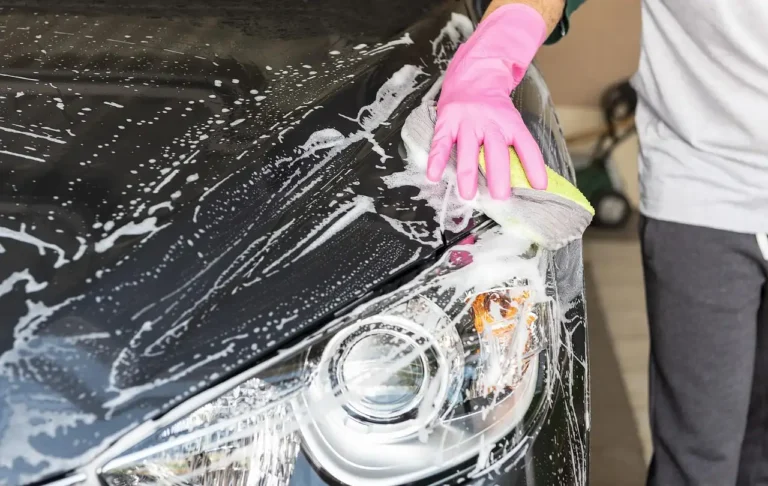
Used correctly, the spray loosens surface dirt so a microfiber cloth can lift it away instead of dragging it across the paint. That is why the method fits maintained cars best, especially finishes that are already in good shape and only need a light clean.
What it removes well
Small bugs, dust, pollen, and light splash marks are the common target soils. Those contaminants sit on the surface and can be removed panel by panel without a rinse, as long as the paint is smooth and the towel stays clean.
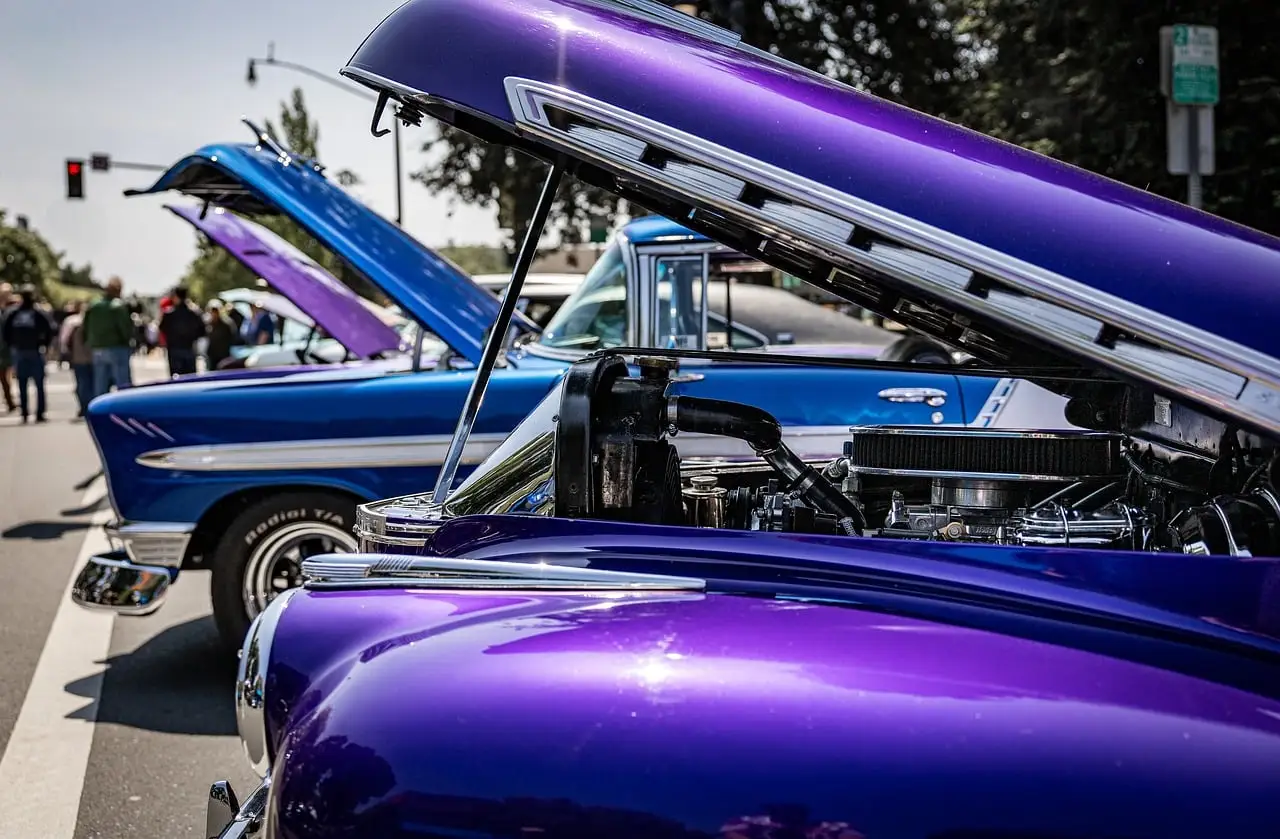
It is a better match for a show-car or well-maintained paint job than for a neglected vehicle. A car that has not been washed in a long time usually carries too much grit for a spray-and-wipe method to be the first step.
What it is not meant to do
A waterless wash is a quick touch-up, not a full wash replacement. It does not replace a traditional wash and wax when the car has heavy soil, thick grime, or a layer of road film that needs a deeper reset.
It also is not the right answer for muddy panels or for paint that feels abrasive. On those surfaces, the safe choice is to stop and use a traditional wash first.
When should you use one?
Use a waterless wash when the car has light dust, pollen, or small bug residue and you want a fast clean without pulling out a hose. It is especially practical when hose access is limited, such as in apartments, water-scarce areas, or while traveling.
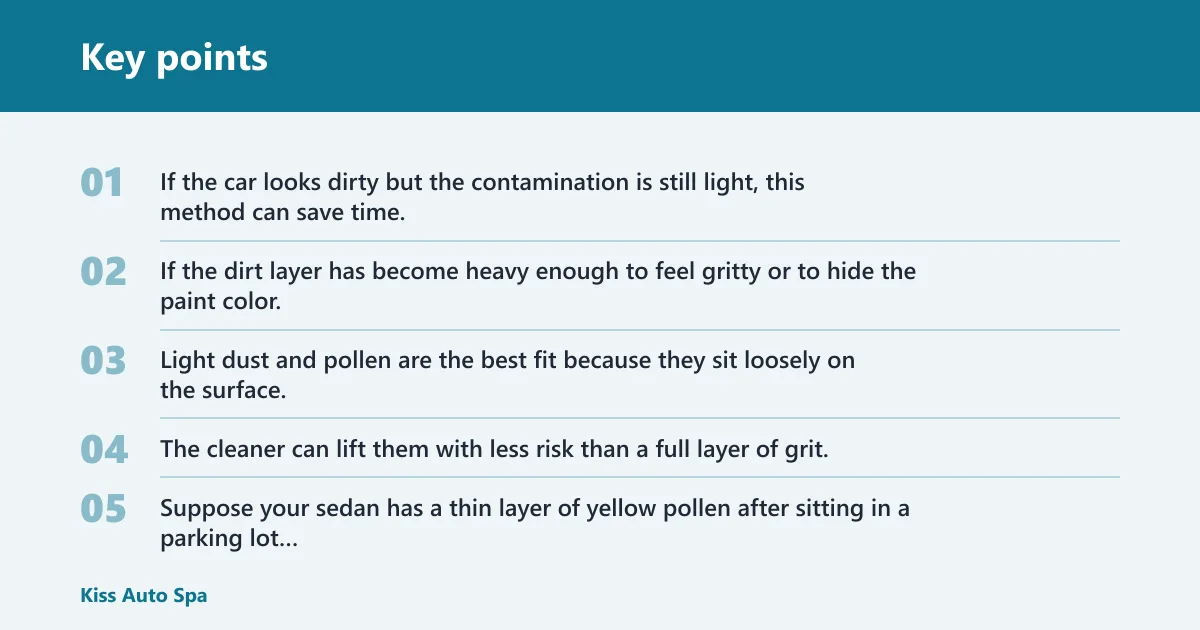
If the car looks dirty but the contamination is still light, this method can save time. If the dirt layer has become heavy enough to feel gritty or to hide the paint color, it is past the safe range.
Light dust and pollen
Light dust and pollen are the best fit because they sit loosely on the surface. The cleaner can lift them with less risk than a full layer of grit, which is why maintained daily drivers are such common candidates.
Suppose your sedan has a thin layer of yellow pollen after sitting in a parking lot overnight. If the surface still looks smooth and the debris is only a light film, a waterless wash can handle that job.
Bug residue and small splash marks
Bug guts and small splash marks are also common target soils. They usually need a section-by-section approach, because the residue should be softened and lifted before it is wiped away.
The key limit is size and buildup. A few isolated marks are reasonable. A front bumper covered in dried insect remains, tar, and gritty residue is moving into traditional-wash territory.
When the paint is too dirty to risk
Do not use a waterless wash on cars that feel gritty to the touch. That grit is the warning sign that the dirt load is too heavy for a spray-only method, and the risk of scratching goes up fast.
Bird droppings and mud splashes also fall outside the safe zone in most cases. Those spots can be abrasive or chemically aggressive, so they deserve caution and often another method instead.
Can I use a waterless wash right now?
Use this checklist before spraying. It separates a safe light-touch cleaning job from a situation that needs a traditional wash first, and it keeps the decision based on the actual dirt level rather than guesswork.
Can I use a waterless wash right now?
| Check | Yes | No |
|---|---|---|
| Dirt level: is it a light dusting, pollen, or a few bug marks? | Go on | Stop |
| Grit test: does the paint feel smooth, not gritty, to a light touch? | Go on | Stop |
| Visible mud: are there no mud splashes or caked dirt on lower panels? | Go on | Stop |
| Bird droppings: are there none, or only a tiny fresh spot you can address carefully? | Go on | Stop |
| Towel count: do you have at least several clean microfiber sections ready? | Go on | Stop |
| Panel-by-panel plan: will you clean one section at a time? | Go on | Stop |
| Shade and temperature: is the panel cool enough for controlled wiping? | Go on | Stop |
| Product type: is this a waterless wash, not a heavy-degreasing cleaner? | Go on | Stop |
| Paint condition: is the finish already maintained, not heavily neglected? | Go on | Stop |
| Stop-conditions: if any panel starts to feel gritty, will you switch methods? | Use it | Traditional wash first |
If most answers are yes, use it. If the main issue is one dirty spot on an otherwise light-dust car, spot-clean only. If the paint is gritty, muddy, or heavily soiled, do a traditional wash first.
How do you apply it safely?
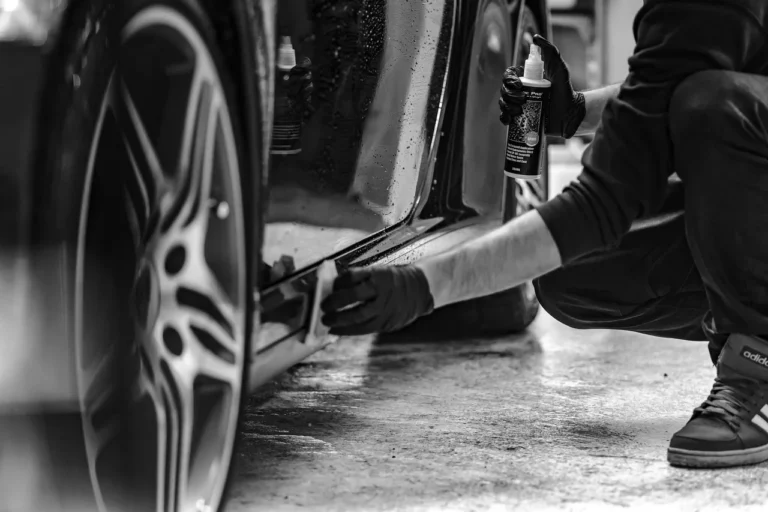
The safest method is simple: work one section at a time, wipe right after spraying, and keep moving to a clean part of the cloth as it loads up with dirt. The goal is to lift contamination, not drag it around.
- Choose a cool panel in shade.
- Spray one section, not the whole car.
- Wipe right away with a clean microfiber section.
- Use straight-line wiping, not tight circles.
- Flip to a clean section as soon as the cloth looks dirty.
- Finish with a light buff if needed.
Work one panel at a time
The one-section-at-a-time method matters because it limits how much dirt is sitting on the paint before you touch it. That is the practical reason the method stays safer on light contamination than on a full layer of grime.
A common first-timer mistake is spraying the whole hood, then getting distracted while the product sits. The safer habit is to spray a small area, wipe it right away, then move on.
Use clean microfiber sections
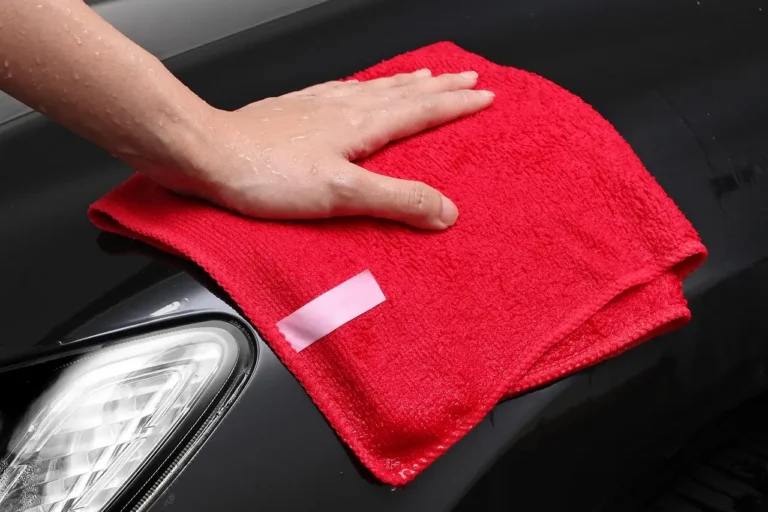
A clean microfiber cloth is not optional. It should be clean before you start, then flipped to a fresh section often so the dirt you picked up does not get dragged back over the finish.
Straight-line wiping is better than aggressive scrubbing because it reduces the chance of trapping debris in a swirl pattern. Once the towel shows visible soil, switch to a clean part or grab a fresh cloth.
Waterless wash vs quick detailer
Waterless wash and quick detailer are related, but they are not the same job. A waterless wash is the stronger cleaner, meant to remove light contamination without a rinse. A quick detailer is usually a lighter maintenance product for dust, fingerprints, or adding some shine.
Cleaning strength
If the car has more than a light film of dust, a waterless wash is the better pick. If the job is mostly a touch-up between washes, a quick detailer may be enough. The difference is cleaning capacity, not just packaging.
That matters because using a weaker detail spray on a dirtier panel can force extra wiping. Extra wiping means more opportunity to move grit around the paint.
Best use cases
Choose a waterless wash when the car needs a real light clean and you cannot rinse it. Choose a quick detailer when the surface is already clean and you only want to remove a small amount of fresh dust or add gloss.
For daily drivers, that means waterless wash for light dust after parking outside, quick detailer for fingerprints after a clean car has been sitting in the garage.
Where each product stops
Both products stop when dirt becomes gritty, muddy, or heavily layered. Neither one is meant to rescue neglected paint, post-rain road film, or panels with heavy contamination.
The decision line is practical: if you would want to rinse the car before touching it, neither product is the right first step.
Who is it best for?
Waterless wash fits drivers who need a fast clean without hose access. That includes apartment dwellers, people in water-scarce areas, and travelers who keep a compact cleaning kit in the trunk.
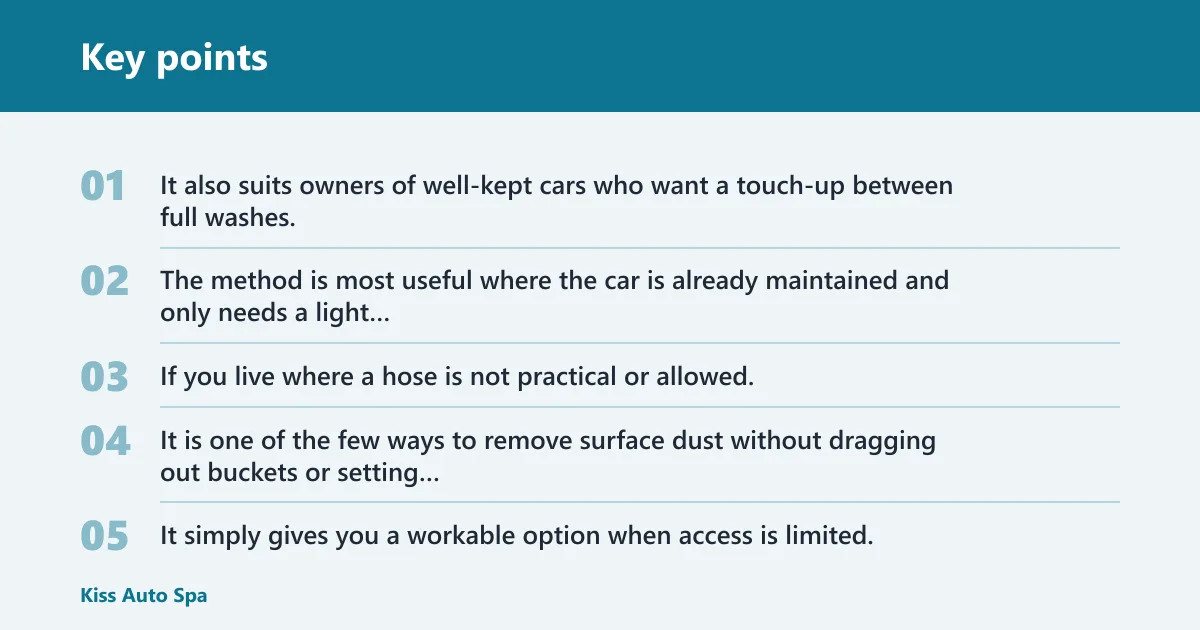
It also suits owners of well-kept cars who want a touch-up between full washes. The method is most useful where the car is already maintained and only needs a light surface reset.
Apartment and no-hose owners
If you live where a hose is not practical or allowed, this product can fill the gap for light cleaning. It is one of the few ways to remove surface dust without dragging out buckets or setting up a wash area.
That does not mean it replaces every wash. It simply gives you a workable option when access is limited.
Travel and trunk-kit use
Waterless wash is portable, so it works well as a trunk-friendly solution. That makes it useful after a road stop, a parking-lot bug splash, or a dusty travel day when the car needs a quick reset.
Because the product is used on small sections, it is easier to carry and use than a full wash setup. That convenience is part of the value, but only when the dirt level stays light.
Show-car and well-kept paint
Car and Driver says these sprays work best on well-maintained paint jobs, which matches the practical use case. A show-car finish or a carefully kept daily driver can benefit from a light touch-up or a shine boost between proper washes.
They are not meant to bring a neglected vehicle back to baseline. For that, you need a deeper wash and, after that, the right protection step.
Wax and ceramic versions
Some waterless wash sprays include wax or ceramic ingredients, but those additives are optional rather than required. The core cleaning result is similar to non-additive sprays, while the extra ingredients may help durability over time.
That means you should pick the product for the cleaning job first. The additive is a secondary feature, not the reason the panel gets clean.
What the additives do
Wax or ceramic ingredients may leave behind a thin protective residue after cleaning. That can be useful if you want a little extra protection between full detailing sessions.
Car and Driver notes that immediate results were similar across additive and non-additive sprays. So the cleaning step itself is not the place to expect a dramatic difference.
When the extra protection matters
If the car is already maintained and you want a bit more durability over time, the additive version can make sense. If you only need a fast cleanup, the standard formula is often enough.
Do not buy an additive spray expecting it to fix poor prep or heavy dirt. It may leave a nicer finish, but it does not change the dirt threshold that makes the method safe.
Frequently asked questions
What is a waterless wash for cars?
It is a spray-and-wipe cleaner used without a hose or bucket. The job is to remove light surface contamination from paint, glass, and trim when the car is only dusty, lightly bugged, or carrying a small amount of fresh grime.
What is the best waterless wash for cars?
The best product is the one matched to the dirt level and your use case. For light maintenance, choose a formula meant for waterless cleaning, use clean microfiber towels, and keep the job limited to panels that are not gritty or muddy.
Is waterless car wash better?
It is better for light contamination, limited water access, and quick touch-ups. It is not better for heavy dirt, road film, or neglected paint. For those jobs, a traditional wash is the safer and more complete option.
Are waterless car washes any good?
Yes, when the car is a good candidate. They work well on light dust, pollen, bug residue, and other small contaminants. They are much less suitable once dirt becomes gritty, muddy, or widespread across the body panels.
Quick detailer vs waterless wash
A waterless wash is the stronger cleaner, while a quick detailer is usually for lighter maintenance work. If the panel needs real cleaning without a hose, use the waterless wash. If the car is already clean and only needs a small dust removal or shine touch-up, use the quick detailer.