How Much Does a DIY Car Upholstery Stain Kit Cost?
A DIY car upholstery stain kit usually costs about $15 to $45 as a starter bundle, while refill packs or spot-only add-ons run about $8 to $20. Choose the starter kit if you need scrubbing pads, extractor fluid, and a brush, not just cleaner. Buying the wrong kit can leave you short on the one tool cloth seats need, so the stain stays visible and you spend more later. This guide breaks down starter vs refill pricing and which stain types justify each budget tier.
Tools vs cleaners: what drives costs
The real cost depends on whether you are buying reusable tools once or buying cleaning supplies that get used up. A kit built for a fresh spill can stay cheap. A kit meant for odor, set-in stain, or roadside cleanup usually costs more because it needs more than one cleaner and a better tool set.
Reusable tools versus consumables
Reusable items are the parts you keep: spray bottle, microfiber cloths, soft-bristled brush, vacuum, bucket, and a whisk or hand mixer for foaming or mixing. Consumables are the part you spend again: dish soap, white vinegar, baking soda, isopropyl alcohol, hydrogen peroxide, club soda, and any ready-mixed cleaner. The split matters because a low first purchase can become a higher per-use cost if you keep repurchasing the same basics.
Core ingredients and add-ons
For cloth seats, a water-based cleaner usually starts with water and a small amount of dish soap, or a mild mix with vinegar or baking soda. Isopropyl alcohol works for some spot cleaning, and hydrogen peroxide can bleach or lighten fabric if it is used too strongly. Club soda and shaving cream appear in some home recipes, but they are add-ons, not a full plan for heavy stains.
What changes the price most
The biggest price swing comes from tools, not liquid. A spray-only kit costs less than a kit with a brush and vacuum access. A portable upholstery cleaner costs far more up front, but it can make sense for pet stains, repeated spills, or seats with odor that keeps coming back after spot cleaning.
How much diy car table
This table prices the kit by use case, not by recipe alone. Reusable tools are counted separately from consumables so you can see the first-kit cost and the refill cost side by side.
| Budget tier | Exact components | Reusable vs consumable | Estimated cost range | Stain scenarios it fits |
|---|---|---|---|---|
| Starter kit | Spray bottle, 2 to 4 microfiber cloths, soft-bristled brush, small bucket, dish soap or upholstery cleaner, white vinegar, baking soda | Reusable: spray bottle, cloths, brush, bucket. Consumable: cleaner ingredients | $15 to $45 | Fresh spill, light-seat only cleanup, minor odor, first-time cloth seat stain removal |
| Refill kit | Refill cleaner, extra microfiber cloths, baking soda, dish soap, isopropyl alcohol, club soda | Reusable: cloths if already owned. Consumable: liquid cleaner, powders, spot agents | $8 to $20 | Fresh spill, odor touch-up, spot cleanup after the starter kit is already owned |
| Emergency trunk kit | Travel spray bottle, small cloth pack, stain remover, disposable towels, club soda, baking soda, portable vacuum access or small hand vac | Reusable: bottle and cloths. Consumable: towels, cleaner, soda, powders | $18 to $60 | Emergency roadside cleanup, fresh spill, fast blotting before a stain sets |
How much do you really need to spend?
For a fresh spill, the cheapest workable kit is usually the starter or refill bundle, depending on what you already own. For odor or a stain that has dried in place, the better buy is often the midrange kit because it includes a brush, more cloths, and enough cleaner for repeat passes without over-wetting the seat.
Cheap kit for fresh spills
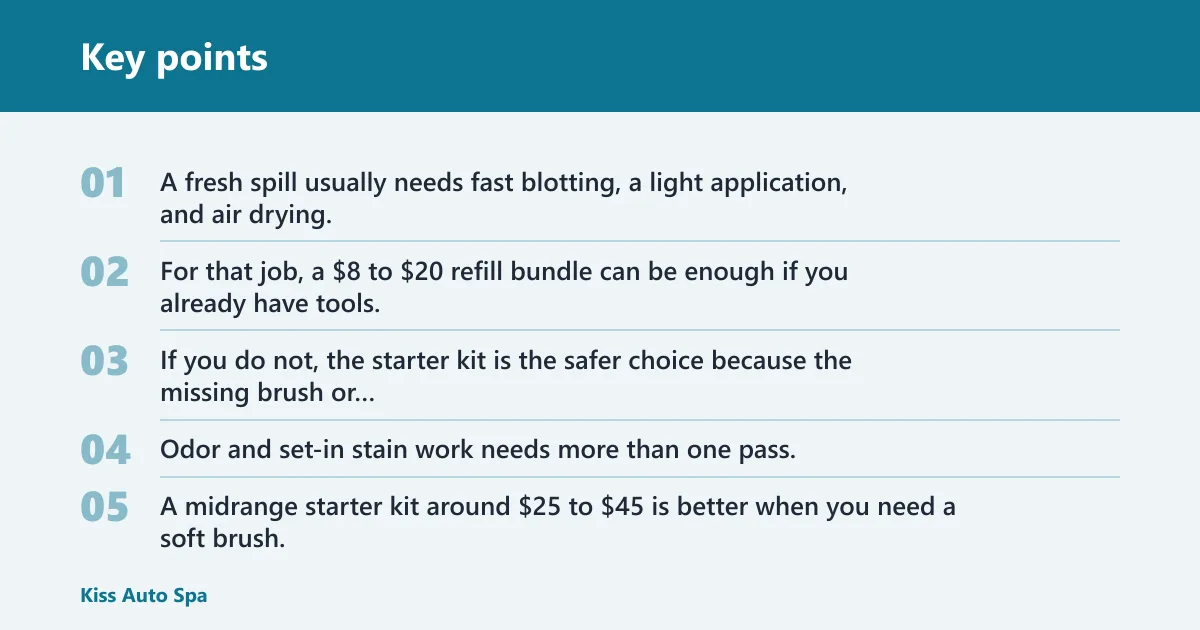
A fresh spill usually needs fast blotting, a light application, and air drying. For that job, a $8 to $20 refill bundle can be enough if you already have tools. If you do not, the starter kit is the safer choice because the missing brush or microfiber cloths often cost more to add separately than to buy in a bundle.
Midrange kit for odor and set-in stains
Odor and set-in stain work needs more than one pass. A midrange starter kit around $25 to $45 is better when you need a soft brush, several cloths, and a cleaner that can be applied lightly without soaking the foam underneath. Say your passenger seat has a two-day-old coffee ring and a sour smell; a refill-only purchase may leave you without the tools to lift residue.
When the high end is worth it
The higher end becomes sensible when you keep dealing with pet stains, repeated food spills, or a larger cleanup area. A portable upholstery cleaner can make more sense than another bottle of spray if the seat needs suction, not just wiping. Repeated attempts can also push you toward professional cleaning, especially when the stain keeps returning after drying.
What goes in the kit?
A practical kit needs cleaner ingredients, tools for application, and one or two extras for harder stains. You do not need every item for every job, but the right mix depends on whether you are cleaning a single fresh spot or a broader seat panel with odor and residue.
DIY cleaner ingredients you can buy
Common water-based cleaner ingredients include water, dish soap, white vinegar, baking soda, isopropyl alcohol, hydrogen peroxide, club soda, and shaving cream. These are cheap in small amounts, but the mix must fit the fabric and the stain. Hydrogen peroxide can bleach or lighten fabric, so it belongs near the cautious end of the list.
Cleaning tools for cloth seats
For cloth car seats, the basic tool list is simple: spray bottle, microfiber cloths, soft-bristled brush, vacuum, bucket, and a whisk or hand mixer if you want to mix foam or a light solution quickly. Vacuuming first removes loose grit, so you do not press it deeper into the seat while scrubbing.
Optional items for harder stains
A portable upholstery cleaner is the main add-on for harder stains. It is a spot-cleaning device for car interior use, and price points around $54 to $99 are common for this class. It makes sense when pet stain and odor cleanup keeps returning after a spray-and-wipe pass.
Which fabric cleaning code is on your seat?
Your seat code determines how far you can push a DIY cleaner. W and W/S fabrics accept water-based cleaning, S means solvent only, and X means vacuum or a gentle brush only. If you ignore the code, a cheap kit can become expensive fast because the wrong cleaner can damage the panel.
W and W/S seats
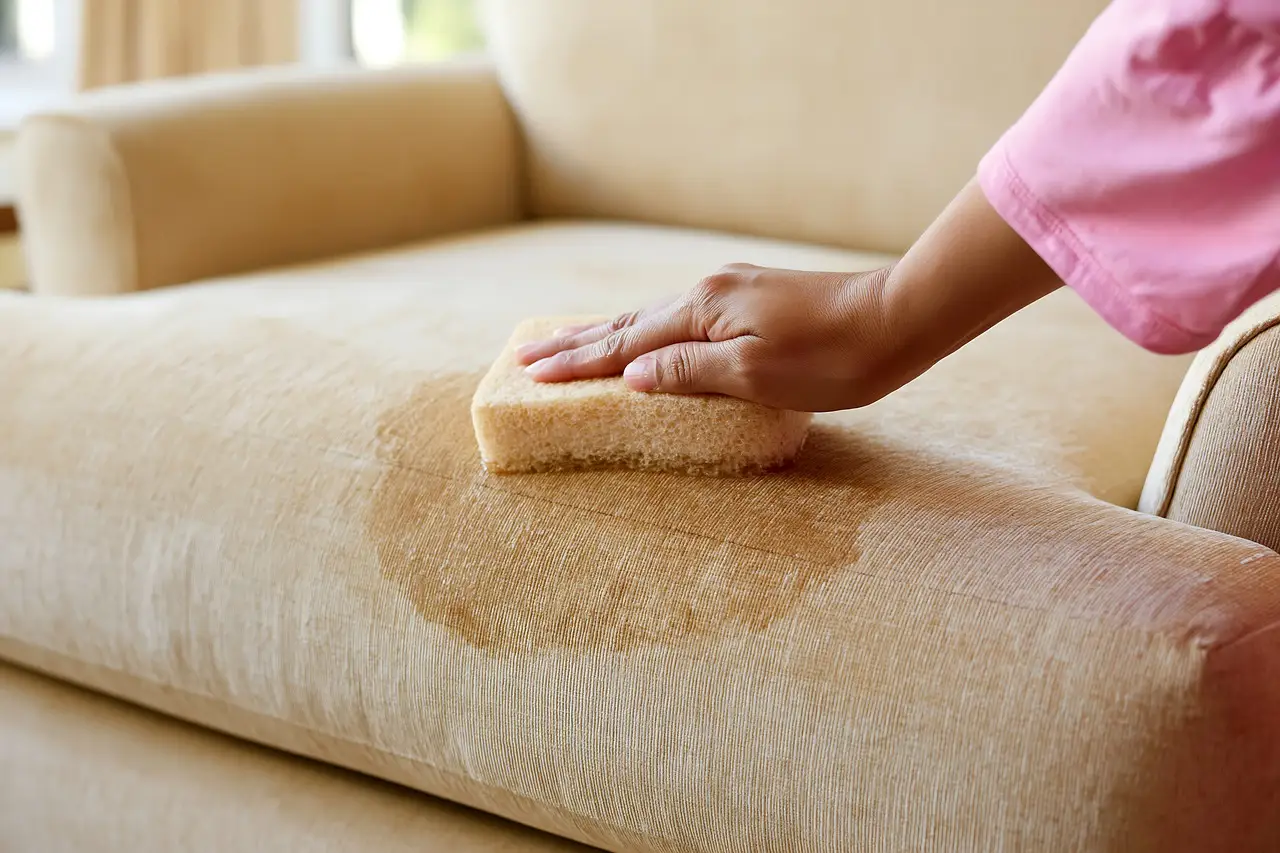
W seats are the most DIY-friendly because water-based cleaner is allowed. W/S seats give more flexibility, but light application still matters. Use suds, not water soaking the cushion, and stop after the stain releases. A soft brush and microfiber cloth are usually enough for many food and drink marks on these fabrics.
S-only seats
S-coded fabric is for solvent-only cleaning, so a vinegar or dish-soap mix is not the right first move. A DIY kit for this code should focus on a compatible solvent cleaner and very limited application. If the stain is set in, repeating the wrong wet cleaner can cause more trouble than the stain itself.
X-coded seats and limits
X-coded seats are the least forgiving. Vacuuming and a gentle brush are the safe baseline. Picture a black cloth panel with a dried juice ring on an X-coded insert; a water-heavy spray can push the stain deeper or distort the surface, so a pro may be the cheaper route than repeated home attempts.
DIY cleaner or store-bought spray?
DIY mix ingredients are usually cheaper per batch, but store-bought sprays save time and reduce guesswork. A 22 oz bottle, a 19 oz bottle, or a 16 oz shampoo can be worth the extra cost if you only need one or two spots handled cleanly. The better choice depends on stain size, fabric code, and how often you expect to clean.
Price per bottle versus batch cost
Store-bought car upholstery cleaners commonly run at about $6 to $16, depending on size and format. That price buys convenience and a known formula. A DIY batch can cost less per use, but only if you already own the spray bottle, cloths, and brush. Otherwise, the first purchase is not as cheap as it looks.
When a 22 oz or 19 oz bottle makes sense
A 22 oz bottle or 19 oz bottle makes sense when you want a ready-made cleaner for a few seats and do not want to mix ingredients. It is also useful if the stain is fresh and you need fast cleanup without measuring. The price gap to DIY narrows when you count the cost of reusable tools you still need to buy.
When a portable upholstery cleaner is the better buy
A portable upholstery cleaner is the better buy when stain and odor return after surface wiping, especially on pet messes or larger fabric areas. Because it combines liquid application with suction, it can do what a spray bottle cannot. If repeated cleaning attempts keep failing, that machine may beat another round of spray-only buying.
Suggested rule of thumb: use a spray-only kit for a fresh spill, step up to a starter bundle for a set-in stain, and consider a portable machine if you need more than two or three thorough attempts. Repair quotes can vary by 25 percent or more between shops, so compare the cost of more DIY attempts against a written shop quote before you keep spending.
A common first-timer mistake is buying a full premium kit when a small spot-cleaning kit would cover the stain on one cloth seat. Suppose a soda spill sits on a sedan cloth seat overnight. A light clean with suds, a cloth, and air drying may still work, but if the fabric is S or X coded, the cheaper move may be stopping early and getting a pro estimate.
Frequently asked questions
How much does a DIY car upholstery stain kit cost?
A DIY car upholstery stain kit usually costs $15 to $45 as a starter bundle, with refill-only packs often around $8 to $20. The first purchase costs more because it includes tools like a spray bottle, cloths, and a brush. If you already own those items, the refill path is the cheaper route.
What comes in a DIY car upholstery stain kit?
Most kits include a spray bottle, microfiber cloths, a soft-bristled brush, and cleaner ingredients such as dish soap, white vinegar, baking soda, or a ready-mixed upholstery cleaner. Better kits add a small bucket and a way to mix the solution. The exact mix depends on cloth seats and stain type.
Is a DIY upholstery cleaner cheaper than store-bought?
Usually, yes, but only after the reusable tools are already in hand. Store-bought car upholstery cleaners commonly cost about $5.97 to $16.09 per bottle. DIY batches can be cheaper per use, but the first kit may cost more once you buy cloths, a brush, and a spray bottle.
Do I need a spray bottle, brush, and vacuum for car seat stains?
For cloth seats, yes, those tools are the baseline for a practical stain kit. The vacuum removes grit first, the spray bottle controls application, and the brush helps lift residue without heavy scrubbing. If the stain is fresh, that trio is often enough to start before adding stronger products.
What is the cheapest way to clean car upholstery stains?
The cheapest safe approach is to vacuum first, blot with a microfiber cloth, then use a light DIY water-based cleaner on a W or W/S seat. A small batch of dish soap, water, or vinegar can be enough for a fresh spill. Avoid soaking the cushion, because water damage costs more than the stain.
How much does a portable upholstery cleaner cost for car seats?
A portable upholstery cleaner for car seats usually costs about $53.75 to $98.94. It is a spot-cleaning device meant for interior use and is often chosen for pet stains and odor. That price is higher than a spray bottle, but it can save time on repeated or larger cleanups.