Upholstery Stain Remover Spray vs Foam for Car Seats
Use Upholstery stain remover spray for watery, ground-in, or larger stains on cloth seats, and foam for car seats for surface soil, light spills, or when you want less soak; the better choice is the one your seat fabric can dry from quickly without leaving a ring. Pick the wrong format, and you can push stain edges deeper, saturate the padding, or leave residue that grabs new dirt. This guide compares spray and foam by stain type, moisture tolerance, and the tools you already have.
This guide is part of our Upholstery stains on car seats: removal guide series.
| Decision factor | Upholstery stain remover spray | foam for car seats | Winner |
|---|---|---|---|
| Fresh spills | Targets the spill directly and is easier to blot before it spreads | Can work, but foam often sits on top longer than needed for a fresh spill | Upholstery stain remover spray |
| Set-in stains | May need repeated passes and more towel work | Clings to fabric and reaches into the pile more effectively | foam for car seats |
| Moisture control | Usually the lower-moisture option for spot treatment | Often needs more dwell time, agitation, and sometimes extraction | Upholstery stain remover spray |
| Deep residue removal | Good for local cleanup, especially with a microfiber towel | Better when paired with agitation and a hot water extractor | foam for car seats |
| Tool demands | Works well with a towel-only approach | Works best with a brush, and sometimes an extractor | Upholstery stain remover spray |
Choosing spray or foam based on stain depth and fabric type
Upholstery stain remover spray is the faster spot-treatment choice when you need to keep the cleaner exactly where the stain is. foam for car seats is the stronger option when the mark sits deeper in cloth, especially on seat backs or other vertical surfaces where cling matters.
What spray does well
Spray fits quick cleanup. It lets you place cleaner only on the mark, then lift soil with a microfiber towel before it spreads into the padding. Good Housekeeping tested cleaners on their own naturally soiled car seats, and that kind of spot-focused work matches what spray does best.
Spray also dries faster than foam in most spot jobs. That matters on cloth car seats, which can hold moisture in the padding and leave rings if they stay wet too long.
What foam does well
Foam clings to fabric and vertical panels, so it can stay where you put it long enough to break down embedded soil. Thewearify notes that aerosol foams excel on vertical surfaces like door panels and seat backs, and Home To Sight says foam is ideal for thick fabric seats because it avoids oversaturation.
Foam also suits deeper cleaning. It often needs agitation, and foam cleaners often work best when followed by a hot water extractor, which can help pull out residue and moisture after the cleaner loosens the grime.
Quick comparison table
Fresh spill on cloth? Spray usually wins. Deep, set-in dirt? Foam usually wins. The middle ground is the seat itself: if the fabric dries slowly, spray is usually the safer first move because it limits soak and cuts the chance of watermarking.
| Situation | Best pick | Why it fits |
|---|---|---|
| Fresh coffee splash on a front seat | Upholstery stain remover spray | Fast, targeted application with blotting |
| Old grease near the seat seam | foam for car seats | Clinging action helps break up embedded soil |
| Seat feels humidity-sensitive or slow-drying | Upholstery stain remover spray | Lower moisture risk |
| Deep seasonal clean with extraction gear | foam for car seats | Pairs well with agitation and extraction |
Which stain type fits each format?
Fresh spills usually favor Upholstery stain remover spray because it lets you treat a small area fast and blot before the spill spreads. Set-in stains usually favor foam for car seats because the foam can cling, work into the fabric pile, and do more work before you wipe it away.
Fresh coffee and drink spills
Use spray for coffee, soda, tea, or a wet snack spill that has not soaked in yet. A microfiber towel is the core tool here: spray the spot, blot from the outside inward, and keep turning to a clean section so you do not push color back into the fabric.
Suppose a 3-inch coffee splash lands on a gray cloth seat and is still damp after a minute. Spray gives you the best chance to lift it before the liquid wicks into the foam below. Foam can work, but it usually adds more dwell time than a fresh spill needs.
Set-in food grease
For old grease, foam is usually the better format. Grease clings to fibers, and foam can sit long enough to loosen the soil before you agitate it with a fabric-safe brush. That extra dwell time matters more than speed when the stain has already dried.
An enzyme cleaner can help when the stain includes food residue, because it targets organic material and odor sources rather than masking the smell. It still needs dwell time, so do not wipe it off immediately.
Pet accidents and muddy buildup
Pet messes usually call for an enzyme cleaner first, then either spray or foam depending on how wet the area already is. For muddy buildup, foam is often the better starting point because it can sit on the surface and loosen the dried dirt before wiping or extraction.
Use spray when the goal is odor control on a small area and you want to keep moisture low. Use foam when the mess reached into the pile and you need cleaner contact across a wider patch.
Old watermarks
Old watermarks are more about moisture balance than stain chemistry. Spray is usually safer if you only need to soften the edge of a ring, because another heavy wetting can make the mark wider.
If the seat already has a tide line from over-wetting, foam is not the default fix. The real priority is controlled moisture, gentle agitation, and drying the area evenly so the ring does not reappear as the seat dries.
How much moisture can your seat handle?
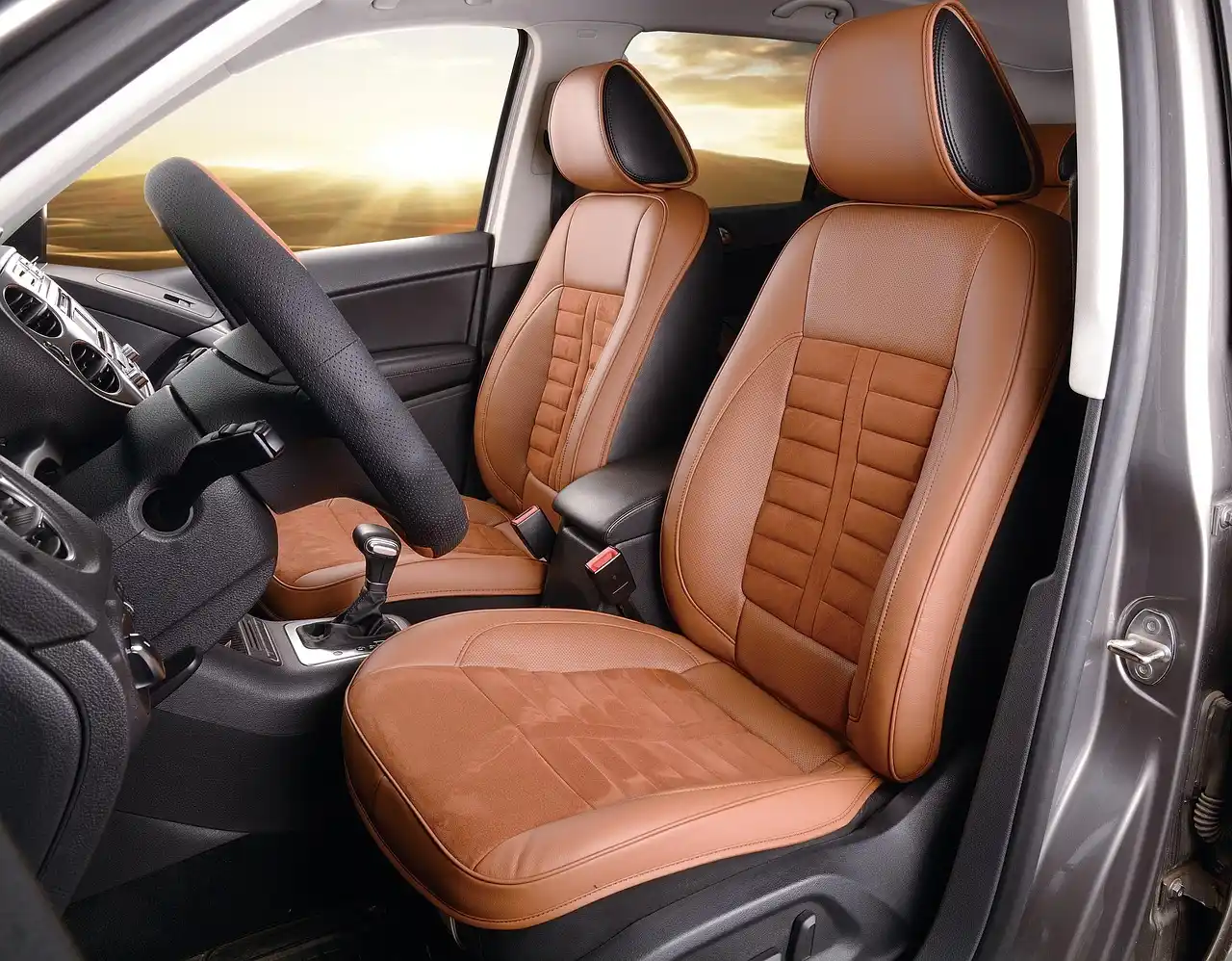
Cloth car seats can retain moisture in the padding, so the seat’s drying speed matters as much as the cleaner itself. A lower-moisture spray is often the safer first step on older, fragile, or humidity-sensitive interiors, while foam makes more sense when the seat can handle a deeper clean and you have a solid drying plan.
Why cloth seats can hold water in the padding
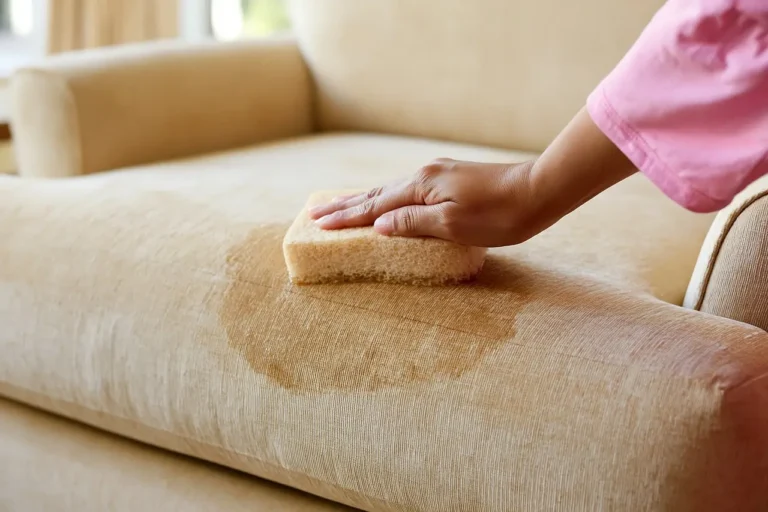
Fabric upholstery does not stop at the visible surface. Liquid can move through the pile and settle in the foam underneath, which is why over-wetting can leave marks, stretch dry time, and pull dissolved soil back to the top as it dries.
That is why a colorfastness test on a hidden area should come first. Motor Mosaicry recommends that test before use, and it is the safest way to check whether the seat fabric reacts badly to the cleaner or the moisture load.
Watermarks, residue, and long dry times
Watermarks usually appear when a cleaned area dries differently from the surrounding fabric. Too much liquid, too much residue, or uneven blotting can all make the ring worse instead of better. A microfiber towel helps remove dissolved soil and some leftover cleaner before it has a chance to set.
Some foam formulas need rinsing or extraction to keep residue from collecting new dirt. That is where a hot water extractor helps most: it removes loosened soil and excess moisture after foam has done the cleaning work.
When a pH-neutral formula matters
A pH-neutral formula is a safer pick for sensitive interiors and delicate fabrics. The same source lists pH-neutral cleaner ranges as 6.5 to 7.5, which is one reason these products are often preferred when you want less chemical stress on trim, stitching, and color-sensitive materials.
Good Housekeeping notes that some upholstery cleaners work on both leather and cloth seats, but that does not mean every product does. Armor All Carpet and Upholstery Cleaner Spray is not suitable for leather upholstery, so the surface label matters as much as the stain type.
What tools do you already own?
Your cleanup tools often decide the winner. If you already have an extractor and a brush, foam becomes more useful. If you only have a towel, spray is usually the practical choice because it matches a simple blot-and-lift method without adding too much water.
If you own a hot water extractor
Foam gets a major advantage when you can extract afterward. The cleaner can work into the fibers, then the extractor can pull out residue and moisture instead of leaving them in the seat foam.
That combination is best for seasonal deep cleaning, seat backs, and older seats that hold dirt in the pile. It is also the better route if the seat has been repeatedly spot-cleaned and now feels stiff or tacky from leftover residue.
If you only own a towel
Spray is the safer format when your tool kit stops at a microfiber towel. You can control the wet area, blot the stain, and keep the seat drier overall. MyTailorKit recommends spray application for stain removal on car seats, which fits a towel-first workflow.
A common first-timer mistake is soaking a whole panel because the stain looks bigger than it is. With spray, keep the application tight to the mark, blot immediately, and stop once the towel stops lifting soil.
Where an agitation brush fits
An agitation brush helps foam reach embedded soil. Armor All includes a removable scrubbing brush for stain agitation, and that kind of tool matters when the stain sits inside fabric pile instead of just on the surface.
Use a fabric-safe brush, not a stiff one that can fuzz or damage the weave. Brush only enough to work the cleaner in; aggressive scrubbing can spread the stain and distort the upholstery texture.
Car seat stain decision matrix
This matrix turns the choice into a practical call. Match the stain, check how dry-sensitive the seat is, then pick the format that gives you the least risk of watermarks or residue. If the seat is already damp or fragile, lean toward the drier path.
| Stain type | Seat condition | Best format | Risk to avoid |
|---|---|---|---|
| Fresh coffee | Light spill, visible on the surface | Upholstery stain remover spray | Over-wetting the padding |
| Set-in food grease | Dried, sticky, or darkened spot | foam for car seats | Leaving residue behind without extraction |
| Pet accidents | Organic odor and possible soak-in | foam for car seats | Masking odor instead of treating it |
| Muddy buildup | Dry soil in the fabric pile | foam for car seats | Scrubbing too hard and spreading the grime |
| Old watermarks | Humidity-sensitive or already ringed | Upholstery stain remover spray | Making the ring larger with extra moisture |
If you own an extractor: foam is usually the better lead choice for deep cleaning, because the extractor helps remove both loosened grime and leftover moisture.
If you only own a towel: spray is usually the safer pick, because you can blot immediately and keep the seat from getting overly wet.
When should you choose spray or foam?
Choose Upholstery stain remover spray when the stain is fresh, the seat dries slowly, or you only need a controlled spot treatment. Choose foam for car seats when the stain is set in, the fabric is thick, or you have the tools to agitate and extract after cleaning.
Choose Upholstery stain remover spray if…
Pick spray if the spill is still wet, the stained area is small, or you are working on a seat that already shows watermarks easily. It also makes sense when your main cleanup tool is a microfiber towel and you want the lowest practical moisture load.
Spray is also a better fit for quick maintenance cleaning. It is the format that keeps the job local.
Choose foam for car seats if…
Pick foam if the stain has dried, sits in the fabric pile, or needs more dwell time to break apart. It is also the stronger option when you have a brush and, ideally, a hot water extractor to finish the job cleanly.
Foam works best when you want deeper fabric cleaning rather than quick surface touch-up. For pet messes and food spills, pair it with an enzyme cleaner when odor is part of the problem.
A common first-timer mistake is choosing foam for a fresh coffee spill on a humid day. The cleaner can work, but the extra moisture can leave a ring that was not there before. A drier spray-and-blot approach usually avoids that tradeoff.
Frequently asked questions
Is upholstery stain remover spray or foam better for car seats?
Neither format wins every time. Spray is usually better for fresh spills, fast spot work, and seats that dry slowly. Foam is usually better for set-in stains, thicker fabric pile, and deeper cleaning when you can agitate the fibers and, ideally, extract afterward.
Which works better on fresh spills versus set-in stains on car seats?
Fresh spills usually favor spray because it lets you control the wet area and blot quickly. Set-in stains usually favor foam because it clings longer and can work into the fabric before you wipe it away. The cleaner that matches the stain age usually performs better.
Will foam leave my car seats too wet?
It can, especially on cloth seats with slow-drying padding underneath. Foam often uses more dwell time than spray, so the risk rises if you apply too much or skip extraction. If your interior is humidity-sensitive, spray is usually the safer starting point.
Can I use spray upholstery cleaner on cloth car seats?
Yes, spray is commonly used on cloth car seats for spot cleaning. It is especially useful when you want a low-moisture method and already have a microfiber towel ready. Always test on a hidden area first so you can check colorfastness and fabric reaction.
Do I need to rinse foam upholstery cleaner after using it?
Sometimes, yes. Many foam cleaners benefit from wiping, rinsing, or extraction so residue does not stay in the fibers and attract new dirt. If the label calls for extraction, use a hot water extractor after the foam loosens the stain.
How do I avoid watermarks after cleaning car upholstery?
Use the least moisture needed, work in a small area, and blot or extract evenly so the cleaned patch does not dry differently from the rest of the seat. Spray is usually the lower-risk choice when watermarks are already a concern or the fabric dries slowly.
Are upholstery stain removers safe for leather seats too?
Not always. Some cleaners work on both leather and cloth seats, but others are fabric-only. The same source notes that some products can handle both surfaces, while Armor All Carpet and Upholstery Cleaner Spray is not suitable for leather upholstery, so check the label before using any cleaner on finished leather.