Foam Cannon vs Bucket Wash: Which Is Safer for Paint?
Neither method is safer in every case: use a foam cannon first on heavily dirty cars because it cuts down early contact, and use a careful bucket wash with grit guards on lightly dirty paint or panels that already need gentle handling. Dirty prep, a contaminated mitt, or dry wiping create the scratches and swirl marks that later need correction. This guide compares foam cannon, bucket wash, and hybrid steps by dirt level, paint condition, and skill so you can choose the lower-risk method.
| Decision factor | Foam cannon | bucket wash | Winner |
|---|---|---|---|
| Paint safety on dirty panels | Lower contact before washing; a pre-soak can lift grit away from clear coat. | Safe when you keep the mitt clean and use the two-bucket method with grit guards. | Foam cannon |
| Light dust and weekly maintenance | Works well, but often adds setup time that light dust does not need. | Usually the simpler choice for a quick, controlled wash. | bucket wash |
| Heavy mud or salted road film | Better as a first step because it loosens surface grit before contact. | Can work, but a mitt hits more loose contamination if you skip a pre-rinse. | Foam cannon |
| Cost and equipment burden | Higher entry cost because it needs a pressure washer and cannon-style dispenser. | Lower cost and fewer parts: buckets, grit guards, and a soft wash mitt. | bucket wash |
| Time | Often faster; GearLab says it can cut wash time in half compared with a bucket. | Usually slower because every contact step is manual. | Foam cannon |
| Scratch risk from technique errors | Lower during the pre-soak, but false confidence can lead to scrubbing too soon. | Higher if the mitt stays dirty, but lower when the two-bucket method is done correctly. | tie |
When grit risk favors foam over mitt contact
The split is simple: foam lowers contact risk before you touch the paint, while a bucket wash gives tighter control during contact washing. A foam cannon uses a pressure washer and sprays thick foam that clings to paint, but the foam is a pre-wash step, not a full wash by itself. A bucket wash is the cheaper manual option and can be very safe when the mitt stays clean.
For dusty cars, either method can work well. For salty, muddy, or heavily filmed cars, the safer choice usually starts with foam because loose grit is more likely to move off the surface before the mitt touches it.
Which wash is safer for paint?
The safer method depends on how much contamination is sitting on the paint before you touch it. Foam cannon is safer when the car is loaded with road film, salt, or mud because it reduces early contact; bucket wash is safer when the car is only lightly dirty and you can keep the mitt clean from start to finish.
Why contamination changes the answer
Swirl marks come from dragging grit across paint, not from the wash label itself. If the panel is dusty, a careful bucket wash may be enough. If it is covered in gritty residue, the safer move is to loosen that residue first, then wash by hand with a clean mitt.
Say your sedan is parked outside for five days on a dry street and only has a thin layer of dust. A bucket wash with a grit guard and microfiber mitt is usually enough. Say the same car comes back from a salted highway drive with film at the lower doors and rear bumper. Foam first, then contact washing, is the lower-risk path.
Foam cannon vs bucket wash at a glance
A foam cannon setup usually uses a pressure washer and a cannon-style soap dispenser. A bucket wash often uses one or two buckets, grit guards, and a soft wash mitt. The differences matter because the tools shape how much grit stays on the paint and how much you move it during cleaning.
What the table means for different cars
Dusty cars favor the bucket wash because the contamination level is low and the process is cheap, controlled, and quick. Salty and muddy cars favor a foam-first routine because the surface load is higher and contact alone can drag abrasive grime around.
Coated cars are a special case. Ceramic or wax protection can make dirt release easier, but it does not remove the need for clean mitt technique. Protection helps the wash, but it does not make careless contact safe.
When is a foam cannon safer?
A foam cannon is generally safest as a pre-soak before any contact wash. It helps most when the paint has loose grit, road film, or winter salt that should come off the surface before a mitt touches it. Foam volume alone does not decide safety; lubricity, pre-rinse quality, and timing matter more.
Why a foam cannon helps most on loose grit
Foam clings long enough to soften and lift debris, which means less dry grit is left for the mitt to drag across the clear coat. That is the main safety gain. It is not a magic shield, and it does not replace contact washing when grime is still attached after rinsing.
Some reviewers say a foam cannon setup can cut wash time compared with a bucket, and one entry-level example lists the Active VE52 with a 35-foot hose and about 1,800 PSI. That lower time cost helps on larger vehicles, but speed should not tempt you to skip the rinse or hand wash step when contamination remains.
When foam alone is not enough
Foam alone is not enough when the car still feels gritty after rinsing, when there is sticky road film, or when the lower panels are caked with winter residue. In those cases, a foam pre-soak followed by a careful bucket wash is safer than trying to “finish” with foam only.
A common first-timer mistake is to spray thick foam, wait a minute, and then wipe the paint immediately with the same mitt used all around the car. That turns a helpful pre-soak into a scratch risk, because the contamination was never fully separated from the wash step.
Can a bucket wash be as safe?
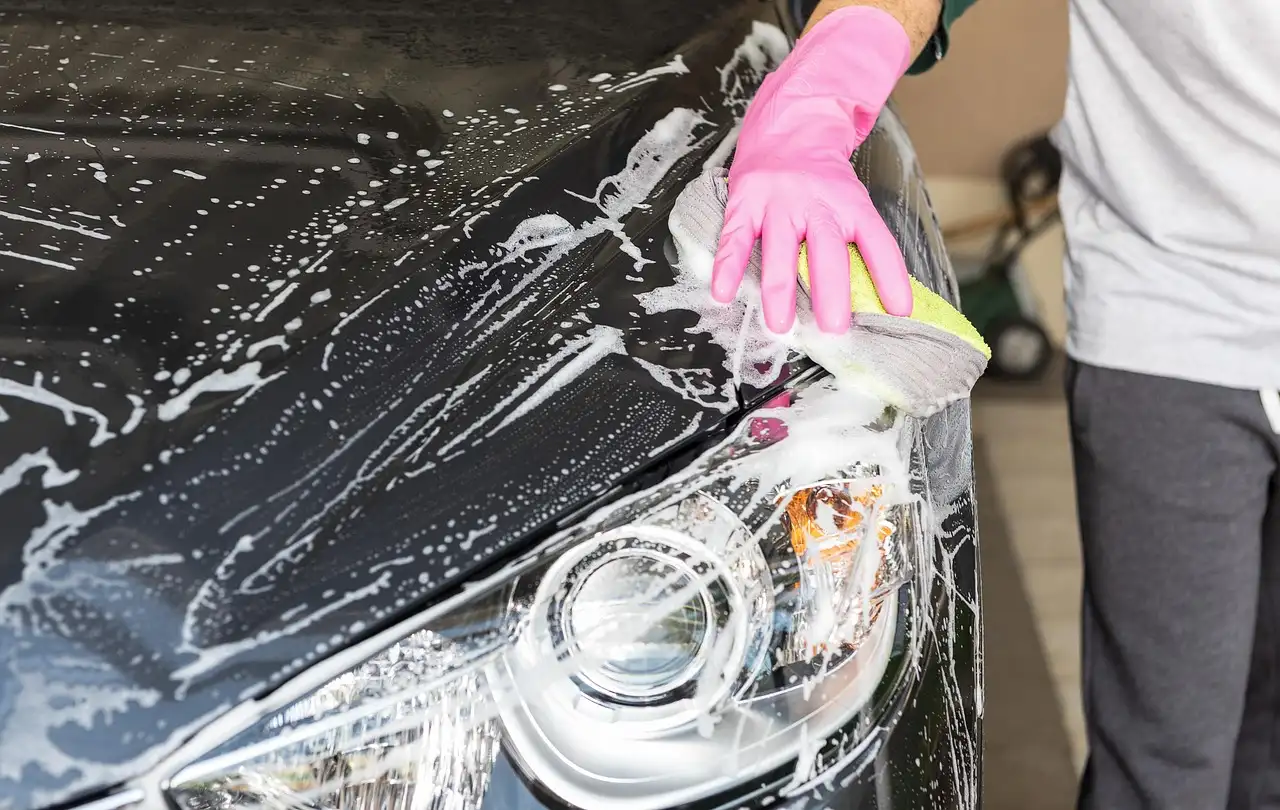
Yes, a bucket wash can be as safe as a foam-first routine when you keep contamination out of the mitt. The two-bucket method separates clean water from dirty rinse water to reduce swirl marks, and a grit guard in each bucket helps trap dirt below the wash surface. Microfiber mitts are preferred because they are softer and hold more lubrication than rougher alternatives.
Why the two-bucket method matters
The two-bucket method works because it gives the mitt a place to shed grit before it returns to the soap bucket. That reduces contamination transfer. A grit guard adds another barrier by helping dirt settle below the part of the bucket you draw from.
Car shampoo matters here too. pH-balanced options with strong lubricity are more important than foam volume alone, and some formulas work in both a foam cannon and a bucket if the dilution is compatible. Meguiar’s Gold Class, for example, is listed by GearLab at $12.99 for 64 oz and over 20 gallons of wash solution.
Common bucket-wash mistakes that raise swirl risk
- Using one bucket with no rinse bucket.
- Skipping grit guards.
- Rinsing the mitt too rarely.
- Reusing a mitt that picked up debris from rocker panels or wheel arches.
- Dry-wiping spots instead of rewetting them.
Those mistakes matter more than the bucket itself. A careful bucket wash can be very safe. A careless one can mark paint fast, especially on dark clear coat where swirls are easier to notice.
Swirl marks and scratch risk
Swirl marks happen when abrasive particles are dragged across the clear coat during contact washing. The risk rises when grit stays on the panel, when the mitt is dirty, or when the wash media loses lubrication. Pre-rinsing matters because it removes loose contamination before the mitt does the more delicate work.
How mitt care changes the outcome
A microfiber wash mitt should be rinsed often and kept away from wheel dirt. If it drops on the ground, stop using it on paint. That rule matters more than brand choice, because a contaminated mitt can scratch even when the soap is good.
Picture a black coupe with pollen on the hood and a light film on the doors. If the mitt is rinsed after each section and grit guards are used, the chance of new swirls drops. If the same mitt is dragged across the lower door after touching a dirty rocker panel, the risk rises quickly.
Foam cannon decision matrix
This matrix rates the three practical approaches on the factors that matter most for paint safety and ownership burden. The scores are relative rather than lab measurements. They are meant to help you pick the lower-risk method for the job in front of you.
| Option | Paint safety | Dirt load | Cost | Time | Scratch risk | Equipment burden |
|---|---|---|---|---|---|---|
| Foam cannon | High as a pre-wash | Best for heavy contamination before contact | Higher | Fast | Low during pre-soak, medium if used as a false finish | High |
| bucket wash | High when done with two buckets and a clean mitt | Best for light to moderate dirt | Low | Moderate to slow | Low to medium depending on mitt care | Low |
| Hybrid wash | Highest for many real-world washes | Best for heavy contamination and mixed conditions | Highest combined setup burden | Moderate | Lowest when the rinse and mitt control are disciplined | Highest |
Best choice by scenario
- Dusty: bucket wash first, unless the dust has become gritty.
- Salty: hybrid wash, starting with a foam pre-soak and a thorough rinse.
- Muddy: foam cannon first, then hand wash after the surface grit loosens.
- Coated: bucket wash for light dirt; hybrid wash if the panel still feels gritty.
Choose Foam cannon if… / Choose bucket wash if…
Choose Foam cannon if…
- The car has heavier dirt, salt, or road film.
- You want a fast pre-soak before contact washing.
- You already have a pressure washer and cannon-style dispenser.
- You plan to hand wash after foaming, not stop there.
Choose bucket wash if…
- The car is only lightly dusty.
- You want the lowest-cost setup.
- You can use two buckets, grit guards, and a microfiber mitt.
- You are careful about rinsing the mitt often and avoiding dry wiping.
Should I still hand wash after using a foam cannon?
Yes, in most cases you still need a hand wash after foaming. The foam cannon helps loosen grit and reduce contact risk, but it does not fully remove bonded dirt from the paint. If the panel still feels slick but not clean after rinsing, the safe next step is a careful mitt wash.
The exception is a very light, dusty refresh where the goal is only to loosen surface dust before rinsing it away. Even then, you should inspect the finish closely. If there is any remaining film, hand wash it.
Does a foam cannon need a pressure washer?
Yes. Foam cannon setups usually use a pressure washer and a cannon-style soap dispenser. Without pressure, the foam will not atomize and cling the way the tool is designed to work. Lower pressure and a wide spray tip are safer around delicate trim than blasting at close range.
That does not mean more pressure is better. It means the tool should be used carefully, especially near badges, seals, and soft trim where concentrated spray can be harsh.
What is the two-bucket method and why does it matter?
The two-bucket method separates clean wash water from dirty rinse water to reduce swirl marks. It matters because every rinse step removes grit from the mitt before the mitt returns to soapy water and back to the paint. That simple separation lowers contamination transfer during contact washing.
Use a grit guard in both buckets if possible. One bucket holds shampoo solution. The other holds rinse water. The mitt should go through the rinse bucket often, not after the whole car is complete.
Can foam cannon soap and bucket soap be the same product?
Often yes, if the product’s dilution works in both tools. A pH-balanced car shampoo with good lubricity can be suitable for a foam cannon and a bucket wash, but you still need to follow the dilution instructions for each method. Foam thickness is not the main quality that protects paint.
Some formulas are made to foam well in a cannon and still rinse clean in a bucket. The important check is compatibility, not bubbles. If the shampoo is too thin in the cannon or too strong in the bucket, adjust only within the maker’s dilution guidance.
Frequently asked questions
Is a foam cannon safer than a bucket wash for car paint?
Not always. A foam cannon is safer when the car is heavily soiled because it lowers the amount of contact needed before washing. A bucket wash can be just as safe on lightly dirty paint if you use the two-bucket method, grit guards, a microfiber mitt, and careful rinse technique.
Does a foam cannon reduce swirl marks compared with a bucket wash?
It can reduce them by loosening grit before contact, but only when you still rinse and hand wash correctly. Swirl marks come from abrasive particles moving across paint, so the real advantage is less contamination at the point of contact, not foam volume by itself.
Can a bucket wash be as safe as a foam cannon if done correctly?
Yes. With two buckets, grit guards, and a clean microfiber mitt, a bucket wash can be very safe on lightly contaminated cars. The main job is to keep grit out of the mitt and off the paint, which is exactly what the rinse bucket and guards are for.
What is the safest way to wash a car without scratching the paint?
Start with the least contaminated panels, pre-rinse well, and avoid dry wiping at every stage. For many cars, the safest routine is foam pre-soak, rinse, then a two-bucket hand wash with a microfiber mitt and grit guards. Keep the mitt clean and stop if the paint still feels gritty.