Paint Sealant vs Ceramic Coating: What’s the Difference?
Paint sealant is a short-term sacrificial layer that usually lasts months, while ceramic coating is a bonded protection system that can last years with stricter prep and maintenance. Pick the wrong one and you can spend money twice, seal in swirls from weak prep, or lose gloss and water behavior sooner than expected. This guide compares durability, prep, upkeep, cost, and the best use case for each.
| Factor | Paint sealant | ceramic coating | Winner |
|---|---|---|---|
| Lifespan | Months of protection; many products need reapplication every 4-6 months. | Multi-year service life when prep, cure, and maintenance are done correctly. | ceramic coating |
| Prep intensity | Usually tolerates lighter prep if paint is already clean and in decent shape. | Needs a cleaner, corrected surface because defects can be locked in. | Paint sealant |
| Cure time | Shorter before water exposure in most cases. | Longer; some systems list 4 hours initial cure and 3 days full cure. | Paint sealant |
| Chemical resistance | Good, but the barrier is thinner and wears faster. | Stronger resistance to bird droppings, bug residue, salts, and road grime. | ceramic coating |
| UV resistance | Helps, but the protection window is shorter. | Better long-term defense against oxidation and gloss loss in hot, sunny climates. | ceramic coating |
| DIY difficulty | Easier to apply and more forgiving. | More demanding because prep, panel wipe, and cure control matter. | Paint sealant |
| Cost per year | Usually lower upfront, but repeated applications add labor and material over time. | Higher upfront, but the longer service life can lower annualized cost. | Depends on ownership timeline |
| Winter performance | Useful, but salt and grime can shorten real-world performance. | Better choice for repeated salt exposure and harsher wash cycles. | ceramic coating |
| Wash tolerance | Accepts routine washing, but detergents and frequent washing can strip it sooner. | Usually tolerates more wash cycles before performance drops. | ceramic coating |
| Ideal ownership timeline | Best for short-term or medium-term ownership, leased vehicles, or easy refresh cycles. | Best for long-term ownership and cars you plan to keep protected for years. | Depends on ownership timeline |
Paint sealant vs ceramic coating: the core tradeoff
Paint sealant is the easier, cheaper-to-renew option. Ceramic coating asks for more prep and cure discipline, but it gives you longer service life and stronger resistance to contaminants, salt, and UV exposure.
The choice is months of replaceable protection versus years of bonded protection, and the wrong pick often fails because the paint was not prepared well enough before application.
Months of easy renewal versus years of bonded protection
Paint sealant sits on top of the clear coat as a synthetic, polymer-based last-step product. That makes it practical when you want a straightforward maintenance layer that can be reapplied on a schedule.
Ceramic coating is built around SiO2 or SiO2/SiC chemistry and chemically bonds to the clear coat after prep. That bond is the reason it usually lasts much longer, but it also means surface prep and cure timing matter more.
Why clear coat condition changes the answer
The clear coat is the surface both products protect. If it already has swirls, light scratches, oxidation, or bonded contamination, those flaws can remain visible under either product.
That matters more with ceramic coating because a durable layer can lock in poor prep for years. On older or neglected paint, sealant can be a safer short-term choice if you are not ready to correct the surface first.
What each product is and how it works
Both products are last-step protection for automotive paint. They are not the same type of protection, and they do not fail in the same way.
Paint sealant: synthetic protection on top of the clear coat
Paint sealant is a synthetic or polymer-based protection layer that sits on the clear coat. It is designed for months of protection, easy application, and simple refresh cycles.
Its strengths are gloss, water beading, and convenience. Its weakness is that those traits fade faster under repeated washing, harsh detergents, and seasonal exposure.
Ceramic coating: SiO2-based protection that bonds to the surface
Ceramic coating uses SiO2 or SiO2/SiC chemistry and bonds to the surface after proper prep. Professional ceramic coatings are engineered for multi-year performance, and some systems are described with terms like 6-year or 10+ year coating.
That longer service life comes with stricter prep, longer cure time, and a higher bar for keeping the paint clean before application.
What both products do well, and what neither can do
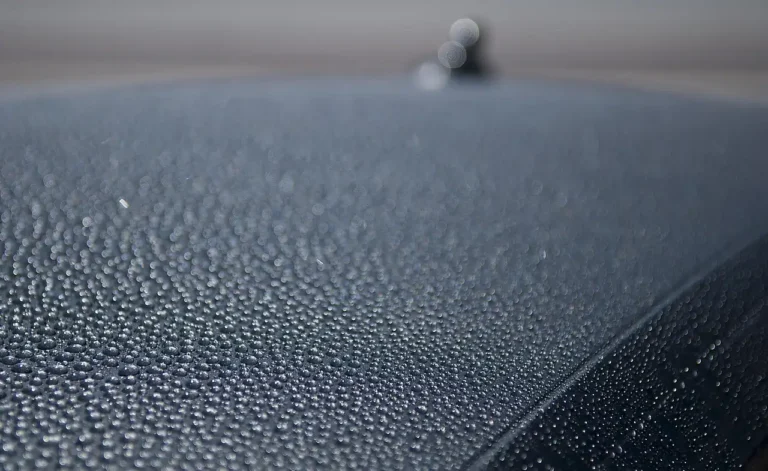
Both improve gloss and water beading, and both can help dirt release during routine washing because water sheets and beads more readily off the surface.
Neither product prevents rock chips, dents, or impact damage. Hardness ratings also do not mean impact resistance, so a 9H label should not be treated as armor.
Side-by-side comparison
Lifespan and reapplication frequency
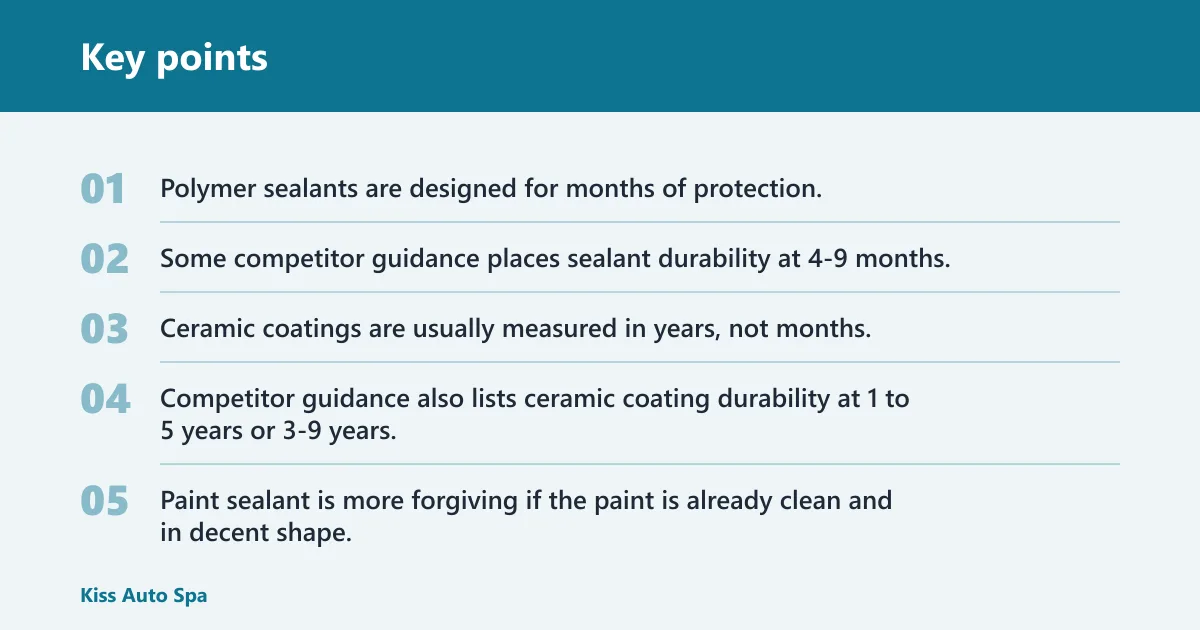
Polymer sealants are designed for months of protection, and a common reapplication cadence is every 4-6 months. Some competitor guidance places sealant durability at 4-9 months, and another places it at 4-6 months in Colorado conditions.
Ceramic coatings are usually measured in years, not months. Competitor guidance also lists ceramic coating durability at 1 to 5 years or 3-9 years, and professional systems are often positioned around multi-year protection.
Prep intensity and paint correction needs
Paint sealant is more forgiving if the paint is already clean and in decent shape. It still benefits from decontamination, but it is less likely to punish a basic maintenance job.
Ceramic coating wants a much cleaner finish. Paint correction often removes swirls, scratches, and oxidation before coating, because any defect left behind can be sealed in and stay visible longer.
Cure time, wash tolerance, and water behavior
Sealants usually cure faster and tolerate water exposure sooner. Ceramic coatings often require a longer cure window, and some systems list 4 hours initial cure and 3 days full cure.
Hydrophobic behavior is stronger in the short term for both, but it changes as the product wears. Beading and sheeting are useful signs of surface behavior, not proof that the underlying protection is still at full strength.
UV resistance, chemical resistance, and winter use
UV resistance is one of the biggest differences between the two. In hot or sunny climates, coating protection matters more because oxidation and gloss loss are long-term concerns for clear coat.
Ceramic coating also tends to handle chemicals better, including bird droppings, bug guts, salts, and road grime. That is one reason it fits winter driving better, especially where road salt and repeated washing are common.
DIY difficulty, cost per year, and ownership timeline
Paint sealant is the easier DIY choice. Ceramic coating asks for more cleaning steps, more surface discipline, and a cleaner application environment.
Upfront price alone is misleading. One competitor lists professional paint sealant at $150-$300, while another lists pro ceramic coating at $649-$1,499+. Annual cost depends on how long you keep the vehicle and how often you need to redo the protection.
Do you need paint correction first?
Usually yes for ceramic coating, and often at least some prep for sealant. If the clear coat has swirls, oxidation, or bonded contamination, protection goes on top of the defect instead of removing it.
That means the finish can still look dull or marked after protection. The more durable the top layer, the more important it is to correct the paint first.
Contamination, swirl marks, and oxidation thresholds
Surface contamination includes road film, iron fallout, tar, and embedded grime that washing alone may not remove. Swirl marks and light scratches are a separate issue, because they come from the clear coat itself.
If the paint only needs a wash and clay-style decontamination, sealant can be a reasonable maintenance move. If the paint is hazy, oxidized, or visibly marked, ceramic coating should generally follow correction rather than replace it.
What gets locked in if you skip polishing
A common first-timer mistake is coating dull paint and expecting the coating to fix the finish. It will not remove defects.
Suppose a black sedan has light swirls across the hood and front doors. If you apply ceramic coating without correction, those swirls are still there after the cure, only protected by a longer-lasting layer.
Why older paint usually needs more prep
Older paint has had more time to oxidize and collect bonded defects. That usually means more correction work before coating, or a more modest expectation for the final result.
If the vehicle is older and the goal is simply to keep it clean for a while, sealant can be the lower-risk choice. If the goal is long-term preservation and the paint can be corrected, coating makes more sense.
Which one lasts longer?
Ceramic coating lasts longer than paint sealant in real-world use. Sealants are usually measured in months, while coatings are usually measured in years with proper prep and care.
That difference is only meaningful if the coating is applied correctly and kept on a sensible wash schedule. Poor prep, aggressive detergents, or bad cure conditions can shorten either product’s real service life.
Typical months for sealants versus years for coatings
Sealant durability is usually counted in months, with many schedules landing around 4-6 months. Ceramic coating durability is commonly listed in years, and competitor claims range from 1 to 5 years, or even 3-9 years for some systems.
Professional coating lines are also marketed for multi-year performance, which is the main reason they are chosen for long-term ownership.
What shortens real-world lifespan
Frequent washing, harsh detergents, road salt, and improper cure conditions can shorten protection life. Hot sun, winter grime, and infrequent maintenance also accelerate decline.
The failure mode is different for each product. Sealant usually fades faster and needs renewal; a coating usually keeps some behavior longer, then loses performance gradually if the maintenance routine is poor.
How detergents, washing, and cure conditions affect durability
Water behavior can drop before the product fully disappears. A finish may still look glossy while its resistance is already weakening.
That is why cure time matters. If a coating gets wet too early, the bond can suffer; if a sealant is washed with strong detergents too often, its months-long protection can shrink faster than expected.
Protection decision matrix
This scorecard uses a simple 1-5 scale, where 5 is stronger for the stated criterion. For cost per year, a higher score means better value over time, not a lower sticker price.
| Criterion | Paint sealant | ceramic coating | Simple recommended choice |
|---|---|---|---|
| Lifespan | 2 | 5 | ceramic coating |
| Prep intensity | 4 | 2 | Paint sealant |
| Cure time | 4 | 2 | Paint sealant |
| Chemical resistance | 3 | 5 | ceramic coating |
| UV resistance | 3 | 5 | ceramic coating |
| Ease of DIY | 5 | 2 | Paint sealant |
| Cost per year | 3 | 4 | ceramic coating for long holds; Paint sealant for short holds |
| Winter performance | 3 | 5 | ceramic coating |
| Wash tolerance | 3 | 5 | ceramic coating |
| Ideal ownership timeline | 5 for short-term | 5 for long-term | tie by timeline |
Recommended choice by ownership scenario
Say your sedan is two years old, parked outside in Phoenix, and you plan to keep it for six more years. That points to ceramic coating because UV load, long ownership, and frequent wash exposure make the multi-year option more practical.
Say your crossover is leased, garaged at night, and you want a clean finish without a major prep bill. That points to paint sealant because the car does not need a years-long bonded system to make sense.
Choose Paint sealant if… / Choose ceramic coating if…
Choose Paint sealant if… you want an easier DIY job, your paint is already in decent shape, you expect to keep the car a few years or less, or you prefer a lower upfront spend with regular reapplication.
Choose ceramic coating if… you are correcting the paint first, you keep vehicles for years, you park in strong sun or face winter road salt, or you want stronger chemical resistance and longer wash tolerance.
If the paint is already tired, sealant can be the more sensible stopgap. If the paint can be corrected and the vehicle will stay in service for years, ceramic coating is the stronger long-term answer.
Frequently asked questions
What is the difference between paint sealant and ceramic coating?
Paint sealant is a synthetic, polymer-based layer that sits on the clear coat and is usually measured in months of protection. Ceramic coating is an SiO2 or SiO2/SiC-based system that bonds to the surface, asks for more prep, and is usually measured in years.
Is ceramic coating better than paint sealant?
Ceramic coating is better if your priority is longer life, stronger chemical resistance, and better UV defense. Paint sealant is better if you want easier application, lower upfront cost, and a shorter commitment to upkeep. The better choice depends on how long you will keep the car.
How long does paint sealant last compared with ceramic coating?
Paint sealant usually lasts months, and many schedules land around 4-6 months. Ceramic coating usually lasts years, with some professional systems described as multi-year protection and competitor claims ranging from 1 to 5 years or 3-9 years.
Does ceramic coating replace paint sealant?
For many owners, yes, because coating can cover the same basic protection role with longer service life. But it does not replace the need for paint correction, cleaning, or maintenance. On an older or neglected car, sealant can still be the better short-term choice.
Which is cheaper over time: sealant or ceramic coating?
That depends on how long you own the vehicle. Sealant is cheaper upfront, but repeated reapplication adds labor and material. Ceramic coating costs more at the start, yet the longer service life can lower the annual cost if you keep the car for years.
Do both products need paint correction before application?
Not always to the same degree, but both benefit from clean paint. Ceramic coating usually needs correction more often because it can lock in swirls, scratches, and oxidation for years. Sealant is more forgiving, though it still should not go over contaminated paint.
Will paint sealant protect against UV, chemicals, and bird droppings?
Yes, to a degree, but its protection is shorter-lived than ceramic coating. It can help reduce UV exposure and chemical contact, yet bird droppings, bug residue, salts, and road grime can wear it down faster. For harsh climates, coating is the stronger barrier.