Rubber Brush vs Pet Hair Remover Glove for Car Interiors
Use a Rubber brush for floor mats, carpet, and heavy shedding, and a pet hair remover glove for car interiors for tight seats, seams, and light-to-moderate hair; if you want one tool, start with the brush. Pick the wrong one and you waste time, leave hair in the weave, and press strands deeper into the fabric. This guide compares surfaces, shedding levels, and cleanup speed so you can choose the right tool without buying both.
| Decision factor | Rubber brush | pet hair remover glove for car interiors | Winner |
|---|---|---|---|
| Embedded hair in fabric and carpet | Stronger mechanical friction; better for hair packed into weave and pile | Works well on loose hair and light buildup, especially when slightly damp | Rubber brush |
| Speed on quick cleanup | Faster on larger panels once you learn short strokes | Fast for small touch-ups and spot cleanup | Rubber brush |
| Hand fatigue | More repetitive motion, especially on carpet and larger areas | Less awkward for short passes and tight spots | pet hair remover glove for car interiors |
| Seam and crevice access | Flexible teeth or edge can reach some gaps | Can conform to contours, but less precise in narrow seams | Rubber brush |
| Leather safety | Needs lighter pressure and more caution on finished leather | Usually gentler when used slightly damp | pet hair remover glove for car interiors |
Embedded hair versus loose surface fur
Rubber friction does the work here. Static and heat help hair grip car fabric over time, so vacuuming alone usually misses strands that have worked into the weave. A rubber brush is the better first pass when the hair is embedded; a damp glove is better when the surface has loose fur and you want a fast cleanup.
Use short strokes and pull toward yourself. That motion lifts hair into clumps instead of scattering it across the panel. On tight-weave seats, the first pass can look weak. The second and third passes are where the clumps start to form.
Which works better on fabric seats and carpet?
On fabric seats and carpet, the Rubber brush usually wins because cloth holds hair in its fibers and carpet pile needs more pressure than a seat surface. The glove can help on open cloth panels, but the brush’s firmer friction gives it the edge once the hair has settled into the material.
Tight-weave cloth and static cling
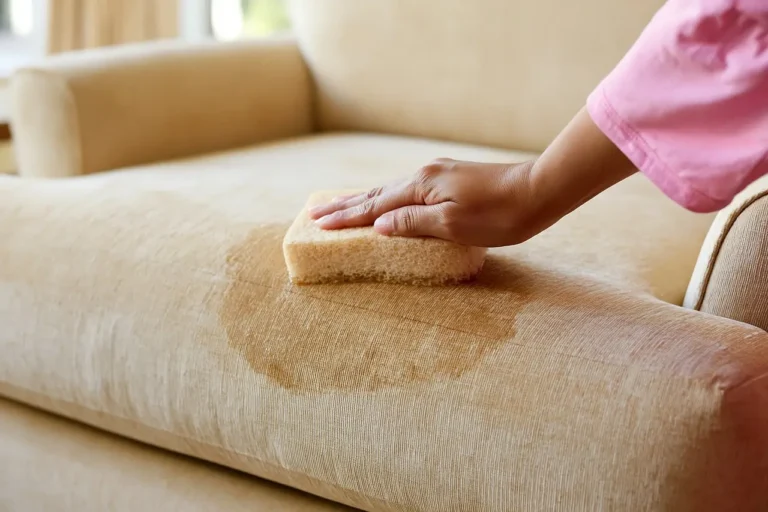
Car upholstery fabric traps hair because the weave gives strands something to grip. A light mist of water can help because it cuts static and makes the fibers less likely to hold the hair. Keep the mist light. Soaking the material drives dirt deeper and slows drying.
Carpet piles, floor mats, and cargo areas
For carpet, the brush is the more practical choice. It can push into pile and loosen hair below the surface, while a glove usually skims the top unless you move slowly and add pressure. Floor mats and cargo-area carpet often need several passes before the vacuum can finish the job.
When the brush beats the glove on open surfaces
Say the rear bench has a gray film of dog hair after a week of commuting. A rubber brush can gather that hair into strips fast, then a vacuum can pull the clumps out. The glove still works, but it is usually slower on wide, open fabric when speed matters.
Which is safer on leather and trim?
The pet hair remover glove for car interiors is usually the safer pick on finished leather and delicate trim because it follows the surface with lighter pressure. Leather does not need the same aggressive friction as cloth, and a stiff brushing motion can leave marks or catch edges if you press too hard.
Gentler pressure on finished leather
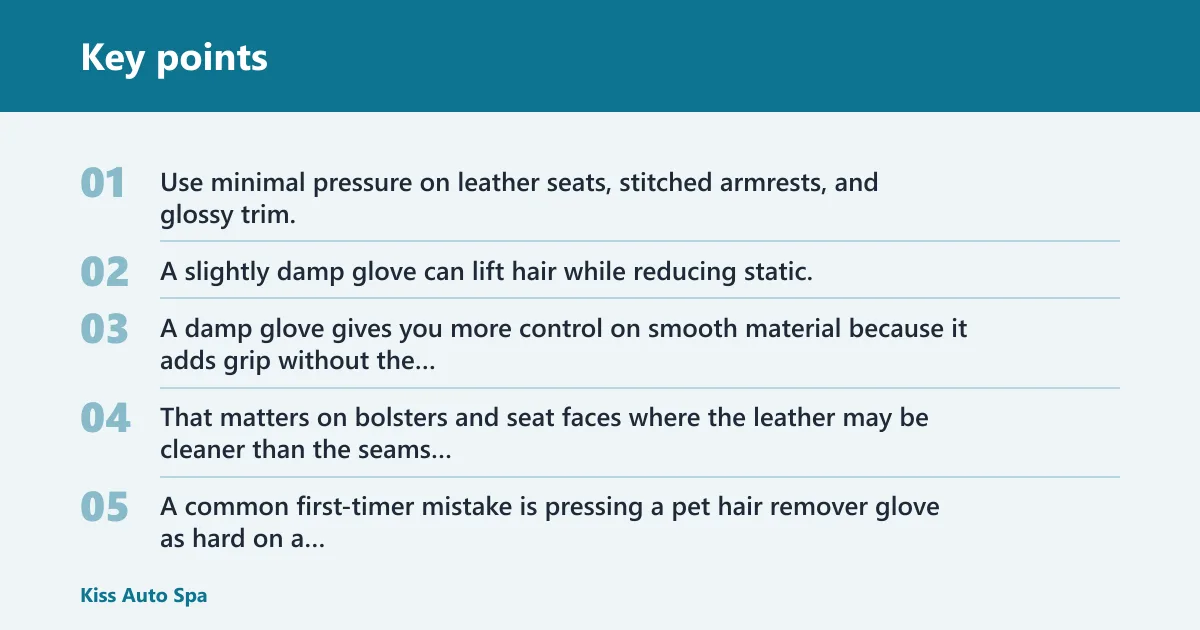
Use minimal pressure on leather seats, stitched armrests, and glossy trim. A slightly damp glove can lift hair while reducing static, which helps the strands clump instead of skating around the surface. The goal is removal without abrasion. Keep the motion broad and light.
Why damp gloves can be safer on sensitive surfaces
A damp glove gives you more control on smooth material because it adds grip without the scratch risk of repeated edge work. That matters on bolsters and seat faces where the leather may be cleaner than the seams but still prone to scuffing. Damp means slightly damp, not wet.
When to avoid aggressive brushing on bolsters and trim
A common first-timer mistake is pressing a pet hair remover glove as hard on a perforated leather seat as you would a rubber brush on a carpeted trunk liner. That can leave shiny pressure marks or make the brush hang on stitched edges. On trim pieces near the door and center console, the glove is the safer first pass.
How do you remove hair from seams and crevices?
Seat seams, track channels, and buckle recesses are where hair hides longest. The Rubber brush has the advantage here because flexible teeth or an edge can work into narrow spaces before the vacuum step. A glove can pull loose strands off the surface, but it usually cannot reach deep into the gap.
Seat seams and stitch lines
Run the brush in short strokes along the seam, then change angle and repeat. Hair often packs into the stitch line and releases only after multiple passes. If the seam is tight, a narrow detailing edge on the brush helps more than a broad glove surface.
Rails, buckles, and track channels
Under-seat rails and track channels are high-risk hiding spots because hair catches on hardware and collects in corners. Start with the brush to loosen the strands, then use a vacuum crevice tool to pull them out. The glove is useful only after the loose hair has been disturbed.
Why narrow edges and multiple passes matter
Suppose hair is packed under a front seat track where fingers barely fit. A brush with flexible teeth can reach the lip of the track, while the vacuum crevice tool finishes what the friction pass loosened. One pass often does not clear these spots. Two or three targeted passes are a common rule of thumb.
Pet hair tool matrix
| Variable | Rubber brush | pet hair remover glove for car interiors | Recommended pick |
|---|---|---|---|
| Embedded hair | 4 | 3 | Rubber brush |
| Speed | 4 | 3 | Rubber brush |
| Hand fatigue | 3 | 4 | pet hair remover glove for car interiors |
| Seam access | 4 | 2 | Rubber brush |
| Leather safety | 3 | 4 | pet hair remover glove for car interiors |
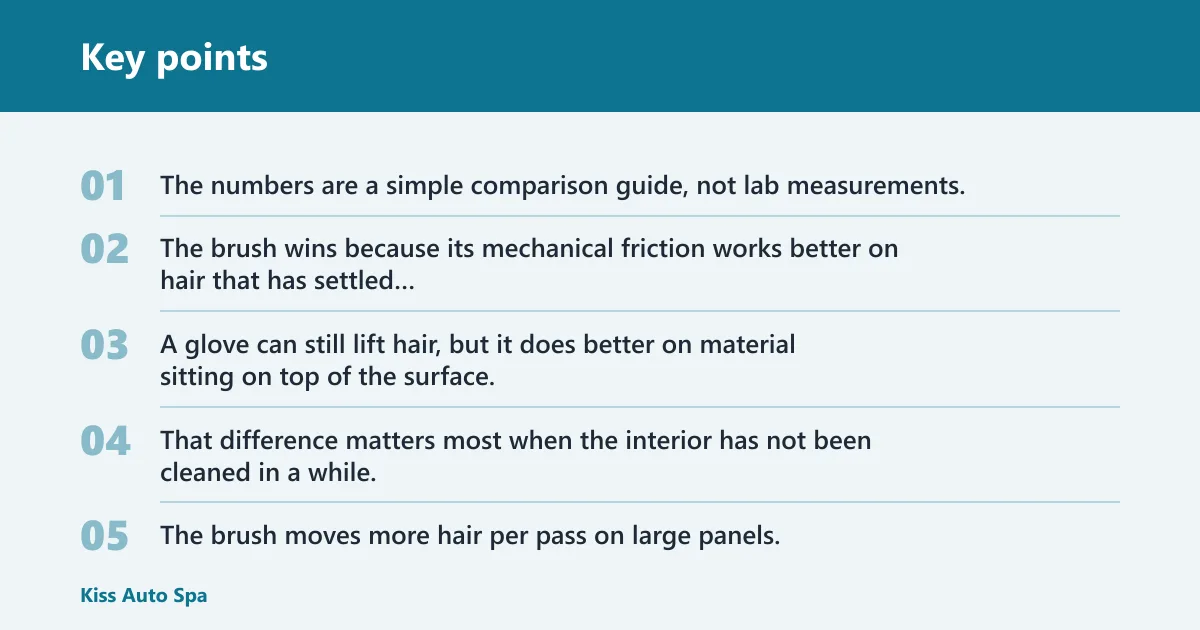
Scoring key: 1 is weak, 5 is strongest. The numbers are a simple comparison guide, not lab measurements.
Embedded hair
The brush wins because its mechanical friction works better on hair that has settled into woven fabric and carpet pile. A glove can still lift hair, but it does better on material sitting on top of the surface. That difference matters most when the interior has not been cleaned in a while.
Speed
The brush moves more hair per pass on large panels, so it usually finishes open seating and floor mats faster. The glove can be quick for a headrest or a narrow armrest, but it slows down when the area grows. Speed here means fewer passes, not less care.
Hand fatigue
The glove is easier to wear for short cleanups because it follows your hand and avoids the pinch-and-grip motion of a handheld brush. That can matter if you are doing a small cleanup before passengers get in. On a full interior, though, fatigue shifts back toward the glove if you keep resetting your hand position.
Seam access
The brush wins because flexible teeth or an edge can be aimed into stitch lines and rails. The glove can slide over contours, but it does not get the same narrow access. If hair is packed in channels, the brush is the more useful first tool.
Leather safety
The glove takes the edge here because it is easier to keep gentle on smooth surfaces. A brush can still work on leather, but only with careful pressure and attention to stitching and trim pieces. If the interior is mostly leather with light hair, the glove is the lower-risk choice.
Choose Rubber brush if… / Choose pet hair remover glove for car interiors if…
Choose Rubber brush if the car has heavy shedding, carpeted cargo space, or hair worked into seat fabric and mats. It is also the better pick if you want one tool that can handle seams, floor mats, and the first loosening pass before vacuuming.
Choose pet hair remover glove for car interiors if the interior is mostly leather, the shedding is light to moderate, or you want a cheap option for quick touch-ups. It also makes sense if hand comfort matters more than maximum pickup on deeply embedded hair.
For mixed interiors, the brush is the better single purchase. For mostly leather with occasional fur, the glove is the safer everyday tool.
What to do after the first pass
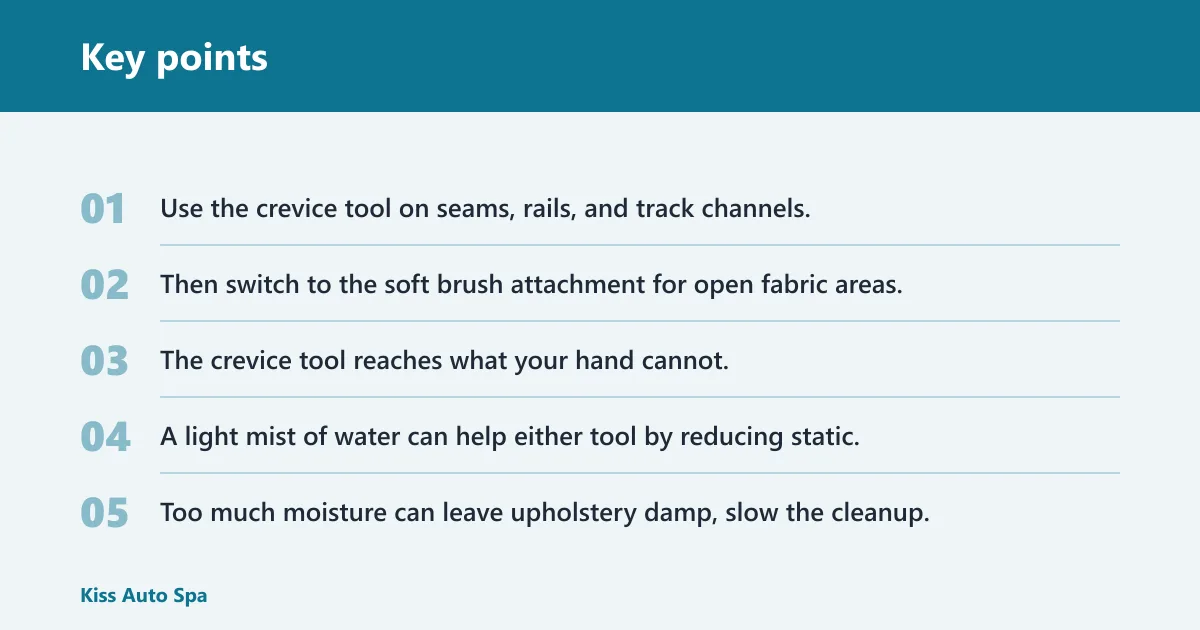
After loosening the hair, vacuum in the right order: crevice tool first, brush attachment second. That matches the most reliable routine, dry friction first, vacuum second, wet or spot treatment last. The vacuum is there to remove what the friction tool lifted, not to do all the work alone.
Vacuum order: crevice tool first, brush attachment second
Use the crevice tool on seams, rails, and track channels. Then switch to the soft brush attachment for open fabric areas. The crevice tool reaches what your hand cannot, while the brush attachment helps pick up remaining loose strands without grinding them back into the surface.
How much water is too much?
A light mist of water can help either tool by reducing static, but it should stay a fine mist, not a soak. Too much moisture can leave upholstery damp, slow the cleanup, and create risk around switches, seat controls, and other electronics. Slightly damp is useful; wet is the wrong direction.
When heavy buildup needs a professional detailer add-on
Heavy or persistent pet hair may need stronger extraction methods such as hot-water extraction or steam cleaning. Some detailers price pet-hair add-ons at $40–$80 depending on severity. That extra labor makes sense when hair is matted into carpet, trapped under seat hardware, or spread across a full daily-driver interior.
A common first-timer mistake is spending twenty minutes brushing a packed cargo corner and never vacuuming the clumps out. The hair lifts, but it stays in the vehicle. If the buildup is thick enough to hide the carpet color, professional help can be the faster route.
Frequently asked questions
Is a rubber brush better than a pet hair remover glove for car seats?
For most fabric seats, yes. The brush usually removes embedded hair faster because it creates stronger friction and can work into seams and weave. The glove is better when the seat is leather, lightly soiled, or needs a quick surface cleanup without as much pressure.
Which works faster on embedded dog hair in car upholstery?
The Rubber brush is usually faster on embedded dog hair because it is built for the first friction pass before vacuuming. Upholstery fabric traps hair in fibers, so a glove often needs more passes to get the same clumping effect on heavily shed areas.
Do rubber gloves work on carpet as well as brushes?
Not usually. Carpet needs more pressure than seats, and the brush is better at reaching into pile and loosening strands. A glove can help on a small carpet patch or a quick cleanup, but it is not the stronger choice for mats, cargo carpet, or matted spots.
Which tool is safer for leather seats: a brush or a glove?
The glove is usually safer for leather because it can be used with lighter pressure and a slightly damp surface. A brush can still work, but it is easier to overdo the pressure on bolsters, stitching, and trim. On leather, gentleness matters more than speed.
How do I remove pet hair from seat seams and crevices?
Start with the rubber brush, using short strokes along the seam to lift the strands. Then use the vacuum crevice tool to pull hair out of the gap. Seat seams, rails, and track channels often need multiple passes because the hair packs in tightly and does not release all at once.
Do I need to vacuum after using a rubber brush or glove?
Yes. The friction tool loosens and clumps the hair, but the vacuum removes it from the upholstery, carpet, and seams. A crevice attachment handles tight areas first, then a soft brush attachment can clean the open surface. Skipping vacuuming leaves the loosened hair behind.
Does misting water help a rubber brush or glove work better?
Yes, if it is a light mist. Slight moisture reduces static and helps hair clump, which improves both tools on fabric and carpet. Do not soak the material. Too much water can slow drying, spread mess, and create problems around upholstery and electronics.
What should I buy first for pet hair removal in a car?
Buy the Rubber brush first if your car has fabric seats, carpet, or frequent shedding. It does the broadest job and is better for embedded hair. If your interior is mostly leather and you only need quick touch-ups, the glove is the more comfortable first buy.