How to Remove Cigarette Smoke Smell From a Car
Remove cigarette smoke smell from a car by cleaning smoke residue first, then neutralizing odor. If the smell returns after wiping hard surfaces, move to fabrics, the headliner, and HVAC. Leaving residue behind keeps the odor active and can hurt resale value. This guide shows the step order, products, and when simple cleaning is enough versus when you need deeper treatment.
What you’ll need
- Vacuum with crevice tool and brush attachment
- At least two microfiber towels
- Interior cleaner or upholstery shampoo
- Soft-bristle brush
- Baking soda
- Activated charcoal odor absorber
- Odor eliminator spray, gel, or fogger
- Steam cleaner, for heavy fabric odor
- Replacement cabin air filter
Smoke odor triage for cars
| Severity | Matching symptoms | Likely odor reservoirs | Recommended tools | Estimated time | Escalate when |
|---|---|---|---|---|---|
| Light | Fresh odor, few visible deposits, smell fades with windows open | Soft surfaces, light film on plastics | Vacuum, microfiber towels, interior cleaner, baking soda | 1 to 3 hours | Odor returns after heat or airflow |
| Moderate | Smell returns with heat, vents, or rain; visible film on plastics | Upholstery, carpet, headliner, HVAC intake, glass film | Vacuum, upholstery shampoo, soft brush, cabin air filter, odor eliminator | 3 to 6 hours | Odor remains after cleaning and filter replacement |
| Heavy | Strong stale smell, ash residue, saturated upholstery, HVAC odor | Seats, carpet, headliner, vents, ducting, filter, trim film | Steam cleaner, deep interior extraction, cabin air filter, charcoal, professional detailing | 6+ hours | Smoke smell returns in heat or when the defroster runs |
How do you remove smoke smell from the interior?
Remove all trash, ash, butts, and loose debris from the cabin, trunk, and cup holders, then vacuum the cabin before any deodorizer goes in. Smoke odor clings to upholstery and carpet quickly, and hard surfaces can hold nicotine film that releases odor later. Clean the soft surfaces by material, then finish with odor control.
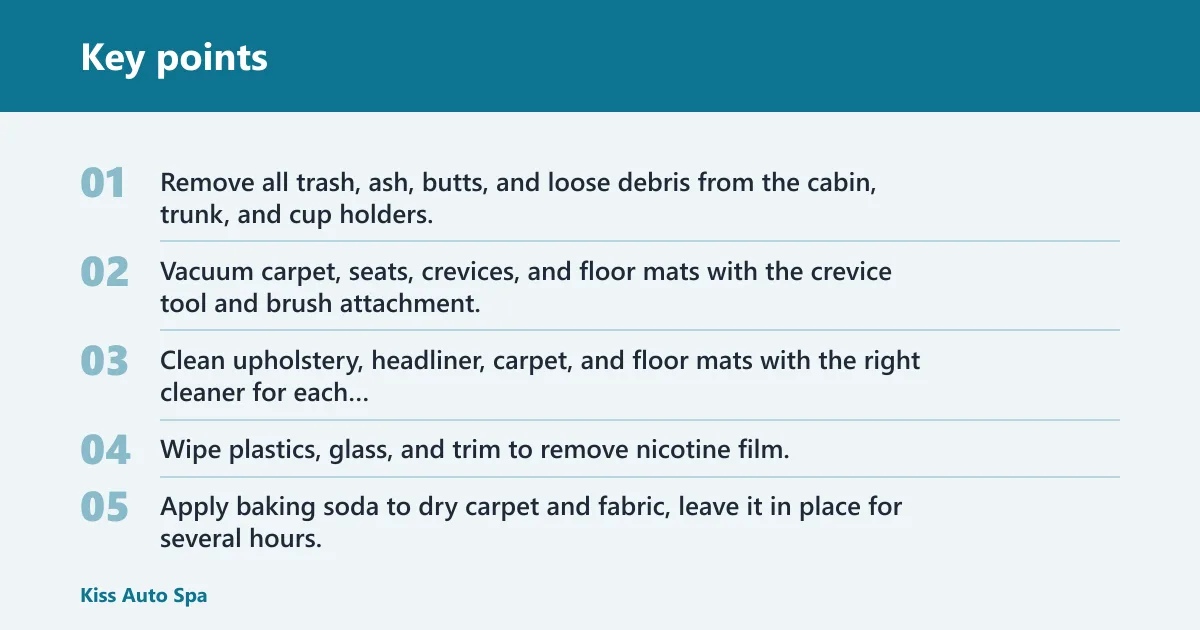
- Remove all trash, ash, butts, and loose debris from the cabin, trunk, and cup holders.
- Vacuum carpet, seats, crevices, and floor mats with the crevice tool and brush attachment.
- Clean upholstery, headliner, carpet, and floor mats with the right cleaner for each surface.
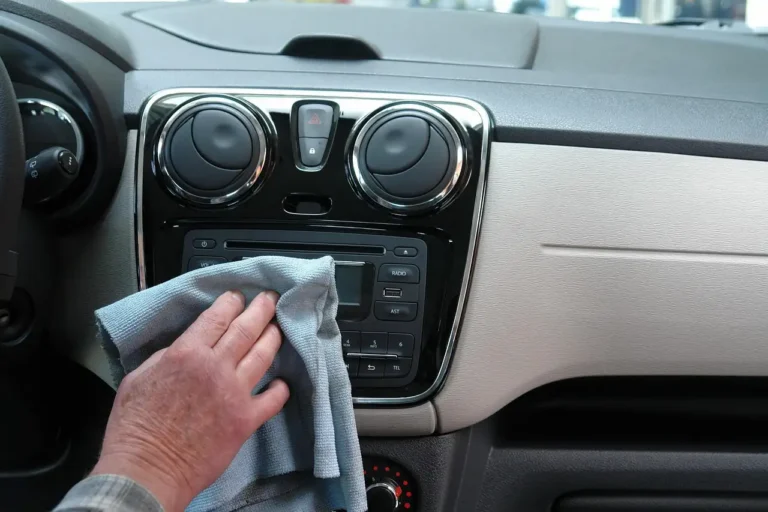
- Wipe plastics, glass, and trim to remove nicotine film; use a second microfiber towel for drying and detail work.
- Apply baking soda to dry carpet and fabric, leave it in place for several hours, then vacuum it away.
- Place activated charcoal in an enclosed bin or footwell area for slow odor absorption after cleaning.
Where smoke hides after the first cleaning
Soft surfaces hold the smell fastest, but the odor also sits on the headliner, glass, vents, and plastic trim. That is why the smell can return after the first wipe-down. If a surface feels tacky or leaves residue on a towel, it still needs cleaning before any odor product goes on.
Say your sedan still smells stale after a quick vacuum, but only the driver seat and a strip of carpet near the pedals were cleaned. That usually means the seat foam, carpet backing, and trim film are still holding residue, so the odor will return once the cabin warms up.
How do you treat the HVAC system?
Treat the HVAC system after the cabin has been cleaned, rather than before. Replace a cabin air filter that smells like smoke or looks contaminated, then treat the intake near the base of the windshield with the fan on high. That matters because the filter and ducting can keep feeding odor into the cabin.
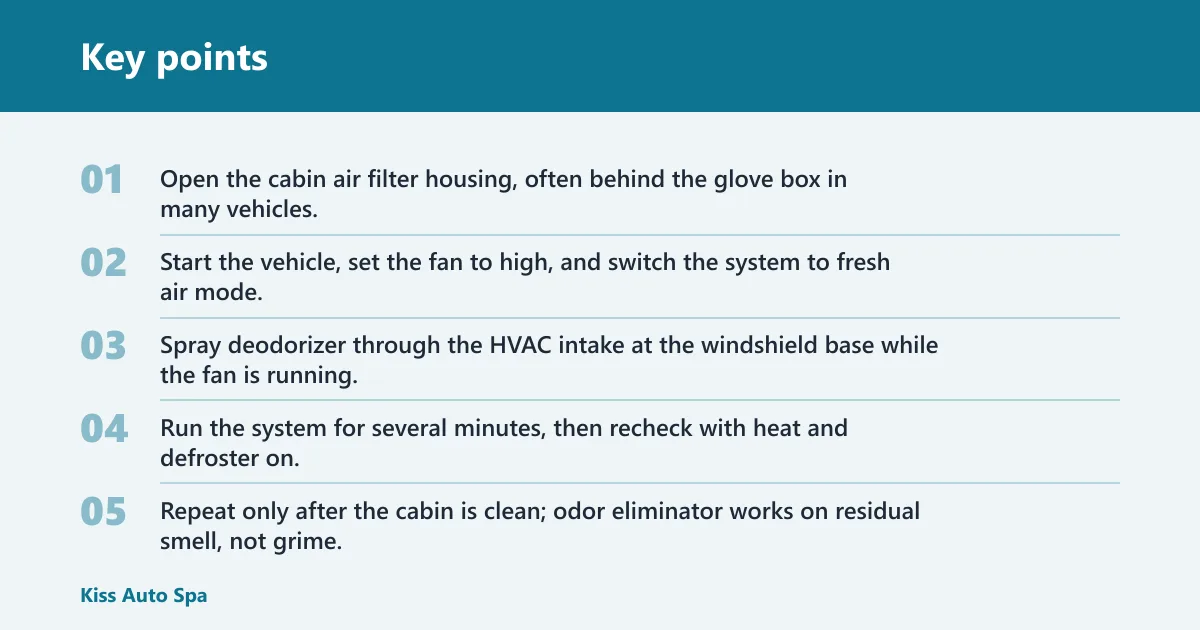
- Open the cabin air filter housing, often behind the glove box in many vehicles, and replace the filter if it smells smoke-heavy.
- Start the vehicle, set the fan to high, and switch the system to fresh air mode.
- Spray deodorizer through the HVAC intake at the windshield base while the fan is running.
- Run the system for several minutes, then recheck with heat and defroster on.
- Repeat only after the cabin is clean; odor eliminator works on residual smell, not grime.
A common first-timer mistake is spraying a fogger into dirty vents and calling the job done. That hides the smell briefly, then the odor returns when the defroster runs because the residue in the ducts was never removed.
Can you remove smoke smell completely?
Yes, in many light and moderate cases, but heavy smoke damage often needs more than a wipe-down. Steam cleaning helps when smoke has penetrated fabric fibers, and full drying matters before you judge the result. If the smell returns after heat or airflow, deeper extraction or professional ozone treatment is the next step.
Suppose a hatchback still smells smoky after shampooing the rear seats, but only when the heater is on. That points to odor left in fabric or HVAC pathways, not a fresh spill. At that point, re-clean the affected material, replace the filter, and escalate if the smell persists.
If that didn’t work, try this next
- Steam clean the upholstery and fabric surfaces, then extract moisture with vacuuming and dry towels.
- Let the car sit with windows open until the seats, carpet, and headliner are fully dry.
- Repeat the HVAC intake treatment with the fan on high after the cabin has dried.
- Book professional detailing or ozone treatment if odor returns after rain, heat, or a long defroster cycle.
Common mistakes
Masking odor before removing residue is the biggest miss. Fragrance on top of smoke film only adds another layer of smell. Cleaning seats while skipping carpet, mats, headliner, and HVAC leaves the odor source behind, and damp fabric can make the car smell worse until it dries fully.
- Skipping the cabin air filter when it smells contaminated
- Cleaning visible surfaces but leaving ash in crevices
- Using too much liquid on the headliner or seat foam
- Applying odor products before the grime is gone
- Leaving upholstery damp after shampooing or steam cleaning
How to remove cigarette smoke smell from carpet
Vacuum the carpet first, then scrub or shampoo it with an interior cleaner that is safe for fabric. Carpet traps ash and odor in the fibers, so surface spraying is not enough. After cleaning, let it dry fully before adding baking soda or charcoal.
- Use the vacuum’s crevice tool along seat rails, under pedals, and along the carpet edges.
- Apply upholstery shampoo or interior cleaner to the carpet, then agitate with a soft brush.
- Blot with a microfiber towel to lift dirty moisture.
- Let the carpet dry, then apply baking soda for several hours before vacuuming again.
What to do when the smell comes back
If the smell returns after a rainstorm or once the car heats up, the carpet pad or adjacent upholstery likely still holds residue. Reclean the area and check the floor mats, because they often store the same odor in a more removable layer.
How to remove stale cigarette smoke smell from a car
Stale smoke smell usually means the odor has bonded to several materials, not one surface. Start with a deep clean of soft surfaces, then wipe plastics and glass, replace the filter, and treat the HVAC intake. If the smell still comes back, the car may need professional extraction or ozone treatment.
- Deep clean the seats, carpet, mats, and headliner with the appropriate cleaner or steam.
- Replace the cabin air filter if it smells smoky or looks gray and loaded.
- Wipe glass, dash, door trim, and other plastics to remove film.
- Use odor eliminator only after everything is clean and dry.
Activated charcoal works best here because it absorbs odor slowly in enclosed spaces. It is useful as a follow-up, not a replacement for cleaning. For heavy smell, leave charcoal in the car overnight after the cabin has been cleaned and aired out.
How do you know when DIY is no longer cost-effective?
DIY may stop making sense if the odor returns after full cleaning, cabin air filter replacement, and HVAC treatment. At that point, smoke has likely moved into deeper fabric layers, foam, or ducts. Professional detailing is usually the better next spend when resale or daily drivability depends on a stronger result.
- Compare the remaining odor with the cleaned areas after about 24 hours of drying.
- Check whether heat, rain, or defroster use brings the smell back.
- If yes, price a full interior extraction or ozone treatment instead of repeating shallow cleaning.
- Choose professional work when the cabin still smells smoky despite clean surfaces and a new filter.
Frequently asked questions
How to remove cigarette smoke smell from a car interior
Start with trash removal and vacuuming, then clean upholstery, carpet, mats, headliner, plastics, and glass in that order. Finish by replacing the cabin air filter and treating the HVAC intake with the fan on high. Odor removers work best after residue is gone.
Can you remove cigarette smoke smell from a car?
Yes, especially when the odor is light or moderate and the residue is cleaned from every affected material. Heavy smoke cases are harder because the smell spreads into fabric, foam, vents, and filters. When odor returns after heat, deeper treatment is usually required.