How to Wax a Car Without a Buffer
Wax one small section at a time: apply a thin coat, let it haze, then wipe it off when a swipe with your finger leaves a clean path and the residue does not smear. If you wait too long or work too large an area, the wax dries hard, leaves streaks, and takes extra time to remove. This guide shows a hand-wax workflow, what tools to use, and how to judge each section before you wipe.
Hand waxing basics
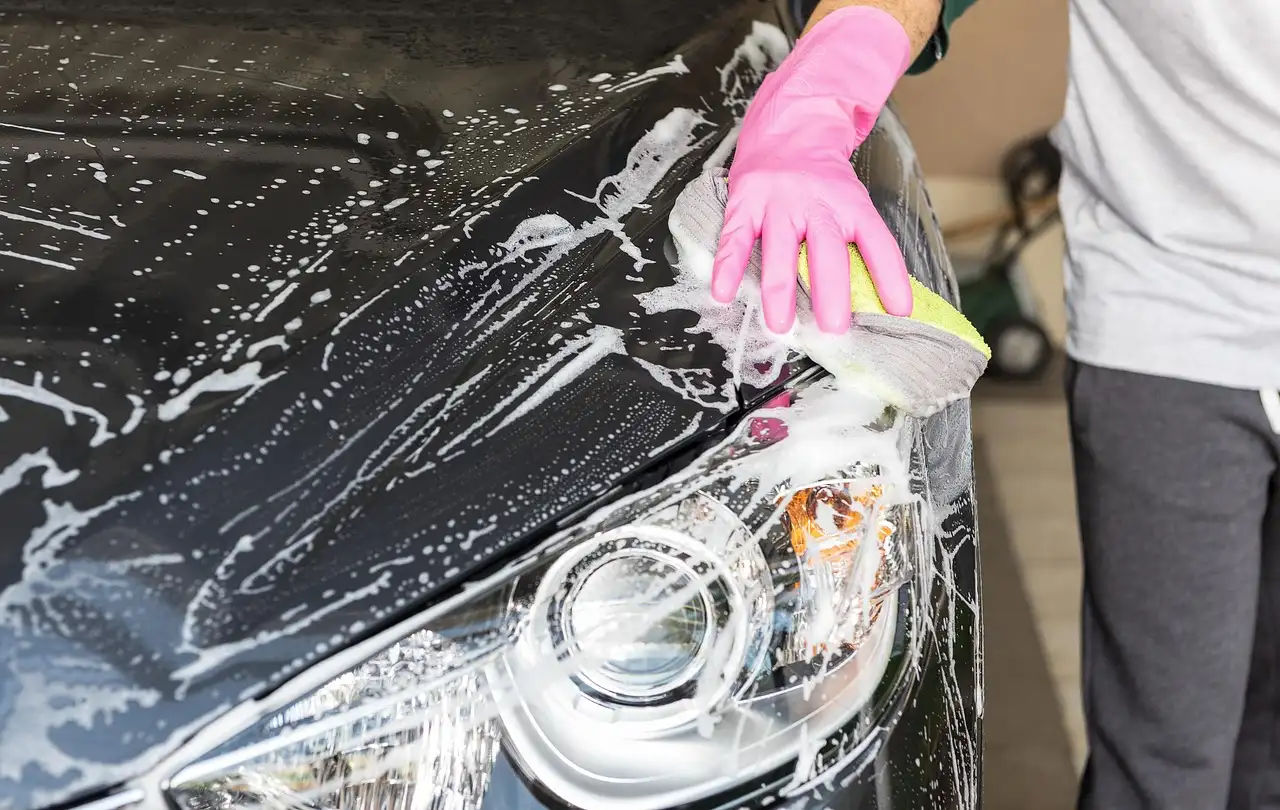
Yes. Hand waxing can work well when you use a foam applicator pad, thin layers, and clean microfiber towels. A buffer is optional, not required, and hand work is often better around tight trim, mirrors, badges, emblems, and other edges where machine pads can miss or catch.
What you’ll need
- Car wax in liquid, paste, or spray form for hand application
- Foam applicator pad for even spreading
- About 2 clean microfiber towels are needed for removal and final wipe.
- Mild car shampoo for the wash step
- Clay bar and clay lubricant if the paint feels gritty after washing
- Water source, bucket, and separate wash mitt
- Shade or garage space with a cool panel surface
Wax types for hand application
Paste wax often gives the most control when you want to load very little product. Spray wax is often reported to give the thinnest coating and the shortest working time. None of them needs a buffer to go on correctly.
| Wax type | Best hand use | Beginner note |
|---|---|---|
| Paste | Small sections, trim-heavy panels, tight control | Load a very thin film on the pad |
| Liquid | Fast, even spreading on larger panels | Easy to overapply if you squeeze too much |
| Spray | Light maintenance wax after a full wash | Use sparingly; it is easy to streak if overused |
Towels and applicators
A microfiber towel is the main removal tool because it is soft, lint-free, and better at picking up residue without dragging grit. Use more than one clean towel if the first one starts to load up with wax; swapping towels early helps prevent streaking.
Prep supplies for clean paint
Use a mild, non-abrasive car shampoo first. If the paint still feels rough after washing and drying, a clay bar is the next prep step before waxing because it removes bonded contamination that can block even contact with the wax.
Prep the paint before waxing
Wash and dry the car fully before any wax goes on. Dirty paint traps grit under the towel, and that grit can mark the clear coat as you wipe. If the surface still feels rough after the wash, clay it first so the wax spreads evenly on cleaner paint.
- Wash the panels. Use a mild car shampoo and clean mitt, then rinse well. Avoid scrubbing hard on the clear coat; dirt and heavy pressure can leave marks.
- Dry every surface. Use a clean microfiber drying towel and remove water from seams, mirrors, and trim edges. Wax does not spread well over standing water.
- Clay rough paint. If the paint still feels gritty, use a clay bar before waxing. Work one panel at a time so you can feel when the contamination is gone.
- Inspect under shade. Check for leftover dust, bug residue, or old wax haze before you start. Any leftover grime can cause patchy coverage later.
How to apply wax by hand
A common way to apply car wax by hand is to work in small sections and keep the coat thin. For beginners, a panel-by-panel rhythm is easier to control than trying to coat the whole car at once. Break the job into one panel at a time, and you can stay ahead of dry spots.
- Load the applicator lightly. Put a thin film on the foam pad, not a thick blob. For paste wax, a single light swipe across the pad face is usually enough for one small section; if the pad looks wet or clumpy, you have too much.
- Spread one section. Apply the wax in gentle, overlapping circular motions or short overlapping passes. Keep each section roughly the size of a door half, a fender, or another area you can finish before the wax dries.
- Watch the haze. Let the wax sit until it turns from wet to a soft haze. Do not wait for a hard crust; once the surface starts to look dull and the swipe test clears a path, it is ready.
- Wipe with a clean towel. Buff off residue with a dry microfiber towel using light pressure. Flip the towel often and switch to a fresh one if the first towel starts smearing instead of lifting residue.
- Recheck the panel. Look across the paint from different angles. If you see smears or missed spots, apply one more light pass only where needed and rewipe.
Say your hood is warm because the car sat outside for 20 minutes. The wax can flash too fast on that panel and leave streaks. Move to the fender in shade, let the hood cool, then return only after the surface feels near ambient temperature.
Suppose a black door shows faint gray smudges after the first wipe. That usually means the coat was too heavy or the towel loaded up. Swap to a fresh microfiber towel and make one light pass across the area instead of adding more wax.
Should you wax in sun or shade?
Shade is the better choice. Direct sunlight and hot panels can speed up drying, which can make wax harder to level and more likely to leave residue. wikiHow recommends waxing in a garage or shady area, and it also lists 55–85 °F as a workable temperature range. (Wikihow)
Temperature and humidity checks
Cool, dry conditions give you more working time. High heat shortens that window, and high humidity can keep wax from setting evenly. If the panel feels hot to the touch, wait until it cools before you apply anything.
Panel-by-panel timing
Do not coat the whole car and then start wiping from the first panel. Instead, finish one panel, check the haze, and wipe that panel before moving on. This prevents the first areas from hardening while you are still applying wax elsewhere.
Hand wax troubleshooting checklist
Use this checklist when the finish turns streaky, patchy, or hard to remove. Start with the most likely fix first, then move down the list if the problem remains after one panel.
| Symptom | Likely cause | Exact fix |
|---|---|---|
| Streaking after wipe-off | Too much product on the pad or towel is loaded with residue | Switch to a fresh microfiber towel and rewipe the panel with almost no pressure |
| Patchy gloss | Uneven hand spread or missed spots near panel edges | Apply one thin pass to the dull sections only, then wipe again after haze forms |
| Hard-to-remove wax | Wax dried too long or the panel was hot | Lightly dampen a microfiber towel with clean water, wipe once, then finish with a dry towel |
| Residue in trim gaps | Wax worked into textured plastic or badges | Use a dry corner of the towel or a foam swab to lift the residue from the edge |
If that didn’t work, try this next
- Stop adding wax. Extra product usually makes the problem worse. Wipe the section clean first so you can see what remains.
- Use a fresh towel. A loaded towel drags residue across the panel. Start with a clean microfiber towel and fold it into quarters.
- Shorten the section size. If the wax keeps drying too fast, cut your working area in half and finish each panel in smaller passes.
- Rewash the area. If residue still will not clear, wash that section with mild shampoo, dry it fully, then reapply a thinner coat.
What not to do
Do not wax on a dirty panel, a hot hood, or in direct sunlight. Do not press hard on the paint, especially on the clear coat, because dirt under pressure can leave marks. Do not load the applicator heavily; thick wax coats are the fastest route to smeary removal.
- Avoid working too many panels before the first one is wiped.
- Avoid one towel for the whole car if it starts to smear.
- Avoid skipping the clay bar when the paint still feels rough after washing.
- Avoid pushing wax deep into textured trim unless you plan to clean those edges by hand.
Do you need to polish before waxing? Usually no. Polishing is for correcting defects or refining the finish, while wax is a protective coating that adds gloss and helps shield the paint. If the paint is already clean and smooth, a wash, dry, and wax is the normal hand-wax sequence.
Keep a second microfiber towel ready before you start. If the first towel picks up too much residue, swap it early so the last few panels do not pick up streaks.
How do you wax tight spots like mirrors and trim by hand?
Use the edge of a foam applicator or a folded microfiber towel for mirrors, badges, emblems, and trim lines. These zones are easier to control by hand than with a buffer, and they need less product than open panels. Work slowly so wax does not collect in seams or on textured plastic.
Tight trim and edges
For narrow edges, keep the applicator nearly flat and use only the smallest amount of wax on the pad. If product gets onto textured trim, remove it right away with a dry microfiber corner before it sets hard.
Mirrors, badges, and emblems
Use short passes rather than full circles on small parts. A cotton swab or wrapped towel corner can lift residue from around badge edges without scraping the paint. Keep pressure light so you do not mar the clear coat around raised pieces.
Frequently asked questions
Can you wax a car without a buffer?
Yes. A foam applicator pad and microfiber towels are enough for hand waxing. Use thin coats, work one panel at a time, and remove residue as soon as the wax hazes so it does not harden on the paint.
How do you wax a car by hand step by step?
Wash with mild shampoo, dry fully, clay if the paint feels rough, apply a thin coat with a foam pad, wait for haze, then buff with a clean microfiber towel. Finish each panel before moving on so the first section does not dry too long.
What is the best way to apply car wax by hand?
Use a foam applicator pad with gentle overlapping circular motions or short passes. Load only a thin film of wax, keep the section small, and wipe once the surface turns hazy and a finger swipe leaves a clean path.
Do I need to polish before waxing my car?
No, not usually. Wax protects and adds shine; polish is for correction. If the paint is already clean and smooth, wash, dry, and wax. Polish only when you need to remove defects or dullness before the wax goes on.
What kind of towel should I use to remove car wax?
Use a clean microfiber towel. It is soft, lint-free, and better for lifting wax residue without dragging grit across the paint. Keep multiple towels ready so you can switch before one becomes saturated and starts streaking.
Should I wax my car in the sun or shade?
Shade is the better choice. Direct sun and hot panels dry wax too quickly, which makes residue harder to remove. A cool garage or shady area gives you more time to apply, haze, and wipe each section clean.