Best Car Wax for Black Cars at Home
The best car wax for black cars at home is a ceramic-hybrid wax for most daily drivers, a carnauba wax for show-like depth, or a synthetic sealant when you want longer durability with less frequent reapplication. Black paint shows swirls, water spots, and dust fast, so the right choice depends on where you park, how you wash, and how much masking you need, not the strongest shine claim.
Top pick for black cars
Top pick: ceramic-hybrid wax. For most black daily drivers, it gives the best balance of gloss, durability, and easier upkeep, and one comparison of wax categories places it as the best category for most San Diego black daily drivers. It also fits the common home-use pattern: regular washing, moderate weather exposure, and a need for more than a short-lived topper.
Why this pick fits most black daily drivers
Ceramic-hybrid wax sits in the practical middle. It gives stronger water beading than most basic carnauba products, more durability than spray wax, and less hassle than many sealants for a home user who wants a glossy finish without frequent rewaxing. Fresh Layer’s comparison table places ceramic-hybrid wax at 4-6 months under standard conditions.
That matters on black paint because clear coat shows micro-marring quickly. A product that leaves a cleaner, longer-lasting layer can keep the finish looking even between washes, especially when your wash method is already careful.
When a different wax is the better choice
Choose carnauba wax if the car sleeps in a garage and you want the warm, deep, wet-look gloss that black paint can wear well. Choose a synthetic sealant if your priority is the longest gap between applications and stronger UV resistance. Choose spray wax only as upkeep between full applications, not as your main protection layer.
Quick picks by use case
Pick by routine first. On black paint, that matters more than the strongest shine claim. If your parking, wash method, and experience level do not match the product, the finish can streak, collect residue in trim, or wear off sooner than expected.
- Garage-kept weekend car: carnauba wax for depth and a softer, wetter look.
- Street-parked daily driver: ceramic-hybrid wax for better balance of gloss and upkeep.
- Beginner-friendly choice: synthetic sealant or an easy ceramic-hybrid wax with simple wipe-off behavior.
- Best for light-scratch masking: a cleaner wax or a wax with filling ability, used with realistic expectations.
Clay & Coat ranks Chemical Guys Butter Wet Wax as a top pick for black paint, while Black Car Shine says it is easy to apply and buff off seconds later and lasts around a month. That makes it a reasonable short-term choice when you want easy gloss more than long durability. For durability, Clay & Coat lists Collinite No. 845 Insulator Wax as its durability pick.
Suppose a black sedan lives outside and is washed every other weekend. A wax that looks great for seven days but leaves residue in panel gaps is the wrong fit. A product that lasts longer and wipes clean the first time is the better home-use choice.
Black car wax decision matrix
This table is meant for home use, not lab grading. It maps common black-car situations to the most practical product type, how hard it is to apply, how long protection usually lasts, and where residue risk rises. The goal is to match the product to your routine.
| Black-car scenario | Recommended wax type | Application difficulty | Expected upkeep window | Residue risk | Best use case |
|---|---|---|---|---|---|
| Garage-kept weekend car | Carnauba wax | Moderate | About 4-8 weeks | Low if applied thinly, but white residue can collect on edges if overapplied | Warm, deep gloss for short drives and show-oriented use |
| Street-parked daily driver | Ceramic-hybrid wax | Moderate | About 4-6 months | Moderate, especially on black trim and emblems if excess product is left behind | Best all-around balance of gloss, durability, and upkeep |
| Beginner | Synthetic sealant | Easy | About 3-4 months | Low to moderate, depending on applicator control and buffing | Simple application and longer protection with fewer reapplications |
| Light-scratch masking need | Cleaner wax or filling carnauba blend | Easy to moderate | About 4-8 weeks | Moderate, because filling products can leave residue in seams | Hides minor haze better than pure protection products, but does not repair defects |
Fresh Layer says carnauba paste lasts 4-8 weeks under standard conditions, synthetic sealant lasts 3-4 months, ceramic-hybrid wax lasts 4-6 months, and spray wax topper lasts 1-3 washes. Use those ranges as product-type guidance, not a promise for every garage or climate.
Which wax type should you buy?
Buy carnauba for depth, synthetic sealant for longevity, ceramic-hybrid wax for the best all-around black-car balance, and spray wax only as maintenance between fuller applications. If you want one answer for most black daily drivers, ceramic-hybrid wax is the most practical starting point because it balances gloss, durability, and at-home usability.
Carnauba wax
Carnauba wax is the classic choice for warm, deep, wet-look gloss on black paint. It usually comes in paste or liquid form and is best for show-car depth rather than long-term protection. Fresh Layer places it at about 4-8 weeks, which may suit owners who prefer frequent hand detailing and garage storage.
Synthetic sealant
Synthetic sealant is the better choice when the car spends more time outside or when you want the longest practical gap between full applications. It bonds chemically to the clear coat and usually looks sharper and colder than carnauba. Fresh Layer places it at 3-4 months, which suits daily drivers that see regular washing.
Ceramic-hybrid wax
Ceramic-hybrid wax blends wax and sealant traits with SiO2 content. It is the middle ground for black paint: better durability than basic wax, better gloss than many pure sealants, and strong water beading without the same upkeep burden as frequent paste waxing. It often needs better prep than a simple spray wax.
Spray wax
Spray wax is a quick topper, not a main shield. It applies easily, wipes fast, and works well between fuller wax sessions, but Fresh Layer lists it at 1-3 washes. On black paint, it is useful when you want a quick gloss boost and low effort, not long protection.
Black Car Shine says Butter Wet Wax is easy to apply and buff off seconds later, which is why it appeals to beginners who want fast gloss. Black Car Shine also says Meguiar’s 3-in-1 Wax removes oxidation and swirl marks. Treat that kind of cleaner-wax claim carefully: it can reduce the look of light haze, but it does not repair real scratches.
Waxing black paint at home works best when you keep the surface cool, the layer thin, and the buffing cloth clean. The goal is a uniform film on the clear coat, not a heavy coat that dries into haze and white residue on trim or in panel gaps.
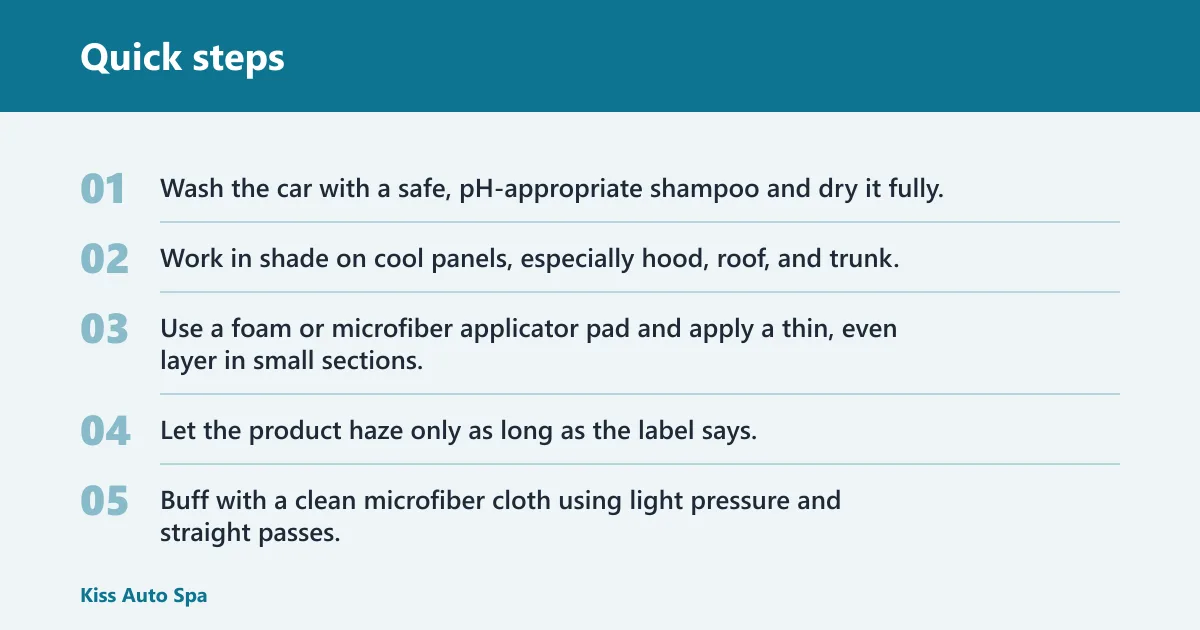
- Wash the car with a safe, pH-appropriate shampoo and dry it fully.
- Work in shade on cool panels, especially hood, roof, and trunk.
- Use a foam or microfiber applicator pad and apply a thin, even layer in small sections.
- Let the product haze only as long as the label says.
- Buff with a clean microfiber cloth using light pressure and straight passes.
- Check black trim, emblems, mirrors, and panel gaps for residue before moving on.
How to wax a black car without leaving streaks
Streaks usually come from too much product, a hot panel, or a dirty microfiber cloth. Keep the layer thin, use a fresh towel for the final wipe, and avoid circular scrubbing on soft clear coat. If the panel still streaks, pause and use less product on the next section.
Microfiber cloth and applicator pad use
A microfiber cloth matters because rough or dirty towels can add micro-marring to black clear coat. A clean applicator pad helps spread wax evenly and reduces over-application, which is one of the main causes of residue on trim and around badges. Keep separate cloths for application and final buffing.
A common first-timer mistake is waxing the entire trunk at once instead of testing a small patch first to see how the black finish reacts. On black paint, that often means the product dries unevenly and takes more effort to remove. Work in sections roughly the size of a door or half a hood.
What works before waxing?
Before waxing, the surface should be safely washed, fully dry, and free of loose grit. Use a clean microfiber cloth for drying and buffing, and use an applicator pad rather than bare hands. Cleaner wax is acceptable when the paint has light haze or road film, but a pure wax is better when the surface is already clean.
Safe wash basics
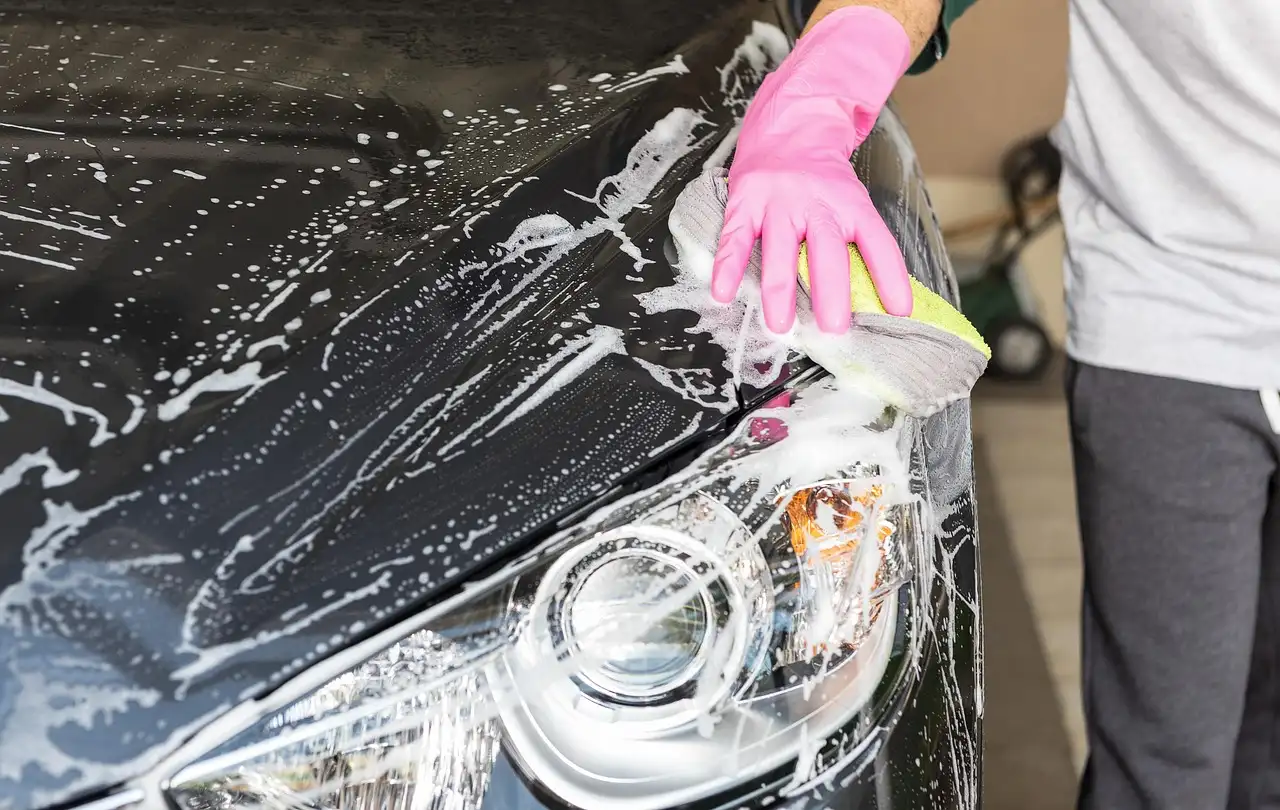
Black paint shows swirl marks, scratches, and dust more clearly than lighter colors, so wash quality matters as much as the wax itself. Use two buckets if possible, rinse often, and avoid dragging dirt across the clear coat. A bad wash can create the very defects the wax is supposed to hide a little.
When cleaner wax is acceptable
Use cleaner wax when the finish has light oxidation, slight haze, or old residue that a pure wax would not address. Do not expect it to repair scratches or true swirl marks. It may improve the look, but it is still a cosmetic layer, not a fix for clear coat damage.
Can wax hide swirl marks on black paint?
Wax can soften the look of minor swirls and faint haze, especially if the product has filling ability, but it does not remove them. True swirl marks sit in or on the clear coat. If you can see them in direct light after washing, the real fix is paint correction, not more wax.
What should you use before waxing a black car? Start with a safe wash, then dry with a clean microfiber cloth. If the paint still feels rough, decontaminate before waxing. A good applicator pad and a residue-free drying towel matter because any grit left on the surface can turn into new micro-marring during application.
How often should you reapply wax?
Reapply based on product type, parking exposure, and how the finish behaves after washing. Weekend cars can often wait longer than street-parked daily drivers. Watch for weaker water beading, faster dust grab, and a flatter look after drying; those are practical signs the layer is wearing down.
Weekend cars
Garage-kept black cars that are driven lightly can often stay on a carnauba schedule, with rewaxing in the 4-8 week range depending on wash frequency and conditions. If the car is not exposed to much weather, the main reason to reapply is gloss loss rather than full protection failure.
Daily drivers
For daily drivers, ceramic-hybrid wax or synthetic sealant usually makes more sense because the protection window is longer. The same source lists 4-6 months for ceramic-hybrid wax and 3-4 months for synthetic sealant under standard conditions. On an outside-parked black car, reapply when water behavior and gloss drop off noticeably.
Spray wax as upkeep
Spray wax is useful between full applications, especially after a careful wash. It can refresh water beading and add a little slickness, but it should not be treated as the main protection layer. The same source lists spray wax topper at 1-3 washes, which is short by design.
Frequently asked questions
What is the best car wax for black cars at home?
The best car wax for black cars at home is usually a ceramic-hybrid wax for most daily drivers. It balances gloss, durability, and ease better than carnauba alone, while avoiding the frequent reapplication that short-lived waxes need. Choose carnauba only if you want a warmer show finish.
How do I wax a black car without leaving streaks?
Use a cool panel, thin application, and small sections. Buff with a clean microfiber cloth before the product dries too hard, and stop using any towel that starts dragging residue. Most streaks come from excess wax, dirty towels, or working on hot paint.
Which wax works best on black paint with light scratches?
A cleaner wax or a filling carnauba blend can improve the look of light scratches and haze better than a pure protection product. It can mask minor defects, but it will not repair the clear coat. If scratches catch a fingernail, wax will not fix them.
Should I use paste wax, liquid wax, or spray wax on a black car?
Paste wax is a good choice for depth and show-style gloss. Liquid wax is easier to spread evenly for many home users. Spray wax is the easiest to use, but it is short-lived and works best as upkeep between fuller wax sessions rather than as primary protection.
How often should I wax a black car at home?
Most black daily drivers do well with ceramic-hybrid wax or synthetic sealant on a few-month cycle, while garage-kept weekend cars can often use carnauba more often. The right timing is based on water beading, gloss loss, and how exposed the car is to weather and parking.
What should I use before waxing a black car?
Wash the paint safely, dry it fully with a clean microfiber cloth, and use a foam or microfiber applicator pad for the wax. If the surface feels rough, decontaminate before waxing. That prep lowers swirl risk and helps the wax spread evenly on the clear coat.
Why should you wax your car?
You wax your car to add gloss, protect the clear coat, and make washing easier. On black paint, that also means helping the finish look darker and more even between washes. Wax is cosmetic protection, though, so it improves appearance more than it fixes damage.