How to Hand Wash a Car Without Scratching the Paint
Hand wash a car with a pre-rinse, two buckets, a clean microfiber mitt, and plenty of lubrication. If the paint still feels gritty after rinsing, do not start contact washing yet. Bad technique drags grit across the clear coat and leaves swirls that cost time and paint correction later. This guide shows how to judge contamination, choose safer wash tools, and use contact methods that cut scratch risk. (Consumerreports)
What you need before you start
- Dedicated car wash soap made for automotive paint, not household cleaners
- Two buckets: one for wash solution and one for rinsing your mitt
- Large, soft wash mitt or natural sponge, kept clean
- Separate wheel cleaner and a separate wheel sponge or brush
- Hose or pressure rinse, plus a gentle spray nozzle
- Nonabrasive drying towel or forced-air drying tool
- Wax or paint protection for seasonal use
- Optional grit guards for the buckets
Paint scratch-risk checklist
| Washing scenario | Safest action | Avoidable mistake |
|---|---|---|
| Light dust | Pre-rinse, then use a lubricated contact wash with straight passes | Dry wiping the panel before rinsing |
| Heavy mud | Rinse thoroughly first and wait until loose grit is gone | Dragging a mitt through visible mud |
| Road film | Use extra pre-rinsing and wash one small section at a time | One-pass scrubbing over a loaded panel |
| Wheel grime | Use separate wheel tools and separate cleaner | Bringing wheel tools to body panels |
| Dropped mitt | Retire it or wash it thoroughly before reuse | Picking it up and continuing on paint |
| Hot paint | Wait until panels cool before washing | Letting soap dry on the surface |
| Direct sun | Move the car or wash in shade | Working fast while water spots form |
| Matte finish | Use only matte-safe wash and dry with minimal pressure | Polishing, waxing, or aggressive rubbing |
| After-rinse drying | Blot or use forced air; finish with a clean drying towel | Dragging a dirty towel across the panel |
| Sap or sticky residue | Soften it first and treat the spot as high risk | Scraping at it with a dry mitt |
How do you wash a car without scratching the paint?
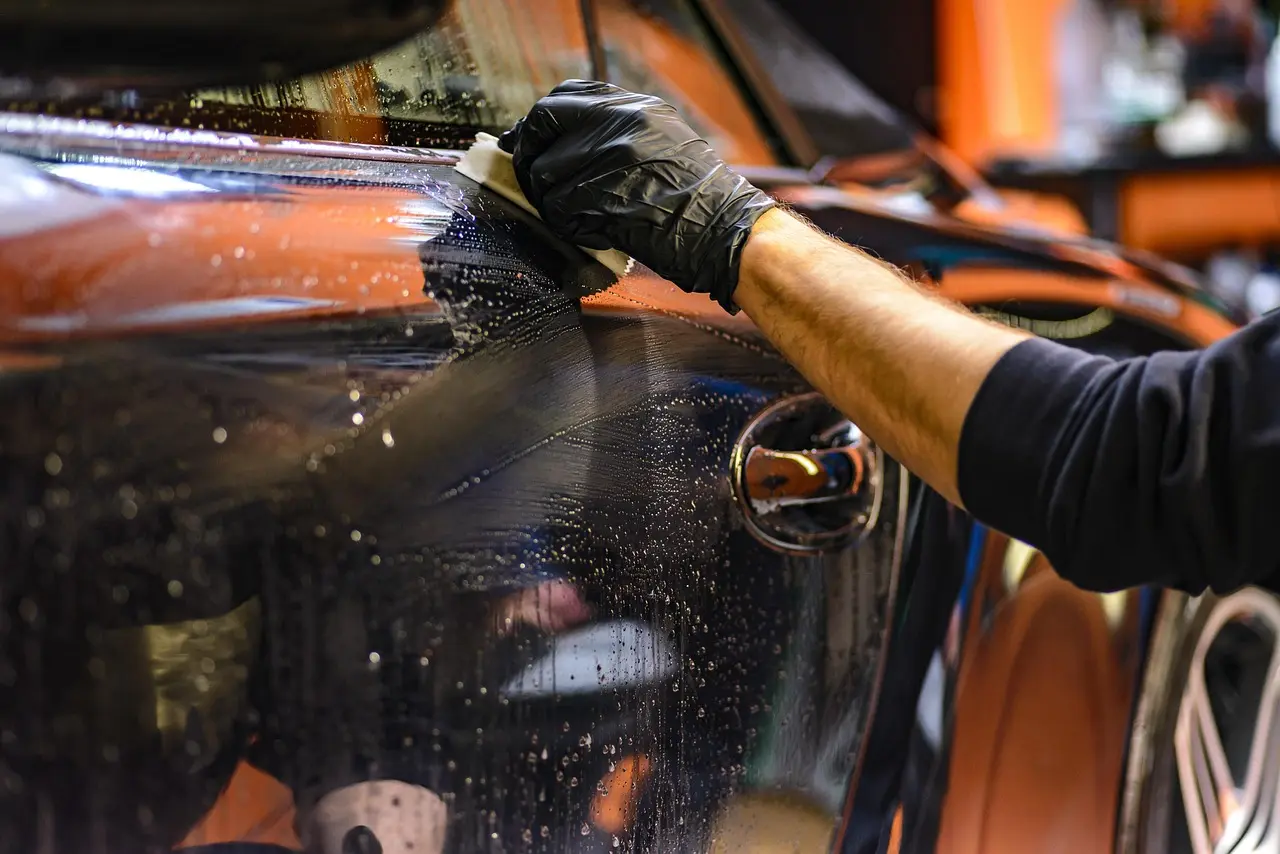
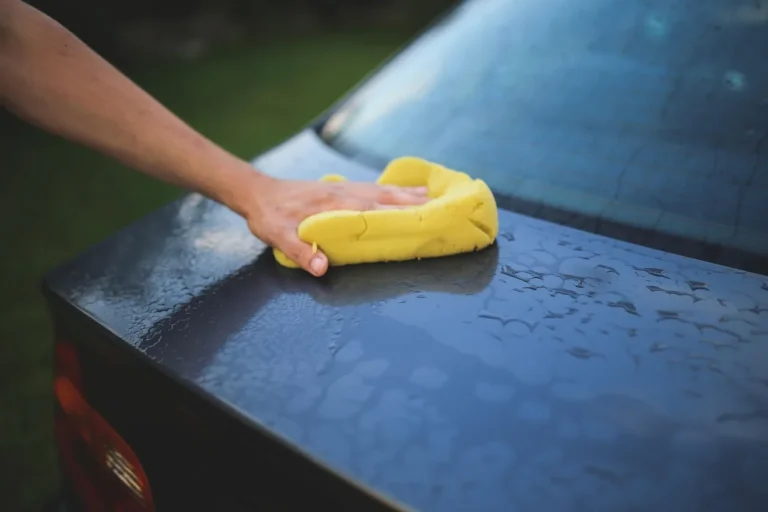
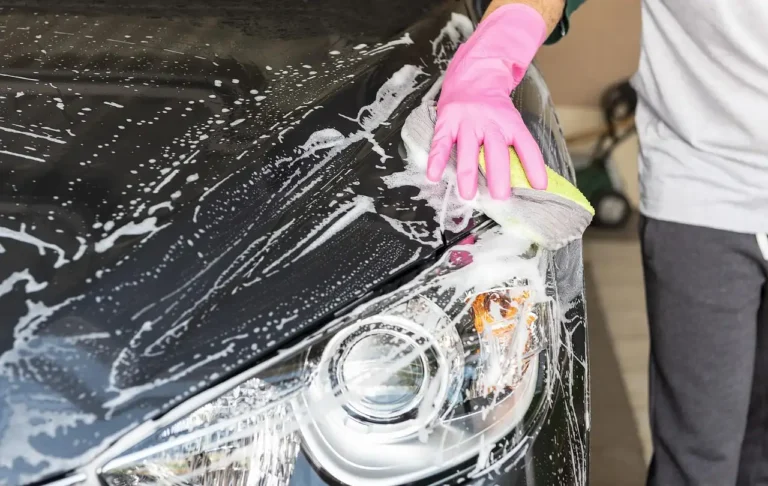
Start with a full rinse, then wash from the top down with a clean mitt, fresh soap, and straight passes. Move the mitt in long lengthwise strokes, not circles, so loose dirt leaves the panel instead of being worked into the clear coat. If the surface still feels sandy, pause and rinse again.
Start with the least dirty panels
- Rinse the roof, glass, hood, and upper doors first to remove loose dirt and debris.
- Mix dedicated car-wash soap in one bucket and clean water in the rinse bucket.
- Dip the mitt in the wash bucket, clean one section, then rinse it before reloading.
- Move in straight lengthwise passes, not circles, because circular motion can create swirl marks.
- Work down the car, then rinse each cleaned section before the soap dries.
Use the two-bucket method correctly
One bucket holds wash solution. The other holds rinse water for the mitt. That split keeps dirt out of the wash solution, which is safer than one-bucket washing and cleaner than wiping the whole car with one loaded mitt.
Picture a sedan covered in light dust after sitting overnight. A pre-rinse and two-bucket wash is usually enough. Suppose the same car has gritty lower doors and road film at the rear bumper; the lower panels need extra rinsing before any mitt touches them.
How do you handle dirt that can scratch faster?
Mud, sap, road film, and brake dust need more caution than light dust because they load the mitt faster and turn a safe wash into an abrasive one. If contamination is heavy, pause contact washing, rinse again, and separate wheel work from paint work.
When to stop and pre-rinse again
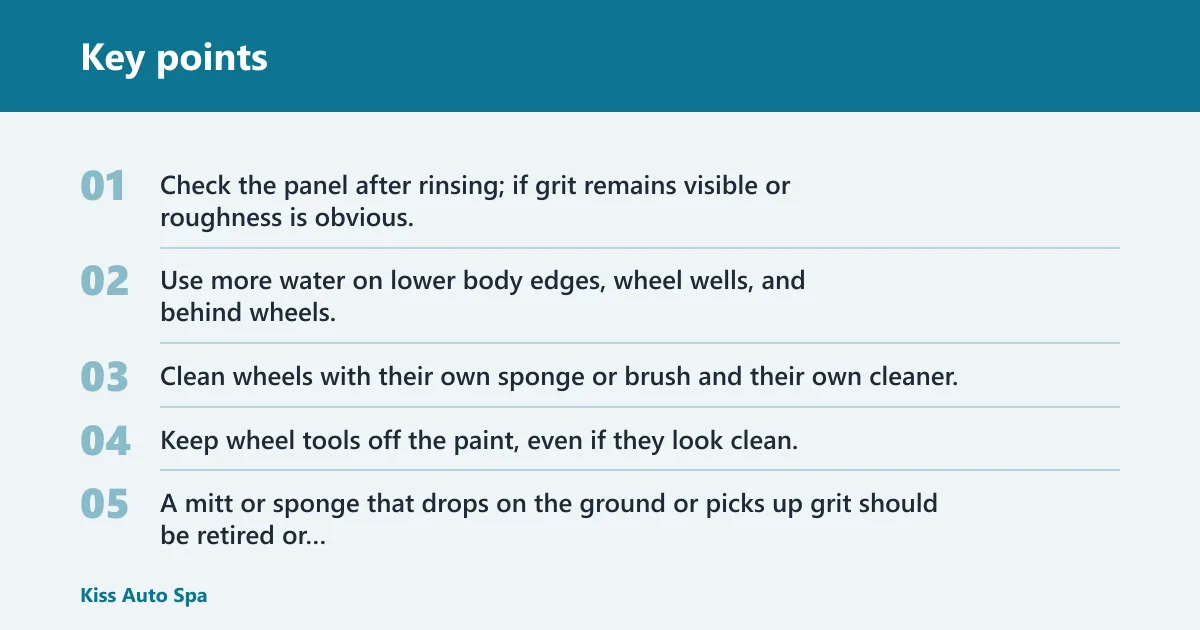
- Check the panel after rinsing; if grit remains visible or roughness is obvious, do not start a contact wash yet.
- Use more water on lower body edges, wheel wells, and behind wheels, where road grime can build up.
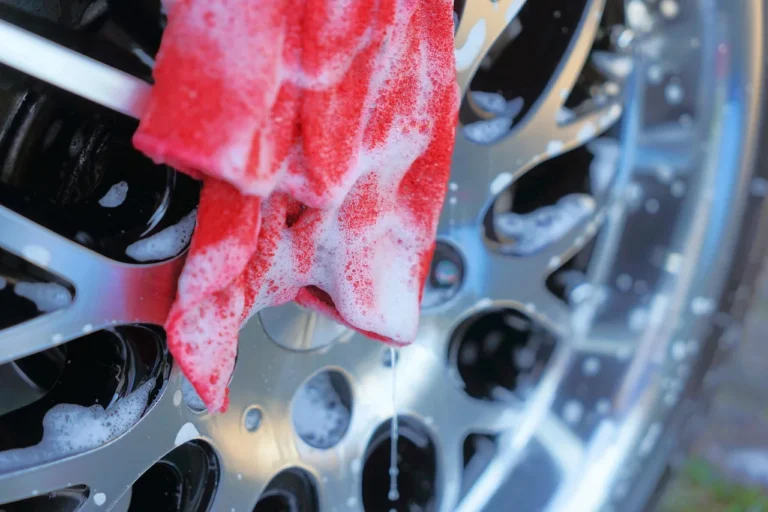
- Clean wheels with their own sponge or brush and their own cleaner.
- Keep wheel tools off the paint, even if they look clean.
- A mitt or sponge that drops on the ground or picks up grit should be retired or thoroughly cleaned before reuse.
A common first-timer mistake is treating wheel dust like normal body dirt. Brake dust can cling to wheel faces and then transfer to paint tools. Keep the wheel cleaner compatible with all wheels, clearcoat, and chrome, and do not let that tool set touch body panels.
Tool failure points to watch
A wash mitt is only safe while it stays clean. Once it traps grit, it becomes a sanding pad. A sponge can do the same if it is loaded with debris. If either tool hits the ground, do not reuse it on paint until it has been thoroughly cleaned and checked for embedded particles.
How should you dry the car safely?
Drying matters as much as washing. A clean, nonabrasive towel or forced air reduces water spots, but the method changes the scratch risk. Blotting is often safer than dragging, and forced air is commonly used for seams and trim where water hides.
Choose the least abrasive drying method
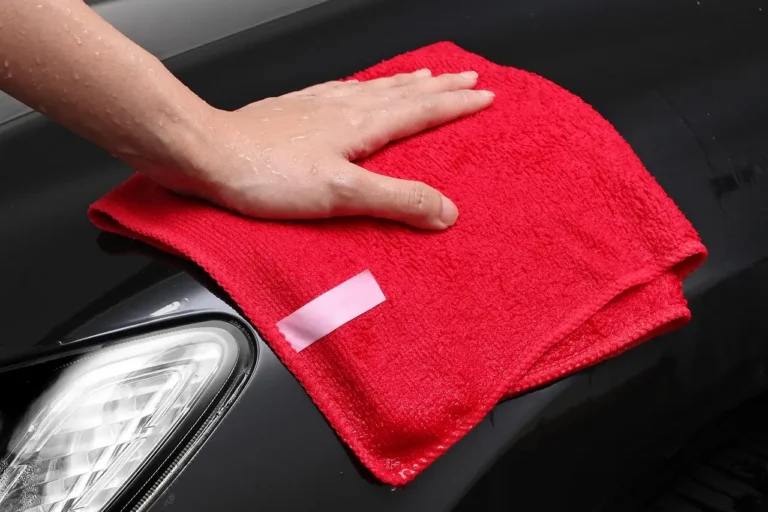
- Blot standing water from flat panels with a clean drying towel.
- Use a patting motion on soft clear coats and delicate finishes.
- Use forced air around mirrors, emblems, grilles, and panel gaps.
- Finish with a light towel pass only if the panel is already mostly dry.
- Dry immediately after rinsing to reduce spotting.
Dragging a towel across a panel can catch leftover grit and leave marks. Blotting reduces that risk. Forced air avoids contact altogether, which is useful on badges, mirrors, and the edges where rinse water collects.
Common mistakes
- Using circular motions on paint instead of straight-line wiping
- Washing in direct sun or on hot panels, which speeds drying and raises spotting risk
- Using household cleaners or dish soap on paint, which can strip protective wax
- Mixing wheel tools with paint tools
- Skipping the pre-rinse when dust, mud, or road film is present
- Letting soap dry before rinsing it off
- Using the same towel from wheels on body panels
Hot paint, sun, and drying spots
Do not wash a car when the body is hot or in direct sunlight. Heat speeds drying, which makes spots and deposits more likely. If the panels are already warm, wait or move the car to shade before touching the paint with soap or a mitt.
Wax and paint protection after washing
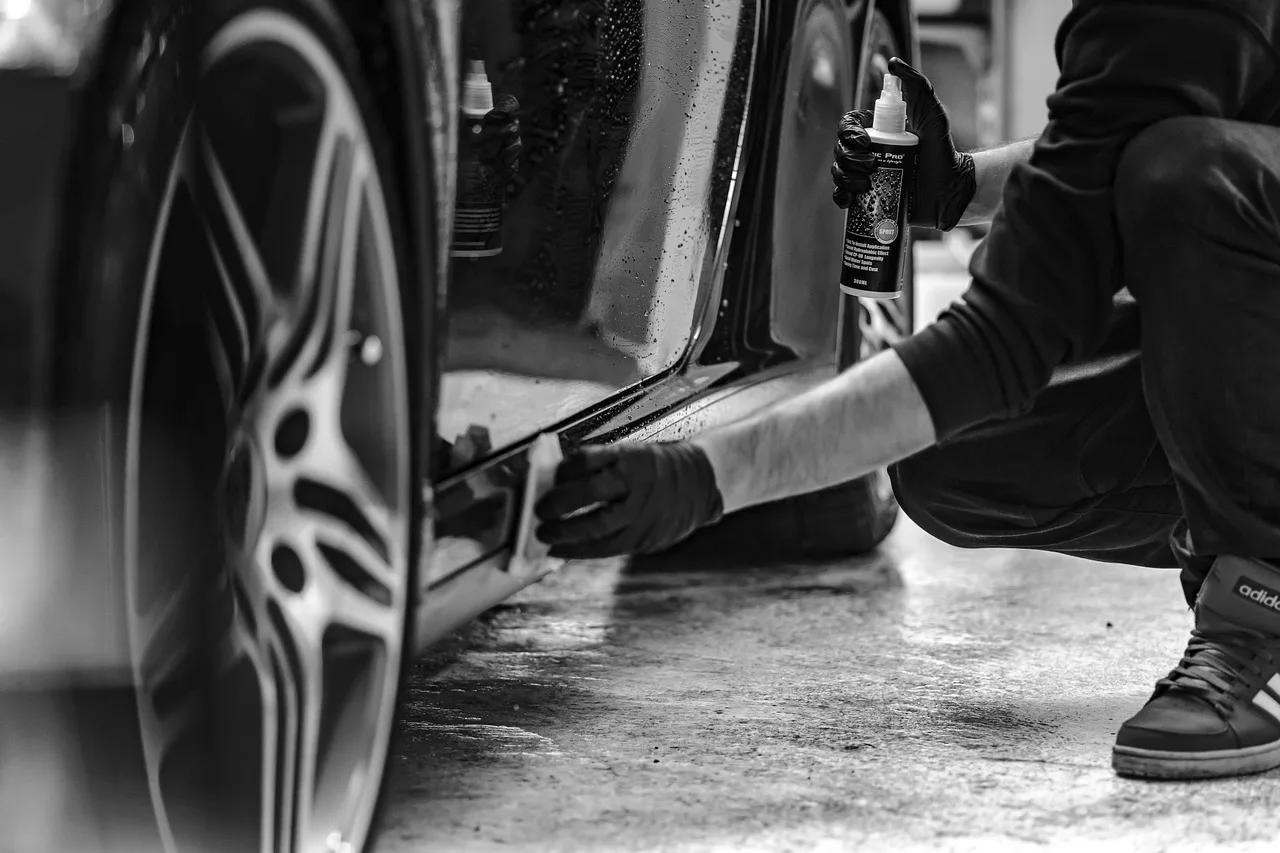
Seasonal waxing helps protect the finish from the elements and supports shine. Protection does not replace careful washing, but it can make later dirt release more easily and reduce the chance that grime clings to the clear coat.
When protection helps most
Apply protection after the car is clean and dry, especially before periods of harsh sun, rain, road salt, or winter storage. A protected surface still needs a safe wash method, because wax cannot stop a dirty mitt from scratching paint.
Household cleaners can strip protective wax from paint. A dedicated car-wash product is milder and designed for automotive paint, which makes it the better starting point for routine washing. CR says washing by hand helps preserve a vehicle’s finish and shine.
Frequently asked questions
Do hand car washes scratch paint?
They can, if the process uses dirty tools, circular scrubbing, or a loaded sponge. A careful hand wash is less risky than a careless one. The key is clean equipment, a strong pre-rinse, and separate tools for wheels so grit does not move onto paint.
Do all car washes scratch paint?
No, but any wash can scratch if the surface is dirty enough or the method is poor. Automated brushes, bad towels, and reused mitts raise the risk. A properly rinsed hand wash with automotive soap and clean tools gives you the most control over that risk.
How to wash matte paint without ruining the finish
Use a matte-safe wash product, rinse carefully, and dry with minimal pressure. Do not wax, polish, or rub hard, because matte finishes are less forgiving of glossing and visible wear. Forced air and gentle blotting are safer than aggressive towel passes on those surfaces.