How to Clean the Interior Windshield Without Streaks
Clean the interior windshield with a dry microfiber first, then use a light mist of glass cleaner or 1:1 alcohol-water only on the towel, not the glass, and switch towels as soon as one loads up. If you pick the wrong residue, haze and glare return fast, especially at night. This guide shows how to identify film, choose the right cleaner and towel, and wipe without streaks.
This guide is part of our Interior windshield cleaning: how to remove haze and film series.
What you’ll need
- Clean microfiber towel for the dry dust-removal pass
- Waffle-weave microfiber towel for final buffing
- Ammonia-free glass cleaner for interior glass and tint-safe cleaning
- Optional DIY mix: 1 cup rubbing alcohol, 1 cup water, and 1 tablespoon distilled white vinegar (Wikihow)
- Distilled water for mixes and for dampening tools
- Dashboard towel to protect vents and trim from drips
- Hard-to-reach glass tool such as a microfiber-wrapped foam block or reach wand
- Optional melamine sponge for stubborn haze on bare glass only
Which interior windshield residue do you have?
| Symptom | Likely cause | Safest first method | Escalation step | If streaks remain |
|---|---|---|---|---|
| Greasy film that returns after a few drives | Off-gassing from interior plastics, often mixed with dashboard spray vapor | Dry microfiber dust pass, then ammonia-free cleaner on the towel | Use a 50/50 isopropyl alcohol and distilled water mix on the towel | Check for saturated towels, dirty cabin air filter dust, or fresh dashboard dressing |
| Gray film around smoke-prone areas | Smoke residue and tar-like particles | Ammonia-free cleaner with a clean microfiber towel | Repeat with a second towel and a slower buff | Wash or replace contaminated towels; residue can redeposit fast |
| Small white spots or rings | Hard-water spotting from mineral residue | Distilled-water-based cleaning mix | Follow with a dry waffle-weave microfiber towel | If spots stay fixed, treat them as bonded residue rather than normal dust |
| Cloudy haze that will not clear | Old cleaner residue, smoke film, or stubborn bonded haze | Ammonia-free cleaner on towel, then dry buff | Use a damp melamine sponge on bare glass only, with light pressure | Stop if the haze is near tint, plastic trim, or a coated area |
Why does the inside of my windshield keep streaking?
Interior streaks usually mean the residue type does not match the cleaner, the towel is overloaded, or the glass still carries contamination from plastics, smoke, or old product. Off-gassing from cabin plastics can leave a greasy chemical haze, while smoke and mineral residue need different handling.
A common first-timer mistake is treating every haze the same. Say your windshield looks clear for one minute, then turns cloudy again after sunset. That usually points to oily film or a dirty towel, not a lack of scrubbing force.
How film behaves on interior glass
Off-gassing is common near dashboards, vents, and the lower edge of the windshield. Cartipsdaily identifies this as a chemical haze from interior plastics, and it often returns after warm weather or after a dashboard dressing is used. Smoke residue behaves differently and usually smears more slowly but spreads across the whole pane.
When the problem is the towel or product
Streaks can come from a damp towel that is already loaded with cleaner, lint from the wrong cloth, or fabric softener residue trapped in the fibers. Hot glass makes this worse because product flashes off too fast. A dirty cabin air filter can also keep dust cycling across the windshield, so the film comes back after cleaning.
How do you prep the glass?
Start with cool glass in shade or a garage, then protect the dash before any liquid touches the car. Dry dust removal first keeps loose particles from turning into gray drag marks. Fold towels often so you keep a clean face in play.
- Park in shade and let the interior cool.
- Lay a dashboard towel over vents, trim, and the top of the dash.
- Use a dry microfiber towel to remove loose dust from the full windshield.
- Fold the towel to expose a fresh face before it starts dragging grit.
Why this order matters
wikiHow recommends a dry microfiber towel before any liquid cleaner, and Jimbo’s Detailing advises parking in the shade and letting the interior cool. If the surface is hot, cleaner can flash off before it loosens the film. That leaves you chasing streaks across the same spot.
How do you clean it without streaks?
Spray the towel, not the windshield. That limits overspray on the dash and gives you better control over how much product reaches the glass. Move in straight, overlapping passes from one edge to the next, then switch to a second dry towel before the first one starts to smear residue back onto the pane.
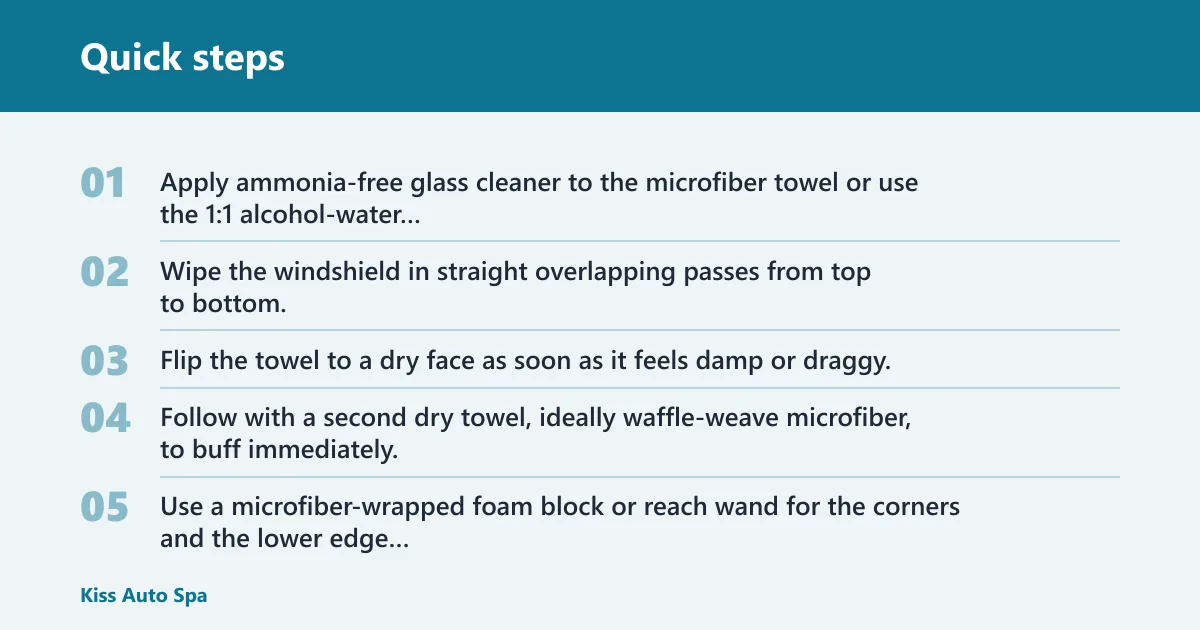
- Apply ammonia-free glass cleaner to the microfiber towel or use the 1:1 alcohol-water mix on the towel only.
- Wipe the windshield in straight overlapping passes from top to bottom.
- Flip the towel to a dry face as soon as it feels damp or draggy.
- Follow with a second dry towel, ideally waffle-weave microfiber, to buff immediately.
- Use a microfiber-wrapped foam block or reach wand for the corners and the lower edge near the dash.
Cartipsdaily says a 50/50 isopropyl alcohol and distilled water mix is useful for oily film, and distilled water avoids mineral streaks because it has zero minerals. Jimbo’s Detailing recommends spraying cleaner onto the towel, not the windshield, and using a second dry towel for immediate buffing.
What towel is best for interior windshield glass?
A waffle-weave microfiber towel is the best finishing towel for most interior glass because it grips moisture and residue well. A regular microfiber towel is still useful for dry dust removal and as a buffing towel. Fold either towel into quarters so you can rotate to a clean face without stopping every few passes.
Suppose the lower passenger-side corner keeps smearing even after the main field looks clean. That spot often needs a separate tool or a tighter towel fold, because the dash blocks your wrist and leaves product behind in the corner.
What should you do for stubborn haze?
Use a melamine sponge only as a careful escalation, and only on bare glass. TidyFormula says to confirm the windshield is bare glass first, use a damp plain Magic Eraser, and keep pressure light. Do not use it on tint film or plastic trim.
- Dampen the melamine sponge so it is moist, not dripping.
- Glide it over the haze with light pressure and short, straight passes.
- Wipe the area with an ammonia-free glass cleaner on a microfiber towel.
- Finish with a dry microfiber or waffle-weave towel.
Use this only when normal wiping leaves a bonded film behind. If the haze is near tinted film, switch back to microfiber and cleaner instead. A melamine sponge is useful, but it is not the default tool.
Common mistakes
- Too much product on the glass: It leaves a film that smears on the next pass. Put cleaner on the towel and reapply only when the cloth starts to dry out.
- Dirty or softener-treated towels: Fabric softener can leave a slick residue. Wash glass towels without softener, and retire any towel that sheds lint.
- Cleaning hot glass: Heat can flash product off before it lifts residue. Work when the windshield is cool.
- Using paper towels as the main tool: They can lint and can leave uneven drag marks. Use microfiber instead.
- Ignoring the source of recurring film: Dashboard sprays, heavy interior dressings, smoke residue, and a dirty cabin air filter can all feed the problem again.
One practical adjustment helps when the first towel loads up too quickly: add one light mist to the towel, not the glass, then recheck the same section. If streaking improves for one pass but returns on the next, the towel is likely saturated or contaminated rather than under-wet.
Why does the inside of my windshield keep getting a greasy film?
Greasy film usually comes from off-gassing plastics, dashboard dressings that vaporize, or smoke residue that settles over time. The same source notes that dashboard sprays can vaporize and stick to glass, which is why the same windshield can haze again after a clean wipe. The cure is residue-specific cleaning, not extra pressure.
If the film returns quickly, inspect the cabin air filter and the products used on the dash. A dusty filter keeps airborne residue moving through the cabin, while glossy interior dressings can keep feeding the same haze on warm days.
Frequently asked questions
What is the best way to clean the inside of your windshield without streaks?
Start with diagnosis, then match the cleaner to the residue. Oily film usually responds to a 50/50 isopropyl alcohol and distilled water mix, while haze often needs an ammonia-free glass cleaner and a dry final buff. Do not skip the second towel if the first one feels damp.
Should I spray glass cleaner on the windshield or on the towel?
Spray the towel. Jimbo’s Detailing recommends this method because it limits overspray on trim and gives better control over how much product reaches the glass. Use just enough to dampen the towel, then add a second dry towel for the final wipe.
What towel is best for cleaning interior windshield glass?
A waffle-weave microfiber towel is the best finishing towel for interior glass because it holds moisture and residue well. Keep a regular microfiber towel for dry dust removal and the first cleaning pass. Fold each towel so you can rotate to a clean side as needed.
Can I use a Magic Eraser on the inside of my windshield?
Yes, but only on bare glass, with the sponge damp and pressure kept light. TidyFormula warns not to use it on tint film. Follow the sponge with microfiber and a glass cleaner so no melamine residue stays on the surface.
How do I clean hard-to-reach corners of the windshield?
Use a microfiber-wrapped foam block or a reach wand to get the lower edge and tight corners near the dash. Put the cleaning towel around the tool, then work from the corner inward with short straight passes. Keep the dashboard towel in place so drips land on fabric, not trim.