Is Paint Sealant Worth It for a Daily Driven Car?
Yes, paint sealant is worth it for many daily drivers if you want low-cost protection that lasts 3 to 6 months and you are fine reapplying it on schedule; if you want the longest gap between details, ceramic coating is the better buy. Skip protection, and clear coat oxidation, water spotting, and grime bonding get harder to handle, especially on cars parked outside. Here, you’ll see how sealant compares with wax and ceramic coating for cost, prep time, durability, and real commuter use.
Is paint sealant worth it for daily driving?
For a daily commuter, paint sealant is usually worth it when the car faces rain, sun, road film, and frequent washing, and when you want a practical protection layer without ceramic coating pricing. It is a weaker buy if the paint needs correction first, the car will be sold soon, or the vehicle spends most of its time garaged.
When the cost is easy to justify
Sealant makes the most sense on outside-parked commuters that see steady mileage and routine washing. A quality paint sealant can protect for several months under normal conditions, and many products are described in the 6 to 12 month range. That fits a car that needs regular upkeep, not a long correction cycle.
It is also a sensible choice when you want easier cleaning of road film, grime, and contamination without paying for a coating that may outlast the ownership period. Motors & Minds lists DIY sealant at $15-$50 and professional sealant at $150-$400, which keeps the entry cost close to the needs of a commuter car.
When the labor is not worth it
Sealant is a weaker value when the paint is already dull, swirled, or oxidized. In that case, the finish needs prep before protection can bond well, and that added work can erase the simplicity advantage. It is also a poor buy if the car is short-term ownership and will leave before the protection has time to pay back.
Use the result you want as the filter. If the goal is a cleaner car that washes easier for the next several months, sealant fits. If the goal is maximum durability with fewer future applications, ceramic coating moves ahead, but only if the higher upfront cost makes sense for the vehicle and the ownership horizon.
Paint sealant decision matrix
The right answer depends on where the car parks, how many miles it sees, how harsh the weather is, and how long you plan to keep it. A garage-kept low-mileage car gets less from sealant than an outside commuter, while a short-term owner usually gets better value from a cheaper, lighter protection plan.
| Scenario | Annual miles | Parking | Climate exposure | Expected sealant value | Better alternative | Reapplication cadence |
|---|---|---|---|---|---|---|
| Garaged low-mileage | Under 5,000 | Mostly indoors | Lower UV, less rain, limited road film | Moderate; useful, but payback is slower | Wax if you want a warmer look; ceramic if long-term ownership matters | Every 6 to 12 months |
| Outdoor commuter | 10,000 to 15,000 | Outside most nights | UV, rain, pollution, dust, frequent washing | High; strong value for low-cost upkeep | Paint sealant is often the best default here | Every 4 to 8 months |
| Winter-salt driver | 8,000 to 18,000 | Outside or mixed | Salt spray, slush, grime, repeated wash cycles | High early in the season, then dependent on maintenance | Ceramic coating if budget and prep allow; otherwise sealant with careful washes | Before winter and again mid-season if needed |
| Short-term owner | Any | Any | Any | Low; limited time to recover prep and product cost | Quick detail wax or light sealant only if appearance matters now | Once, if at all |
Garaged low-mileage driver
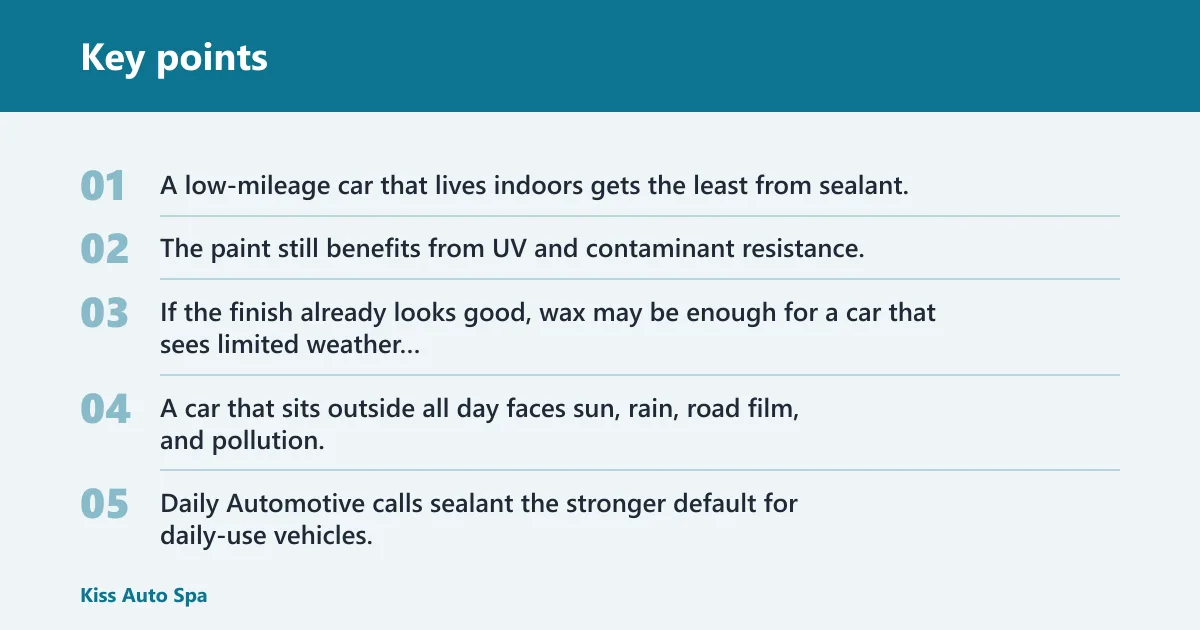
A low-mileage car that lives indoors gets the least from sealant. The paint still benefits from UV and contaminant resistance, but the exposure load is lower, so the value case is weaker. If the finish already looks good, wax may be enough for a car that sees limited weather and few wash cycles.
Outdoor commuter
This is the best use case for sealant. A car that sits outside all day faces sun, rain, road film, and pollution, and sealant helps keep those contaminants from bonding as quickly. Daily Automotive calls sealant the stronger default for daily-use vehicles, and that matches the commuter use case better than a garage queen.
Winter-salt driver
Sealant is still useful in cold climates because it helps shed slush, grime, and salt residue more easily. It does not stop corrosion by itself, and it will not replace washing, but it can make cleanup less stubborn. The key is maintenance: winter detergents and heavy wash frequency can shorten its life.
Picture a sedan parked outside in a northern city. After a week of salted roads, the paint will collect a gray film. A fresh sealant layer will not make that film disappear, but it can make the first wash faster and reduce how hard the residue clings to the clear coat.
Short-term ownership
If you plan to sell or trade the car soon, sealant is often not the best place to spend money and time. A basic wash, clay if needed, and a simple protectant may be enough. Longer-lasting products only pay back when you keep the car long enough to use them.
Paint sealant vs wax vs ceramic
Sealant sits in the middle on cost and durability. Wax costs less and can give a warmer look, but it usually needs more frequent reapplication. Ceramic coating costs more up front and lasts longer, yet daily-driver results still depend on prep, washing habits, and exposure. The right choice depends on how often you will maintain the car.
| Option | Typical durability | Upfront cost | Maintenance burden | Best fit |
|---|---|---|---|---|
| Wax | 4 to 8 weeks or 1 to 3 months | Lowest | Highest reapplication frequency | Drivers who want a quick refresh and do not mind frequent upkeep |
| Paint sealant | Several months, often 6 to 12 months | Low to moderate | Moderate | Most daily drivers, especially outdoor commuters |
| Ceramic coating | 2-5+ years | Highest | Lower reapplication frequency, but prep matters more | Owners keeping the car longer and willing to pay for the start-up cost |
Durability and reapplication interval
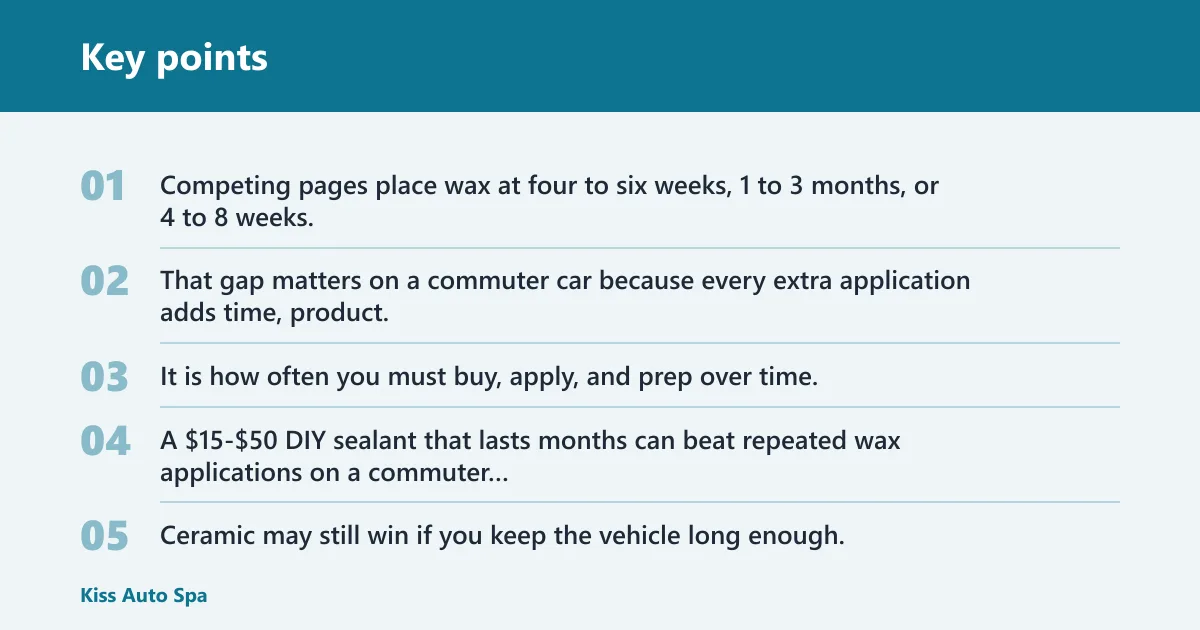
Wax usually lasts less time than sealant. Competing pages place wax at four to six weeks, 1 to 3 months, or 4 to 8 weeks, while sealant is often described as lasting several months and commonly 6 to 12 months. That gap matters on a commuter car because every extra application adds time, product, and wash prep.
Cost over 2 to 4 years
The real comparison is not bottle price. It is how often you must buy, apply, and prep over time. A $15-$50 DIY sealant that lasts months can beat repeated wax applications on a commuter car. Ceramic may still win if you keep the vehicle long enough, but the higher upfront cost needs a longer ownership window to make sense.
Suppose a four-door commuter is kept for three years. If sealant is refreshed a few times during that period, the total spend can stay modest. If ceramic is chosen instead, the up-front bill is higher, but the lower reapplication schedule may suit an owner who wants fewer future details more than a smaller initial bill.
Look, feel, and maintenance tradeoffs
Wax still has a place for drivers who prefer its warmer look. Sealant is less about show-car warmth and more about practical protection that makes washing easier. Ceramic coating sits above both on durability, but its value depends on prep quality and the owner’s willingness to keep up with proper washing.
What does sealant protect on a daily driver?
Sealant helps protect clear coat from UV, rain, road film, grime, and other contaminants that build up on a daily-use car. It does not stop chips or scratches, but it can make washing easier and reduce how aggressively dirt and fallout stick to the surface between washes.
UV, rain, and road film
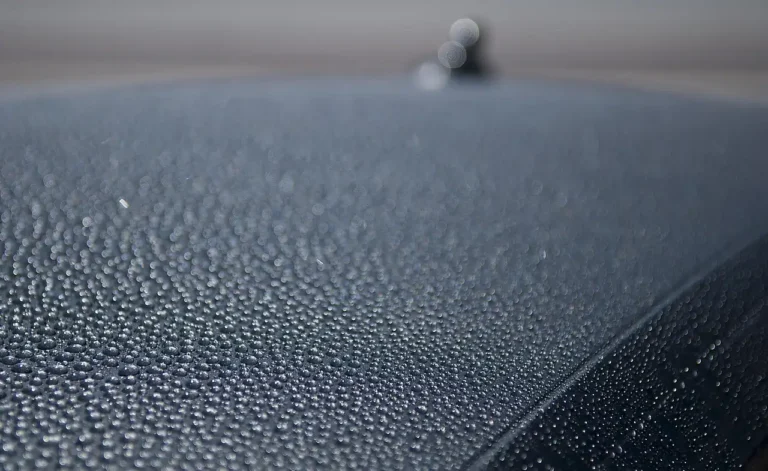
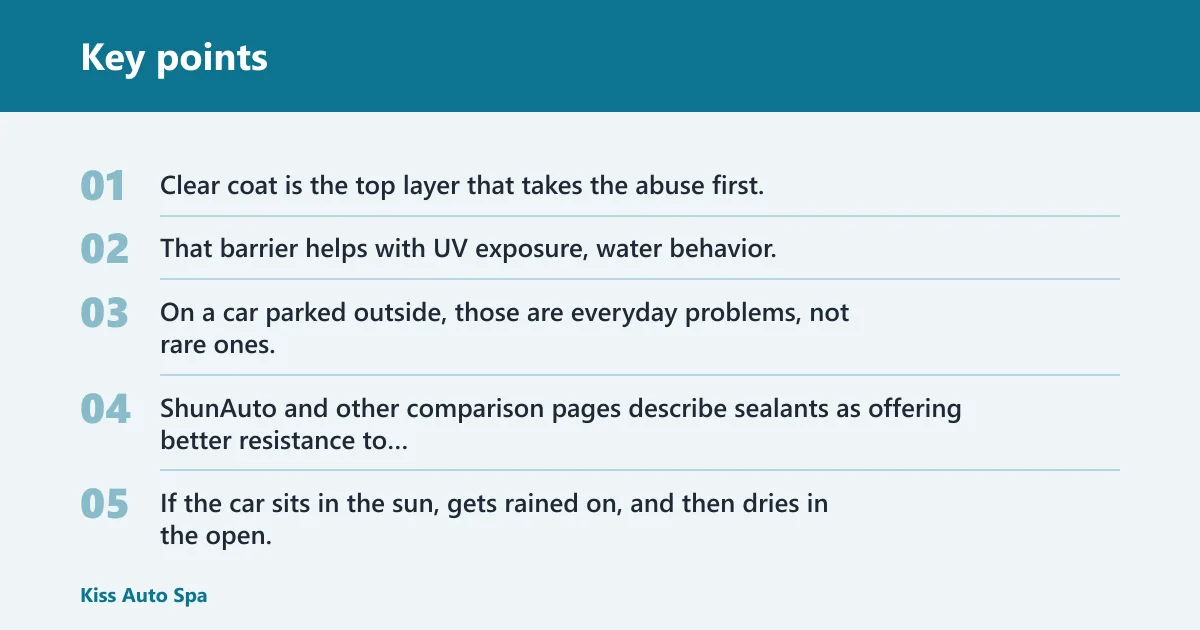
Clear coat is the top layer that takes the abuse first, and sealant adds a sacrificial barrier over it. That barrier helps with UV exposure, water behavior, and the sticky film that forms from traffic, dust, and pollution. On a car parked outside, those are everyday problems, not rare ones.
ShunAuto and other comparison pages describe sealants as offering better resistance to UV rays, water spots, and contaminants than wax, which matches the way daily drivers age. If the car sits in the sun, gets rained on, and then dries in the open, that extra barrier has real utility.
Bird droppings, bug splatter, and tree sap
Fresh sealant can make bird droppings, bug splatter, and tree sap easier to remove because the contamination sits on a protected surface rather than bonding straight to bare clear coat. That does not mean these contaminants are harmless. Left too long, they can still etch paint, especially in heat.
A common first-timer mistake is waiting for a weekend wash after a long highway drive. Bug splatter on the bumper or a bird dropping on the hood may clean off faster with fresh sealant, but the paint still needs prompt attention. Protection buys time. It does not cancel chemistry.
Winter salt and grime
Sealant helps most by making winter residue less stubborn to wash away. Salt spray and road grime still reach the paint, but the barrier can reduce how tightly they cling. For cold-climate commuters, that is valuable because repeated washing is already part of the season, and wash habits affect how long the protection lasts.
Harsh detergents and abrasive wash routines can shorten sealant life. Strong chemicals, overly frequent automatic washes, and dirty wash media all wear the layer down faster. That is one reason the same sealant can last longer on a careful owner’s car than on a heavily washed commuter in salt season.
Does your paint need prep first?
Yes, in many cases. Sealant bonds best to clean, decontaminated paint, and its finish quality depends on the condition of the clear coat beneath it. If the paint is oxidized, contaminated, or visibly swirled, you may need clay, decontamination, or paint correction before protection goes on.
When clay and decontamination are enough
If the paint feels rough but still looks clear, a wash followed by clay and decontamination may be enough. That removes bonded contaminants and helps the sealant lay down evenly. This is often the right level of prep for a well-kept daily driver that has not been neglected.
When paint correction is the better first step
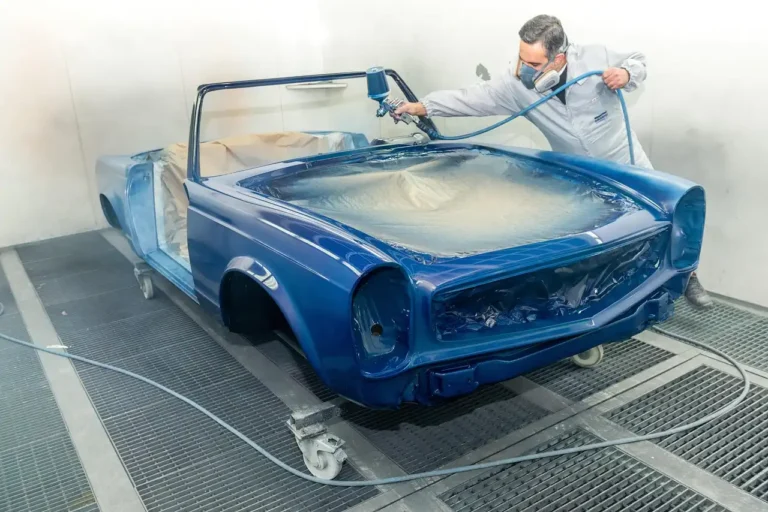
If the clear coat has oxidation, haze, swirls, or visible defects, paint correction usually makes more sense before sealant. Correction removes a layer of the damaged surface so the finish looks cleaner and the sealant bonds to better paint. Skipping that step leaves defects trapped under the protective layer.
Why dirty paint shortens sealant life
Sealant needs a clean surface to bond well. If the paint still has road film, embedded contamination, or leftover residue, the layer will not grab evenly, and durability can fall short. That is why prep matters more on used commuter paint than on a fresh, corrected finish.
- Wash the car thoroughly.
- Remove bonded contaminants with clay or a decontamination step if needed.
- Polish only if the clear coat needs correction.
- Apply sealant to a clean, dry surface.
- Maintain it with gentle wash chemistry and regular cleaning.
Choose paint sealant if… / Choose wax if… / Choose ceramic coating if…
Choose paint sealant when you want the best balance of cost, durability, and easy maintenance for a commuter car. Choose wax when you want the shortest, cheapest protection cycle and prefer its look. Choose ceramic coating when the car will stay with you long enough to justify the higher starting cost and stricter prep.
Choose paint sealant if…
Choose sealant if the car parks outside, sees year-round mileage, and gets washed often enough that easier cleaning matters. It is also the better pick if you want a middle-ground product that usually lasts several months and does not ask for coating-level spending or care.
Choose wax if…
Choose wax if you want a quick appearance boost and do not mind reapplying it every 4 to 8 weeks or 1 to 3 months. Wax can make sense for garage-kept cars and for owners who prefer a warm finish over longer durability. It is less practical for high-exposure daily drivers.
Choose ceramic coating if…
Choose ceramic coating if you plan to keep the car for years, want fewer reapplications, and are willing to pay more upfront. It is the stronger long-horizon option, with published longevity claims of 2-5+ years. For many commuters, though, the extra cost only makes sense if the ownership timeline is long enough to use it.
Frequently asked questions
How long does paint sealant last on a daily driver?
On a daily driver, paint sealant usually lasts several months, and many products are listed in the 6 to 12 month range under moderate conditions. Frequent washing, strong detergents, heavy road salt, and harsh weather can shorten that life. Careful washing usually matters more than bottle claims.
Is paint sealant better than wax for an everyday car?
For most everyday cars, yes. Wax usually needs reapplication sooner, with common ranges of 4 to 8 weeks or 1 to 3 months, while sealant lasts longer and better fits routine commuter maintenance. Wax can still win if the driver wants a warmer look and does not mind frequent refreshes.
Is paint sealant cheaper than ceramic coating over time?
Usually, yes. Ceramic may cost less per year over a long ownership span, but only if the car stays with you long enough to spread out the higher upfront cost.
Does a daily driven car need paint sealant if it parks outside?
It often does. Outdoor parking increases UV exposure, rain, road film, and contamination, so a protection layer has more work to do. Sealant is especially useful when the car is washed regularly and the goal is lower-cost upkeep rather than long-term coating protection.
What are the downsides of paint sealant on a commuter car?
The main downsides are limited durability, the need for periodic reapplication, and weaker performance on dirty or uncorrected paint. Sealant also cannot stop chips, scratches, or all chemical damage. If the paint is already rough, the time spent on prep may outweigh the benefit.
Will paint sealant help against road salt and winter grime?
Yes, but only as part of a wash routine. Sealant can make salt residue and winter grime easier to remove and less likely to bond tightly to clear coat. It does not replace underbody washing or routine cleaning, and heavy winter detergents can shorten its life.