Why Is the Inside of My Windshield Foggy?
If the fog clears with the defroster in minutes, it’s usually normal condensation. If it smears, feels greasy, or returns right after wiping, you likely have an interior film. Mixing those up wastes time, keeps visibility poor, and can point to a leak, HVAC problem, or dirty cabin surface. This guide shows how to tell condensation from oily haze and which fix fits each one.
How moisture and temperature create condensation

Inside fog is usually moisture condensing on cooler glass. Warm, moist cabin air hits the windshield, cools, and leaves water on the surface; the effect gets worse when the temperature inside the car doesn’t match the outside temperature and the air is humid. Cold starts and rainy weather make that mismatch easier to hit.
That is different from a greasy film. Fog clears in a more uniform way when you dry the cabin air. Film tends to smear, streak, or return after wiping because the problem is residue on the glass, not just water in the air.
Why winter and rainy weather make it worse
Winter creates a larger temperature gap between cabin air and glass, so condensation forms faster. Rainy weather raises cabin humidity through wet shoes, clothes, and door openings. More moisture in the cabin means more vapor available to settle on the coldest surface, which is usually the windshield.
Fog may also appear after short trips. The glass stays cold, but passengers add breath moisture quickly. That is why the front windshield often mists first while the side windows may lag behind.
Foggy inside windshield use this diagnosis matrix
This table separates common patterns so you can choose the fastest fix before you start wiping the wrong problem. A true condensation issue usually tracks with temperature and humidity. A film issue usually tracks with residue, off-gassing, smoke, or dressing overspray.
| Symptom pattern | Likely cause | Fastest test | Next action |
|---|---|---|---|
| Fog only on cold starts | Interior condensation | Run defrost with fresh air and watch whether the moisture clears in a few minutes | Use heat, AC, and higher fan speed together |
| Fog returns after cleaning | Interior glass film from residue, off-gassing, smoke, or dressing sling | Wipe a small section with an ammonia-free glass cleaner; if it smears, the glass needs degreasing | Clean in two passes with microfiber towels |
| Fog with a sweet smell | Possible heater-core leak or coolant entry | Check whether the smell is sweet and whether the windshield keeps hazing even with defrost on | Inspect the cooling system and HVAC area promptly |
| Fog that clears with AC but not defrost | Cabin air is still too humid, or airflow is weak | Switch to fresh air intake, raise fan speed, and add AC to the defrost setting | Check the cabin air filter, vents, and HVAC operation |
| Fog that appears after detailing products | Dashboard dressing sling or residue on the inside glass | Rub a clean microfiber on the lower corner; greasy transfer points to film | Degrease the glass and reduce overspray |
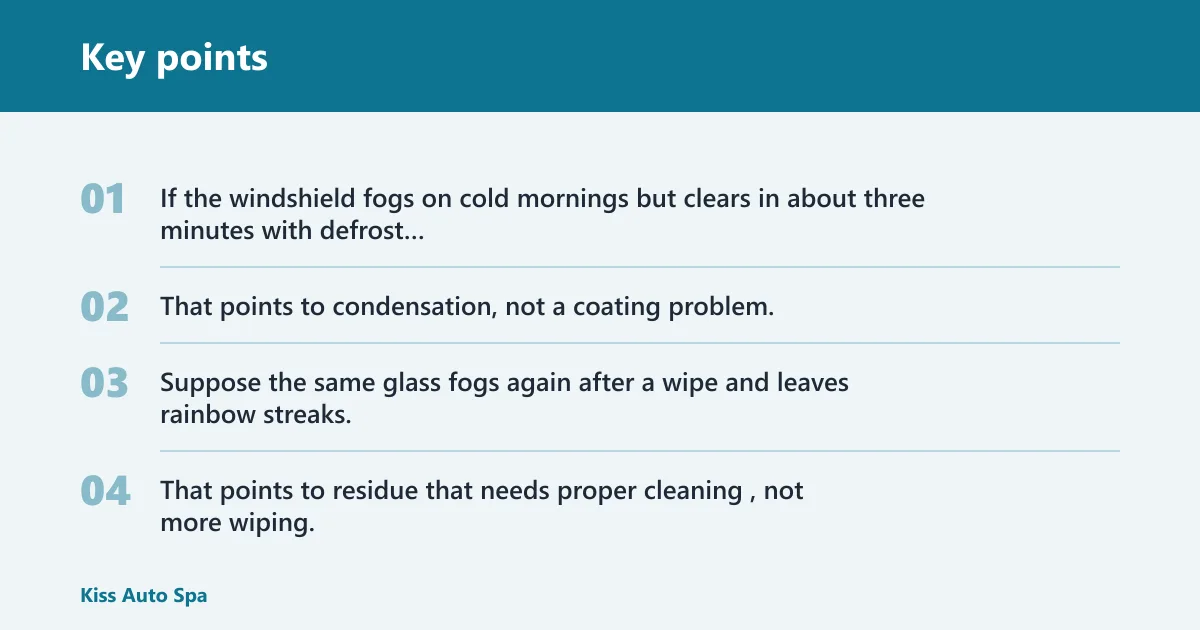
If the windshield fogs on cold mornings but clears in about three minutes with defrost and heat, that suggests condensation rather than a coating problem. That points to condensation, not a coating problem. Suppose the same glass fogs again after a wipe and leaves rainbow streaks. That points to residue that needs proper cleaning, not more wiping.
What causes interior condensation?
Interior condensation comes from moist air sources inside the cabin. Breath is the biggest everyday source. Wet clothes, snowy shoes, damp floor mats, spills, and water leaks all add moisture. CarGlassFix notes that wet clothes are a common source, and that moisture inside meeting warmer, humid glass creates fog.
Fresh air intake versus recirculation
Fresh air intake brings in drier outside air when conditions allow, which helps lower cabin humidity. Recirculation traps the same moist air inside, so fog can build faster if the cabin already has humidity. The wrong setting can make a fog problem linger even when the defroster is on.
Open a window a little to balance inside and outside air. That said, wikiHow warns against open windows at or below freezing, where you can trade one visibility problem for another and add discomfort without solving the source of the moisture.
Why damp carpets and mats keep feeding humidity
Wet carpets, rubber mats with standing water, and hidden leaks keep releasing moisture into the cabin. Even after the glass clears, the car can fog again because the moisture source never stopped. If fog keeps returning after a drive, the cabin floor and trunk area deserve a check.
How defrost and AC clear the glass
Defrost directs air at the windshield so the glass surface warms and dries faster. Fan speed matters because more moving air removes moisture sooner. Air conditioning helps too, even in cold weather, because it dehumidifies cabin air; wikiHow says AC can help when it is cold outside, and heat can speed evaporation.
Why defrost works better when paired with AC
Heat alone raises the air temperature, which helps. AC alone removes moisture, which also helps. Together, they clear the windshield faster because one raises the glass temperature while the other lowers the air’s water content. That combination is often the quickest practical fix for normal condensation.
Why fan speed changes clearing time
Low fan speed moves less dry air across the glass, so the fog lingers longer. Higher fan speed increases airflow to the windshield and shortens the clearing time. If the windshield stays foggy even with defrost, AC, and strong fan speed, look beyond normal condensation.
Why a greasy interior film looks like fog
A greasy film can look like fog, but it behaves differently. It smears when wiped, returns after cleaning, and often shows up most on the lower windshield or in patches that catch light. NuVision says smoke and air fresheners can create interior windshield film, and dirty hands can transfer residue to glass.
Off-gassing from new interiors
New dashboards, trim, and adhesives can release vapors in heat. Redline says dashboard plastics and adhesives release vapors when the cabin heats up, and that the film is most noticeable when the car heats up in the sun. That makes new-car haze common on hot days, even when there is no visible water.
Smoke residue and dressing sling
Smoke leaves a sticky residue that coats glass. Interior dressings can also sling onto the windshield if they are sprayed too close to trim or vented into the cabin. A sweet or perfumed smell does not always mean coolant; it can also mean products, smoke residue, or a mix of both.
How to tell haze from moisture
Moisture clears with drying air and temperature changes. Film does not. If the windshield looks cloudy after repeated defrost cycles, or if the same patch comes back after wiping, treat it as contamination first. If the cloudiness stays paired with coolant odor, inspect for a leak.
Windshield film cleaning steps
When the issue is residue, use an ammonia-free or tint-safe glass cleaner and a clean microfiber towel. The same source recommends regular cleaning with a non-greasy glass cleaner. A dirty towel can move oil around instead of removing it, so start with clean fibers and a product meant for automotive glass.
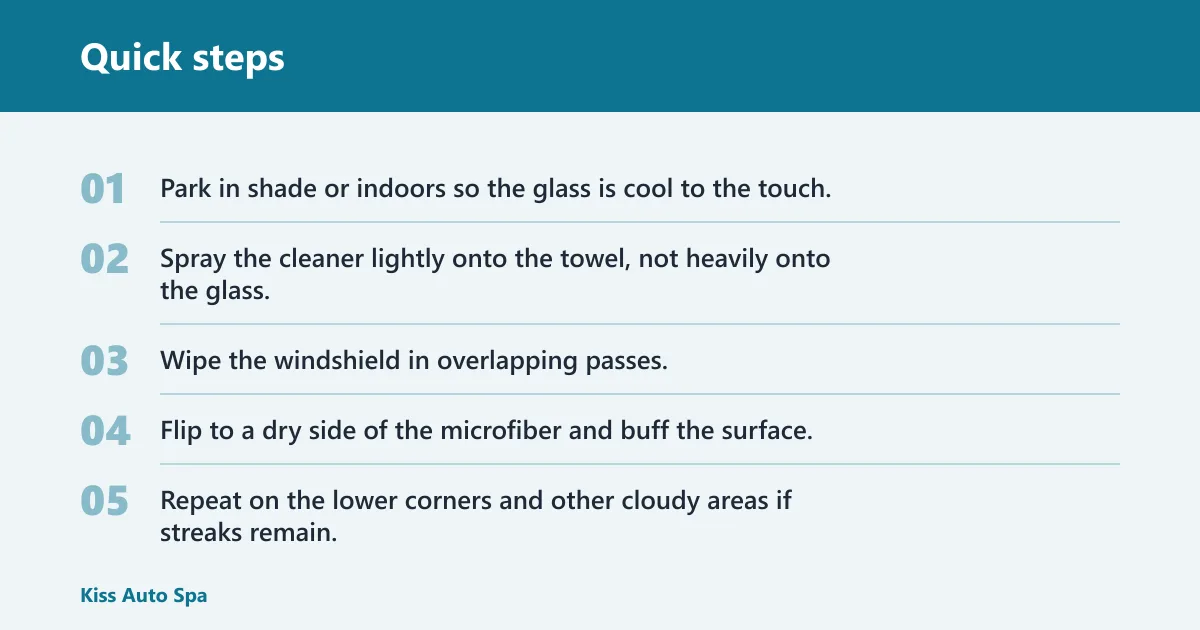
- Park in shade or indoors so the glass is cool to the touch.
- Spray the cleaner lightly onto the towel, not heavily onto the glass.
- Wipe the windshield in overlapping passes.
- Flip to a dry side of the microfiber and buff the surface.
- Repeat on the lower corners and other cloudy areas if streaks remain.
Why a two-pass wipe matters
The first pass lifts the film. The second pass picks up what the first pass loosened. That is especially useful for oily residue, because one swipe often spreads it instead of removing it. If the towel turns gray or brown, the glass had contamination that needed degreasing, not a dry wipe.
What persistent fogging can mean
Fog that keeps coming back can point to a deeper airflow problem. CarGlassFix links persistent fog to poor ventilation and HVAC issues. A restricted cabin air filter, blocked vents, or a fault in the HVAC system can reduce the amount of dry air reaching the windshield. That can make moisture harder to clear and easier to build again.
Cabin air filter or vent restriction
A clogged cabin air filter can limit airflow, which slows defogging and keeps the cabin humid longer. Blocked vents do the same thing. If the air feels weak at the windshield even with the fan on high, the problem may be mechanical rather than cosmetic.
Possible heater-core leak or water entry
A sweet smell, oily mist, or repeated film that does not behave like normal condensation can point to a heater-core leak. Water entry from seals, drains, or body leaks can also keep the cabin damp. Those problems deserve inspection because wiping the windshield will not stop the moisture source.
Why does the inside of my windshield get foggy after rain but not on dry days? Extra cabin moisture is the usual reason. Wet shoes, damp seats, and a humid cabin raise the water content inside the car, so the glass fogs when the temperature difference is large enough.
Why is the inside of my windshield wet? If the glass has visible droplets, the cabin air may be at or near saturation, or liquid water may be entering the cabin. Check for wet mats, a leaking door seal, blocked drains, or a heater-core leak if the wetness comes with a sweet odor.
Why is the inside of my windscreen foggy? The same rule applies. Warm, moist cabin air meets cooler glass and condenses, then defrost, AC, fresh air, and airflow remove it. If it keeps returning after cleaning, treat it as film or a moisture source, not just weather.
Frequently asked questions
Why is the inside of my windshield foggy?
It is usually condensation from warm, moist cabin air hitting cooler glass. The first fix is defrost with fresh air, higher fan speed, and AC if needed. If the fog smears or returns right after wiping, the glass likely has an interior film that needs cleaning.
Why does the inside of my windshield fog up?
Because the cabin has more moisture than the glass can hold. Breath, wet mats, damp clothes, and leaks all raise humidity inside the car. When the windshield is colder than the air, water condenses on it. That is why fog often appears first on cold starts.
Why is my windshield always foggy?
Constant fogging usually means the cabin stays humid or the HVAC airflow is weak. A restricted cabin air filter, recirculation left on, or a vent problem can keep moisture trapped. If the fog is greasy or returns after cleaning, add interior film to the list of likely causes.
Can a dirty windshield cause interior fog or haze?
A dirty windshield does not create condensation by itself, but it can create haze that looks like fog. Smoke residue, dressing sling, dirty hands, and off-gassing can all coat the inside glass. In that case, wiping with a dry towel usually fails; degreasing is the right step.
How do I stop the inside of my windshield from fogging up?
Remove moisture first: dry wet mats, fix leaks, and use fresh air instead of recirculation when possible. For normal fog, use defrost with AC and enough fan speed. For film, clean the inside glass with a tint-safe cleaner and microfiber, then consider an anti-fog coating as a prevention layer.
What do I do if the inside of my windshield is foggy?
Start by deciding whether it is water or film. If it clears with defrost, treat it as condensation. If it smears, smells sweet, or returns after cleaning, inspect for residue, smoke, dressing sling, or an HVAC issue. Anti-fog products can help prevent repeat moisture, but they will not fix leaks or poor airflow.