How to Choose a Dedicated Glass Towel for Automotive Use
Pick a dedicated glass towel with a tight waffle or flat weave, low pile, and a thin sewn edge. Keep plush towels for light haze only, and assign one towel to wiping and one to buffing. The wrong towel leaves lint, smears, and streaks that mean more passes. This article shows how weave, edge, pile, and care affect clarity, drying, and scratch risk.
Dedicated glass towel construction and required supplies
A dedicated microfiber glass towel is made to finish automotive glass with less lint, fewer streaks, and less drag than a general-purpose microfiber towel. It is usually lower pile than paint towels, and it works best with ammonia-free cleaner on cool glass. On tinted windows, the towel should be soft enough to avoid unnecessary abrasion.
What you’ll need
- One or two dedicated glass towels with a waffle or flat weave
- A low-pile microfiber towel with an edgeless or satin edge
- Ammonia-free glass cleaner
- A clean, dry microfiber for the final buff
- A separate wash load for microfiber
- Lint-free storage, such as a closed bin or drawer
What sets this towel apart is construction. Plush paint towels hold more residue and can leave fibers behind on glass, while a glass towel uses a shorter pile and tighter surface to cut streaking and help the cleaner do its job instead of dragging across it.
How do you choose the right glass towel?
Start with the problem on the glass, then match the towel to it. For oily windshield haze, you want a towel that can move residue without smearing it around. For hard-water spotting, you need enough texture to lift mineral film without leaving fiber trails. For tint, the safest choice is a soft, low-pile towel with an ammonia-free cleaner.
Glass towel decision matrix
| Issue | Best weave | Best edge | Ideal pile | Wash notes | What to avoid |
|---|---|---|---|---|---|
| Interior oily haze | Flat weave or fine waffle weave | Edgeless or satin edge | Short pile | Wash separately from linting fabrics | Plush towels and over-spraying cleaner |
| Exterior drying after a wash | Waffle weave | Satin edge | Short pile to medium-low pile | Low-heat dry only | Heavy fabric softener residue |
| Final streak removal | Flat weave | Edgeless | Very short pile | Use no softener and no dryer sheets | Thick border stitching and damp storage |
| Hard-water residue | Waffle weave | Satin edge | Short pile | Rinse well after use | Using the same towel on dirty paint |
| Tinted glass | Flat weave | Edgeless or satin edge | Low pile | Pair with ammonia-free cleaner | Rough edging and aggressive rubbing |
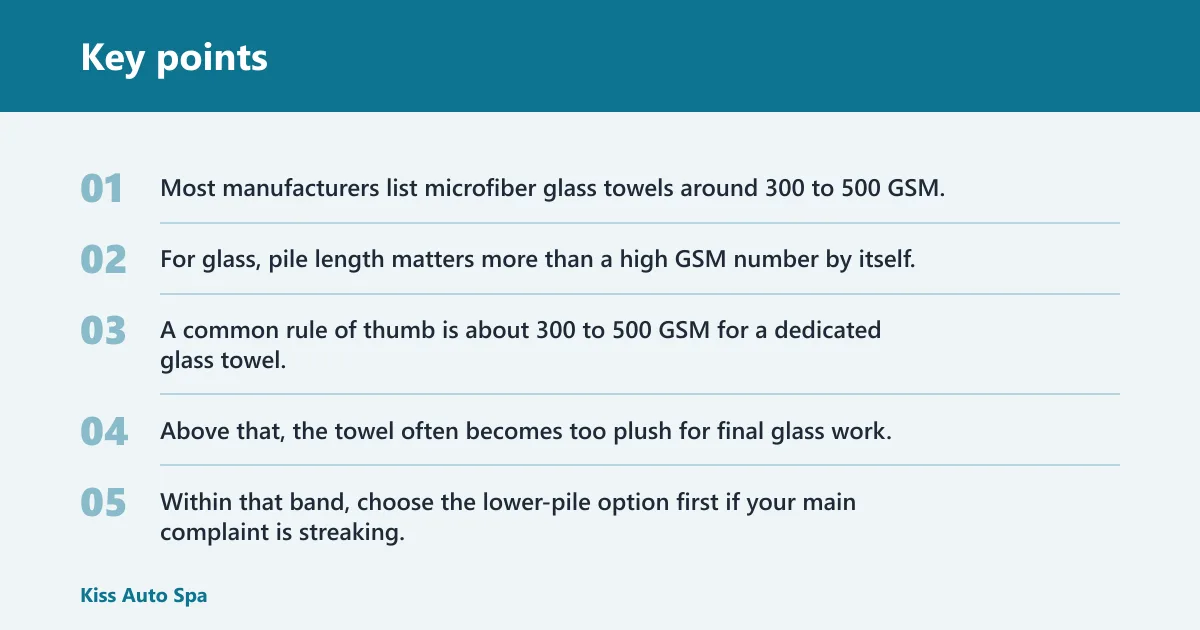
Most manufacturers list microfiber glass towels around 300 to 500 GSM. That range is common because it gives enough substance to hold cleaner and residue, while staying lower pile than plush paint towels. For glass, pile length matters more than a high GSM number by itself.
What microfiber GSM is best for a glass towel?
A common rule of thumb is about 300 to 500 GSM for a dedicated glass towel. Lower-pile towels in that range usually streak less than thick paint towels because the fibers do not hold as much residue on the face of the cloth. Above that, the towel often becomes too plush for final glass work.
Pick 300–500 GSM. Within that band, choose the lower-pile option first if your main complaint is streaking. Choose the higher end only if the towel still stays low-pile and does not shed lint after washing.
Say your front windshield has a hazy film that shows up only at night. A flat weave towel in the 320 to 380 GSM range usually handles the final pass better than a fluffy paint towel, because the shorter pile leaves less residue behind.
Waffle weave or flat weave?
Waffle weave and flat weave solve different glass problems. Waffle weave is better for drying and the first wipe because its textured surface can pull moisture away quickly. Flat weave is usually better for the final polish because its low-pile face leaves less chance for streaks or visible lint.
Waffle weave for drying and initial wipe
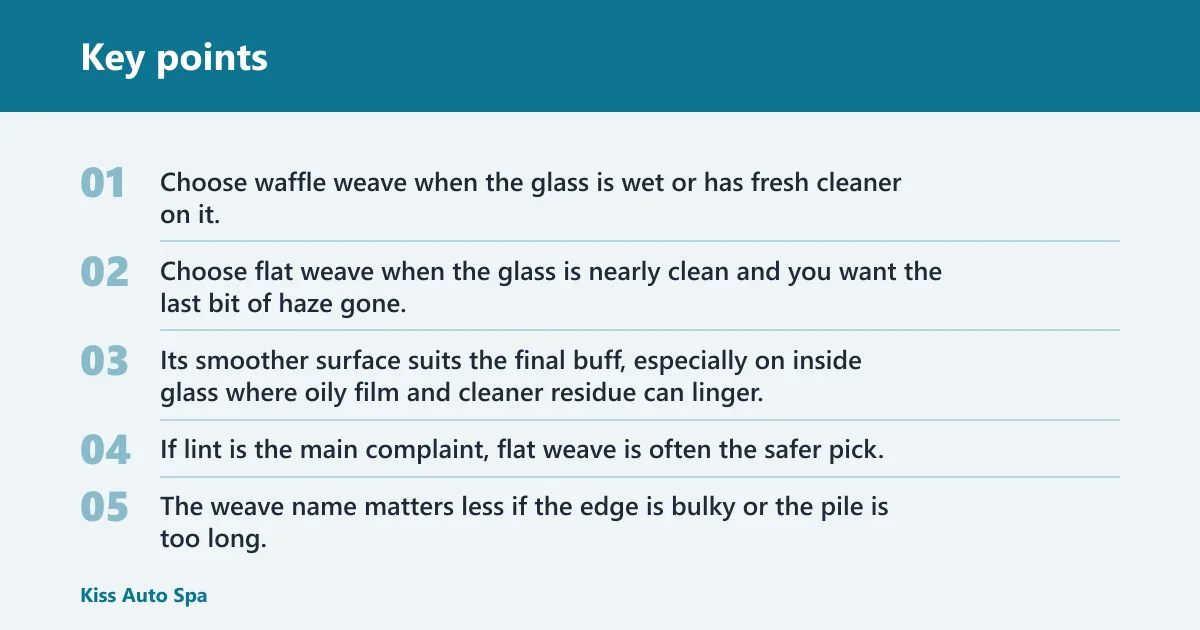
Choose waffle weave when the glass is wet or has fresh cleaner on it. The textured pattern gives more contact points for water pickup, which helps on exterior glass after washing and on interior glass that only needs one first pass. It is a common automotive glass towel style for a reason.
Flat weave for final polish and streak removal
Choose flat weave when the glass is nearly clean and you want the last bit of haze gone. Its smoother surface suits the final buff, especially on inside glass where oily film and cleaner residue can linger. If lint is the main complaint, flat weave is often the safer pick.
When edge and pile matter more than the weave name
The weave name matters less if the edge is bulky or the pile is too long. A thin edgeless or satin edge reduces scratch risk and lint shedding, while short pile helps clarity. On tinted glass, that combination matters more than whether the towel is labeled waffle or flat.
Suppose a side window is tinted and shows streaks after a light mist of cleaner. A flat weave towel with a satin edge often finishes cleaner than a larger waffle towel, because the short pile and thin edge reduce drag on the film.
How do you keep glass towels lint-free?
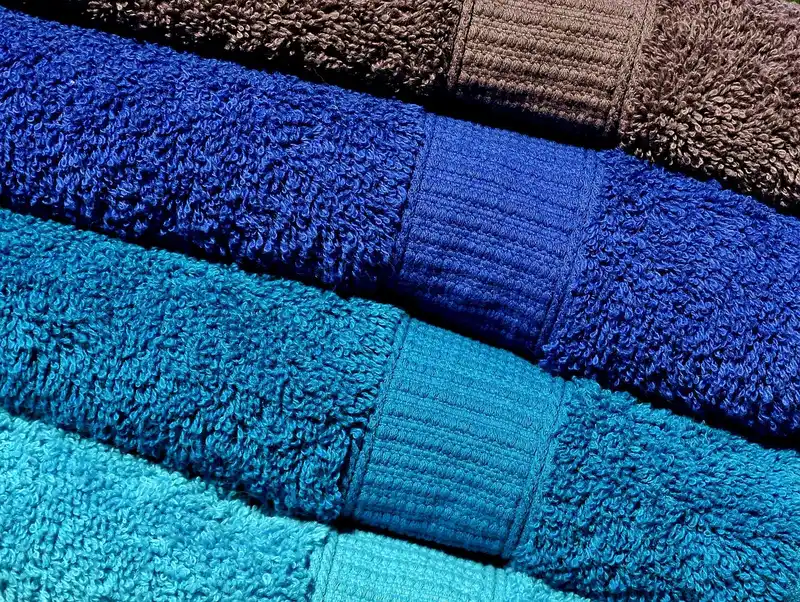
Lint control starts with washing and drying, not just with the towel itself. Separate microfiber from cotton and linting fabrics, skip fabric softener, and dry on low heat. Cleaner residue on the towel can also cause streaks, so a clean rinse cycle matters as much as the weave.
- Wash microfiber separately. Keep glass towels out of loads with cotton rags, bath towels, or garage textiles that shed. That single change prevents most lint transfer.
- Use a mild detergent. Follow the bottle dose, then reduce it if suds remain after rinse. Heavy detergent can leave residue that shows up as smearing on glass.
- Skip softeners. Do not use fabric softener or dryer sheets. They coat microfiber and reduce absorbency, which hurts streak control.
- Dry on low heat. Tumble dry low or air dry. High heat can flatten fibers and shorten towel life.
- Store them closed. Keep clean towels in a drawer, bin, or sealed container so dust does not settle on them before use.
Use one towel only for glass. Do not move it to paint or door jambs. Cross-use loads the fibers with residue that can smear the next windshield wipe.
How do I stop glass towels from leaving lint on windows?
Check a clean, dry panel before using the towel on interior glass. If lint appears, rewash the towel separately and dry it without softener. If the streaking continues, the towel may have frayed edges or a pile that is too long for final glass work.
What towel edges are safest for car glass and tinted windows?
Edgeless and satin-edge towels are the safest common choices because they reduce scratch risk and shed less lint than thick borders. On tint, that matters because the film can be more sensitive than bare glass. A thin edge also helps the towel lie flat instead of catching on corners.
Avoid thick stitched borders. They can leave a line near the edge of the glass and feel harsher on tinted film than a thin hem or edgeless cut.
How do you use the towel with cleaner for a streak-free finish?
Use less cleaner than many people expect. Overloading the glass with spray leaves residue that the towel has to push around, which is a common cause of streaking. A light mist, one panel at a time, usually works better than soaking the glass.
- Spray lightly. Use 1 to 2 sprays for a side window and 2 to 3 for a windshield section, then spread it immediately. More cleaner increases residue unless the glass is heavily soiled.
- Wipe in one direction. Move the towel across the glass with overlapping passes. This helps you see whether the streak comes from cleaner residue or from the towel itself.
- Flip for the buff. Use a second dry glass towel or a dry side of the towel for the final pass. That extra dry pass removes film that a wet face can leave behind.
- Inspect in angled light. Check the glass from the driver’s seat and from outside at an angle. Some streaks only show when light hits the surface directly.
A common first-timer mistake is spraying half the windshield at once. The cleaner flashes unevenly, the towel loads up, and the result is a gray smear that needs more passes instead of fewer.
For tinted window film, use an ammonia-free cleaner and a gentle towel. Ammonia can be hard on some films, while a soft flat weave or low-pile glass towel lowers the chance of visible drag across the tint.
Can I use the same towel for glass and paint?
It is better to keep glass towels separate from paint towels. Paint towels often have deeper pile and can hold polish, wax, or sealant residue that streaks glass. A towel used on paint can also pick up abrasive dust that does not belong on interior glass or tint.
Use one set for glass only, and reserve paint towels for paintwork. If a towel has touched compound, tire dressing, or dirty trim, keep it out of your glass kit.
How many glass towels do I need for one car?
Two is often the practical minimum for most cars: one for the first wipe and one for the final buff. Three can be better if you are cleaning a windshield, rear glass, and multiple side windows, because a fresh dry towel helps on the last pass. That keeps residue from moving window to window.
Are disposable shop towels good for car windows?
Disposable shop towels are handy for rough cleanup, but they are a poor choice for the final glass finish. They can shed lint, feel abrasive on tint, and leave a dull film on the last pass. If you need one for a spill, follow it with a dedicated microfiber glass towel.
How do you wash and maintain a glass towel so it keeps working?
Wash and dry habits decide whether a glass towel stays low-lint or starts leaving streaks. Separate loads, no softener, and low heat are the core rules. If a towel begins to feel slick, heavy, or dusty after washing, it probably has residue that needs a deeper rinse.
- Sort by function. Wash glass towels with other microfiber only. Do not mix them with cotton, terry, or greasy utility cloths.
- Measure detergent carefully. Use the label dose, then avoid adding extra for “more cleaning.” Extra detergent often leaves film on microfiber.
- Rinse twice if needed. If the towel comes out stiff or smells strongly of detergent, run an extra rinse cycle.
- Dry low or line dry. Use low heat in the dryer, or hang the towels fully open so they dry evenly.
- Retire worn towels. When edges fray, the surface pills, or lint keeps returning after proper washing, move the towel to rougher jobs.
Prevention note: Keep one bag or bin for clean glass towels and another for dirty ones. That simple separation stops lint transfer before wash day.
Common mistakes
The most common mistake is buying a generic microfiber towel and expecting it to handle every glass job. A plush towel can be fine for paint, yet still streak on glass because the pile is too deep. The second mistake is using too much cleaner, which leaves residue that looks like bad towel performance.
- Using fabric softener, which coats microfiber and reduces absorbency
- Choosing a thick border that drags on tint or leaves edge marks
- Using one towel for oily interior glass and then for a clean final buff
- Ignoring hard-water residue, which often needs a better initial wipe before the final polish
- Storing towels open where dust and lint settle on them
- Letting a towel that has shed once keep going without rewash or replacement
Frequently asked questions
What should I look for in a dedicated glass towel for cars?
Look for low pile, a tight waffle or flat weave, and a thin edge such as edgeless or satin. A good automotive glass towel should stay lint-free after washing, work with ammonia-free cleaner, and leave less drag on tinted glass than a plush paint towel.
Is waffle weave or flat weave better for automotive glass?
Waffle weave is usually better for drying and the first wipe because it pulls water quickly. Flat weave is usually better for the final polish and streak removal. If you only buy one, choose based on your main problem: drying or final haze.