How to Remove Film From the Interior Windshield
Identify the film first: oily haze needs glass cleaner and a clean microfiber, adhesive needs a solvent-safe step, and mineral spots need vinegar or a glass polish; if one pass smears, stop and change methods. Poor cleaning leaves streaks, glare, and a windshield that looks dirty again by morning. This guide shows how to tell haze, residue, and adhesive apart, then remove each one from the inside glass without chasing streaks.
Start here: identify the film first
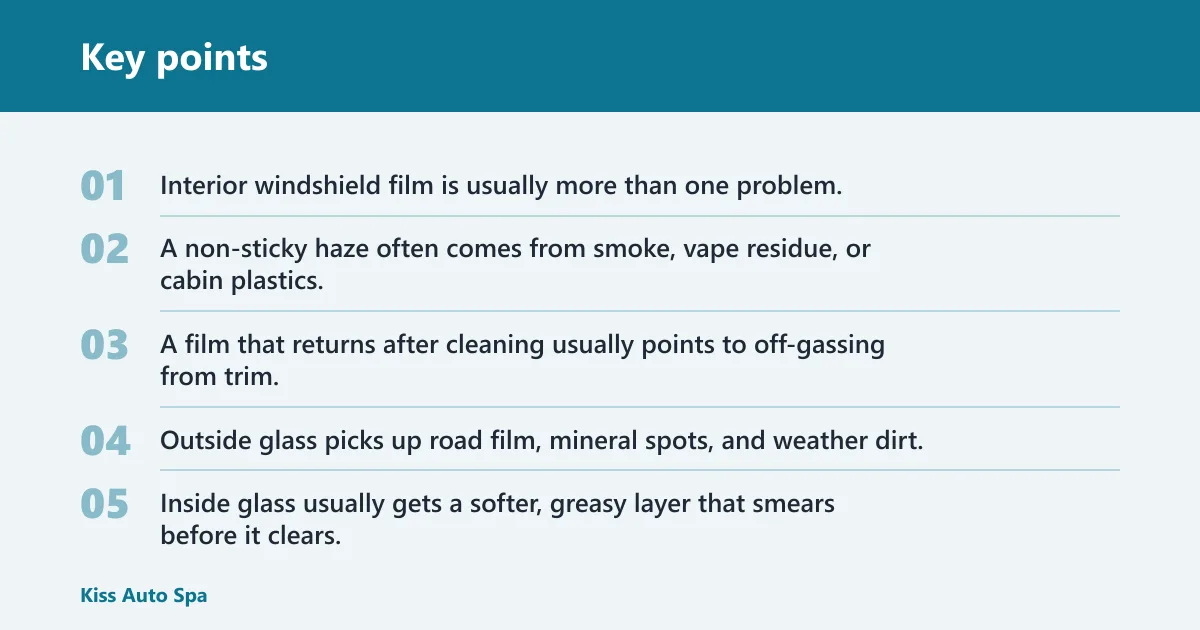
Interior windshield film is usually more than one problem. A non-sticky haze often comes from smoke, vape residue, or cabin plastics. Sticky film points to adhesive. A film that returns after cleaning usually points to off-gassing from trim, dash plastics, or repeated contamination from vents and hands.
What makes it different from outside grime
Outside glass picks up road film, mineral spots, and weather dirt. Inside glass usually gets a softer, greasy layer that smears before it clears. That difference matters because the wrong tool only spreads the residue across the glass and leaves glare in sun or headlights.
If the windshield is tinted, has sensor areas, or sits tight against the dash, use less liquid and shorter strokes. Overspray can land on trim, switches, or coatings and make the next cleaning harder.
What you’ll need
- Microfiber towels, clean and lint-free, with more than one towel for contamination control
- Ammonia-free automotive glass cleaner
- 70% isopropyl alcohol
- Steam cleaner
- Hair dryer or heat gun with a low setting
- Plastic scraper or plastic razor
- Dry microfiber towel for final buffing
Interior windshield film decision table
| Film type | How it looks and acts | Safest first method | Tool order | Switch tactics if you see this |
|---|---|---|---|---|
| Oily haze | Non-sticky smearing, foggy glare, prints back quickly after a wipe | Dry microfiber, then 70% isopropyl alcohol on the towel | Dry wipe → lightly dampened towel → ammonia-free glass cleaner → dry buff | If the haze moves around instead of lifting, the towel is loaded or the cleaner is too wet |
| Sticky adhesive | Grabs the towel, feels tacky, may come from old film or leftover glue | Steam to soften, then plastic scraper | Inspect perimeter → steam → peel or lift → glass cleaner → dry buff | If it resists and strings, add more steam or gentle low heat before scraping again |
| Recurring off-gassing film | Clear at first, then haze returns after heat, sun, or defrost use | Clean glass, then clean nearby plastics and vents | Glass cleaning → vent and dash wipe-down → fresh towels → recheck after heat soak | If the film returns after the cabin warms, the source is still in the car |
How do you remove oily film from inside windshield?
Start dry, then use about 70% isopropyl alcohol lightly on the towel to help break oily residue. Follow with an ammonia-free automotive glass cleaner on a fresh towel, then finish with a dry microfiber towel. If the wipe smears instead of clears, stop and change towels before adding more liquid.
- Wipe the glass with a dry microfiber towel to lift loose residue.
- Apply 70% IPA to the towel, not the glass, so you cut oil without soaking trim.
- Work one section at a time with straight passes.
- Switch to ammonia-free glass cleaner on a clean towel after the oil breaks down.
- Buff with a dry microfiber towel until the surface clears.
Use multiple towels. A towel that has already picked up oil will redeposit it, which is why the same patch can look clean, then cloudy again.
Suppose a 12-inch square near the mirror clears after IPA but streaks reappear after the next pass. That usually means the towel is carrying residue. Swap it before adding more cleaner.
Use at least two towels: one to clean and one to finish dry. Spray cleaner onto the towel, not directly onto the glass, then buff the surface dry before moving on. If streaks show up again after the dry pass, the towel is dirty or the residue source is still active.
- Choose a clean microfiber towel for the cleaning pass.
- Use a second dry microfiber towel for the final buff.
- Work one small section at a time.
- Change towels as soon as streaking starts.
- Check the glass from the driver seat and from outside the car.
The cleanest result comes from matching the method to the film, not from stronger cleaner. Interior haze needs one approach. Adhesive needs another. Recurring film needs source control.
How do you remove sticky adhesive from inside windshield?
Soften the adhesive first, then lift it. Steam is the preferred method for old windshield film adhesive because it adds heat and moisture before removal. If steam is unavailable, use a hair dryer or heat gun on a low setting and keep it moving. After the glue loosens, use a plastic scraper rather than metal, especially near rear defroster lines.
- Inspect the perimeter before lifting any film edge.
- Steam the adhesive until it softens.
- Peel at about a 45-degree angle in slow pulls.
- Use a plastic scraper or plastic razor on soft spots that stay attached.
- Clean the remaining residue with glass cleaner and a fresh towel.
Rear-window defroster lines are a higher-risk removal area. Metal blades can damage them, so slow work with a plastic tool is safer there.
Picture a rear glass edge where the film comes up clean for 2 inches, then clings to one corner near the defroster grid. That corner usually needs more steam, not more force.
How do you keep the film from coming back?
Clean nearby plastics, vents, and dash materials if the haze returns after heat or sun. Smoke and vape residue also settle back onto glass, so cabin cleaning matters as much as the windshield itself. Fresh towels help too, because one contaminated towel can undo the last pass.
- Wipe the dash top, vent outlets, and surrounding plastic trim with a clean microfiber towel.
- Replace any towel that starts to feel greasy or leaves streaks.
- Crack the windows for airflow after cleaning when conditions allow.
- Recheck the windshield after the cabin sits in sun or heat.
Say your windshield looks clear after cleaning, then turns hazy again after a hot afternoon. That points to a source still off-gassing or releasing residue inside the cabin, not a glass-only problem.
Common mistakes
Most repeat streaks come from the method, not the glass. The job gets harder when one towel is used for the whole windshield, when too much liquid reaches the trim, or when the cleaner is too strong for nearby tint and coatings.
- Using one dirty towel for the whole windshield. Change towels before the film spreads back.
- Soaking the glass or nearby trim. Spray the towel, not the windshield, when overspray is a risk.
- Scraping rear glass with metal tools. Use a plastic scraper near defroster lines.
- Stopping before the dry buff removes the last haze. A final dry wipe matters.
- Using acetone, lacquer thinner, or paint strippers on nearby parts. Those solvents can damage surrounding components.
If that didn’t work, try this next
If the windshield still looks smeared after the first pass, move from gentle cleaning to targeted residue removal. The order matters: dry wipe, alcohol for oily film, steam for adhesive, then a final glass-cleaner pass. Do not jump to scraping unless the residue is actually sticky.
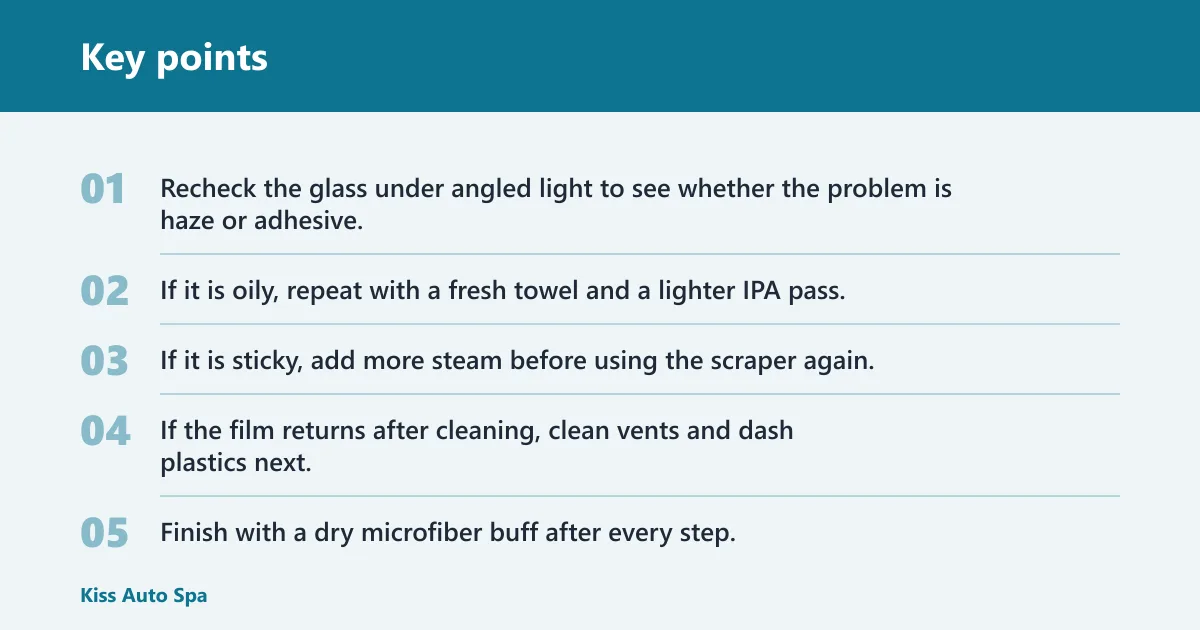
- Recheck the glass under angled light to see whether the problem is haze or adhesive.
- If it is oily, repeat with a fresh towel and a lighter IPA pass.
- If it is sticky, add more steam before using the scraper again.
- If the film returns after cleaning, clean vents and dash plastics next.
- Finish with a dry microfiber buff after every step.
A common first-timer mistake is to keep spraying more cleaner when the towel is already loaded. That turns a small haze into a full windshield smear and makes the next cleanup take longer.
Frequently asked questions
How do you remove film from inside windshield?
Work in small sections and watch how the residue behaves. If it lifts, stay with microfiber and cleaner. If it strings or resists, soften it first with steam. A plastic scraper is safer than metal near rear defroster lines and tighter glass edges.
How do I get rid of the film on the inside of my windshield?
Use a clean microfiber towel, then follow with ammonia-free glass cleaner or 70% IPA depending on the residue. Spray the towel rather than the glass when tint, controls, or trim sit close to the edge. Finish with a dry towel so the last haze does not stay behind.
How to remove film on inside of windshield without streaks
Use clean towels in sequence, not one towel for the whole job. Put cleaner on the towel, wipe in sections, and finish with a dry buff. If streaks return after that, the towel is contaminated or the glass is still getting residue from vents, trim, or cabin materials.