Best Car Odor Eliminator: Spray, Gel, Charcoal, or Fogger?
Pick the eliminator by odor source: spray for fresh spills and surface contamination, gel for light ongoing odors, charcoal for damp cabins and steady absorption, and fogger for stubborn smoke after a full cleaning. Pick the wrong one, and you usually cover the smell, waste money, or leave the cabin still musty after a few days. This guide compares spray, gel, charcoal, and fogger by odor type, cabin conditions, safety, and how long each option typically lasts.
Choose the right odor eliminator first
Odor source comes before format. A smoke smell in the headliner, a wet dog odor in carpet padding, and stale air from a parked car do not need the same product, even if they smell equally bad. Start with the source, then choose the delivery method that can reach it.
A quick rule helps: use spray for surface contamination, enzyme products for organic residue, fogger for cabin-wide smoke after cleaning, gel for background freshness, and charcoal for mild ongoing absorption or damp storage. Fragrance-only products are for cover, not removal.
Quick rule for smoke, pet, food, mildew, and stale air
Smoke usually needs source cleanup plus a fogger or spray, depending on how far the odor has spread. Pet smell often needs an enzyme treatment first, then a maintenance product. Food spills respond best to cleanup and an enzyme spray. Musty odor points to moisture, drying, and source removal before any freshener.
Car odor eliminator comparison matrix
The real trade-off is speed versus reach versus maintenance. Sprays act fast on targeted surfaces, foggers reach more of the cabin at once, gels and charcoal work passively, and enzyme products attack organic residue at the source. Masking fragrance can make the cabin smell cleaner, but it does not remove odor molecules.
| Format | Odor source | Severity | Cabin condition | Safety sensitivity | Expected duration | Best-use scenario |
|---|---|---|---|---|---|---|
| Spray odor eliminator | Smoke on upholstery, carpets, headliners, hard surfaces; general odor; bacteria | Light to moderate | Dry cabin with accessible surfaces | Moderate sensitivity if fragrance or residue is an issue | Hours to days, depending on source removal | Fast spot treatment for fresh contamination and quick odor reduction |
| Fogger / total-release odor eliminator | Deep smoke, pet smell, cabin-wide odor, vents and fabrics | Moderate to severe | Closed vehicle, then ventilated after use | Lower fit for fragrance-sensitive or asthma-prone passengers | Days to weeks if the source is gone | Whole-cabin treatment after deep cleaning and source removal |
| Gel odor eliminator | Background stale air, light odors | Light | Normal daily-use cabin | Useful when you want passive control, not a strong spray cycle | Typically 4–8 weeks | Ongoing freshness between deeper cleanups |
| Activated charcoal bags | Mild odors, moisture-linked smells, VOCs | Light to mild | Damp or parked cabin, storage, low airflow situations | Good when you want a chemical-free option | Weeks to months with reactivation or replacement | Steady absorption in a car that sits a lot |
| Enzyme-based odor eliminator | Urine, sweat, food residue, pet mess | Light to severe, depending on saturation | Soiled fabric, carpet, padding | Often preferable when you want source breakdown rather than heavy scent | Varies with soil load and drying | Organic spills and pet accidents |
| Odor masking fragrance | Any odor, but only by cover | Light | Any cabin, including temporary use | Often a poor fit for sensitivity if fragrance is strong | Short-term | Temporary cover before a proper cleaning |
Spray odor eliminator
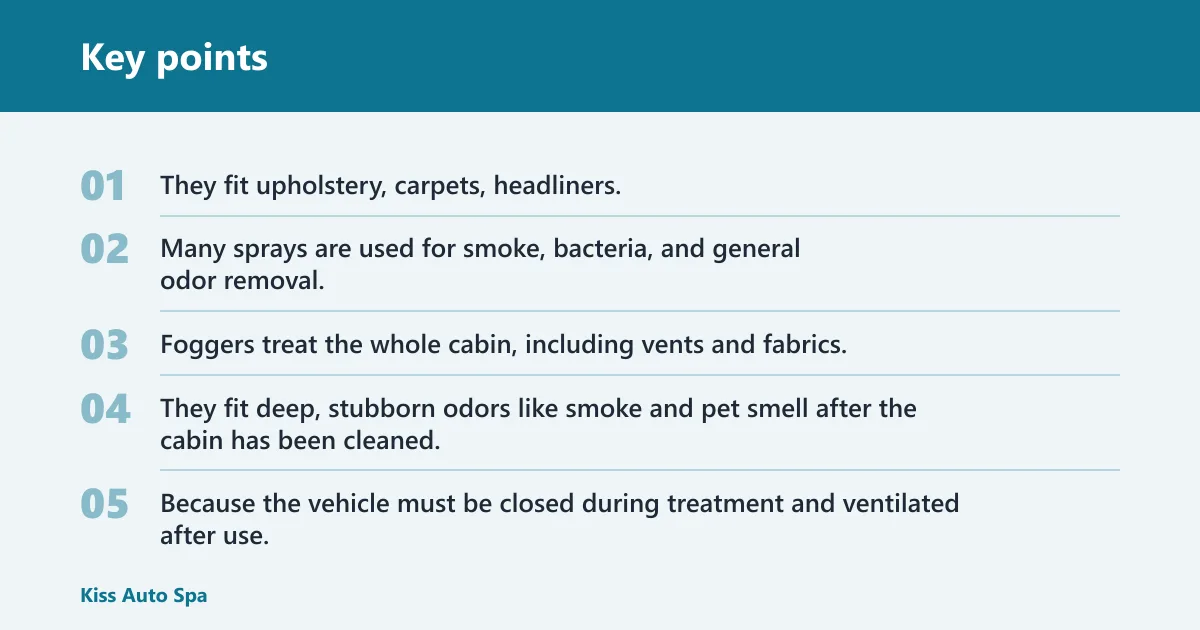
Sprays work quickly. They are easy to aim, too. They fit upholstery, carpets, headliners, and hard surfaces when the odor sits on or near the surface. Many sprays are used for smoke, bacteria, and general odor removal.
Fogger / total-release odor eliminator
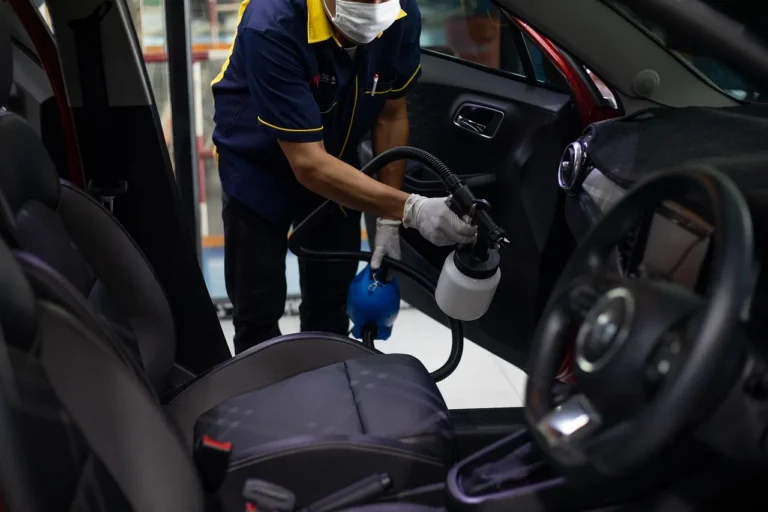
Foggers treat the whole cabin, including vents and fabrics. They fit deep, stubborn odors like smoke and pet smell after the cabin has been cleaned. Because the vehicle must be closed during treatment and ventilated after use, they are a stronger process, not a casual air freshener.
Gel odor eliminator
Gels provide passive, continuous odor control. They are useful for daily drivers that need light maintenance, not for heavy contamination. The common duration is 4–8 weeks, which makes them practical for steady freshness between deeper cleanups.
Activated charcoal bags
Activated charcoal bags are reusable and chemical-free. They absorb moisture, VOCs, and odor molecules, which makes them a sensible choice for mild or ongoing odor control. They need space and time, so they work best when you are managing a problem instead of trying to erase a strong source overnight.
Enzyme-based odor eliminator
Enzyme products break down organic compounds such as urine, sweat, and food residue. That makes them the right call for pet odors and spills that soaked into fabric or carpet. They act at a molecular level, so they matter most where the smell comes from, not only where you can smell it.
Odor masking fragrance
Masking fragrance covers smell instead of removing it. It is common in vent clips and hanging fresheners, and it can help for a short trip or a temporary presentation. It should not be treated as a fix for smoke, pet accidents, mildew, or food residue.
Meguiar’s Whole Car Air ReFresher as a whole-cabin option
Meguiar’s Whole Car Air ReFresher appears as a 71 g product listing, and one listing shows a discounted price of 278 Kč. Ahifi lists it at 395 Kč, shows 45 ratings, identifies it as a 71 g odor eliminator with a new car scent, and says it is intended for whole-cabin use and the climate system.
Ahifi also describes it as a one-time use product, with aerosol mist that penetrates vents and hard-to-reach areas. The same listing includes a 15-minute in-car dwell time after activation and recommends 10 to 15 minutes of ventilation after use. That makes it a total-cabin treatment, not a repeat spray for daily touch-ups.
Which car odor eliminator works best for smoke, pets, food, or mildew?
The best option changes with the source. Smoke often needs a spray for surface cleanup and a fogger for cabin-wide odor. Pet smell usually needs enzyme treatment first. Food spills respond well to enzymes and spot cleaning. Musty odor points to moisture, drying, and source removal before any fragrance or fogger.
Cigarette and smoke odor
For cigarette smoke in a car, a fogger is usually the stronger choice after the cabin has been cleaned. Smoke clings to fabric, vents, and trim, so a whole-cabin treatment helps where a surface spray may miss. If ash or residue remains, the smell often comes back.
Pet odor and organic spills
Pet odor often responds best to enzyme-based treatment because urine, saliva, and tracked soil are organic sources. If the smell is only light and recent, a spray can help on surfaces. If it soaked into seat foam or carpet padding, enzyme treatment should come first, then a maintenance product.
Food odor and spilled drinks
Food odors are often tied to residue, not air alone. Clean the spill first, then use an enzyme spray on the affected area if the source is organic. A gel or charcoal bag can help after cleanup, but it should not replace source removal.
Musty or mildew smell
Musty odor is a warning sign, not a scent problem. Dry the cabin, check for wet carpet, blocked drains, cabin filter issues, or trapped moisture, then treat the source. Foggers and fragrances can hide the odor for a while, but they do not fix damp padding or mold growth.
Spray vs fogger: which one should you buy?
Spray is better for targeted control. Fogger is better for whole-cabin reach. The right choice depends on where the odor lives. If the smell sits on a seat, headliner, or trim panel, a spray is usually the better tool. If the cabin smells stale from multiple surfaces, fogger reaches more of the interior at once.
When a spray is the better fit
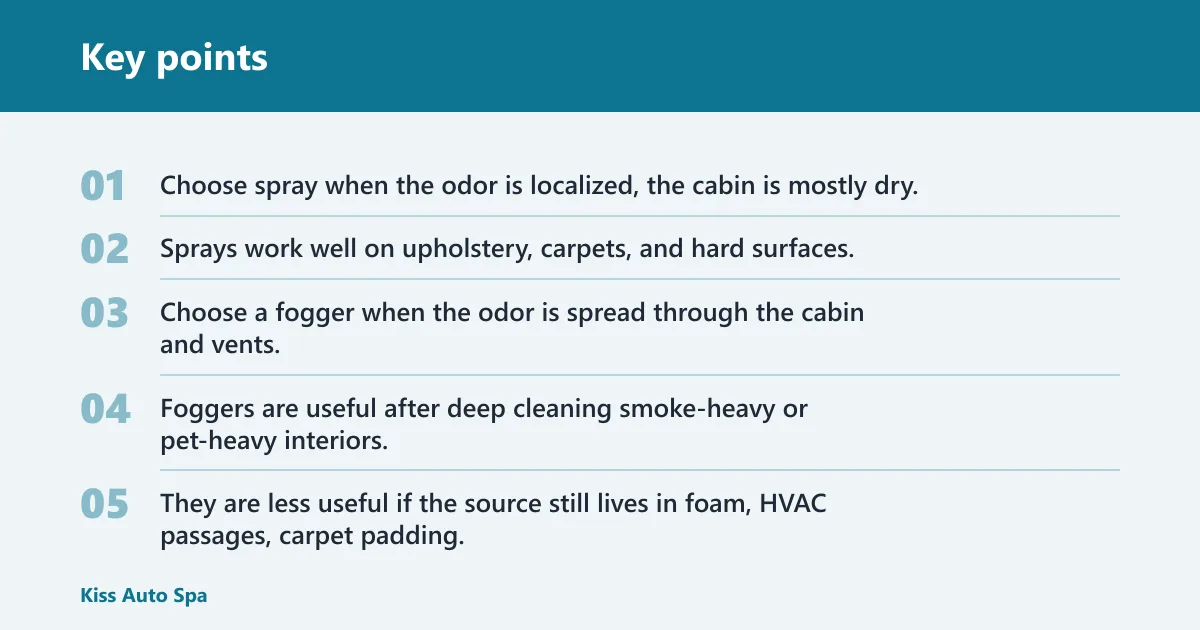
Choose spray when the odor is localized, the cabin is mostly dry, and you want control over where the product lands. Sprays work well on upholstery, carpets, and hard surfaces, and they are useful when you need a fast response after a spill, smoke episode, or minor odor event.
When a fogger is the better fit
Choose a fogger when the odor is spread through the cabin and vents, and when cleaning has already removed the visible source. Foggers are useful after deep cleaning smoke-heavy or pet-heavy interiors. They are less useful if the source still lives in foam, HVAC passages, carpet padding, or the cabin filter.
Why source removal still matters
Foggers can fail when the source is still present. If smoke tar, food residue, pet urine, or mildew stays in hidden materials, the odor returns after the treatment fades. The product can reach more of the cabin, but it cannot replace cleaning, drying, and filter checks.
Say your sedan still smells like cigarettes after a detail: the seats look clean, but the headliner and cabin filter were never addressed. A fogger may reduce the air smell for a while, yet the odor returns because the source still sits in hidden materials.
How long do gel odor eliminators and charcoal bags last?
Gels are a maintenance tool, not a deep-clean tool. The common lifespan is 4–8 weeks, which makes them practical for daily commuting or rideshare use where you want steady background control. Charcoal bags last longer in practice, but only when they have enough airflow, space, and time to absorb odors.
Passive freshness in daily drivers
Gels fit cars that are already clean and only need light odor control. Charcoal bags fit cars with mild stale air or moisture-linked smell. Neither product is meant to rescue a heavily contaminated cabin on its own.
What affects reapplication or replacement
Heat, humidity, cabin size, and how much odor source remains all affect life span. A sunny car with heavy use will exhaust passive products faster than a dry car in storage. If a product stops helping after a short time, the source is usually still present.
When maintenance products stop being enough
Once odor returns quickly after airing out, you need source removal, not a stronger scent. That is the point where a spray, enzyme treatment, or fogger may be needed. Gels and charcoal are best for upkeep after the problem is already under control.
Choose spray or enzyme treatment if…
Use spray when the smell is on the surface or in exposed materials. Use enzyme treatment when the odor comes from urine, sweat, food residue, or a pet accident. For upholstery, carpet, headliner, and vents, the question is not only how strong the odor is, but what created it and where it settled.
Use cases for upholstery, carpet, headliner, and vents
Spray is a practical fit for a seat bolster, a carpet spot, or a headliner with smoke residue. Enzyme spray is better when the stain or smell comes from organic material. For vent odor, cleaning and filter inspection matter as much as any product choice.
When to skip foggers for spot treatment
Skip foggers when only one area smells bad. A fogger treats the whole cabin, so it is poor value for a single spill or one dirty seat. A focused spray or enzyme treatment is usually faster, cheaper, and easier to repeat if needed.
Choose spray if… Choose fogger if…
Choose spray if the odor is localized, you need control, and the cabin is mostly dry. Choose fogger if the odor is widespread, the vehicle has already been cleaned, and you need whole-cabin treatment that reaches vents and fabric. Both fail when the source is still active.
- Choose spray if the smell is on seats, carpet, headliner, or trim; you need a quick fix; or you want to treat one area without bathing the whole cabin in product.
- Choose fogger if smoke has spread through the cabin; the odor returns after airing out; or you want one treatment for the interior and HVAC path after cleaning.
- Do not choose spray if the odor comes from soaked foam, mildew, or deep pet contamination that has not been cleaned.
- Do not choose fogger if the source is still sitting in carpet padding, HVAC parts, or the cabin filter.
Picture a rideshare car with a faint fast-food smell after a shift. A spray on the seat fabric and floor mat makes sense. Now picture the same car after a spilled drink soaked into padding under the rear seat. That calls for source cleanup and likely an enzyme product, not a fragrance clip.
Car odor eliminator decision matrix
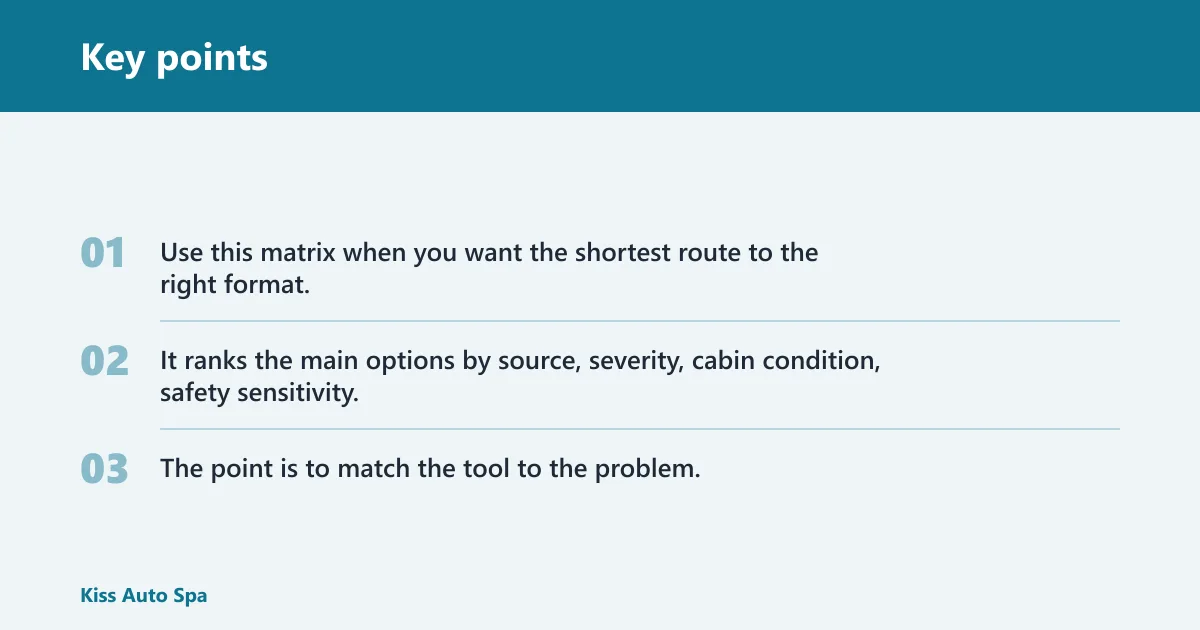
Use this matrix when you want the shortest route to the right format. It ranks the main options by source, severity, cabin condition, safety sensitivity, duration, and best-use scenario. The point is not to buy the strongest scent. The point is to match the tool to the problem.
| Format | Source rank | Severity rank | Cabin condition rank | Safety sensitivity rank | Duration rank | Best-use scenario | Do not use when |
|---|---|---|---|---|---|---|---|
| Spray | 1 for surface smoke, general odor | 1–2 for light to moderate odor | Best when surfaces are accessible and dry | Moderate if fragrance load matters | Short to medium | Spot treatment for seats, carpets, headliners, and hard surfaces | Do not use when the odor source is soaked into foam or hidden under trim |
| Fogger | 1 for whole-cabin smoke, deep pet odor | 1 for stubborn cabin-wide odor | Best in a closed vehicle that can be ventilated after | Lower fit for asthma-prone or fragrance-sensitive passengers | Medium, if the source is removed | Whole-cabin odor treatment after deep cleaning | Do not use when the source is still active in padding, HVAC, or filters |
| Gel | 2 for stale air and light odor | 2 for mild odor | Best in a clean daily driver | Often better than a strong aerosol for daily use | 4–8 weeks | Maintenance freshness between deep cleanings | Do not use when you need fast cleanup of a strong smell |
| Activated charcoal | 2 for mild odor and moisture-linked smell | 2–3 for light to mild odor | Best in damp or parked cabins with room for the bag | Good for chemical-free preference | Weeks to months | Steady absorption in storage, seasonal parking, or mild stale air | Do not use when you expect it to erase severe smoke or pet odor alone |
| Enzyme spray | 1 for urine, sweat, food, pet mess | 1–3 depending on saturation | Best on soiled fabric and carpet | Often a strong fit for source-focused cleaning | Varies | Organic residue that keeps reactivating odor | Do not use when the problem is only stale air without a soil source |
| Masking fragrance | 0 for removal; only cover | 0–1 for appearance only | Any cabin, as a temporary cover | Often poor for sensitive passengers | Short | Short-term cover before proper cleaning | Do not use when you need actual odor removal |
Frequently asked questions
Which car odor eliminator works best: spray, gel, charcoal, or fogger?
The best choice depends on the source. Spray is strongest for quick spot treatment, fogger is better for cabin-wide smoke, gel works for ongoing light odor, and charcoal helps with mild or damp-cabin smell. If the odor comes from urine, food, or pet mess, use an enzyme product first.
Is a fogger better than an odor eliminator spray for smoke smell?
For smoke that has spread through the cabin, yes, a fogger is often the better fit after cleaning. Spray is better for targeted surfaces and quick cleanup. Fogger reaches vents and fabric more broadly, but it cannot fix smoke that is still embedded in dirty foam or filters.
Do charcoal bags actually remove car odors or just reduce them?
Charcoal bags reduce odors by absorbing odor molecules and moisture, which is useful in mild or ongoing situations. They do not clean the source. That means they work well as support, storage, or maintenance tools, but they are not enough for severe smoke, pet odor, or soaked spills.
What is the best odor eliminator for cigarette smoke in a car?
After a full cleaning, a fogger is usually the strongest option for cigarette smoke because it treats the whole cabin, including vents and fabrics. A spray can help on seats, headliners, and trim before or after fogging. If ash residue remains, the smell often comes back.
Which option is safest for daily use inside a car?
For daily use, gel or activated charcoal is usually the safer fit because both are passive and lower impact than a strong aerosol or total-release treatment. That said, any product can be a poor choice if fragrance sensitivity is high. Daily use should mean light control, not heavy scent.
How long do gel odor eliminators last in a car?
Gel odor eliminators typically last 4–8 weeks, though heat, humidity, and cabin size change that window. They are meant for light, ongoing freshness rather than deep cleaning. If odor returns quickly, the source is still present and needs cleaning, drying, or a different treatment.
How do I choose between masking fragrance and true odor removal?
Choose true odor removal when the smell comes from a spill, smoke, pet accident, or mildew. Choose masking fragrance only when you need a short-term cover before proper cleaning. If the odor comes back after the fragrance fades, the problem was never removed in the first place.