How to Apply Tire Dressing Without Getting It on Rims
Apply tire dressing with a foam applicator loaded lightly, then stop about 1/8 to 1/4 inch before the rim edge. Use one thin coat first, then add a second only if the finish still looks uneven. Keep the boundary on the rubber, not the wheel: that is the cleanest way to avoid rim cleanup and sling.
What you’ll need
- Foam applicator pad for controlled hand application near the sidewall edge
- Microfiber pad for touch-up removal and excess cleanup
- Tire brush for pre-cleaning the sidewall
- Tire dressing, preferably one suited to the finish you want
- Clean microfiber towels for rim wipe-off
- Wheel cleaner or plain wash solution for pre-cleaning the rim surface
Why does tire dressing get on rims?
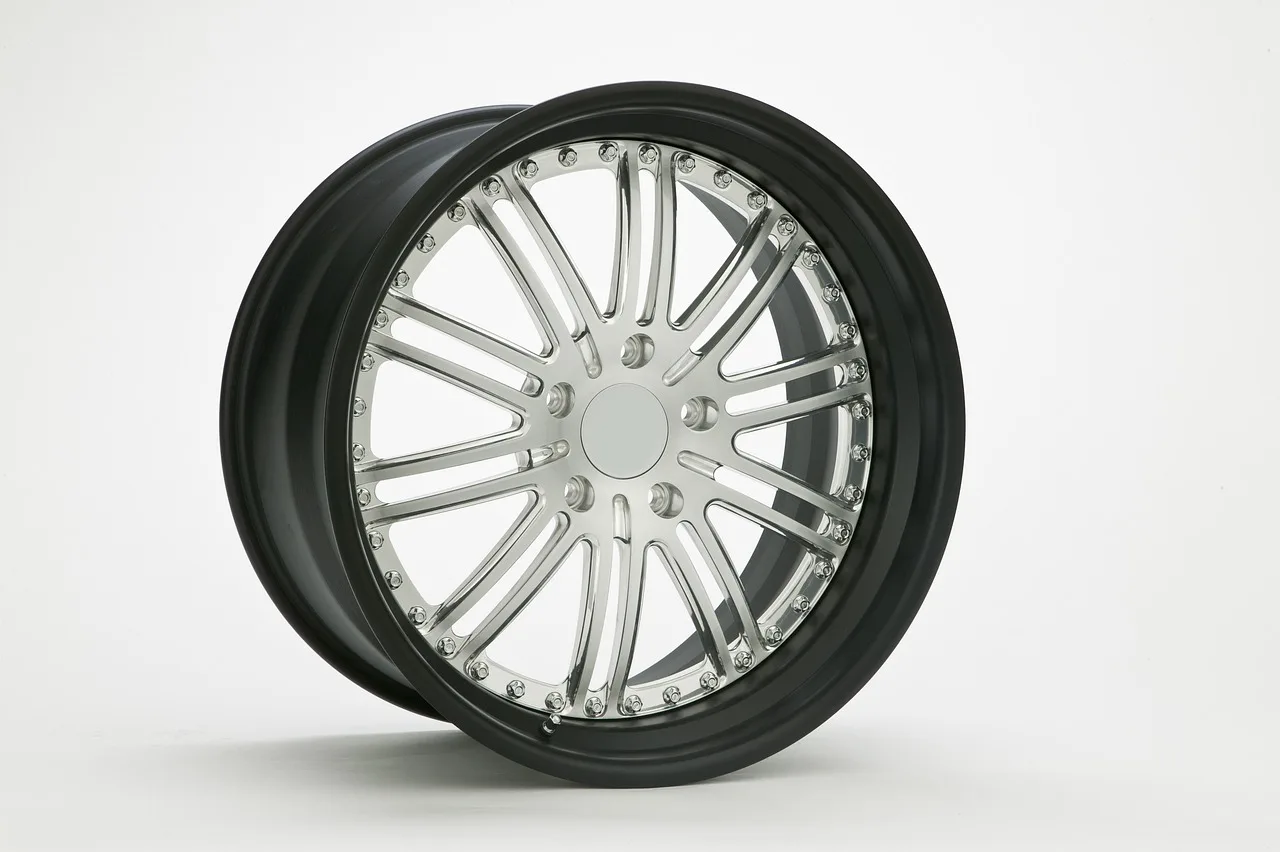
Tire dressing gets on rims when the coat is too heavy, the applicator is too wet, or the edge boundary is vague. It also moves farther than expected on deep-lip wheels and around narrow spokes, where overspray and wipe-off residue land on visible wheel surfaces.
Thin coats reduce that risk, but drying behavior still depends on the product formula, temperature, humidity, and the sidewall texture. Water-based tire dressing is usually the lower-sling choice, while wetter-feeling finishes can show more residue if they are overapplied or the car moves before the surface has flashed.
On a 19-inch wheel with a wide lip and a dark painted face, a heavy pass on the outer shoulder is more likely to creep toward the rim edge. That is why the same product can look tidy on one wheel and messy on another: the wheel design changes how much margin you need.
How do you apply tire dressing without touching the rim?
Load a foam applicator lightly, work around the tire in short sections, and stop short of the rim bead area. Keep a hard, visible boundary: the tire gets dressed, the wheel does not. Thin coat application is the main control point, and a second pass should correct a thin spot rather than become the default.
-
Clean the sidewall first.
Use a tire brush to remove dirt, old dressing, and road film before any new product goes on. The cleaner the sidewall, the less product you need, and the less likely residue is to migrate onto the rim. -
Clean the wheel face.
Wash the rim and spokes first so residue does not get trapped under fresh dressing or rubbed deeper into a black finish. Clean wheels are easier to protect, and you will spot accidental transfer much faster. -
Load the applicator lightly.
Follow the product label and use only a small amount on the pad. The pad should feel damp, not wet enough to drip when squeezed. A light load gives you control near the edge and lowers the chance of sling. -
Start high on the sidewall.
Apply in short strokes and keep the pad angled slightly toward the tire, not the wheel. Stop 1/8 to 1/4 inch before the rim edge so the pad never crosses into the lip or bead area. -
Use thin coats only.
Cover the sidewall in one light pass, then check the finish before adding more. Thin coat application reduces sling and gives you better control near the rim lip, especially on multi-spoke and deep-lip designs. -
Buff excess at the edge.
Use a microfiber pad to remove any wet line near the boundary. This matters most where the tire meets the wheel face, because a visible wet edge is the part most likely to move onto the rim later. -
Wait before moving the car.
Let the dressing dry for 10 to 15 minutes before driving, or longer if the surface still looks wet. Drying time varies with formula, temperature, humidity, and how much product was used.
On compact cars with multi-spoke wheels and tight openings, a direct spray is much harder to control. A lightly loaded foam pad places dressing on the rubber only, which is the point: the wheel design changes the method, not the goal.
Tire dressing application checklist
Use this before every tire you dress. The safest result comes from matching the applicator load, edge angle, and drying time to the wheel shape and the product formula. When in doubt, choose less product and more drying time.
| Wheel type | Application risk | Exact technique adjustment | Pre-drive check |
|---|---|---|---|
| Open spoke | Overspray and pad contact can reach visible metal fast | Use 3 to 5 drops on a foam applicator, hold it 20 to 30 degrees toward the tire, stop 1/4 inch before the rim edge, then dry 10 to 15 minutes | Yes only if the sidewall looks dry and the spokes are clear of haze |
| Multi-spoke | Spoke gaps catch mist and wipe-off residue | Load the pad sparingly, work in 6-inch sections, keep the pad flat to the sidewall, maintain a hard wipe boundary at the bead, and let the coat flash before a second pass | Yes only if no wet line is visible near the edge |
| Deep lip | The lip hides wet transfer until it slings later | Apply less product than usual, keep the pad aimed upward away from the lip, stop 1/8 inch short of the edge, and extend drying time beyond 15 minutes if the coat looks glossy | No if the lip still looks shiny or tacky |
| Black finish | Oily residue shows quickly and is hard to hide | Use the driest pad load of the group, make one thin coat only, wipe the edge with a clean microfiber pad right away, and recheck for haze before moving the vehicle | Yes only if the finish is even and not visibly wet |
Quick boundary-fail check: oversaturation
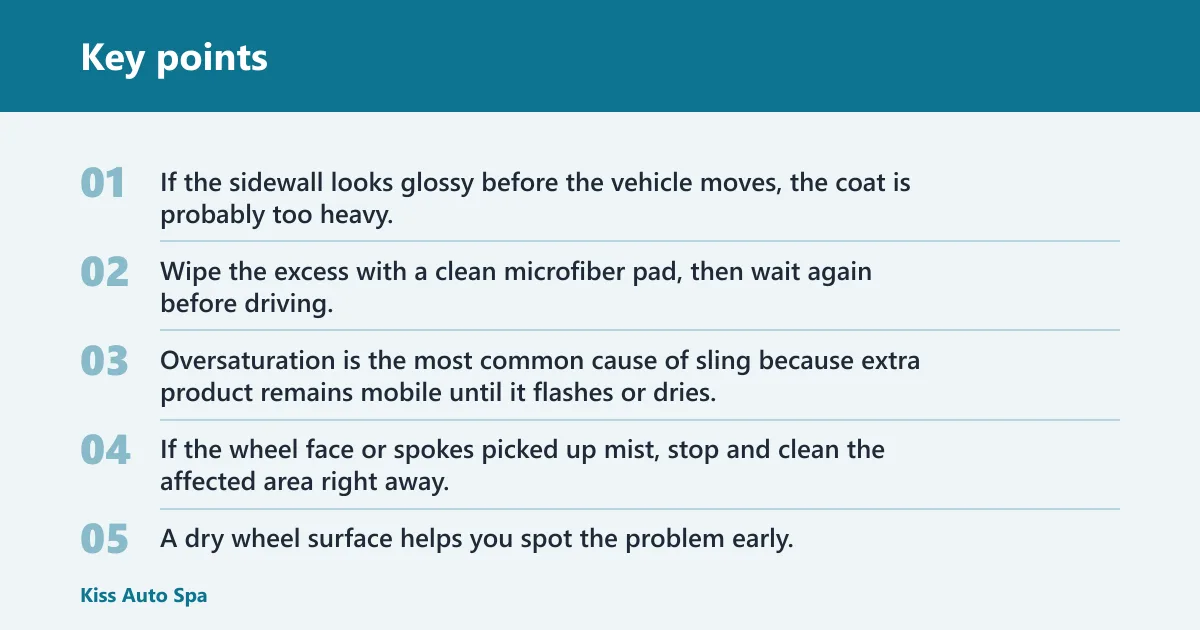
If the sidewall looks glossy before the vehicle moves, the coat is probably too heavy. Wipe the excess with a clean microfiber pad, then wait again before driving. Oversaturation is the most common cause of sling because extra product remains mobile until it flashes or dries.
Quick boundary-fail check: overspray
If the wheel face or spokes picked up mist, stop and clean the affected area right away. Overspray usually means the applicator was too wet, the spray pattern was too broad, or the wheel opening was too exposed. A dry wheel surface helps you spot the problem early.
Quick boundary-fail check: rim transfer
If dressing touched the rim edge, wipe the transfer before it sets and rebuff only the nearby sidewall strip. Rim transfer often stays hidden on deep-lip wheels until the car moves, so a fast cleanup is safer than waiting to see whether it “disappears.”
What if tire dressing gets on the rim?
Stop immediately, wipe the rim with a clean microfiber towel, and clean only the contaminated area if needed. You do not need to redo the whole tire. If the tire edge picked up product too, rebuff that narrow strip with a microfiber pad and leave the rest alone.
-
Wipe the rim now.
Use a dry or lightly damp microfiber towel to remove the transfer before it spreads. Do not smear it around the spoke face or into lug recesses. -
Inspect the wheel edge.
Check the lip, barrel edge, and spoke corners for streaks. These spots trap residue that a quick glance can miss. -
Touch the tire edge.
If dressing bled past the boundary, use a microfiber pad with very little product and rebuff only the first about 1/4 inch of the sidewall. That keeps the correction local. -
Reset the drying clock.
After cleanup, give the area a fresh 10 to 15 minutes before driving. If the correction was heavy, wait longer so the wheel stays clear of sling.
On a deep-lip wheel with a black barrel, a small mistake can look minor at first and then show up as a visible sheen after the first turn of the wheel. Cleaning the rim immediately prevents that residue from setting.
Common mistakes
Heavy coats are the most common problem. They look richer at first, but they also create sling, attract dust, and push product onto rims during the first drive. Product type, surface temperature, and humidity change how quickly that happens, so the safest approach is still a thin first pass.
- Spraying directly at the wheel area. Load the applicator instead. Direct spray wastes product and increases overspray risk on open-spoke and black-finish wheels.
- Skipping sidewall cleaning. Dirt and old dressing block bonding and can drag grime onto the wheel face when you apply fresh product.
- Working too close to the rim lip. Keep a visible gap of 1/8 to 1/4 inch so the applicator stays on rubber, not paint or clear coat.
- Using too much product at once. Start with a few drops, then add only after you confirm the first coat is even and dry enough to hold.
- Driving too soon. Give the dressing 10 to 15 minutes to dry, and longer if the finish still looks glossy or the weather is humid.
- Choosing finish before fit. A satin look from a water-based tire dressing may suit one wheel style, while a wetter finish can be harder to keep off a deep lip.
Frequently asked questions
How do I apply tire dressing without getting it on the rims?
Use a foam applicator pad loaded with just a few drops, then keep it 1/8 to 1/4 inch short of the rim edge. Work around the sidewall in short sections, wipe the boundary with a microfiber pad, and wait 10 to 15 minutes before moving the vehicle. If the finish still looks wet, give it more time.
What applicator should I use to keep tire dressing off the wheels?
A foam applicator pad is the primary choice for precision work, and a microfiber pad is useful for touch-up removal. Foam usually gives the most control when you are tracing the edge near the rim lip, but either tool works best when it is only lightly loaded.
Should I spray tire dressing onto the tire or onto an applicator?
Load the applicator instead of spraying the wheel area directly. That keeps product off spokes, center caps, and painted lips, especially on open-spoke wheels. Direct spray is harder to control and is more likely to leave overspray or wet residue, particularly when the wheel has deep openings.
How long should tire dressing dry before driving?
Let it dry for 10 to 15 minutes before driving, and longer if the coat is heavy, the weather is humid, or the surface still looks wet. Drying time varies by formula and application amount, so the safest cue is a dry-looking sidewall rather than the clock alone.
How much tire dressing should I use per tire?
Start with a very light load, such as about 3 to 5 drops on a foam applicator for an outer shoulder pass. Add only enough for a second coat if the first pass looks patchy after it flashes. Use the smallest amount that creates an even finish, especially near the rim edge.
Why does tire dressing sling onto rims?
Overapplication, short drying time, and wheel shape are the usual reasons. Cheap tire dressing flings everywhere more easily when it stays wet too long, and deep lips or narrow spokes make stray product more visible. Thin coats and a dry finish reduce that movement before the tire turns.
What should I do if tire dressing gets on my rims?
Wipe the rim immediately with a clean microfiber towel, then clean the touched area again if residue remains. If the tire edge was contaminated too, rebuff only that narrow strip. Do not restart the whole tire unless the transfer is widespread or you can still see a wet boundary.
Can I apply tire dressing in direct sunlight?
It is safer to skip direct sunlight when you can. Heat can shorten working time and make the product flash unevenly, so the coat may dry too fast in one spot and stay wet in another. Shade or a cooler panel temperature gives you more control and a lower risk of sling.