Can You Apply Paint Sealant in Direct Sunlight?
Paint sealant can be applied in direct sunlight only if the panel is cool to the touch and stays around or below 90°F (32°C); if the surface is hot, skip it. Hot panels shorten flash time, raise streak risk, and can make wipe-off stubborn or uneven. This guide gives a temperature-and-surface checklist for deciding when outdoor sealing will work and when to wait.
What you’ll need
- Paint sealant in paste, liquid, or spray form
- Foam applicator pad for hand application
- Clean, plush microfiber towels for buffing
- Car wash soap, rinse water, and drying towels
- A 50:50 isopropyl alcohol and water panel wipe
- Shade, a garage, or another cool work area
- A way to check panel temperature, such as an infrared thermometer if available
Can you apply paint sealant in direct sunlight?
Yes, but only in a narrow window. Direct sun is risky because it heats the panel, shortens haze or flash time, and makes residue harder to remove cleanly. Sealant should be applied away from direct sunlight, and another says the ideal surface temperature is below 85°F (30°C).
Why direct sun changes the result
Paint sealant forms a protective layer over clear coat, and that layer needs time to spread and level before buffing. In sun, the surface can flash in minutes instead of the longer window many liquids and pastes need. That is where streaks, smears, and patchy removal usually start.
Which surfaces heat up first?
Dark paint, the hood, the roof, and glass usually warm fastest. Clear coat on those panels absorbs heat, so the top layer can run much hotter than the air around it. A panel that feels only warm at first can move out of the safe range before you finish a section.
Paint sealant decision table
| Surface condition | Risk level | Recommended action |
|---|---|---|
| Direct sun on a hot hood, roof, or glass | High | Wait. The panel heat speeds flash time and makes streaks more likely. |
| Shaded but hot panel | Medium to high | Wait or cool first. Shade helps, but heat can still cause uneven bonding and stubborn wipe-off. |
| Cool shaded panel | Low | Apply now. This gives the most controlled working time and the cleanest removal. |
| Windy, dusty outdoor conditions | Medium to high | Wait if possible. Dust can settle into fresh sealant and scratching risk rises during buffing. |
| Overcast weather | Low to medium | Apply if the panel is cool and dry. Clouds help, but surface temperature still decides the outcome. |
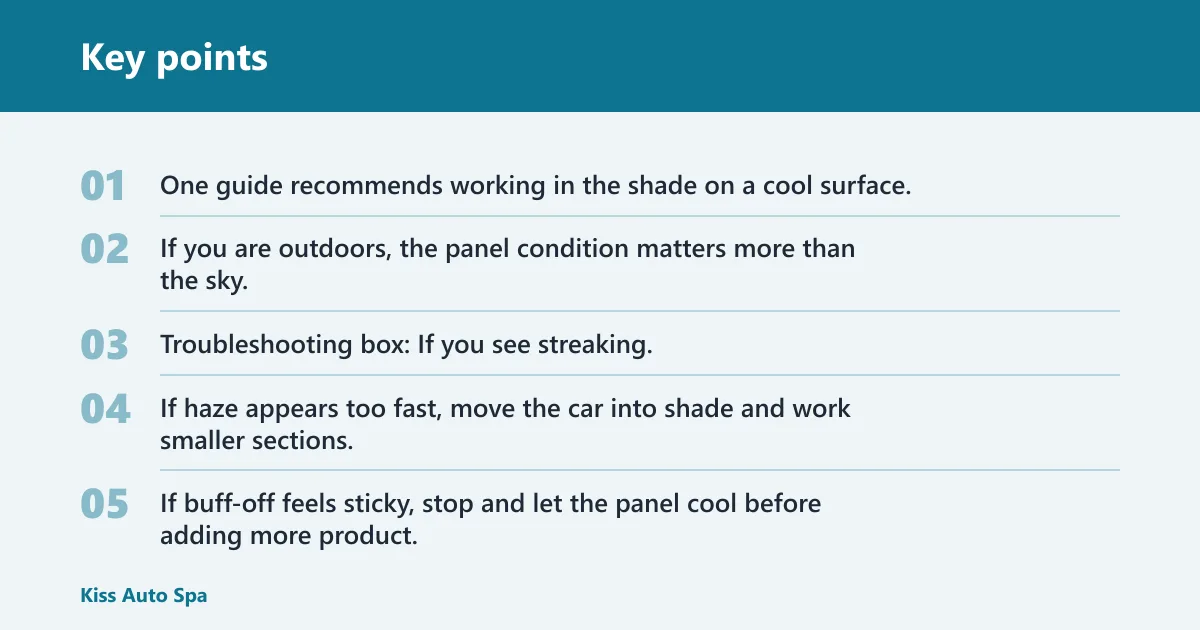
Working in the shade on a cool surface. That is the safest default. If you are outdoors, the panel condition matters more than the sky.
Troubleshooting box: If you see streaking, switch to a fresh microfiber towel and buff with straight passes. If haze appears too fast, move the car into shade and work smaller sections. If buff-off feels sticky, stop and let the panel cool before adding more product.
How cool should the paint be before you start?
A practical target is below about 85°F (30°C) on the surface. Cooler paint gives you a wider flash window and a more even finish. Very hot panels can bond unevenly, while very cold panels can stay sticky and make residue harder to level.
Use the panel, not the air, as your guide
Air temperature can mislead you. A black hood in partial sun may be far hotter than the shade around it, while a car in a garage can stay workable even on a warm day. If the panel feels hot enough that you would not keep your hand on it comfortably, wait.
Say your sedan is parked under light cloud cover, but the roof still feels hot after an hour outside. That roof is the problem, not the weather report. Move to shade, let the panel cool, then check again before you open the sealant.
What happens if paint sealant is applied on a hot panel?
Hot clear coat changes the way sealant behaves. The product can flash too fast, spread unevenly, and leave a thin smear that resists normal buffing. In that state, you are more likely to chase residue around the panel than to remove it cleanly.
Why the bond can suffer
Most sealants need a clean, dry surface to bond properly. When the panel is overheated, the product may level poorly before it sets. That does not mean the sealant will fail immediately, but it can reduce consistency and make the finish look patchy.
Spray versus liquid and paste
Spray sealants usually have the shortest working window, with some guides putting application times at 1 to 3 minutes. Traditional liquids and pastes often have haze times of about 5 to 30 minutes. In sun, the difference gets more dramatic because the panel itself drives the product to flash faster.
How to apply paint sealant the right way
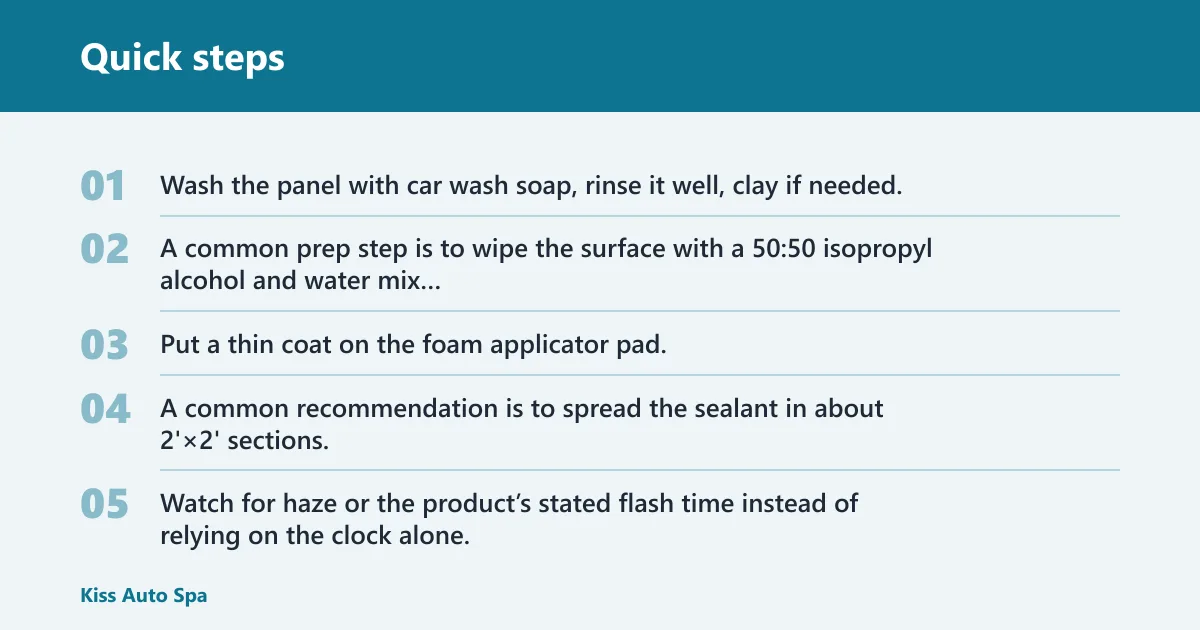
- Wash the panel with car wash soap, rinse it well, clay if needed, and dry it completely with clean drying towels.
- A common prep step is to wipe the surface with a 50:50 isopropyl alcohol and water mix to remove oils and residue.
- Put a thin coat on the foam applicator pad.
- A common recommendation is to spread the sealant in about 2’×2′ sections, or one small section at a time.
- Watch for haze or the product’s stated flash time instead of relying on the clock alone.
- Buff with a clean microfiber towel using straight, even strokes.
- Inspect under angled light and remove any smears before moving on.
A thin coat matters. Heavy application does not add extra protection, and it usually makes removal harder. A good sealant should sit evenly on the clear coat, add hydrophobic water repellency, and leave the finish clearer and glossier after cure.
Suppose you are working one half of a hood in shade and then the sun reaches the other half. Finish the shaded half first, then pause. That one change matters more than trying to rush both halves at once.
What if the weather changes while you’re working?
Stop and reassess if the sun comes out, the wind picks up, or the panel starts warming again. Outdoor sealing can go from workable to difficult quickly. Shade, cooler panels, and lower dust exposure give you more control over curing and wipe-off.
If that didn’t work, try this next
- Move the car into full shade. This reduces panel heat and slows flash.
- Shorten your section size. Work in smaller areas so the product does not sit too long before buffing.
- Switch towels if residue drags. Use a fresh plush microfiber towel if the first one starts loading up.
- Wait for the panel to cool. If the surface stays hot, stop and return later.
When wind carries dust, even a good sealant job can turn gritty at the wipe stage. If you have a garage, use it. If not, choose the calmest, coolest shaded side of the vehicle and keep each section tight.
Common mistakes
- Applying too much product: A thick coat is harder to haze evenly and harder to buff cleanly.
- Starting on a hot panel: Heat shortens the working window and increases streak risk.
- Skipping the alcohol wipe: Oils and residue can block proper bonding to clear coat.
- Using a dirty towel: Grit in microfiber can leave marks or add fine scratches.
- Waiting too long in warm weather: The residue can set hard and become stubborn to remove.
- Ignoring cure time: Many guides call for 12 to 24 hours of dry time before rain or washing.
One guide lists traditional liquid sealant cure time at 2 to 4 hours, while other guidance says to keep the car dry for 12 to 24 hours. The safer habit is simple: avoid water until the product instructions say the coating has cured enough for exposure.
Frequently asked questions
Is it okay to apply sealant in the shade instead?
Yes. Shade is usually the better choice because it reduces heat buildup and dust exposure. A cool, shaded panel gives you a wider working window and a cleaner buff. A garage is even better when it keeps the surface out of sun and wind.
How cool should the paint be before applying sealant?
A practical target is below 85°F (30°C) on the panel. That temperature gives most products enough working time to haze before buffing. If the surface feels warm enough to make the back of your hand pull away quickly, wait a bit longer.
Can I apply paint sealant after washing in the sun?
Not right away if the panel is still hot or drying in direct light. Washing can leave warm paint and hidden moisture in trim or seams. Dry the car completely, move it into shade, and do the alcohol panel wipe before you start sealing.
Will direct sunlight make paint sealant streak or haze too fast?
Yes. Sun-driven panel heat can shrink flash time to minutes, especially on dark paint, the hood, roof, and glass. That fast flash makes the residue less forgiving and raises the chance of smears. If that happens, move the car into shade and work smaller sections.
How long should I wait to buff paint sealant off in warm weather?
Follow the product’s haze cue first, then the clock. Some products have haze times of about 5 to 30 minutes, while some spray sealants can be ready in about 1 to 3 minutes. In warm weather, check early and often so the film does not set harder than needed.
What is the best environment for applying paint sealant?
The best setting is a cool, dry, shaded area or a garage. That environment reduces heat, dust, and sudden flash-off changes, which helps the sealant bond more evenly to clear coat. Keep the panel dry for the full cure window before any rain or washing.