Paint Sealant vs Ceramic Spray: Which Should You Use?
Use paint sealant if you want longer protection and fewer reapplications. Choose ceramic spray if you wash often and want faster upkeep every about 4–8 weeks. Pick the wrong one and you waste time, money, or protection that fades before your next wash routine. This guide compares how each product handles prep, curing, durability, cost, washing, gloss, and failure risk so you can choose the right option.
| Decision factor | Paint sealant | ceramic spray | Winner |
|---|---|---|---|
| Prep time | Usually needs wash, decontamination, and a clean surface before application | Usually faster; some formulas can go on dry paint or during a wash | ceramic spray |
| Cure time | Some products need no wait time, others ask for 24–48 hours before wetting | Often marketed for quick use; many are ready for light use sooner | ceramic spray |
| Durability | Typically in the 3–6 month range | Typically in the 2–6 month range | Paint sealant |
| Cost per month | Usually lower if you stretch application intervals toward the long end of its range | Usually higher if you reapply every few weeks or every couple of months | Paint sealant |
| Wash tolerance | Handles normal washing, but frequent automatic washes can shorten life | Often holds up well to regular washing, but harsh chemicals still wear it down | ceramic spray |
| Gloss type | Often a warmer, fuller look on clean paint | Often sharper slickness with strong water beading | Tie |
| Topper compatibility | Can accept a ceramic spray topper if the label allows it | Often used as a topper or quick refresh over existing protection | ceramic spray |
| Failure risk | Prep mistakes can leave streaks or weak bonding, but the product itself is forgiving | Prep mistakes can also reduce bonding, and hard-water spotting can make failure look worse | Paint sealant |
Reading product labels to choose correctly
Paint sealant is commonly described as a synthetic polymer protectant that sits on the clear coat and offers a practical middle ground between wax and coating. Ceramic spray is commonly described as an SiO2-style spray protectant made for fast application, stronger water behavior, and frequent maintenance.
People compare them because both sit on the same paint surface, both can improve gloss and beading, and both are sold for short- to medium-term protection rather than years of coverage. The naming gets messy because the shelf may say spray sealant, ceramic spray, wet-coat sealant, or ceramic-style topper, yet the real choice is usually about how often you wash and how much prep you will do.
One common split is this: paint sealant is often chosen for longer intervals between reapplication, while ceramic spray is chosen for quicker upkeep and more frequent touch-ups. Both can help slow UV-related oxidation on clear coat, but neither is a substitute for a true ceramic coating.
Why the labels confuse shoppers
Some products are true paint sealants with synthetic polymer chemistry. Others are ceramic sprays that use SiO2 or ceramic-style ingredients, and some sit in a gray zone as quick spray sealants sold for gloss and protection.
That matters because a “ceramic spray” may still be a maintenance topper, while a “paint sealant” may be the better pick when you want one application to last longer than a quick detail product. Read the label for whether the product is meant for dry paint, wet use, or both.
This comparison focuses on how often you will reapply and how much prep the job needs. If you wash weekly, the easier product may win even if its lifespan is shorter. If you want fewer reapplications, the product with the longer service interval usually makes more sense.
Prep time
Paint sealant usually asks for a cleaner starting point. A wash is the minimum, but decontamination matters if the paint has bonded grime, road film, or old product residue.
Ceramic spray is often faster to use, especially when the label allows application on damp paint or as a wet-coat step during the wash. That speed is useful if you want protection without turning the job into a full correction session.
Cure time
Some paint sealants claim no wait time, while others want about 24–48 hours before the car gets wet. That gap matters if the car lives outside or if rain is in the forecast.
Ceramic spray formulas often reduce the waiting burden, but the exact instructions still depend on the bottle. If the product needs dry paint and a dry cure, the time savings shrink.
Durability and wash tolerance
Paint sealant usually lasts longer than a quick spray topper, and competitors commonly place it around 3–6 months. Ceramic spray is also measured in months, but its shorter end of the range is lower, especially with frequent automatic washing.
Wash routine changes everything. Strong detergents, touch washes, winter salt, and constant road film all shorten usable life for both products.
Cost per month
Budget shoppers should look past the bottle price and divide by the number of months the product usually stays effective. A cheaper bottle that needs more frequent reapplication can cost more per month than a pricier sealant that lasts longer.
That is why paint sealant often wins on value for cars that are washed less often. Ceramic spray can still be the smarter buy if you want fast application and are comfortable refreshing it more often.
Gloss, hydrophobicity, topper compatibility, and failure risk
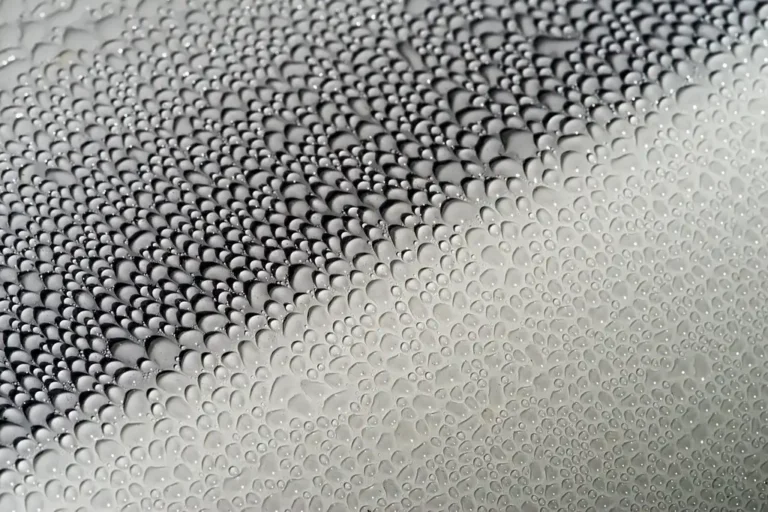
Both products can add gloss and slickness, but the feel is different. Paint sealant often reads as fuller or smoother on clean clear coat, while ceramic spray tends to show stronger water beading and water sheeting.
Beading tells you the surface still has some hydrophobic behavior. It does not prove the layer is fully healthy, because hard-water spots, grime, and wash chemicals can weaken protection before beading disappears.
Which needs less prep?
Ceramic spray usually needs less prep, but neither product should go on dirty paint if you want the result to hold. At minimum, wash the car and remove bonded contamination. If the clear coat is rough, oxidized, or covered in old residue, a clay step and light polish can improve bonding.
Paint sealant is less forgiving of neglected surfaces because it depends on clean clear coat for the best bond. If oils, grease, or old dressing remain on the paint, both products can streak, haze, or wear off early.
What prep actually changes
Prep is not only about shine. It affects how evenly the product spreads, how well it bonds, and how long the water behavior lasts.
Say your sedan sits under trees and picks up sap dots plus road film. If you skip decontamination and apply sealant over that layer, the finish may bead at first but fail unevenly after a few washes.
How long does each last?
Paint sealant usually lasts longer in the real world than a quick spray product, with common claims landing in the 3–6 month range and some competitor claims reaching 4–6 months. Ceramic spray is also measured in months, often around 2–6 months depending on chemistry, with some products marketed around 4 months.
Climate shortens that window. High UV exposure accelerates oxidation, winter salt adds abuse, and frequent washing strips away protection sooner. Garaged cars often keep protection longer than outdoor parked cars.
What beading and sheeting really tell you
Strong beading usually means some hydrophobic behavior remains. Fast sheeting can mean the surface still has usable protection too.
But neither pattern guarantees full life. A car can still bead while the layer is thin, contaminated, or losing uniform coverage. The practical check is whether water behavior, slickness, and easy rinsing all weaken at the same time.
How do you apply and cure them?
Both products are usually spray-and-wipe, then buff-off. The exact motion matters less than using thin, even coverage and clean towels. Heavy application causes smearing and makes removal harder.
Wet-use formulas are the fastest route because they fit into the wash. Dry-paint formulas can give more control, but they ask for a cleaner surface and often a dry panel before and after application.
- Wash the car thoroughly.
- Decontaminate if the paint feels rough or looks filmed.
- Dry the panel if the product is made for dry use.
- Apply a thin layer in sections.
- Buff before the product flashes or hazes, per label direction.
- Avoid water exposure until the stated cure window passes.
One common first-timer mistake is trying to fix streaking with more product. That usually makes the finish worse, especially on black paint. A second clean towel often solves the issue faster than adding another coat.
Suppose a compact hatchback is parked outside in a humid area and gets hit by sprinklers overnight. If the product needed a dry cure, early water exposure can leave spotting or dull patches before the protection has fully set.
Choose paint sealant if… / Choose ceramic spray if…
Choose paint sealant if you want fewer reapplications, you are willing to do a proper wash and decontamination step, and you plan to keep the car protected for months at a time rather than refreshing it every few weeks. It also makes sense when cost per month matters more than instant application speed.
Choose ceramic spray if you wash often, want a faster routine, or prefer a product that fits into regular maintenance. It is also the cleaner pick when you want a quick topper for an existing layer, provided the label allows that use. For short ownership, frequent washing, or outdoor parking with regular upkeep, ceramic spray is often the more practical match.
Decision matrix by owner type
| Owner type | Main need | Best pick | Why |
|---|---|---|---|
| Leased car | Easy cleanup and reasonable protection without overcommitting | ceramic spray | Fast application suits short-term ownership and regular washing |
| Daily driver | Balanced durability and upkeep | Paint sealant | Longer interval between applications usually fits a commuter better |
| Black paint | Visible gloss and lower risk of streaking from heavy layering | Paint sealant | It is easier to build a clean, even finish when prep is done well |
| Low-maintenance commuter | Fast refresh after routine washes | ceramic spray | Quick spray-and-wipe use fits a simple maintenance habit |
Leased car
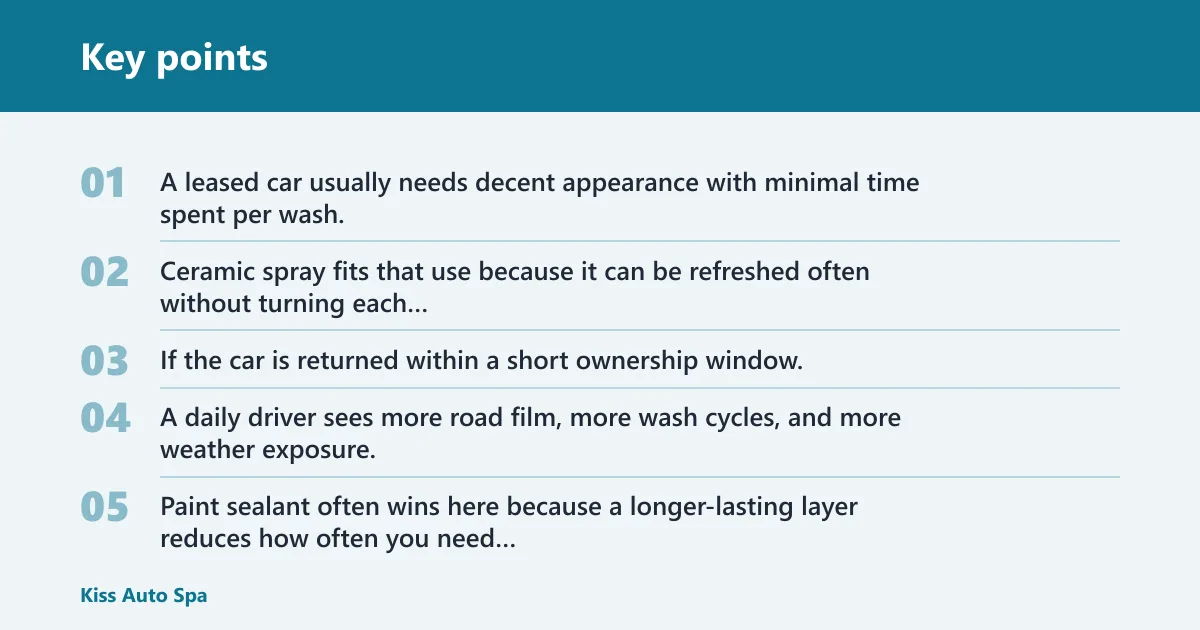
A leased car usually needs decent appearance with minimal time spent per wash. Ceramic spray fits that use because it can be refreshed often without turning each maintenance session into a long project.
If the car is returned within a short ownership window, the shorter service life is less of a problem than the easy application.
Daily driver
A daily driver sees more road film, more wash cycles, and more weather exposure. Paint sealant often wins here because a longer-lasting layer reduces how often you need to reapply.
That makes it a cleaner value choice when the goal is protection with less frequent maintenance.
Black paint
Black paint shows streaking, haze, and missed residue quickly. Paint sealant is often the safer pick if you are willing to prep properly, because it can leave an even look that is easier to maintain over time.
That said, a carefully applied ceramic spray can work well if speed matters more than a longer interval between applications.
Low-maintenance commuter
If the car gets washed often and the owner wants a quick routine, ceramic spray fits best. It is also useful when you want an easy refresh after winter grime or after a basic wash.
Paint sealant becomes less attractive if the car will be rewashed so often that its longer interval never gets fully used.
Frequently asked questions
What is the difference between paint sealant and ceramic spray?
Paint sealant is a synthetic polymer protectant built for a longer maintenance interval, while ceramic spray is an SiO2-style spray protectant aimed at faster application and frequent refreshes. Both sit on clear coat, both can bead water, and both need clean paint for the best result.
Is ceramic spray better than paint sealant for daily drivers?
Not always. Ceramic spray is often easier to keep up with if you wash often, but paint sealant usually lasts longer between applications. For a daily driver, the better choice depends on whether you value quicker upkeep or fewer reapplications over the next few months.
How long does paint sealant last compared with ceramic spray?
Paint sealant is commonly described in the 3–6 month range, while ceramic spray is also measured in months and often falls around 2–6 months depending on the formula. Heat, UV exposure, salt, and wash frequency can shorten both ranges.
Which is easier to apply: paint sealant or ceramic spray?
Ceramic spray is usually easier because many formulas are designed for spray-and-wipe use, and some can be applied during the wash. Paint sealant is still DIY-friendly, but it often asks for a cleaner surface and a bit more care during application and curing.
Can you use ceramic spray on top of paint sealant?
Often yes, if the product label allows it. Ceramic spray is commonly used as a topper or maintenance layer over existing protection. The key is to make sure the base layer is clean and fully cured before adding the spray product.
What should I choose if I want the fastest protection with the least prep?
Ceramic spray is usually the better match for the fastest route, especially if the formula can be used on wet paint during the wash. Still, “least prep” should mean clean paint, not dirty paint. A quick wash and proper drying still matter.
Is paint sealant enough if I don’t want a full ceramic coating?
Yes. Paint sealant is a realistic middle ground for owners who want more durability than wax without stepping into a full ceramic coating. It gives months of protection on clean clear coat, as long as you keep the wash routine reasonable and reapply when water behavior fades.