Ceramic Spray for Cars: How to Use It and Choose One
Choose a ceramic spray for cars by use case first: paint gets a gloss-focused spray, trim needs a trim-safe formula, glass needs a low-streak cleaner-coating, and wheels need heat and dust resistance; apply it one panel at a time with 2 plush towels. Pick the wrong product or towel method, and you get haze, streaks, grabby residue, and wasted product. This guide shows how to compare spray ceramics by surface, prep level, and wipe-off style, then apply each one cleanly at home.
Ceramic spray basics
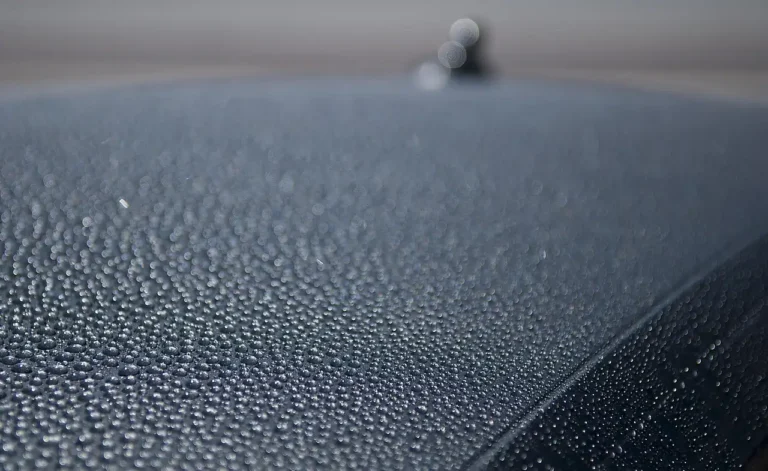
Spray-on ceramic coating is a consumer DIY spray-and-wipe product. It leaves a thin protective film that improves water beading, adds gloss, and can give some UV protection to exterior surfaces.
It is not the same thing as a professionally installed ceramic coating. Traditional coating work uses a different process, with far more prep, higher cost, and a longer service life claim. Ceramic spray gives you a lighter, quicker layer that fits routine home care.
SiO2, graphene, and hybrid formulas
Many spray ceramics are commonly grouped into three broad formula types: SiO2-based spray, graphene-based spray, and hybrid formulas. The label matters more than the marketing term. A SiO2 spray is often aimed at water behavior and gloss. A graphene-based spray may be sold with longer durability claims. A hybrid formula usually tries to balance ease, shine, and maintenance use.
Ceramic spray wax sits in the middle of this group. It is often used as a maintenance topper after wax, sealant, or an existing coating, though some products can also stand alone. Read the label to see whether the product is meant as a booster, a standalone layer, or a wet-apply aid.
How spray differs from paste coating
Spray products are made for fast application. Paste and bottle coatings usually need more surface prep, tighter working time, and more careful leveling. Spray ceramics stay forgiving only when you match the towel, panel size, and cure time to the product type.
That difference matters most on older paint. If the surface already has oxidation, bonded grime, or past product buildup, a spray-on layer will not hide those defects for long. It may even make them more visible once the surface is slick and reflective.
Ceramic spray decision matrix
This table separates the three main use cases: standalone protection, maintenance topper, and wet-apply drying aid. Start with the job you need done, then match prep, surfaces, and wipe-off style. That order prevents the most common beginner errors.
| Use case | Required prep | Compatible surfaces | Application order | Buffing method | Common failure signs |
|---|---|---|---|---|---|
| Standalone protection | Wash first, then dry completely; decontaminate or deep clean if the paint feels rough or has old residue | Paint and clear coat first; check label before using on glass, trim, chrome, or wheels | Apply to one panel at a time on clean, dry paint; spread thinly, then level | First towel spreads; second towel removes leftover film and evens the finish | Streaks, high spots, oily haze, uneven gloss, residue that returns after the next wash |
| Maintenance topper | Wash first; remove loose dirt and old road film; full decontamination is helpful when slickness drops | Paint, and sometimes glass, trim, chrome, and wheels if the label allows it | Use after a wax or sealant has cured; apply sparingly so the topper does not smear the base layer | Light wipe with one towel, then a dry towel to clear any film before it sets | Grabby wipe-off, patchy beading, smearing over old wax, short-lived slickness |
| Wet-apply drying aid | Wash first; keep the panel wet; no full dry step before application if the label says wet-apply | Usually paint; some products may also allow trim or glass, but check the bottle first | Spray onto the wet panel or towel after washing, then dry the surface as you spread the product | Use a plush drying towel first; follow with a second towel if streaks appear | Water spotting, diluted coverage, drag marks from a damp towel, residue in seams and edges |
How do you choose the right spray ceramic?
Choose by paint condition, wash routine, and the role you want the product to play. A finish in good shape can take a standalone spray. A vehicle that already has wax or sealant may do better with a maintenance topper. If you want one-step drying help, choose a wet-apply formula that says so on the label.
Match the product to paint condition
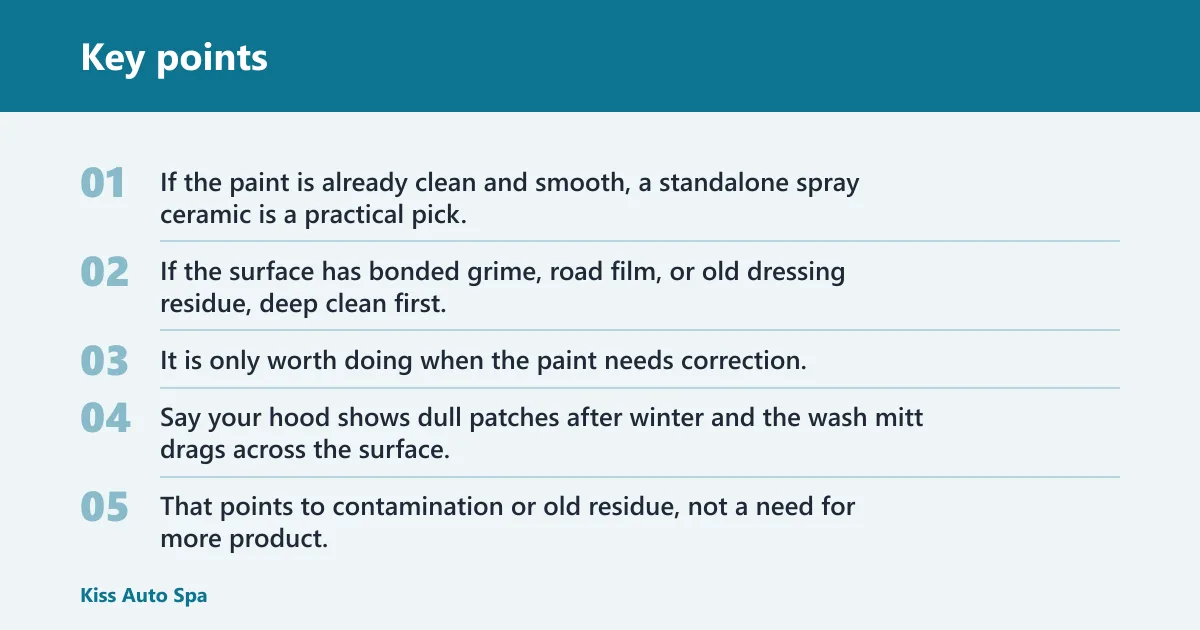
If the paint is already clean and smooth, a standalone spray ceramic is a practical pick. If the surface has bonded grime, road film, or old dressing residue, deep clean first. Polishing is not required every time. It is only worth doing when the paint needs correction, not as a default step before every spray.
Say your hood shows dull patches after winter and the wash mitt drags across the surface. That points to contamination or old residue, not a need for more product. Clean the paint first, and only polish if the surface still shows defects after washing and decontamination.
Match the product to your wash routine and climate
Daily drivers in wet or salty conditions usually need more frequent upkeep than garage-kept cars. A commuter that sees rain, dust, and automatic tunnel washing will lose slickness faster than a weekend car. In that case, a topper-style spray can fit a monthly or near-monthly schedule better than a long-claim standalone product.
A wet-apply drying aid makes sense for someone who always dries immediately after washing and wants one extra step, not a separate coating day. A dry-apply ceramic spray makes more sense if you want to work carefully on clean paint and level the film before it sets.
Compare size, price, and durability claims
Compare bottle size against your vehicle size and how often you wash. Turtle Wax Hybrid Solutions Ceramic Spray Coating comes in a 16 oz bottle. CERAKOTE Platinum Rapid Ceramic Paint Sealant Spray is sold in a 14 oz bottle. Adam’s Graphene Ceramic Spray Coating is listed at 12 to 18 months of claimed durability, with another listing that says 18+ months. Meguiar’s Hybrid Ceramic Wax is listed at $19.99 for 26oz.
Those claims do not mean the same thing in use. A larger bottle can be a better value for frequent maintenance, while a longer durability claim can be less useful if the application is more sensitive to prep. For a beginner, the better choice is the bottle that matches the amount of prep you are willing to do every time.
How do you apply ceramic spray without streaks?
Wash and dry first, then work on one small section at a time with two clean plush towels. Use light pressure, apply a thin layer, and stop as soon as the first towel leaves a uniform film. Streaks usually come from too much product, too large a panel, or a towel that is already saturated.
Start with wash and decontamination
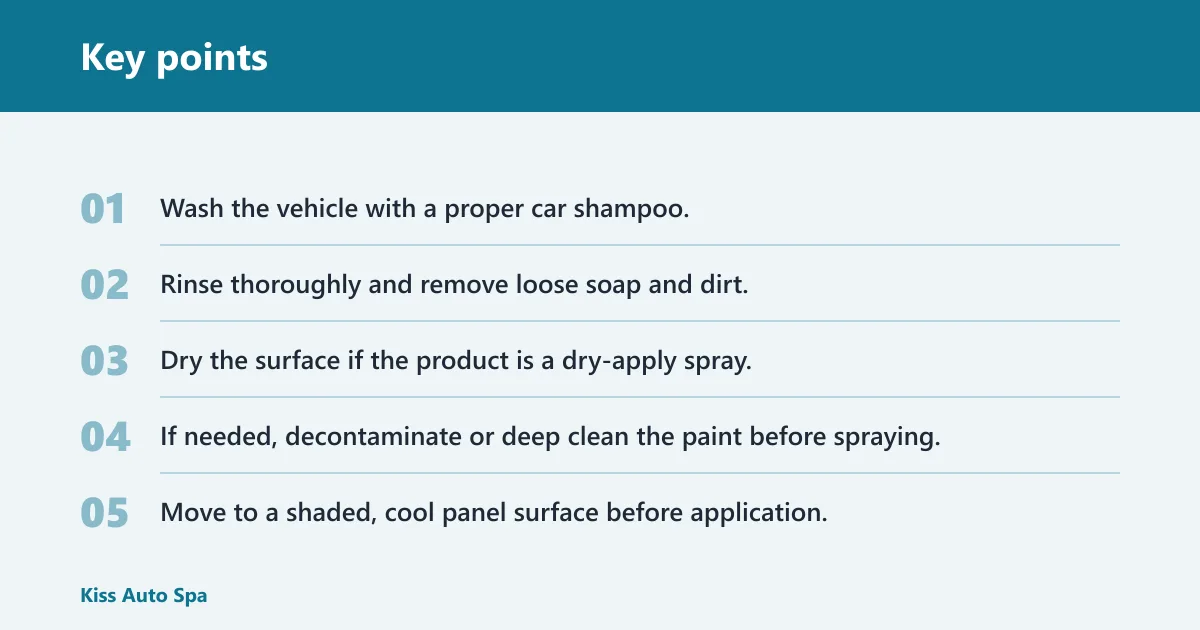
Wash the car before applying ceramic spray wax or a dry-apply ceramic spray. That step matters because dirt under the coating becomes locked into the finish. If the paint feels rough after washing, use decontamination or deep cleaning first. Ceramic spray works best on a surface that is clean enough for the film to level evenly.
- Wash the vehicle with a proper car shampoo.
- Rinse thoroughly and remove loose soap and dirt.
- Dry the surface if the product is a dry-apply spray.
- If needed, decontaminate or deep clean the paint before spraying.
- Move to a shaded, cool panel surface before application.
Work one panel at a time
Spray ceramics are often easiest to control on a hood, a door, or a half panel. A full side of the vehicle can be too large if you are new to the product. Smaller sections help you catch high spots before they set.
Apply a light mist or a few sprays, then spread it with the first towel. Follow with a second dry towel to remove any leftover film. If the surface starts to grab, stop and switch towels. That usually means the towel is loaded with product or dirt.
Use two towels and light pressure
The first towel should spread the product evenly. The second towel should level the finish and remove excess. Plush microfiber is the safe default because it can lift residue without cutting into the film. Thin or dirty towels are a common cause of haze and drag marks.
Suppose a sedan door gets three sprays, then one towel pass leaves a dull smear near the handle recess. The fix is not more product. Switch to a clean towel, wipe the panel again, and reduce the amount used on the next door.
Watch for high spots before moving
High spots are areas where the coating sits thicker than the surrounding film. They often show up as darker, shinier patches or sticky-feeling residue after the panel flashes. Catch them before they cure fully. If you wait, the fix becomes much harder and may require a rewash or polish.
Uneven coverage often comes from spraying too far from the panel or rushing across a hot surface. Work slowly enough to see the product level, but not so slowly that it dries into streaks before the second towel touches it.
Can you use ceramic spray on a wet car?
Use the product on a wet panel only if the bottle is a wet-apply type and the label says it can be used as a drying aid. That workflow fits spray waxes and some hybrid products. It is not the right method for every ceramic spray, because some formulas need a fully dry panel to level without streaking.
When wet-apply formulas make sense
The guide recommends washing the car before applying ceramic spray wax, and it also notes that spray waxes can be applied on the wet car body. That makes wet-apply formulas useful when you want to combine drying and protection in one pass. They are especially practical after routine washes on daily drivers.
Use this method only when the product instructions support it. A dry-apply coating used on a wet panel can streak, dilute, or fail to bond evenly. The result is usually less gloss and more towel drag.
What changes in towel choice
For wet-apply use, start with a plush drying towel that can absorb standing water while spreading the product. Then switch to a second dry towel to catch streaks and leftover film. If the towel starts to feel heavy or damp, replace it before it starts smearing the surface.
Do not flood the panel with product. A wet panel already carries water. Too much spray on top of that can leave residue in seams, around emblems, and at panel edges.
What to avoid during drying aid use
Avoid working on a hot panel or in direct sun when possible. The product can flash too quickly, especially on dark paint. Also avoid drying one whole side before leveling it. On a wet-apply formula, the order matters: spray, spread, dry, then inspect.
Where can ceramic spray be used?
Most spray ceramics are aimed at paint and clear coat first, then other exterior surfaces if the label approves them. The same product may behave differently on glass, plastic trim, chrome, and wheels. Surface prep and wipe technique still matter, even when the bottle says it is compatible.
Paint and clear coat
Paint is the main target for spray ceramic use. That is where gloss, slickness, and water behavior are easiest to notice. Clean paint also gives you the best chance of spotting high spots and fixing them before they cure.
Glass and chrome
Glass and chrome can work well with the right product, but they are also where streaks show fastest. TEC582 Ceramic Detail Spray is described as usable on glass, plastic trim, chrome, and wheels. That makes it a useful reference point for cross-surface use, but the bottle directions still decide whether it should be used on your specific car.
Plastic trim and wheels
Plastic trim needs a formula that will not stain or leave an oily halo. Wheels need heat and brake dust resistance, and they usually require deeper cleaning before any coating goes on. The same spray that looks fine on paint may leave visible residue on textured trim if it is overapplied.
When a product says it works on wheels, apply it only after the wheel face and barrels are cleaned well enough to remove brake dust and road film. A quick wipe over dirty wheels traps grime and makes later cleaning harder.
When to check the label first
Check the label any time you move away from paint. Compatibility can depend on chemistry, finish, and the vehicle’s trim material. Even a product marketed for multiple surfaces may have limits on matte plastics, soft black trim, or coated glass.
Product comparison guide
The following products cover different needs. Use the claims as starting points, not as a substitute for prep and wipe method. A good match is the one that fits your surface, your time, and your maintenance habit.
| Product | Notable claim or format | Best fit | Watch for |
|---|---|---|---|
| Turtle Wax Hybrid Solutions Ceramic Spray Coating | 16 oz bottle; positioned for long-lasting protection and strong water beading | Standalone paint protection for a home user who wants a familiar spray-and-wipe format | Do not treat beading alone as proof of full coverage |
| CERAKOTE Platinum Rapid Ceramic Paint Sealant Spray | 14 oz bottle; 50 wash rating claim; quick application angle | Fast application on a daily driver when you want a simple spray routine | Fast products still need careful leveling to avoid streaks |
| Adam’s Graphene Ceramic Spray Coating | 12 oz bottle; UV tracer technology; 12 to 18 months claimed durability | Users comparing graphene-based spray options for longer claimed service life | Long claims still depend on prep, climate, and wash method |
| Meguiar’s Hybrid Ceramic Wax | 26 oz bottle; standalone or booster use; affordable option | Maintenance use, especially when you want a lower-cost bottle with broad appeal | Booster-style use often needs more frequent reapplication |
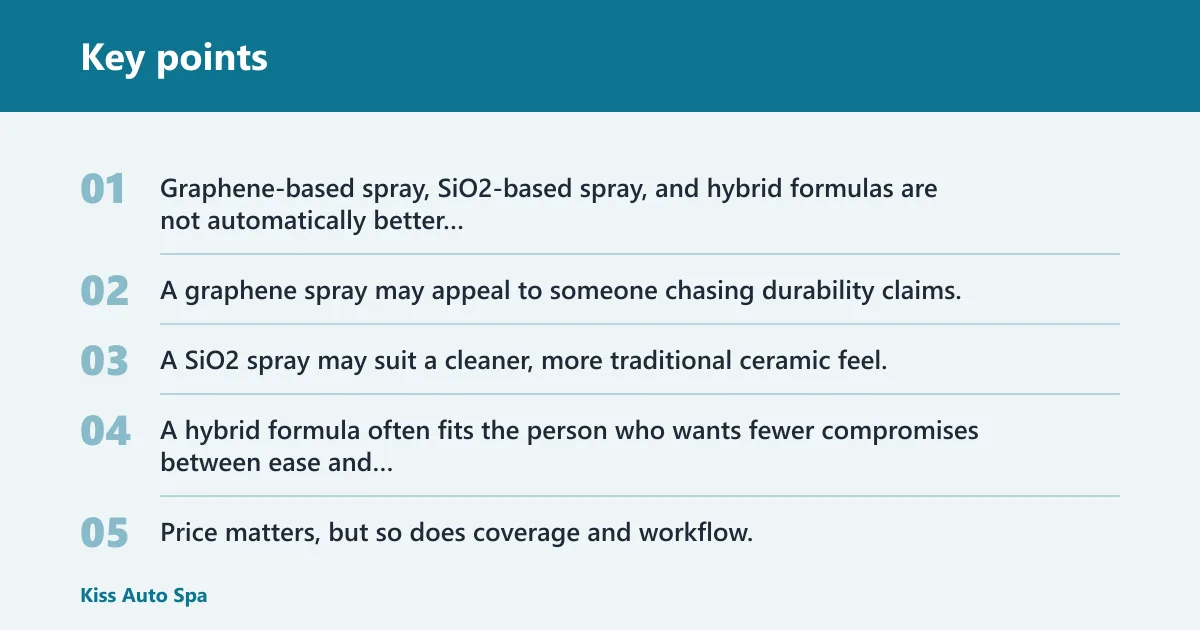
Graphene-based spray, SiO2-based spray, and hybrid formulas are not automatically better than one another. A graphene spray may appeal to someone chasing durability claims. A SiO2 spray may suit a cleaner, more traditional ceramic feel. A hybrid formula often fits the person who wants fewer compromises between ease and protection.
Price matters, but so does coverage and workflow. Meguiar’s Hybrid Ceramic Wax is listed at $19.99 for 26oz, which makes it attractive for frequent use. Turtle Wax’s 16 oz bottle may make more sense if you want a more dedicated coating-style product. CERAKOTE’s 14 oz size suits quick use, while Adam’s 12 to 18 month claim may matter more if you are willing to prep carefully and maintain it well.
Frequently asked questions
How long does ceramic spray last on a daily driver?
Daily-driver durability depends on wash method, weather, and how often the car sees abrasion from dirt and road film. Many spray ceramics need more frequent upkeep than their label claims suggest. For commuter use, expect a maintenance cycle measured in months, not years, unless the product is used and maintained very carefully.
What is the difference between ceramic spray wax and ceramic coating?
Ceramic spray wax is usually a quicker maintenance product, sometimes usable as a topper or a standalone layer. A traditional ceramic coating is a much more involved installed treatment with more prep and a much higher price range. Spray wax is about convenience and upkeep; installed coating is about a longer, more intensive protection job.
Do you need to polish before applying ceramic spray?
No, not before every application. Polish only when the paint has defects that washing and decontamination will not remove, such as oxidation, heavy swirl marks, or etched residue. For many cars, a proper wash and decon step is enough before a spray ceramic goes on.
How often should you reapply ceramic spray?
Reapply based on loss of slickness, weaker beading, and your wash routine. Booster-style products often get a monthly rhythm because they are meant to refresh an existing layer rather than act like a full coating. If water behavior drops off sooner, shorten the interval.
Can ceramic spray be used on glass, trim, and wheels?
Sometimes, but only if the label says so. Some products are limited to paint, while others are meant for multiple exterior surfaces. TEC582 Ceramic Detail Spray is described as usable on glass, plastic trim, chrome, and wheels, which shows why label reading matters before you spray beyond paint.
Is spray ceramic coating worth it for a beginner?
Yes, if the goal is easier protection and you are willing to prep the car properly. It is less demanding than a full installed coating, but it still rewards good washing, careful towel choice, and small working sections. Without those basics, streaks and high spots are common.