Can You Use Rinseless Wash After Rain?
You can rinseless-wash a car after rain if the paint is cool, the surface is only lightly soiled, and you can confirm there’s no grit; if it’s muddy, sandy, or hot, wait, pre-rinse, or do a full wash first. Skip that check and you can drag grit across the clear coat, causing wash marring and extra cleanup. This guide explains how to judge the paint, when damp is fine, and when rain leaves too much contamination for rinseless washing.
Quick decision matrix: if the car is cool, lightly dusty, and smooth to the touch, the safest next step is a rinseless wash with microfiber towels or a rinseless wash sponge; risk is low. If it is damp but you cannot tell whether residue is gritty, the safest next step is to pre-rinse or dry and inspect first; risk is moderate. If you feel sand, mud, or salt, the safest next step is a full wash; risk is high. If the panel is hot, the safest next step is to wait until it cools; risk is moderate.
If you are unsure, pre-rinse or do a full wash first. That rule is safer than guessing because wet paint can hide contamination that feels harmless until a towel starts to drag.
Which rain residue is safe to towel away?
Yes, but generally only when rain leaves the car damp rather than gritty. A rinseless wash is a no-rinse cleaning method for light contamination, so it fits light rain dust, recent water marks, fingerprints, or thin road film on a cool panel. If the rain picked up grit, salt, or mud, pause and choose a safer path.
What rain leaves behind on paint
Rain can leave several kinds of residue, and they do not all carry the same risk. Water spots, a thin road film, or dust mixed with moisture may still be within rinseless-wash range if the surface feels smooth. Gritty residue changes the job, because it should be removed with more water first.
- Water spots: Often from mineral residue left as droplets dry. These can be handled with a light rinse or rinseless wash if the paint is otherwise clean.
- Road film: A thin gray film that can form after rain on daily drivers. It is a light contamination case only if it feels smooth.
- Dust and pollen: Fine debris mixed with moisture can usually be cleaned panel by panel on a cool surface.
- Mud, grit, salt: These are stop signals. Do not wipe them dry with a rinseless towel.
Rainwater alone is not the decision point. The real question is whether the surface is wet but safe to touch, or wet and contaminated enough to need a rinse before any towel contact.
When rinseless wash is the right choice?
A rinseless wash is generally the right choice when contamination is light, the panel is cool, and the paint feels smooth rather than gritty. It also fits maintained daily drivers and garaged cars that picked up a thin layer of dust or very light road film. That is the range where microfiber towels or a rinseless wash sponge can work with low friction.
Light contamination on a cool panel
A cool panel matters because it slows drying while you clean one section at a time. That gives the lubricated solution time to carry away light dust and pollen instead of flashing off too fast. Car Cleaning Zone advises inspecting first and cleaning one cool panel at a time, which matches the safest approach here.
- Inspect the panel closely.
Look for visible grit, muddy patches, and any rough feel. If the panel looks smooth and only lightly dusty, a rinseless pass is reasonable. - Load the towel or sponge.
Use a clean microfiber towel face or a rinseless wash sponge with a lubricated solution in a bucket. Keep the contact tool saturated enough to glide rather than drag. - Wipe one section only.
Work in small sections, then switch to a clean towel face before the face starts to load up. Low-friction wiping helps limit marring. - Dry immediately.
Use a separate microfiber towel to blot or lightly level the panel before moving on. This reduces streaking on damp paint.
Microfiber towels need clean faces during use. Rotate to a fresh side often, and launder them after the wash so trapped dirt does not get reused on the next car.
Garaged cars and maintained daily drivers
Cars that stay garaged or are washed on a regular schedule are better candidates than heavily road-soiled vehicles. Renu Auto notes that rinseless washing is best for a very well maintained car, and it can be done in a warm garage on a cold winter day. That makes it useful where a hose is unavailable, but only within the light-dirt limit.
Product labels and package sizes do not change the rule: the paint still has to be lightly contaminated, smooth, and cool enough for gentle contact. If the surface needs more than that, the safer move is to rinse first or switch to a full wash.
When should you dry, pre-rinse, or full-wash first?
Dry first, pre-rinse, or switch to a full wash when the surface carries visible grit, muddy residue, construction dust, or winter road salt. Those conditions can turn a rinseless wash into a rubbing step across sharp particles. If the towel starts to drag, stop and change methods.
Visible grit or dragging towel feel
Visible grit is the simplest stop signal. Car Cleaning Zone says to stop if the contamination feels gritty, and that instruction should override convenience. A dragging towel on wet paint means the surface is not lubricated enough for safe contact, or the dirt load is too high.
- Touch a hidden spot first.
Test a lower panel or a less visible edge with almost no pressure. If it feels rough or sandy, do not continue with a rinseless wash. - Choose the safer reset.
Dry the car first if the rain left only water and light film. Pre-rinse if the panel carries loose dust or spray. Move to a traditional wash when the contamination is heavy. - Reset your towels.
If a towel face picks up grit, retire that face immediately. Do not keep wiping with the same side.
Suppose a hatchback sat outside after a drizzle and picked up a thin layer of dust. That is a light-contamination case if the panel is cool and smooth. Change one variable, though: if the same hatchback is parked under a road overpass and feels sandy on contact, it should be rinsed or fully washed first.
Road spray, salt, or muddy rain
Road spray, winter salt, and muddy rain can carry abrasive particles or residue beyond plain wet paint. They can hold abrasive particles or corrosive residue that a rinseless pass should not be asked to remove dry. Renu Auto warns that increased marring is more likely if the car was very dirty, and that risk rises with mixed grit.
| Scenario | Safest next step | Risk level | Tools needed |
|---|---|---|---|
| Light rain dust | Rinseless wash on a cool panel | Low | Microfiber towels, rinseless solution, bucket or spray bottle |
| Clean but wet car | Dry first, then inspect before contact | Low to moderate | Drying microfiber towels, inspection light if needed |
| Road spray | Pre-rinse, then decide whether rinseless is still enough | Moderate | Hose or rinsing source, wash mitt or rinseless sponge, microfiber towels |
| Muddy or salty rain | Traditional wash | High | Full wash setup, rinse water, wash mitt, drying towels |
A common mistake is assuming a car that is still beaded with rain is ready for rinseless washing. Wet paint can hide contamination, so the safe move is to inspect before the first wipe. If the surface is wet but the residue is gritty, dry contact is the wrong choice.
How to do a rinseless wash on damp paint
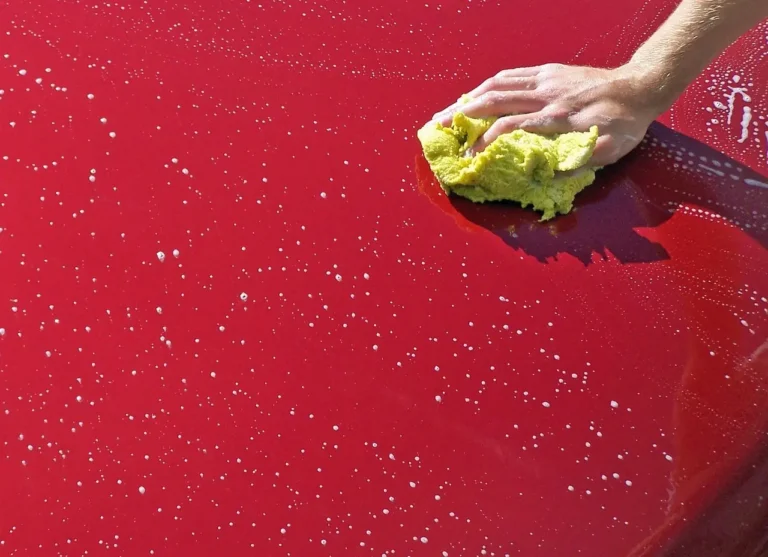
Use a rinseless wash on damp paint only when the panel is cool, the contamination is light, and the surface passes the grit check. The goal is controlled contact, not scrubbing. A rinseless wash sponge is a gentler contact tool when paired with a lubricated solution in a bucket, while microfiber towels are better when you can rotate clean faces often.
- Park in shade or indoors.
Let the paint cool before you start. Hot panels dry too fast and increase streaking risk. - Inspect each panel.
Look for water spots, film, or dust mixed with moisture. Stop if you see mud, salt, or construction dust. - Prepare the solution.
Use the rinseless product according to its label and keep the contact media well lubricated. The surface should feel slick, not grabby. - Clean one panel at a time.
Wipe gently in straight passes, then follow with a clean towel face or a separate drying towel. Keep pressure light. - Check for drag.
If the towel begins to snag or skip, stop. That change usually means the panel is dirtier than a rinseless wash should handle. - Launder used microfiber.
Wash microfiber towels after use so trapped residue does not stay in the pile. Dirty towels are a scratch risk on the next job.
Rinseless and waterless wash are not the same decision. Waterless wash is for very light dust and minimal touch; rinseless wash uses a lubricated solution and is the better fit when the car is still damp but only lightly contaminated. That distinction matters after rain, because moisture can hide dirt without making it safe.
Frequently asked questions
Can you use rinseless wash right after it rains?
Yes, if the paint is cool, the rain left only light contamination, and there is no grit under your fingers. If the car has road spray, mud, or salt, wait or pre-rinse first. Rain by itself is not the issue; residue and surface feel are.
Should I wait for the car to dry before using rinseless wash?
Not always. A damp car can be a good candidate when it is clean enough and the panel is cool. If the water is hiding dust, grit, or road film, drying first helps you inspect the paint and can prevent dragging contamination across the finish.
Is rinseless wash safe on a wet car?
It is safe on a wet car only when the wet surface is lightly soiled, smooth, and cool. The method depends on lubrication and gentle contact. If the towel starts to grab, or if the surface feels sandy, the car is not a good rinseless candidate.
Does rainwater count as dirt before a rinseless wash?
Rainwater alone does not count as dirt. What matters is what the rain leaves behind: minerals, road film, pollen, dust, or grit. A clean, wet car can be wiped with a rinseless product; a wet car with gritty residue should be rinsed or washed first.
What if the car has road spray or mud after rain?
Road spray and mud are stop conditions for a direct rinseless wash. A pre-rinse is the safer next step, and a full wash is better if the residue is heavy or salty. Those particles can scratch if you try to remove them with a towel alone.
Will rinseless wash scratch the car after rain?
It can, if you use it on grit, salt, or muddy residue. The method itself is not the problem; contamination control is. Use it only on lightly dirty, cool panels, rotate clean towel faces, and stop at the first gritty feel. That is how you keep the risk low.
When is it better to do a traditional wash instead?
Use a traditional wash when rain leaves the car heavily soiled, when the paint feels gritty, or when salt and construction dust are present. That extra water step clears loose contamination before any towel touches the surface. For heavily road-soiled cars, that is the safer route.