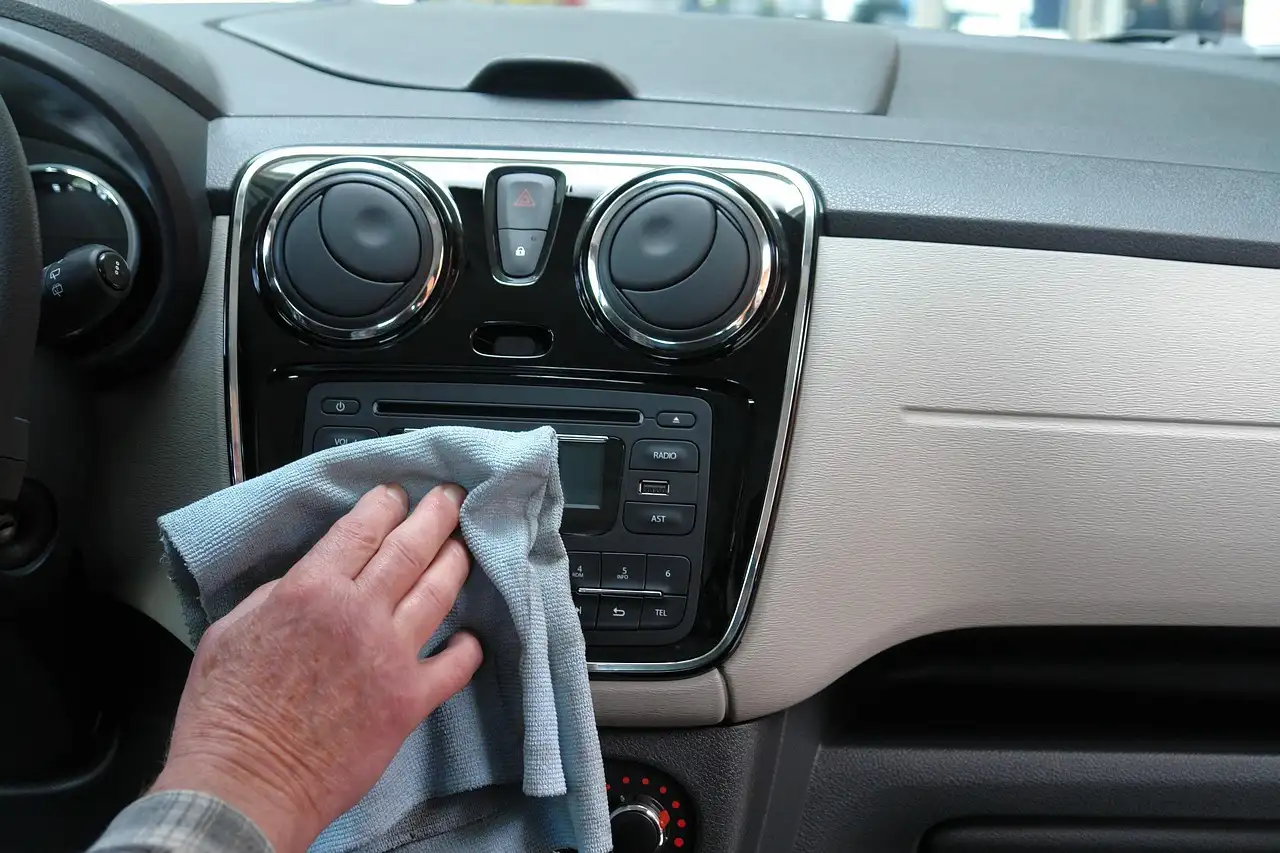
What Makes a Car Smell Bad?
A bad car smell usually comes from moldy A/C parts, spilled food, pet odor, smoke residue, fuel, exhaust, or damp carpet. Match the odor to where it appears, and treat fuel, burning plastic, or exhaust smells as urgent. If you chase the wrong odor first, you waste time and may miss a leak or safety issue.
What the smell is telling you
Location matters more than the odor alone. A smell that shows up only after startup often points to HVAC parts, while a smell that lingers with the windows closed can come from upholstery, the trunk, or a leak under the car. Fuel and exhaust smells inside the cabin need immediate attention.
Car odor matrix
| Smell description | Likely source | Safety level | Quick test | First action |
|---|---|---|---|---|
| Musty or sour smell when the A/C starts | Evaporator core, cabin air filter area, or a blocked drain | Needs inspection | Run the fan with A/C off, then turn A/C on and note whether the smell appears at startup | Check the cabin air filter and evaporator drain |
| Rotten food or sour snack odor | Spilled food or drink in carpet, seat foam, or under seats | Low unless mold has grown | Lift floor mats and feel for sticky or damp spots | Trace the spill source before deodorizing |
| Pet odor, wet-dog smell, or ammonia note | Fur, dander, urine, or saliva in upholstery and headliner | Needs cleaning | Smell the seatbacks, headliner, and cargo area separately | Use enzyme cleaning where urine or organic residue is present |
| Gasoline smell | Fuel leak, loose cap, damaged line, or vapor issue | Stop-driving risk | Notice whether the smell is strongest near the rear, engine bay, or after refueling | Get immediate mechanical diagnosis |
| Exhaust smell | Leak at seals, gaskets, exhaust joints, or tailpipe routing | Stop-driving risk | Check whether the smell increases at idle or with the windows closed | Inspect the exhaust system and cabin seals |
| Stale smoke odor | Cigarette smoke residue in trim, fabric, vents, and HVAC parts | Needs deep cleaning | Compare the smell in the headliner, vents, and steering wheel area | Deep-clean soft surfaces and ventilate the cabin |
| Damp, moldy carpet smell | Wet floor mat, carpet, leak, spill, or flood residue | Needs drying and inspection | Press on the carpet padding and floor mats for moisture | Dry the area fully before any deodorizing |
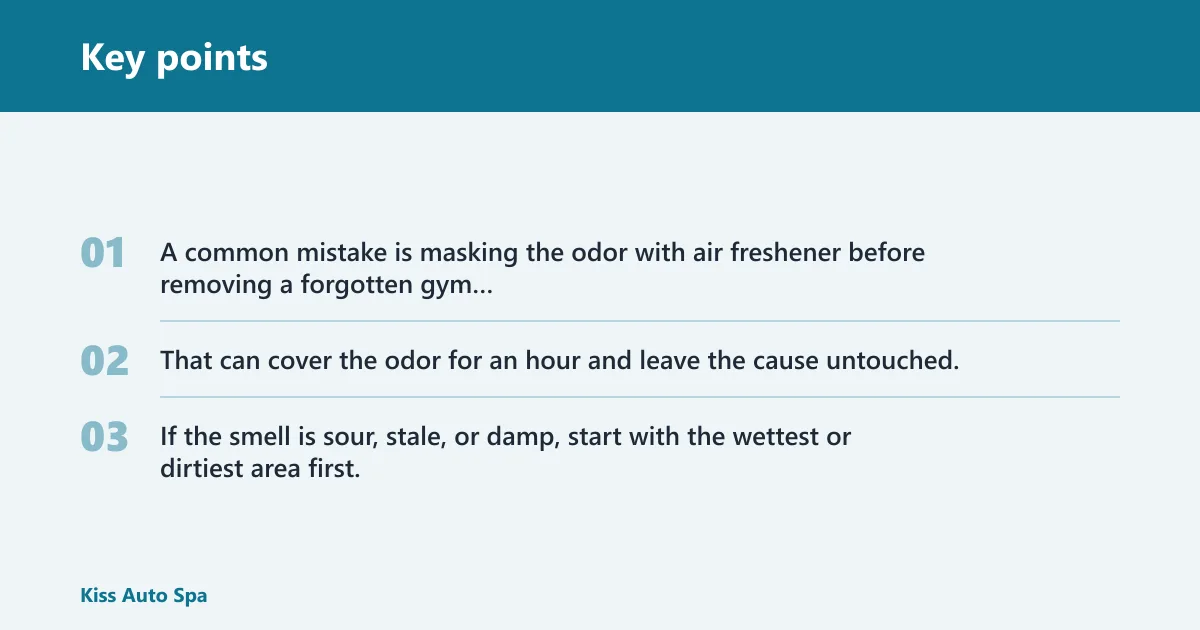
A common mistake is masking the odor with air freshener before removing a forgotten gym bag from the trunk. That can cover the odor for an hour and leave the cause untouched. If the smell is sour, stale, or damp, start with the wettest or dirtiest area first.
Why does my car smell bad after the AC starts?
That pattern usually points to moisture and residue in the HVAC system. The evaporator core can hold condensation, and the cabin air filter can collect debris and odor. If the smell appears right after startup or only when the A/C runs, inspect the drain, filter, and nearby ducting.
Evaporator core, drain, and filter clues
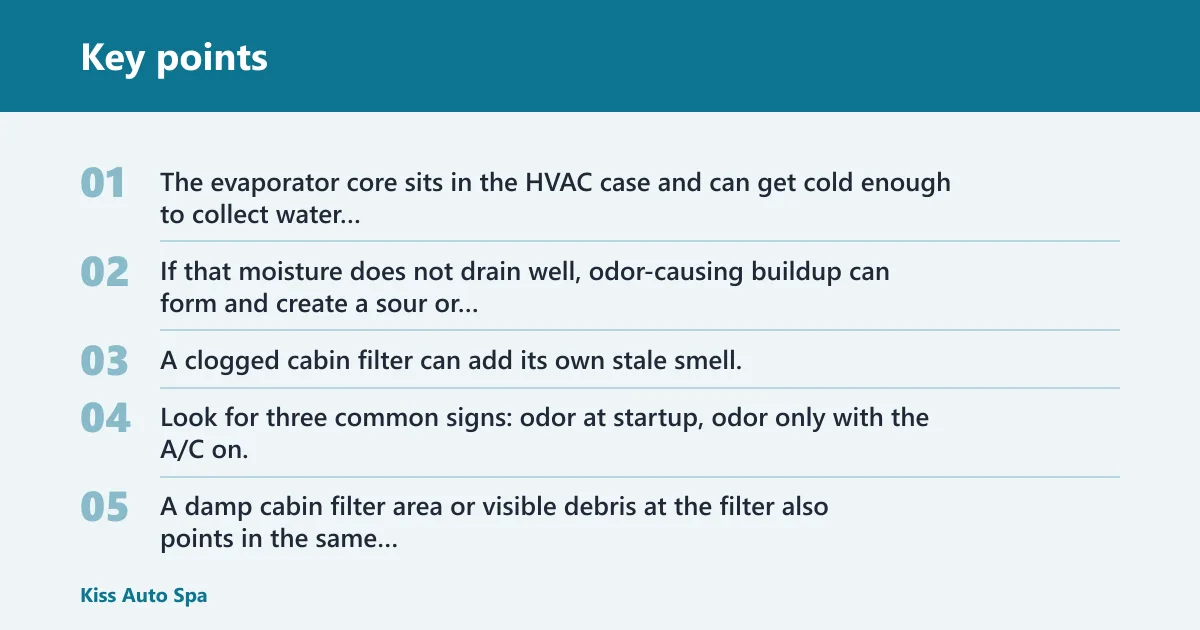
The evaporator core sits in the HVAC case and can get cold enough to collect water during normal A/C use. If that moisture does not drain well, odor-causing buildup can form and create a sour or musty blast when airflow begins. A clogged cabin filter can add its own stale smell.
Look for three common signs: odor at startup, odor only with the A/C on, and a weak stream from the evaporator drain. A damp cabin filter area or visible debris at the filter also points in the same direction. If the smell is strongest at the vents, HVAC inspection comes before upholstery cleaning.
What inside the cabin causes bad smells?
Most cabin odors come from organic material trapped in soft surfaces. Spilled drinks soak into foam, pet odors bind to fabric and headliners, and smoke residue settles into trim and vents. Wet mats and carpet padding can also hold moisture long after the surface feels dry.
Spills, pets, smoke, and damp materials
Food and drink spills do not stay on top of the carpet for long. They can move into seat foam, under padding, and into seams where fragrance cannot reach. Pet odor often spreads farther than expected because fur, dander, and urine can sit in upholstery and cargo-area trim.
Cigarette smoke is different. It leaves residue on hard surfaces and inside HVAC components, which is why the smell can remain even after a surface wipe. When the odor is stale and persistent rather than sour or damp, deep cleaning and ventilation matter more than a quick detail spray.
Wet floor mats or carpet deserve special attention. They can smell moldy after a spill, window leak, sunroof drain issue, or flooding. Dry the padding completely before trying to remove the odor, or the smell often returns.
Say a patch about 12 inches square under the passenger mat feels cool and damp on a dry day. That points more toward a leak or trapped water than a food spill. Dry the area and find why it got wet first, not after you cover it with fragrance.
What smells mean you should stop driving?
Fuel and exhaust smells inside the cabin are the main stop-driving odors. Gasoline smell can mean a leak, and exhaust smell can mean combustion gases are entering the cabin through a failed seal, gasket, or exhaust path. Both can become dangerous quickly, especially in enclosed spaces.
Fuel and exhaust warnings
Gasoline odor is not a normal cabin smell. If it appears after refueling, near the rear of the car, or around the engine bay, get a mechanical diagnosis before more driving. Exhaust odor inside the car is also a safety issue because it can point to leaks in the exhaust system or body seals.
Do not confuse these with ordinary stale smells. Fuel and exhaust odors are sharper, more penetrating, and harder to mask. If either smell is strong enough to notice with the windows closed, stop and inspect.
Where exhaust leaks usually enter
Exhaust smell can reach the cabin through worn door seals, trunk seals, firewall gaps, failed gaskets, or tailpipe routing problems that let fumes collect where they should not. The smell may be worse at idle, in traffic, or with the heater or fan running.
How to trace the source without guessing
Start with the area that matches the odor. Check the trunk for food, the floor for dampness, the seats for spills, and the headliner for pet or smoke residue. Then move to the HVAC filter, vents, and drain areas if the smell changes when the A/C starts.
Inspection order
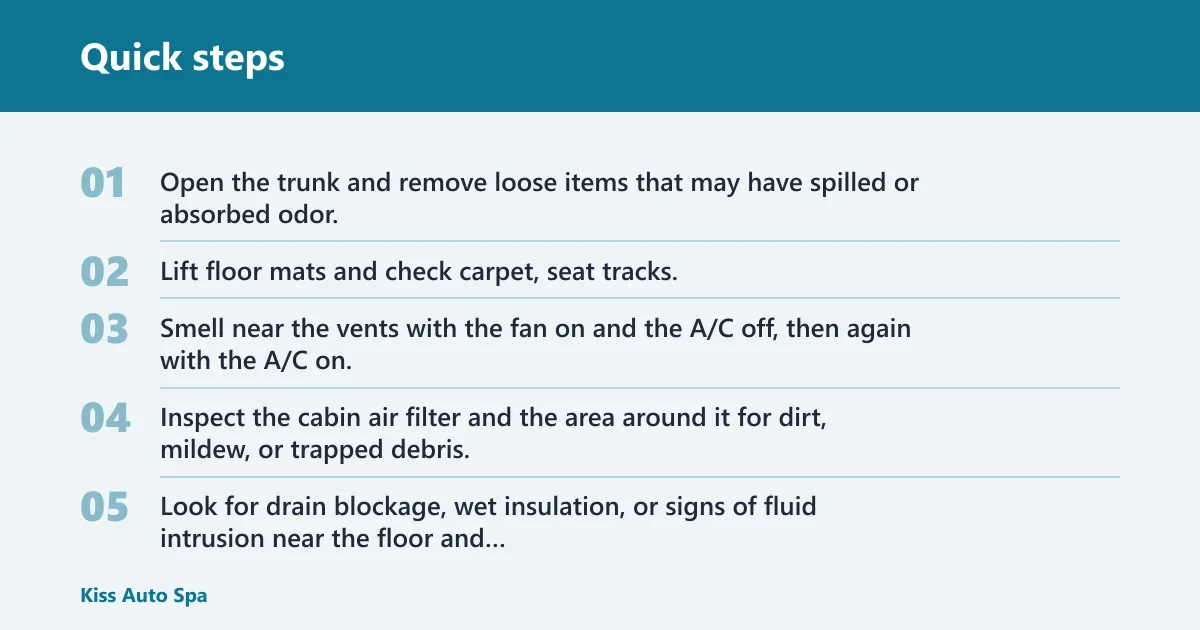
- Open the trunk and remove loose items that may have spilled or absorbed odor.
- Lift floor mats and check carpet, seat tracks, and under-seat spaces for moisture or debris.
- Smell near the vents with the fan on and the A/C off, then again with the A/C on.
- Inspect the cabin air filter and the area around it for dirt, mildew, or trapped debris.
- Look for drain blockage, wet insulation, or signs of fluid intrusion near the floor and HVAC case.
- Decide whether the issue is cleaning-related or points to a leak, exhaust fault, or HVAC problem.
Say your car smells musty only after about 5 minutes of driving with the A/C on, but the seats and trunk smell normal. That points much more strongly to the evaporator core, drain, or cabin filter than to food or pet odor. The clue is when the smell appears, not just how it smells.
How do you remove the smell for good?
Permanent odor removal starts with source removal. If the source stays in the car, masking products only buy time. Dry wet materials, clean organic residue, and repair leaks first. Enzyme cleaning can help with pet urine and some food spills, while smoke residue often needs deep cleaning across hard and soft surfaces.
Cleaning and repair priorities
Drying comes before deodorizing for wet carpet or flooded padding. If the padding stays wet, the odor returns. For pet odor, enzyme cleaners are useful because they break down organic residue instead of covering it. For smoke, ventilation helps, but residue in vents, trim, and fabric usually needs a deeper cleaning pass.
If the smell comes back after cleaning, the source is probably still present. That is common with HVAC odors, hidden spills, and leaks under the car. At that point, repair or professional detailing is the better next step than repeated fragrance use.
Frequently asked questions
What makes a car smell bad?
The most common sources are moldy A/C parts, spilled food or drink, pet odor, smoke residue, damp carpet, fuel leaks, and exhaust leaks. The key is to match the smell to where it appears and when it shows up. Startup-only odors usually point to HVAC, while fuel and exhaust need urgent attention.
What can make a car smell bad?
Any material that traps moisture or organic residue can do it. Carpet padding, seat foam, cabin filters, evaporator cores, headliners, and trunk liners all hold odor well. A smell that seems to come from everywhere often starts in one hidden wet or dirty area that needs inspection.
Why does my car always smell bad?
If the smell never leaves, the source is probably still in the vehicle. Hidden spills, damp insulation, dirty HVAC parts, or smoke residue in fabric and vents can keep re-releasing odor. Cleaning the visible surface alone usually is not enough if the odor returns after a day or two.
What makes car ac smell bad?
Musty or sour A/C odor usually comes from moisture and buildup on the evaporator core or a dirty cabin air filter. A blocked drain can keep water in the HVAC case, which makes the smell worse after startup or whenever the A/C runs. That pattern points to the HVAC system, not the seats.
What makes a car exhaust smell bad?
An exhaust smell in the cabin usually points to a leak or routing problem, not a normal cabin odor. Worn seals, failed gaskets, tailpipe issues, or body gaps can let fumes enter the car. Treat it as safety-critical, especially if the smell is strongest at idle or with the windows closed.
Why does car smell bad?
Because odor sources are usually trapped in soft materials, hidden drains, or mechanical parts that collect moisture and residue. The odor profile tells you where to look first. Sour smells point to HVAC or mildew, stale smells to smoke, and sharp fuel or exhaust odors to urgent mechanical faults.