How to Clean Wheels and Tires at Home
Clean wheels and tires at home separately: pre-rinse, clean the tires first with a dedicated tire brush and cleaner, then wash the wheels with a pH-safe wheel cleaner, soft brush, and microfiber rinse. Skip that order, and tire grime can grind into wheel finishes while brown residue stays on the rubber. This guide gives a finish-safe sequence, simple product choices, and the steps that help avoid scratches and residue.
What you’ll need
- Hose or pressure washer for the first rinse
- Acid-free, pH-balanced wheel cleaner for painted alloy and coated wheels
- Separate tire brush or soft-bristled brush for sidewalls and tread grooves
- Soft wheel brush for wheel faces and reachable barrel areas
- Microfiber towels for drying tires after rinsing
- Bucket and water
- Dish soap and water as a household fallback
- Optional tire dressing or tire shine for the sidewalls only
- Optional household alternatives: baking soda, vinegar mixed with water, lemon juice, club soda, cornstarch
How wheel and tire cleaning differ
Wheel faces and barrels can collect brake dust, road film, and metal particles. They need a wheel-safe cleaner and a brush that reaches tight areas without scratching the finish. Tire sidewalls and tread grooves hold brown film, old dressing, and trapped grit, so they respond better to a separate brush and a different cleaning method.
Wheel face and barrel
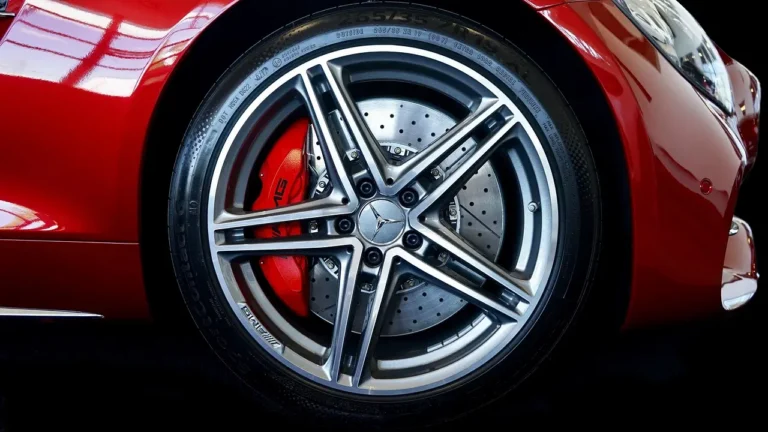
Use a cleaner matched to the wheel finish. For most painted alloy and coated wheels, an acid-free, pH-balanced wheel cleaner is the safer default after rinsing. Soft brushes matter here because harsh bristles can leave marks, especially on clear-coated finishes.
Sidewalls and tread grooves
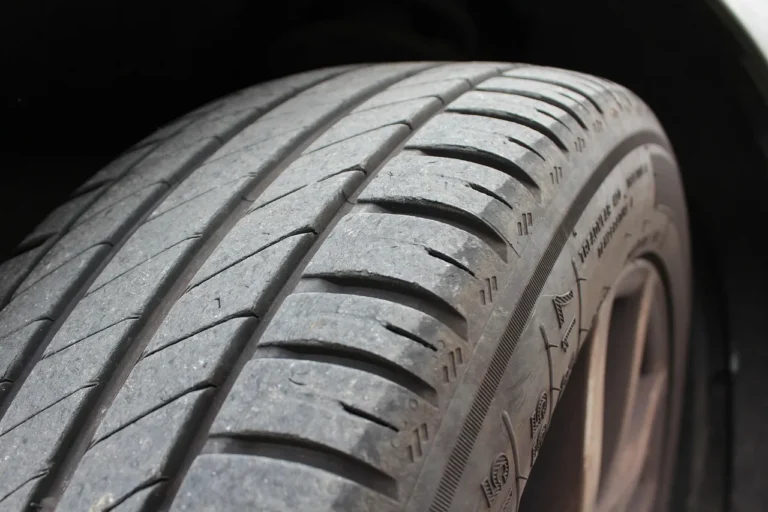
Use a separate tire brush for the rubber. Sidewalls can take more agitation than wheels, but the tread grooves still need care because dirt packs into the channels. Soft bristles lower the chance of scratching nearby wheel surfaces while still lifting embedded grime from the rubber.
Wheel cleaning matrix
This table gives a finish-first way to choose a cleaner, brush, dwell time, and no-go mistakes for common wheel types. Start with the gentlest effective choice, then move up only if brake dust remains after a rinse and brush pass.
| Wheel finish | Safest cleaner | Brush type | Dwell time | No-go mistakes |
|---|---|---|---|---|
| Painted alloy | Acid-free, pH-balanced wheel cleaner | Soft wheel brush | Short dwell, only until the cleaner loosens grime | Letting cleaner dry; harsh-bristled brush; using the same brush on tires and wheels |
| Chrome | Gentle, non-acidic wheel cleaner approved for bright finishes | Very soft brush or microfiber-safe applicator | Brief dwell, then rinse promptly | Acidic product, abrasive pad, heavy scrubbing on dry chrome |
| Polished aluminum | Low-risk cleaner made for delicate bare-metal or polished finishes | Soft brush only | Minimal dwell | Strong acids, aggressive wheel acids, stiff nylon, letting residue sit |
How do you clean wheels first?
Rinse first, then apply a wheel-safe cleaner to the wheel face and reachable barrel areas, agitate with a soft brush, and rinse thoroughly. That order clears loose grit before scrubbing, cuts scratch risk, and keeps brake dust from being dragged across the finish.
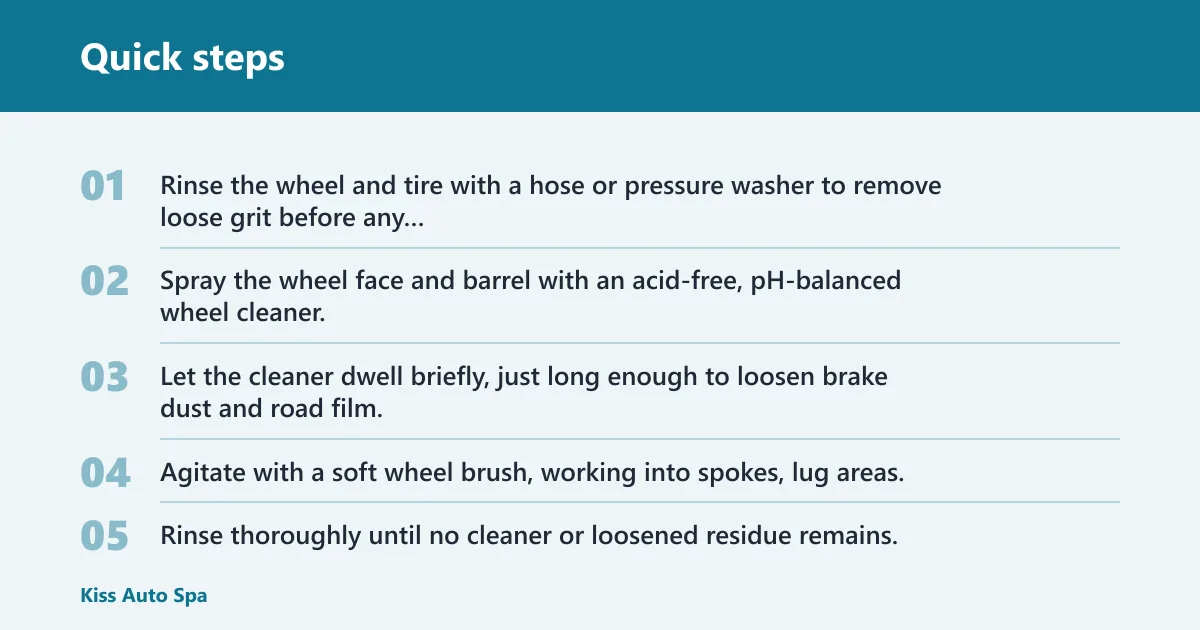
- Rinse the wheel and tire with a hose or pressure washer to remove loose grit before any scrubbing.
- Spray the wheel face and barrel with an acid-free, pH-balanced wheel cleaner.
- Let the cleaner dwell briefly, just long enough to loosen brake dust and road film.
- Agitate with a soft wheel brush, working into spokes, lug areas, and reachable barrel sections.
- Rinse thoroughly until no cleaner or loosened residue remains.
Say your front wheel has dark brake dust around the spokes and a light gray film on the barrel. A short dwell plus a soft brush is usually enough on painted alloy. If the dust remains after that first cycle, move to the escalation step below instead of scrubbing harder.
How do you clean tires and sidewalls?
Clean the tire separately with a dedicated tire brush or soft-bristled brush, then work the sidewalls and tread grooves. The rubber needs agitation for brown bloom and old dressing buildup, while the grooves need brushing to pull out trapped dirt that rinsing alone leaves behind.
- Apply your tire cleaner or a dish soap and water solution to the sidewall.
- Scrub the sidewalls with a separate tire brush.
- Brush the tread grooves to lift packed dirt from the channels.
- Rinse thoroughly so no cleaner or brown residue stays behind.
- Dry the tire with a microfiber towel to reduce water spots and streaks.
- Apply tire dressing only to the sidewall if extra shine is desired.
Do not put dressing on the tread surface. It belongs on the sidewall only. A slick tread can reduce grip and collect dirt faster.
What if brake dust or brown buildup stays put?
If a brush and regular wheel cleaner do not lift the residue, move up one step at a time. For painted alloy and coated wheels, a stronger wheel cleaner or iron-removal product may be needed. For chrome and polished aluminum, stop before harsh products or aggressive pads damage the finish.
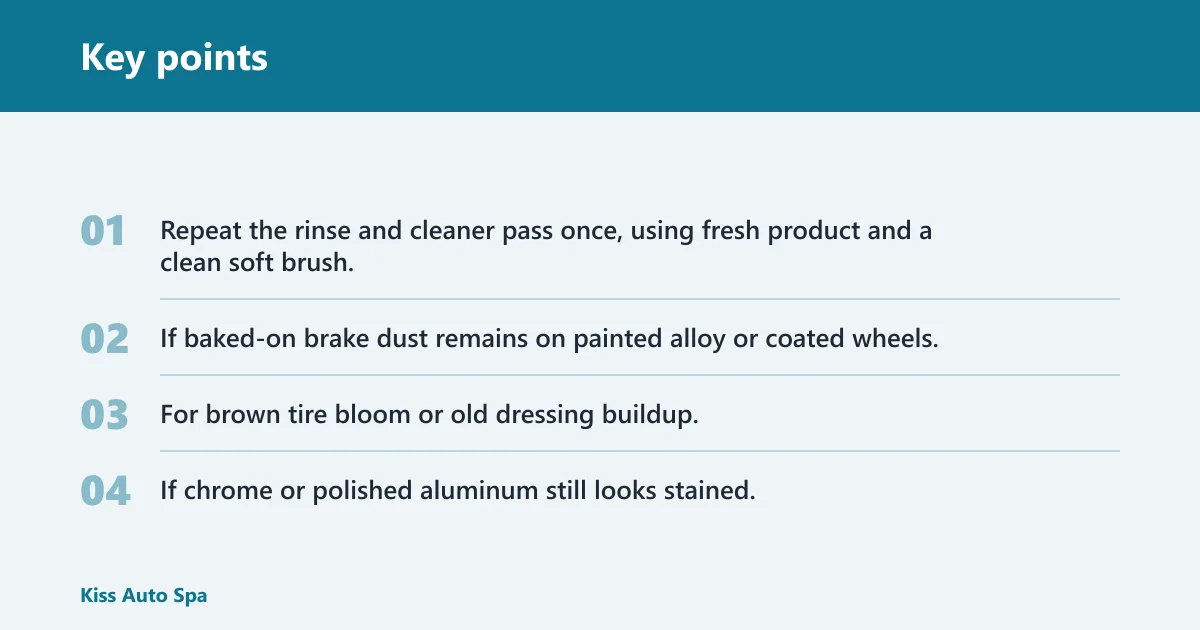
- Repeat the rinse and cleaner pass once, using fresh product and a clean soft brush.
- If baked-on brake dust remains on painted alloy or coated wheels, use a stronger wheel-safe cleaner designed for that finish.
- For brown tire bloom or old dressing buildup, scrub again with the tire brush and a stronger soap solution.
- If chrome or polished aluminum still looks stained, stop and use only a finish-safe product listed for bright or polished metal.
Suppose a polished aluminum wheel still shows dark specks after one gentle pass. That is the point to stop treating it like a painted wheel. Use only a product approved for polished metal, and avoid extra pressure from stiff bristles or rough pads.
Common mistakes
The biggest errors come from treating wheels and tires as the same surface. Different materials need different tools, and the wrong brush or cleaner can leave scratches, dulling, or residue that is harder to remove later.
- Using one brush on every surface: keep a separate tire brush and a soft wheel brush.
- Skipping the pre-rinse: rinse first so loose grit does not cut the finish.
- Letting cleaner dry on the wheel: work one wheel at a time and rinse promptly.
- Using harsh-bristled brushes: soft bristles lower scratch risk.
- Putting dressing on the tread: apply tire dressing only to sidewalls.
What supplies do I need to clean wheels and tires at home?
You need a hose or pressure washer, a wheel-safe cleaner, a separate tire brush, a soft wheel brush, microfiber towels, and a bucket. For a simple one-car wash, household fallback cleaners and one optional dressing bottle keep the supply list short without forcing you to buy specialty items right away.
Wheels and tires at checklist
| Item | Use | Beginner note |
|---|---|---|
| Hose or pressure washer | Initial rinse | Removes loose grit before scrubbing |
| Wheel cleaner | Wheel face and barrel | Choose acid-free, pH-balanced for coated or painted wheels |
| Tire brush | Sidewalls and tread grooves | Keep it separate from wheel tools |
| Microfiber towels | Drying | Use after rinsing to reduce spots and streaks |
| Optional tire dressing | Sidewall finish | Skip if you want a matte look |
Can I use household products to clean tires?
Yes, but treat them as fallback options, not equal substitutes for every finish. Dish soap and water is the safest common DIY choice for general dirt and grime. Baking soda, vinegar mixed with water, lemon juice, club soda, and cornstarch appear often as household alternatives, but they are not equally safe for chrome, polished aluminum, and coated wheels.
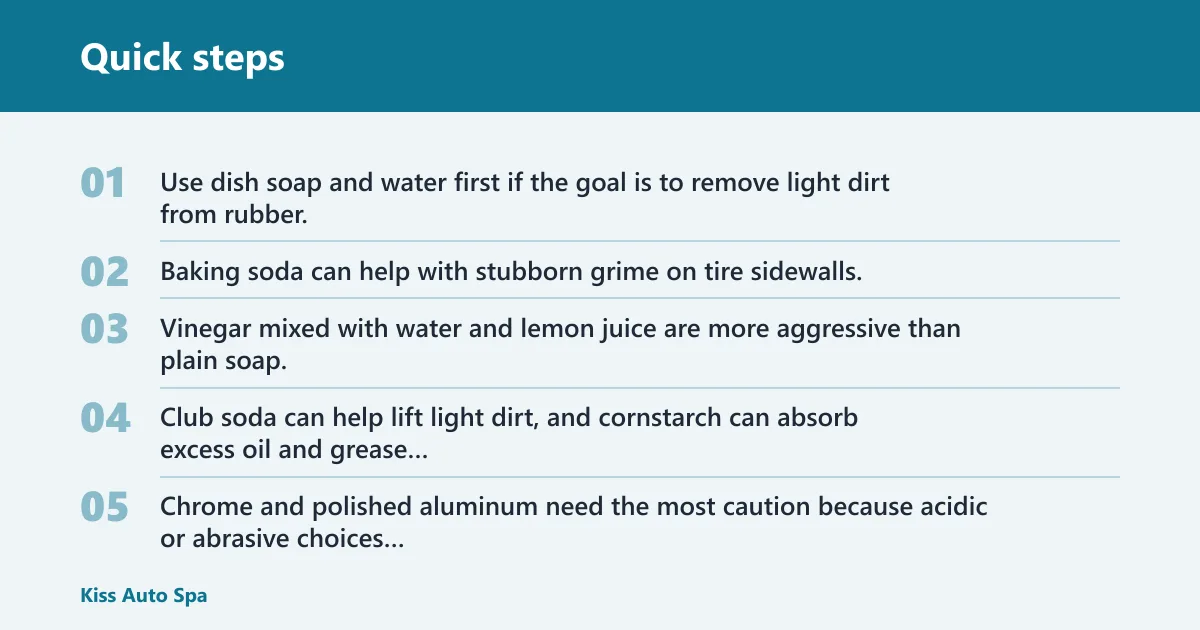
Use dish soap and water first if the goal is to remove light dirt from rubber. Baking soda can help with stubborn grime on tire sidewalls. Vinegar mixed with water and lemon juice are more aggressive than plain soap, so keep them away from delicate wheel finishes unless a finish guide says they are safe. Club soda can help lift light dirt, and cornstarch can absorb excess oil and grease before a rinse.
Household-product caution
Household cleaners are not finish-neutral. Chrome and polished aluminum need the most caution because acidic or abrasive choices can dull brightness quickly. If a product is not clearly safe for the wheel finish, keep it on the tire only, and rinse promptly.
How do I avoid scratching wheels while cleaning?
Use the softest tool that still removes grime, and keep wheel tools away from tire rubber. A pre-rinse, a finish-safe cleaner, and a soft-bristled brush do most of the work before any force is needed. If a spot resists light agitation, switch products before switching to a harder brush.
- Rinse off loose grit before touching the wheel.
- Use an acid-free, pH-balanced cleaner on painted alloy and coated wheels.
- Choose a soft wheel brush, not a harsh-bristled brush.
- Keep a separate tire brush for sidewalls and tread grooves.
- Rinse thoroughly so residue does not dry into the finish.
Frequently asked questions
How to clean tire rims diy
A simple DIY setup uses a hose or pressure washer, dish soap and water for tire rubber, and an acid-free, pH-balanced wheel cleaner for the rims. Keep one brush for the tire and one soft brush for the wheels. Rinse thoroughly after each surface.
Should I rinse before applying wheel cleaner?
Yes. The rinse removes loose grit, which lowers scratch risk and helps the cleaner work on brake dust instead of dirt sitting on top of it. A hose or pressure washer is enough for the first pass before you spray cleaner on the wheel.
Do I need a separate brush for tire sidewalls?
Yes. Tire sidewalls and wheel finishes take different levels of contact, so a separate tire brush keeps rubber grime off the wheel tool. A soft-bristled brush also helps lift dirt from tread grooves without scarring the nearby finish.
Is tire dressing necessary after cleaning?
No. Tire dressing is optional. Use it only if you want a darker or glossier sidewall, and keep it off the tread. If you prefer a clean matte look, finish with a rinse and microfiber drying step instead.