How to Get Pet Hair Out of Car Carpet and Floor Mats
Use a rubber pet-hair brush or damp rubber glove for short pile and removable mats, then move to a carpet rake or drill brush for dense, packed hair. Pick the wrong tool and hair mats deeper, clogs vacuums, and leaves grit behind. This guide shows which method fits carpet, rubber, carpeted, and all-weather mats, plus how to work loose, packed, and static-clung hair.
What to know first
Carpet pile changes the job. Loop pile often holds hair in open loops and seams, while cut pile can let strands sink deeper between fibers, where dirt and grit may hide them. That is why the same carpet brush may work fast on one surface and stall on another.
Dry removal comes first. If you wet muddy or sandy carpet before loosening the hair, the hair can bind to grit and turn into a packed layer that is harder to lift. A common approach is to start dry, then vacuum, then clean only if the fibers still need it.
What you’ll need
- Pet hair remover tool with rubber bristles or a squeegee edge
- Shop vacuum with strong suction, crevice nozzle, and brush attachment
- Lint roller for final pickup on surface strands
- Compressed air is best used as a prep step only.
- Pet hair remover stone for durable carpet only
- Optional vacuum for pet hair on carpet with agitation, high airflow, sealed suction, and HEPA filtration if allergens matter
How do you remove pet hair from carpet?
Clear loose grit first, then loosen the fibers with a dry tool and vacuum right away. On car carpet, one pass is rarely enough because hair sits in the pile, around seams, and along pile direction. Repeat short passes until the fibers stand back up.
For looped pile, work lightly so you do not snag the loops. For cut pile, use firmer, short strokes across the grain to pull trapped hair to the surface. A common first-timer mistake is to press harder when the hair does not move; that usually packs it deeper.
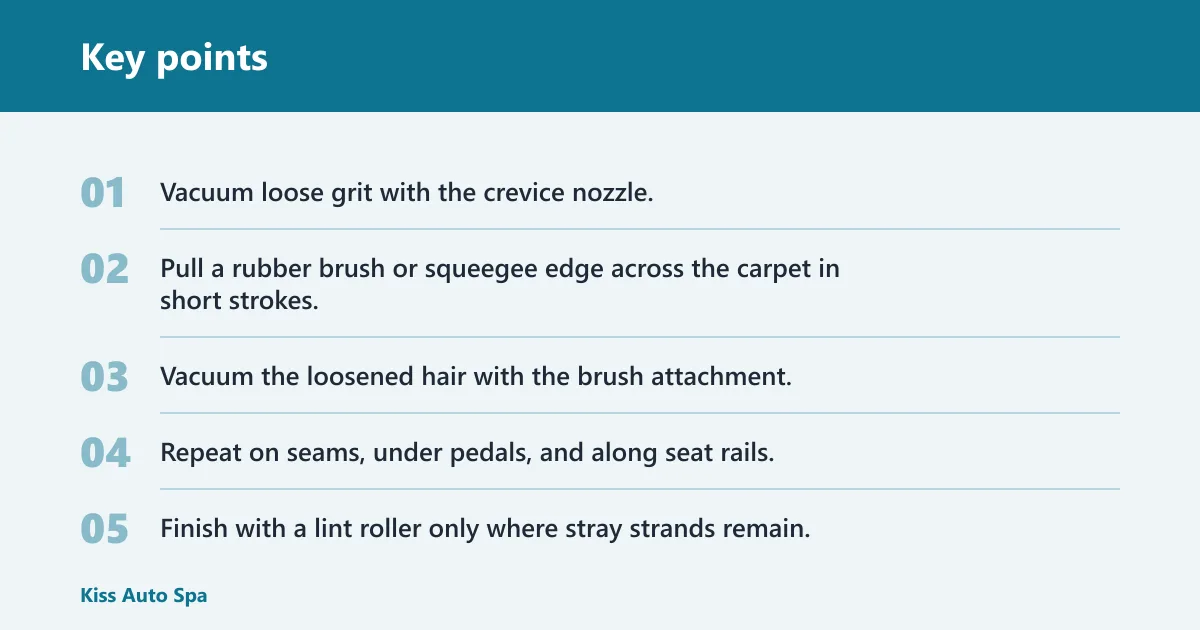
- Vacuum loose grit with the crevice nozzle.
- Pull a rubber brush or squeegee edge across the carpet in short strokes.
- Vacuum the loosened hair with the brush attachment.
- Repeat on seams, under pedals, and along seat rails.
- Finish with a lint roller only where stray strands remain.
How do you loosen pet hair before vacuuming?
Use a rubber bristle tool, a squeegee edge, or compressed air as a prep step. Rubber works by friction and static, so it lifts hair that vacuum suction misses. Compressed air can free fibers, but it also spreads dust, so it belongs before vacuuming, never after.
Suppose a winter mat has dog hair mixed with road salt and dry mud. A quick air blast loosens the top layer, but you still need to vacuum immediately so the dust cloud does not settle back into the pile.
How do you handle car floor mats?
Handle removable mats outside the car whenever possible. Carpeted mats can be shaken, beaten out, brushed, and vacuumed before they go back in. Rubber mats often need a different approach: shake them, brush the grooves, then vacuum or rinse if the surface can be cleaned that way.
Fixed floor areas need a slower workflow because you cannot lift and beat them out. Focus on the edge zones, heel-wear zones, and the narrow strip near the tunnel and seat tracks, where hair collects in a thin line that is easy to miss.
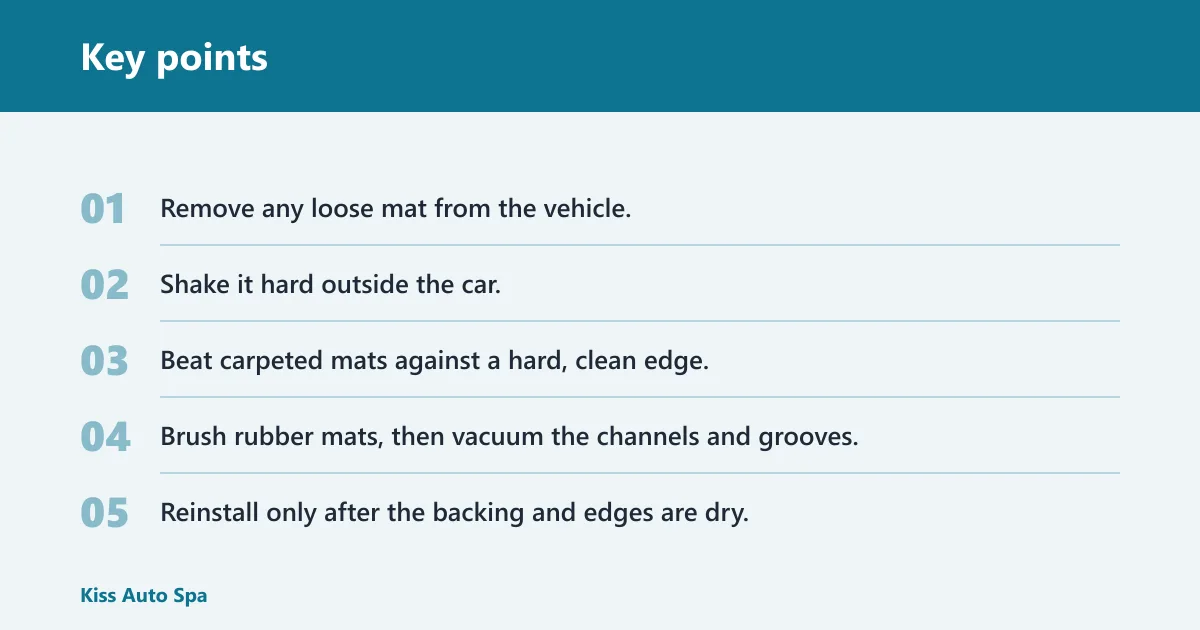
- Remove any loose mat from the vehicle.
- Shake it hard outside the car.
- Beat carpeted mats against a hard, clean edge.
- Brush rubber mats, then vacuum the channels and grooves.
- Reinstall only after the backing and edges are dry.
What’s the safest method for delicate floor mats?
Use the least aggressive dry method first: shake-out, a soft rubber brush, then vacuum with a brush attachment. Delicate carpeted mats can fray if you rub them with abrasive blocks or heavy pressure. If the backing is thin or the edge binding is worn, skip stones and stiff brushes.
Best pet hair method by situation
| Situation | Best safe tool choice | When to avoid it |
|---|---|---|
| Looped pile with surface hair | Rubber brush or squeegee edge | Avoid heavy pressure that can snag loops |
| Cut pile with deep, packed hair | Rubber brush, then shop vacuum with brush attachment | Avoid stopping after one pass; hair stays buried |
| Carpeted removable mat with loose hair | Shake-out, beat-out, then vacuum | Avoid wetting before grit is removed |
| Rubber mat with hair in grooves | Rubber brush or stiff hand brush, then vacuum | Avoid lint rollers; they waste tape on textured rubber |
| Fixed carpet with seams and heel-wear zones | Crevice nozzle after loosening | Avoid pushing hair deeper with a dry scrub pad |
| Durable carpet with stubborn embedded hair | Pet hair remover stone with light, controlled pressure | Avoid delicate fibers, thin mats, and hard pressure |
| Allergen cleanup | Vacuum with sealed suction and HEPA filtration | Avoid spreading dust with compressed air at the end |
Which tool should you use?
A rubber brush or pet hair remover glove is the best first pick for trapped hair on carpet pile. It is safe on most carpeted surfaces when you use light, repeated strokes. A squeegee edge can do similar work on flatter pile and on some carpeted mats.
Use a shop vacuum after the hair lifts. The crevice nozzle reaches seams and edges, while the brush attachment pulls up the last strands from the pile. A lint roller is for final cleanup only; it works on surface hair, but it is slow and wasteful on packed fibers.
Compressed air belongs before vacuuming, not after. It can break loose hair from fibers, but it also spreads dust. Pet hair remover stones can work on durable carpet with controlled pressure, though they are too aggressive for delicate carpet or light-duty mats.
Picture a sedan with beige cut pile on the rear floor and a thick clump in the seat-track seam. The safe path is rubber brush first, crevice nozzle second, and lint roller only on the last visible strands near the threshold.
Common mistakes
Wet cleaning before dry removal turns hair, dust, and mud into a packed mat. That makes the next pass slower and can smear grit across the carpet. If the floor is dirty, dry work first is the better order.
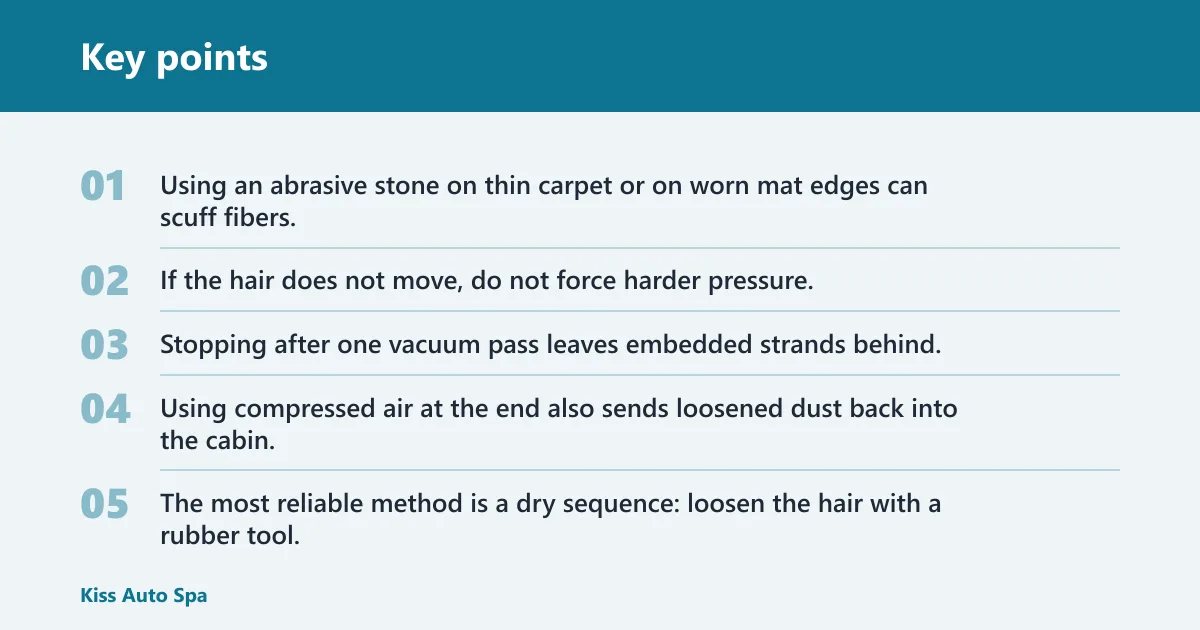
Using an abrasive stone on thin carpet or on worn mat edges can scuff fibers. Heavy pressure creates the same problem. If the hair does not move, do not force harder pressure; switch to a different tool or add another dry pass.
Stopping after one vacuum pass leaves embedded strands behind, especially in seams and heel-wear zones. Using compressed air at the end also sends loosened dust back into the cabin. Finish with suction, not more air.
What is the best way to get pet hair out of car carpet?
The most reliable method is a dry sequence: loosen the hair with a rubber tool, vacuum with strong suction and a brush or crevice nozzle, then repeat on seams and edge zones. For deep cut pile, a carpet rake or vacuum with agitation helps more than a lone lint roller.
Does vacuuming remove embedded pet hair from floor mats?
Yes, but only after the hair is loosened. Vacuuming works best on floor mats when you use a brush attachment or agitation first. Carpeted mats often need shake-out and beat-out steps before suction can reach hair deep in the fibers, while rubber mats often need the grooves brushed out first.
Should I use a rubber brush or pet hair remover glove on car carpet?
Use a rubber brush for most carpeted floors because it gives better control on seams, edges, and larger areas. A glove works well for curved spots and quick touch-ups. On looped pile, keep pressure light so you do not snag the fibers or leave fuzz behind.
Do pet hair remover stones work safely on car carpet?
Use only on durable carpet and only with light, controlled pressure. They can remove stubborn packed hair, but they also carry a fiber-damage risk on delicate mats, thin pile, and worn edges. If the carpet already looks fuzzy or frayed, use rubber agitation and vacuum instead.
Frequently asked questions
How to get dog hair off carpet
Start with dry removal and work across the grain of the pile. Looped carpet needs a lighter touch than cut pile. After the hair loosens, vacuum the same area again, especially at seams and near the floor edges where dog hair packs in.
How do I get dog hair off carpet?
Use the same dry-first approach: loosen, vacuum, then repeat where the hair stays embedded. Dog hair often clings along seams, under seat rails, and in heel-wear zones, especially when mixed with grit. A rubber brush or squeegee edge is usually the fastest safe start.