Car Odors: How to Find, Remove, and Prevent Smells
Find the source first: if the smell is strongest at one spot, trace that area before treating the whole cabin. If it still smells after cleaning and ventilation, the likely source is hidden moisture, mold, or HVAC contamination. Ignoring it wastes time and money, and some odors signal leaks or decay that get worse. This guide maps common car smells to their causes, fixes, and the point where DIY stops paying off.
How do you find the smell source?
Start by isolating each zone. Check under seats, mats, cup holders, vents, the trunk, and any damp area before you clean anything. The location often tells you whether the odor sits on a surface, hides in foam or padding, or comes from the HVAC system.
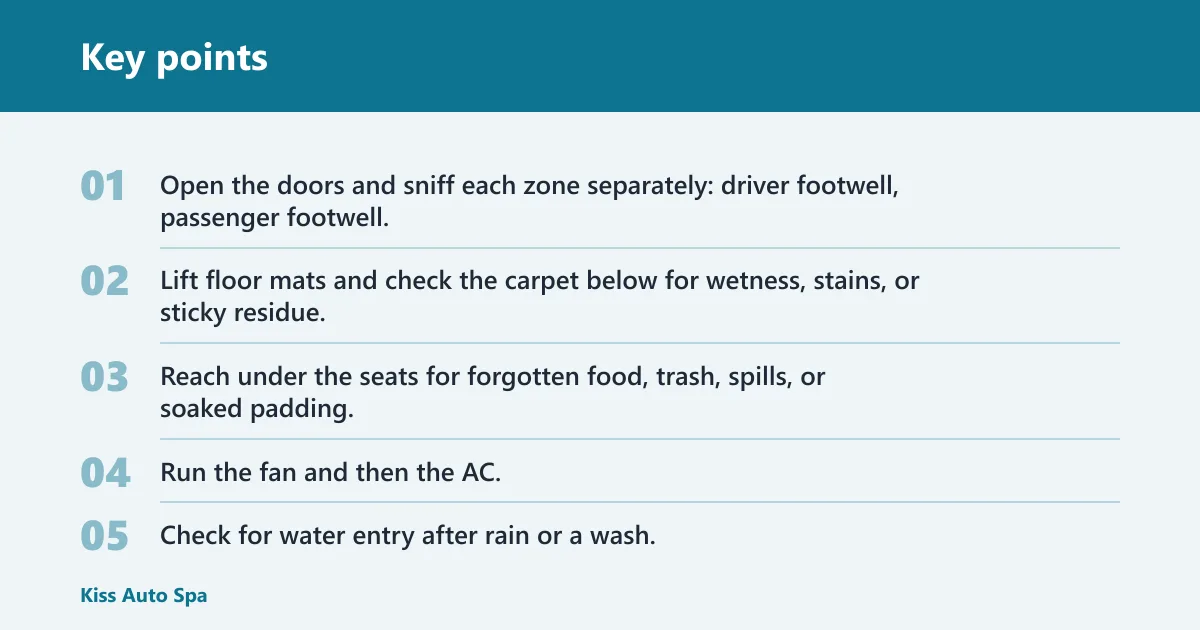
Follow the smell location first
- Open the doors and sniff each zone separately: driver footwell, passenger footwell, rear seat area, trunk, and vents.
- Lift floor mats and check the carpet below for wetness, stains, or sticky residue.
- Reach under the seats for forgotten food, trash, spills, or soaked padding.
- Run the fan and then the AC. If the odor gets stronger with airflow, focus on the cabin filter, evaporator, or drain tube.
- Check for water entry after rain or a wash. Wet carpet often points to a leak or blocked drain.
Use the smell itself as a clue. Musty usually points to moisture or HVAC residue. Smoke tends to coat surfaces and vents. Urine and food odors often live in carpet and foam. Gas-like odors call for caution because they can come from the fuel system or a spill near the cabin.
Odor diagnosis matrix
| Smell type | Trigger or clue | Likely source | First-line fix | Escalation step | Estimated DIY effort | Common failure point | Decision rule |
|---|---|---|---|---|---|---|---|
| Musty AC | Smell appears when the fan or AC turns on | AC evaporator or clogged cabin air filter | Replace the cabin air filter; dry the system by running the fan before shutdown | Inspect the evaporator and drain tube for blockage | Low to moderate | Moisture stays in the HVAC box and the smell returns | If the odor is strongest at the vents, start with HVAC parts |
| Smoke | Smoke odor is present on seats, headliner, and vents | Tar and nicotine film on every surface | Wipe hard surfaces with a white vinegar solution and clean soft trim carefully | Professional cleaning or ozone for severe residue | High | Only the visible film gets cleaned; hidden residue remains | If the smell returns after cleaning, treat deeper contamination |
| Pet urine | Odor is strongest near a seat edge, carpet, or child seat area | Urine in carpet, foam, or backing | Apply enzyme cleaner with dwell time, then blot and dry | Hot water extraction if the odor reached padding | Moderate | Surface cleaning misses the soaked layer below | If the smell remains after drying, contamination is deeper than the surface |
| Spilled milk or food | Sour smell after a spill, especially under a seat or in carpet | Organic residue in fabric, seams, or foam | Use enzyme cleaner, then ventilate and dry fully | Extract carpet and padding if residue soaked through | Moderate | Drying stops too soon and bacteria remain active | If the spot is sticky or still smells after drying, clean deeper |
| Gas-like odor | Fuel smell near the rear, under the car, or after refueling | Fuel leak, vapor issue, or contaminated spill | Do not mask it; inspect for visible leaks and avoid driving if strong | Professional inspection of fuel system and lines | Low for inspection, but not a DIY odor fix | Treating it like a cabin odor delays a safety repair | If it smells like fuel, stop and check for a leak first |
| Wet or mildew | Damp carpet, foggy windows, or odor after rain | Water leak, wet mats, hidden carpet moisture | Dry the cabin, remove mats, and locate the water source | Check drains, seals, and under-car water movement | Moderate to high | Only the visible surface dries; padding stays wet | If moisture returns, treat the leak before odor cleaning |
Say your sedan smells like stale gym socks only when the AC starts. That points away from the seats and toward the HVAC path. If the cabin filter is dirty and the vents smell stronger than the carpet, start there before scrubbing the whole interior.
Suppose a milk spill happened in the rear footwell and the mat looked dry after an hour. The carpet pad below can still hold odor, so the source is deeper than the top layer. In that case, enzyme cleaner and longer drying matter more than a quick wipe.
📊 wikiHow recommends a 1:1 mixture of white vinegar and water for cigarette smell. Source: Wikihow.
What is the best way to remove car smells?
The best fix is the one that matches the source. Begin by removing trash and visible debris, then vacuum the cabin, trunk, mats, and seat seams. After that, clean the right surface pathway: hard trim, carpet, fabric, HVAC, or leak-related moisture.
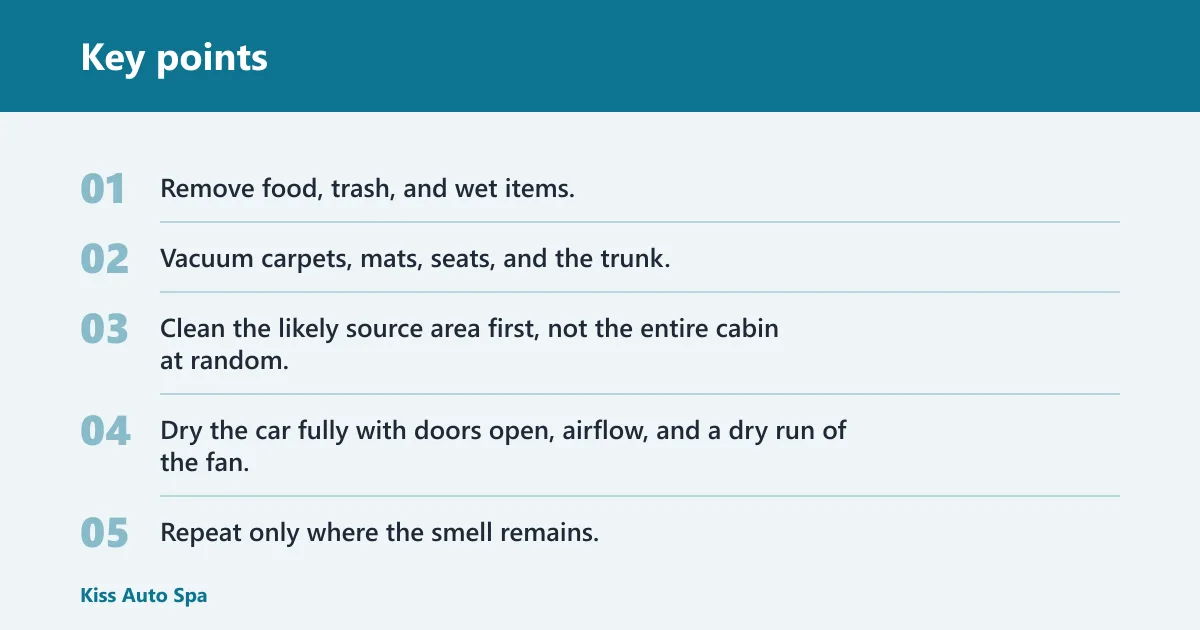
Work in this order
- Remove food, trash, and wet items.
- Vacuum carpets, mats, seats, and the trunk.
- Clean the likely source area first, not the entire cabin at random.
- Dry the car fully with doors open, airflow, and a dry run of the fan.
- Repeat only where the smell remains.
Clean hard surfaces with an interior-safe wipe or a damp microfiber cloth before moving to fabrics. On odor-stained surfaces, a white vinegar solution can help with organic residue and smoke film. For carpeting and upholstery, a targeted cleaner matters more than a general deodorizer.
Why source matching matters
Surface odor and embedded odor behave differently. A seat surface may smell fine while the foam underneath still holds moisture or contamination. HVAC odor can return the moment you switch the fan back on. That is why the same spray can work on one car and fail on another.
Why does my car smell musty when I turn on the AC?
A musty AC smell often comes from the AC evaporator or a clogged cabin air filter. The evaporator can hold moisture, and a blocked drain tube can let water sit and support mold growth. If the smell appears with airflow, the HVAC path is the first place to check.
Cabin air filter issues
The cabin air filter is usually located behind the glove box. It can trap dust, pollen, exhaust, and mold spores. If odor persists or airflow is restricted, replacement is a sensible first step. A common interval is every 12 to 18 months, or sooner if the owner’s manual says so.
When the filter loads up, the HVAC system can push stale odor back into the cabin. That does not mean the filter caused the odor by itself. It may simply be holding debris that already entered the system, which is why replacement alone sometimes helps and sometimes does not.
Evaporator and drain tube problems
Moisture on the evaporator can create a musty smell. If the drain tube is blocked, water may pool instead of leaving the case, and the smell can return after a short drive. A simple habit helps prevent this: run the fan for the last few minutes before shutdown so the system dries out.
Drain trouble may show up as water pooling under the car when it should be dripping away, or as damp carpet if water backs up in the wrong place. If the filter is clean but the odor comes back fast, the evaporator or drain path deserves attention.
What to do before the smell comes back
Replace the cabin filter, then dry the system. If the odor is still there after a few drives, inspect the drain and look for moisture inside the HVAC housing. When the smell only appears with AC use, cleaning the seats alone will not fix it.
Do baking soda, vinegar, or charcoal work?
Yes, but only in the right job. Baking soda, vinegar, and activated charcoal can help with mild or lingering odors, especially on surface contamination. They do not repair soaked padding, blocked drains, or smoke that has settled into foam and vents.
Baking soda for carpets and fabrics
Consumer Reports recommends sprinkling baking soda on carpets before vacuuming. It may absorb moisture and odor from carpet and fabric. Leave it in place for several hours or overnight, then vacuum thoroughly. If the surface is wet, it can clump instead of spreading evenly.
Baking soda is best for light smells, not soaked upholstery. If the odor comes from a spill that reached the pad below the carpet, baking soda may only treat the top layer. Use it as a support step after the area is clean and dry.
White vinegar solution for odor-stained surfaces
A common 1:1 mixture of white vinegar and water works well for wiping odor-stained hard surfaces and lightly dampening some trim areas. It is often used for cigarette smell and other organic residue. It helps with smoke film on non-porous surfaces, but it is not a cure for embedded smoke in fabric.
Keep the application controlled. Dampen a cloth, wipe the surface, and dry it afterward. Do not soak seats or headliners. Consumer Reports advises not using bleach or hydrogen peroxide on upholstery, so avoid strong spot treatments that can damage fabric. (Consumerreports)
Activated charcoal for mild lingering odor
Activated charcoal works as an odor absorber rather than a mask. It is useful when the source is already cleaned and only a faint smell remains. It is not a fix for contamination buried in carpet backing, foam, or HVAC parts.
Think of charcoal as a finishing step. If the odor is still strong enough to notice from the driver seat, the source is usually still there. Charcoal can help reduce leftovers, but it should not replace cleaning.
How do you remove smoke and pet odors?
Smoke and pet odors need different cleaners because they travel differently. Smoke coats surfaces with tar and nicotine. Pet urine and spilled food are biological odors that soak into fabric, padding, and seams. Match the cleaner to the material pathway or the smell will return.
Use enzyme cleaner for biological spills
Enzyme cleaner targets odors from urine, vomit, milk, and food. Let it dwell long enough to work, then blot or scrub the area as directed. After that, dry the spot fully and keep air moving. The cleaner does the breakdown; drying stops the odor from coming back.
This matters most for carpet, seat seams, and foam-backed padding. If the smell came from a pet accident or a spilled bottle that soaked below the fabric, a surface wipe will not reach the contaminated layer. In those cases, repeat treatment may be needed after the first dry-down.
Treat smoke residue on contact surfaces
Smoke is difficult because tar and nicotine coat every surface in the vehicle. Start with hard trim, steering controls, door panels, glass, and vents. A white vinegar solution can help with residue on hard surfaces, and vacuuming can remove ash and loose debris before deeper cleaning.
For smoke in fabric, work carefully and let the car dry between passes. A lingering smell after cleaning often means residue remains in the headliner, seat foam, or HVAC path. If smoke is heavy and repeated, surface cleaning alone rarely solves it.
A common first-timer mistake is cleaning the visible ash but skipping the vents and carpet backing. The cabin may look clean and still smell smoky the next morning because residue stayed in hidden surfaces.
When should you use ozone or pro cleaning?
Use escalation when DIY cleaning no longer changes the smell, when contamination is deep, or when the odor keeps returning after full drying. Ozone treatment is for severe smoke or mildew odors. Professional hot water extraction is for contamination that has reached carpet padding or seat foam.
Signs DIY has reached its limit
- The smell returns after cleaning and a full dry cycle.
- Wet carpet, soaked foam, or repeated leaks keep reappearing.
- Smoke odor remains after surface cleaning and filter replacement.
- The odor is strongest in the same area even after you clean it twice.
If hidden moisture keeps feeding the smell, another spray or deodorizer will not hold. Fix the water source first. Then clean the affected materials. Otherwise, the cabin can smell better for a day and worse the next week.
What ozone can and cannot do
Carsmotology identifies ozone shock treatment as a method for severe odors like smoke and mildew. The car must be empty during treatment, and manufacturer timing guidance matters. Mr Shine says an ozone generator should run for 30 to 60 minutes. Afterward, the cabin needs full ventilation.
Ozone can help reduce odor in hard-to-clean places, including vents and hidden surfaces. It is not a substitute for removing wet carpet, spilled food, or urine-soaked padding. If the source stays in the car, ozone only reduces the symptom for a while.
Why hot water extraction matters
Hot water extraction is a professional method for deep carpet and seat cleaning. It may reach contaminants in foam and padding that DIY surface cleaning can miss. It is especially useful when a spill or biological odor has soaked below the top layer.
Choose this step when the smell persists after targeted cleaning and drying, or when the fabric feels clean but the odor remains in the cushion. Deep extraction is often the right move after smoke, pet accidents, or old food spills that have spread under the surface.
How do you keep odors from coming back?
Prevention works best when it targets the cause. Keep wet mats out of the cabin, clean spills fast, maintain the cabin filter, and dry the HVAC system after use. Odors return when moisture, residue, or trapped debris stays in place long enough to spread.
Prevent wet mats and hidden moisture
Pull wet floor mats out as soon as possible and dry the carpet below. If rainwater, snowmelt, or a spilled drink reaches the padding, the odor can linger long after the top surface looks dry. EPA guidance cited for water-damage drying is 24 to 48 hours, which is a useful warning sign for any wet cabin material.
Check for leaks after storms or a wash. If the carpet keeps getting wet, cleaning the odor alone is wasted effort. Find the entry point first, then dry the cabin fully before you treat the smell.
Keep the HVAC system dry
Use the fan for the last few minutes before shutdown so the system dries out. Replace a dirty cabin filter on schedule, especially if odor starts at the vents. If the AC drain is blocked, moisture can stay in the system and feed musty smell again.
A dry HVAC path is one of the best odor controls in the car. It cuts the chance of mold and stale moisture buildup. If the smell starts only when the fan runs, keep the filter and drain on your maintenance list.
Set a cleanup schedule
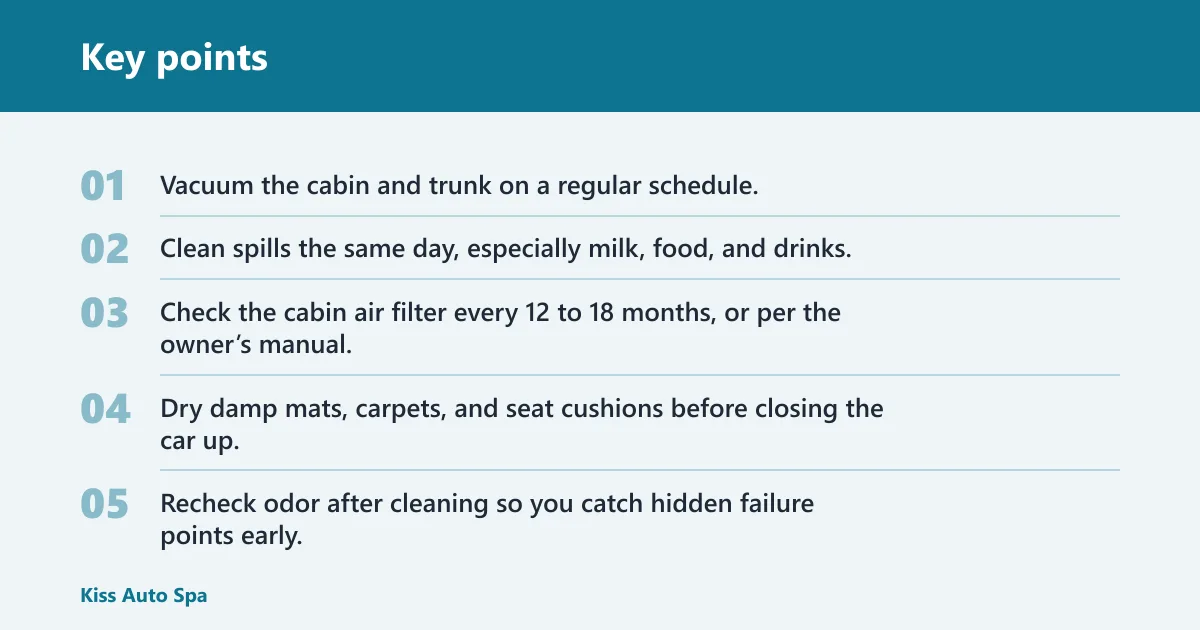
- Vacuum the cabin and trunk on a regular schedule.
- Clean spills the same day, especially milk, food, and drinks.
- Check the cabin air filter every 12 to 18 months, or per the owner’s manual.
- Dry damp mats, carpets, and seat cushions before closing the car up.
- Recheck odor after cleaning so you catch hidden failure points early.
Smoke, pet accidents, and leaks need faster action than ordinary dust. The longer they sit, the more likely they move from a surface problem to a foam or HVAC problem. That is the point where simple deodorizing stops working.
Frequently asked questions
How do I find where a smell is coming from in my car?
Start by smelling the cabin in zones: driver footwell, passenger footwell, rear seat area, trunk, and vents. Lift mats, check under seats, and look for damp carpet or sticky residue. If the odor gets stronger with the fan or AC, focus on the cabin filter, evaporator, and drain path first.
What is the best way to get rid of bad smells in a car?
Match the fix to the source. Remove debris, vacuum the cabin, clean the likely source area, and dry the car fully. Use baking soda for light carpet odors, vinegar for some smoke residue on hard surfaces, enzyme cleaner for biological spills, and deeper extraction or ozone when contamination is embedded.
How do I remove smoke smell from a car interior?
Smoke odor is hard because tar and nicotine coat many surfaces. Clean glass, trim, vents, and fabric carefully, then address the headliner, carpet, and seat foam if needed. A white vinegar solution can help on hard surfaces, but repeated smoke or heavy residue may need professional cleaning or ozone treatment.
How do I get pet urine smell out of a car?
Use an enzyme cleaner, let it dwell, then blot or scrub as directed and dry the area fully. If the odor reaches carpet padding or seat foam, surface cleaning may not be enough. Hot water extraction is the next step when the smell remains after a thorough dry-down.
Will baking soda or vinegar actually remove car odors?
They can help, but only for the right kind of odor. Baking soda is good for absorbing light carpet and fabric smells, and vinegar can help wipe smoke residue or other organic film from hard surfaces. Neither one fixes soaked foam, blocked drains, or deeply embedded contamination on its own.
When should I use ozone treatment for car odors?
Use ozone for severe smoke or mildew odors after cleaning has already removed the source as much as possible. The car must be empty, timing guidance matters, and the cabin needs full ventilation afterward. Ozone can reduce odor in hidden areas, but it will not fix wet carpet, spills, or leaks.
How can I keep my car from smelling bad again after cleaning?
Prevent the cause, not only the smell. Keep mats dry, clean spills right away, replace the cabin filter on schedule, and run the fan briefly before shutdown so the HVAC dries out. Recheck damp areas after rain or a wash, because hidden moisture is a common reason odors return.