Why Is Brake Dust Brown or Red on My Wheels?
Brown or red brake dust is often brake pad debris that may be iron-rich, oxidizes, and mixes with road film. If one wheel has far more dust than the others, or the color comes with noise, heat, or pulling, inspect the brakes. Ignoring it can hide worn pads, sticking calipers, or rotor damage that costs more later. This guide shows how to tell normal discoloration from a brake problem, clean the wheels safely, and know when to schedule an inspection.
How iron, moisture, and road film shift dust color
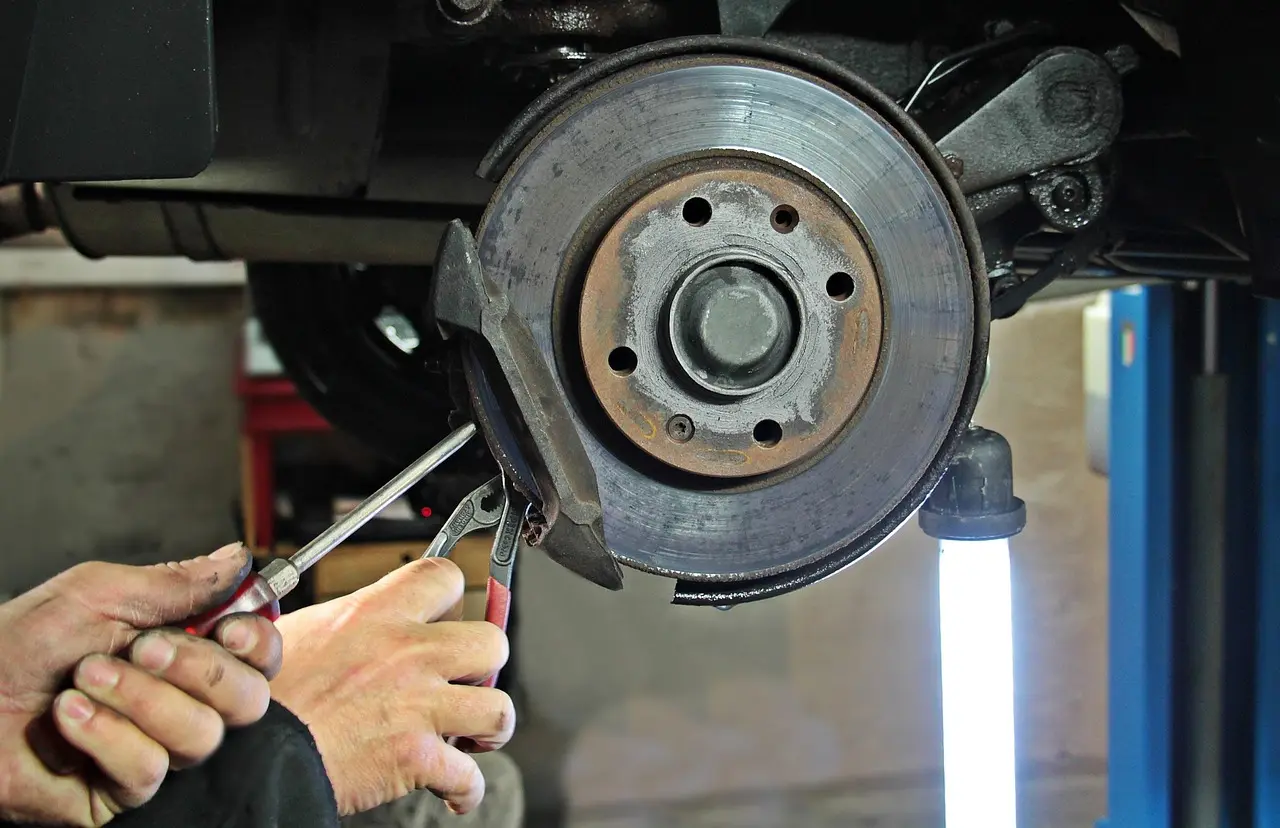
Brake dust starts as tiny bits shed when pads rub rotors. That material can include metal, carbon, and adhesive, and the color shifts as the particles oxidize. On light-colored wheels, that same debris often reads as brown, reddish-brown, or rusty rather than plain gray.
Iron particles and oxidation
Many brakes use materials that leave iron-bearing debris behind. Once that debris hits air and moisture, it can oxidize and take on a red or brown cast. That does not mean the wheel itself is rusting. It often means the dust layer contains oxidized metal from normal braking.
Rust-colored dust is easier to spot on silver, white, or pale painted wheels. On black wheels, the same buildup may look dark until it collects in seams, around lug nuts, or in the spokes. Brake dust can also be corrosive if it stays on a metal surface.
Road film and moisture
Dust rarely sits alone. It mixes with rain spray, traffic grime, and fine road contamination, which can make the color look more brown than black. After wet weather, the film can appear stronger because moisture helps the particles cling and spread across the wheel face.
Suppose a compact sedan returns from a wet commute with a rusty-looking wheel face, but all four wheels have the same film and the brakes feel normal. That pattern points more toward contaminated road film and oxidized dust than a mechanical fault.
Why light wheels make it more visible
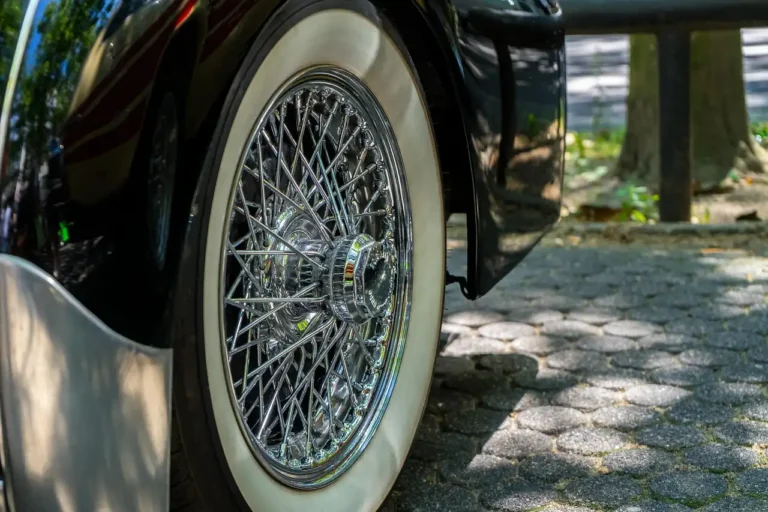
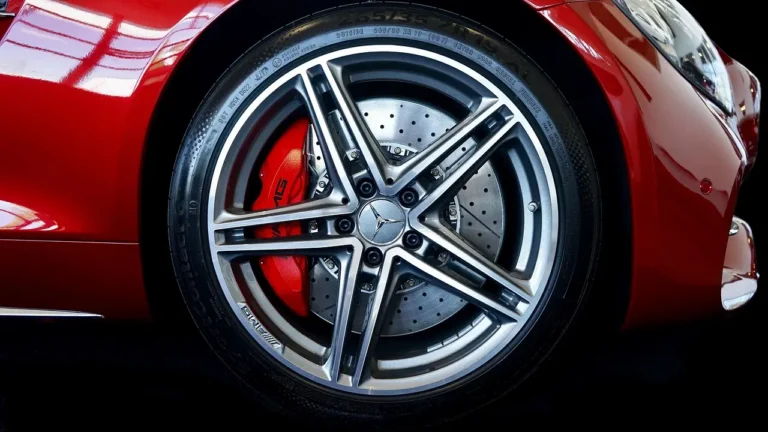
Clear-coated, painted, and chrome wheels make brake dust easier to notice because the contrast is higher. The same amount of debris that looks minor on a dark wheel can look heavy on a white or silver finish. That visibility matters when you are deciding whether the buildup is ordinary or unusual.
What causes brake dust on wheels?
Brake dust comes from the braking system as pads rub rotors. The amount and look depend on pad material, rotor wear, and driving style. Front brakes do more work than rear brakes on most vehicles, so front wheels usually collect more visible dust.
Pad material and rotor wear
Organic, semi-metallic, and ceramic pad compounds can produce different dust amounts and colors. Semi-metallic pads can shed more metallic particles, and those particles may look darker or more rust-tinted as they oxidize. Worn or grooved rotors can shed more metallic particles too.
That is why a vehicle with older rotors may show more dust than one with fresh rotors, even if the pads are similar. More debris does not automatically mean a safety problem, but a sudden increase can be a clue worth checking.
Front brake bias
Front brakes usually carry more of the stopping load, so front wheels tend to get dirtier first. City driving, heavy braking, and hill climbs increase front-brake dust because the brakes do more work in stop-and-go traffic and on steep grades.
A common pattern is a car with clean rear wheels and dusty front spokes after a week of commuting. That split is often normal. It becomes more suspicious when one front wheel is much dirtier than the other.
Driving style and terrain
Frequent hard stops, downhill driving, and repeated slowdowns generate more heat and more wear material. Brake dust can build faster in those conditions, then stick to the wheel and nearby body panels. The dust can even creep onto painted surfaces if it is left there long enough.
- Check whether the dust is even across both front wheels.
- Compare the front wheels with the rear wheels.
- Notice whether the buildup changed after rain, hills, or heavier-than-usual driving.
- Look for heat, noise, vibration, or pulling at the same time.
Brake dust vs rust on wheels
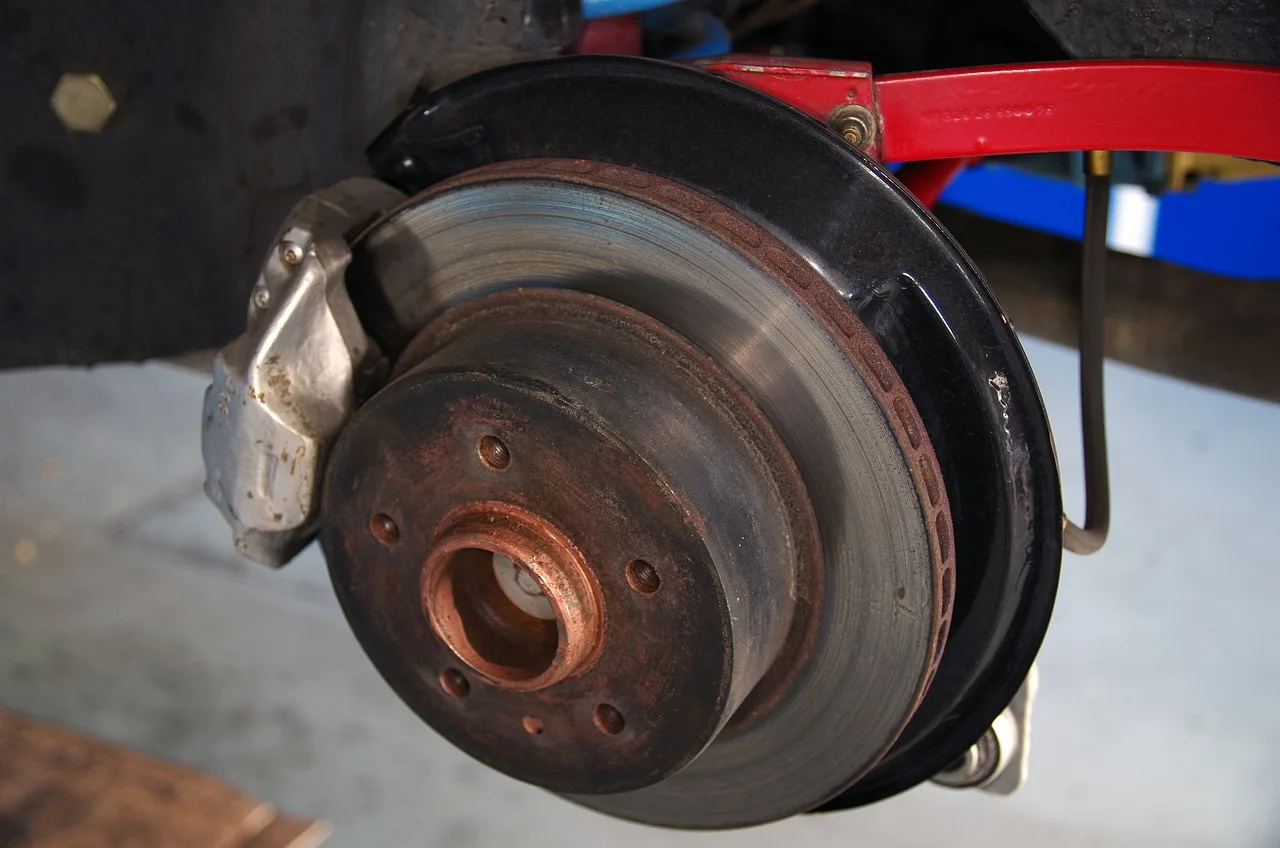
Brown or red color does not automatically mean the wheel is rusting. Brake dust contamination can mimic rust on wheels or paint because the particles oxidize. Rust usually begins on bare steel or damaged metal, while brake dust usually sits as a film or speckled layer on the surface.
Color differences to look
Brake dust often looks like a dusty film, streaks, or fine speckling. Rust usually looks more like a true metal corrosion spot, chip edge, or bubbling area on an exposed steel surface. On coated, chrome, or painted wheels, the same red-brown appearance can still be dust rather than corrosion.
Pattern clues by wheel and axle
Rust tends to follow the damaged metal. Brake dust follows use. If all four wheels show similar film after a commute, that leans toward dust. If only one wheel has a dense patch, or one side grows much dirtier than the rest, inspect the brake hardware on that corner.
Brake-fluid stains are different again. They are not usually powdery, and they do not behave like dry wheel dust. If you see wet residue, a soft smear, or fluid loss at the same time, that needs a brake inspection rather than a cleaning-only plan.
When rust-like color points to a brake issue
Rust-colored dust is more concerning when it appears with heat, brake noise, smoke, or a pull while stopping. Those clues suggest overheating, pad breakdown, or uneven contact. A sticking caliper can create that pattern because one pad stays in contact longer than it should.
| Dust color or pattern | Likely cause | Next step |
|---|---|---|
| Brown film on both front wheels | Normal iron-rich brake dust mixed with road film | Clean with a finish-safe wheel cleaner and monitor the rate of return |
| Red speckling across all wheels | Oxidized brake dust, often more visible on light wheels | Wash soon; use a pH-balanced, non-acidic cleaner matched to the finish |
| One-wheel buildup | Possible sticking caliper or uneven pad contact | Inspect the brake hardware on that corner |
| Front-only buildup | Front brake bias and normal front axle workload | Compare left and right front wheels for balance |
| Dust returns quickly after cleaning | Pad material is shedding heavily, or rotor wear is adding debris | Check pad thickness, rotor condition, and driving conditions |
| Dust appears after rain | Moisture has mixed with existing brake dust and road film | Rinse soon and dry with a soft towel or dedicated wheel towel |
| Rust-colored ring near lug holes | Trapped dust and moisture around crevices | Clean the area carefully and inspect for pitting or corrosion |
| Dust on one side of the vehicle | Uneven braking or caliper slide issue | Have that side inspected before the next long drive |
| Dust plus squeal or grinding | Pad wear or rotor surface damage | Schedule a brake inspection promptly |
| Dust plus a hot wheel after a short trip | Dragging brake, often from a sticking caliper | Do not keep driving long distances; inspect the brake system |
| Speckled dust on painted calipers and wheel faces | Fine brake dust embedded in surface texture | Use a soft mitt and a non-acidic wheel cleaner |
What one-wheel or one-side buildup means
One-wheel or one-side buildup is not normal in the same way front-only dust is normal. It often points to uneven pad contact, a sticking caliper, or another hardware issue that is making that corner work harder than it should. That pattern deserves more attention than a general film on all four wheels.
Sticking caliper clues
Sticky calipers can increase dust production through uneven pad contact. You may also notice a hot wheel, a slight pull, or pad material that seems to disappear faster on one side. Those clues matter because a caliper fault can increase wear even if the wheel still spins and stops.
Uneven pad contact
If the inboard and outboard sides of a wheel look different, or one rear wheel is far dustier than the other, the pads may not be contacting evenly. The cause can be hardware, slide pins, or rotor issues. Dust alone is not proof, but the pattern is worth a brake inspection.
When to inspect hardware
Inspect the brakes soon if the dust is paired with noise, heat, or a change in pedal feel. A simple rule helps: even dust across the axle can be normal; one wheel that stands out needs a closer look. That difference is more important than the exact shade of brown or red.
Use a cleaner and tool set that matches the wheel finish. Wheel cleaners should be pH-balanced and non-acidic for coated, chrome, or painted wheels. Harsh or acidic products can damage those finishes, and abrasive tools can scratch them.
Choose a wheel cleaner by finish
On clear-coated, painted, and chrome wheels, start with a non-acidic cleaner labeled for that surface. Some wheel cleaners change color, purple or red, as they break down dust. That color change is a cleaning reaction, not a sign that the wheel itself is rusting.
On neglected wheels, a chemical may be needed to break the rust bond of brake dust. Use it only if the product is approved for the finish, and rinse thoroughly. Do not assume a stronger product is better for coated or chrome wheels.
Brushes and tools that are safer
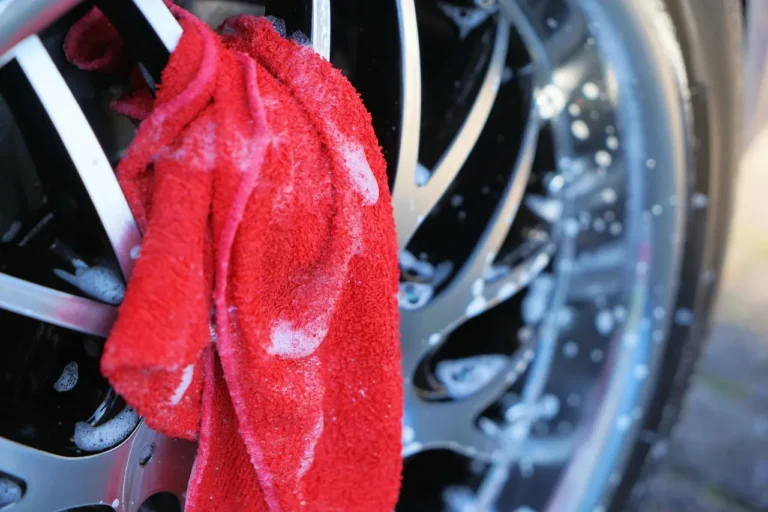
Use soft-bristle wheel brushes, microfiber wash mitts, and separate towels reserved for wheels. Avoid metal brushes, abrasive pads, and any tool that can cut through clear coat or paint. Wheel dust can harm car paint by embedding and rusting on the surface, so nearby panels matter too.
Picture a white SUV with coated wheels and thick red-brown dust around the spokes. A soft brush and pH-balanced cleaner can remove most of it without scuffing the finish. A stiff wire brush would solve nothing and could leave permanent marks.
How to avoid finish damage
Work on cool wheels. Rinse loose grit first, then apply cleaner and agitate lightly. Pay attention to lug holes, spoke edges, and valve stems, where dust can pack in and stain. If the wheel finish is damaged already, be more conservative with dwell time and agitation.
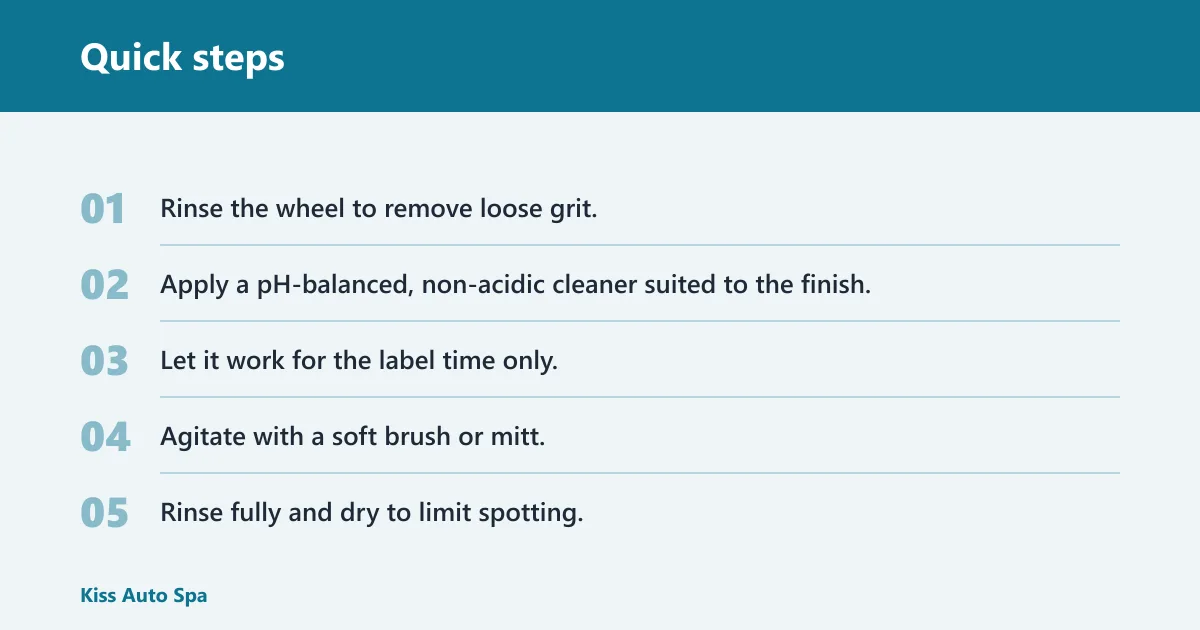
- Rinse the wheel to remove loose grit.
- Apply a pH-balanced, non-acidic cleaner suited to the finish.
- Let it work for the label time only.
- Agitate with a soft brush or mitt.
- Rinse fully and dry to limit spotting.
You can reduce visible dust, but braking safety comes first. Low-dust brake pads can help, especially ceramic or low-dust options, yet compatibility with the vehicle matters. A pad that works well on one car may not suit another car’s weight, rotor size, or braking demands.
Low-dust brake pads
Ceramic and low-dust pads can reduce visible buildup compared with some semi-metallic pads. That does not make them universally better. Some vehicles need a specific friction profile, and the wrong choice can change pedal feel, noise, or stopping behavior.
Protective coatings and sealants
Wheel sealants or protective coatings can help dust release more easily during washing. They do not stop dust from forming, but they can slow the bond between the particles and the wheel surface. Reapply based on the product directions and the wheel finish.
Driving habits that limit buildup
Smoother braking, fewer hard stops, and less riding of the brakes on hills can cut down visible dust. That helps because heavy braking, city driving, and hill climbs increase front-brake dust. Even so, do not change driving habits in a way that reduces control or safety.
Regular cleaning matters because brake dust is easier to remove before it bonds to the finish. The longer it sits, the more likely it is to stain or corrode. That is especially true on light wheels where the color difference is obvious.
Frequently asked questions
Why is brake dust brown or red on my wheels?
Brown or red brake dust usually means iron-rich pad and rotor debris has oxidized and mixed with road film. The color can look stronger on light wheels and after rain. If the dust is even across both front wheels, that is often normal. One-wheel buildup needs a closer look.
How do I tell brake dust from rust on wheels?
Brake dust usually appears as a film, speckling, or staining that follows braking use. Rust usually shows up on damaged or bare metal as bubbling, pitting, or a more defined corrosion spot. If the color is spread evenly after driving, it is more likely dust than rust.
How do I clean brake dust off wheels safely?
Use a pH-balanced, non-acidic cleaner that matches the wheel finish, especially on coated, chrome, or painted wheels. Work on cool wheels, rinse first, and use soft brushes or microfiber tools. Avoid metal brushes and harsh cleaners, because they can damage the finish while removing the dust.
How do I stop brake dust on wheels?
You cannot stop brake dust completely, but you can reduce it with the right pad choice, good cleaning habits, and protective coatings. Low-dust or ceramic pads may help if they are compatible with the vehicle. Regular washing also keeps dust from baking onto the wheel surface.
When should I worry about red or brown dust?
Worry when the dust is heavy on one wheel, appears with heat or noise, or returns very quickly after cleaning. That pattern can point to a sticking caliper, uneven pad contact, or rotor wear. Normal front-wheel dust is common; uneven dust is the part that deserves inspection.