How Much Water Does It Take to Hand Wash a Car?
A typical hand wash can use relatively little water with a careful two-bucket or rinseless method, or much more if a hose runs continuously. Poor washing can scratch paint, leave mineral spots, and use far more water than necessary. This guide breaks down water use by method and shows which approach cuts gallons without giving up paint safety.
How much water does hand washing use?
Most home wash methods fall in a wide range, from about 2 gallons for a light rinseless wash to 80 gallons or more when a garden hose runs the whole time. A sedan usually sits near the lower end of the range, while SUVs and trucks need more wash water and more rinse water.
The method matters more than the badge on the car. A running hose can pour out water faster than the wash needs it, while a measured bucket setup keeps the total much lower.
Water use by wash method
| Method | Estimated water use | Best fit | Where water is usually wasted |
|---|---|---|---|
| Garden hose wash | 40 to 80 gallons | Heavier grime, driveway wash, easy access to a spigot | Continuous hose flow, long pre-rinses, repeated full-car rinses |
| Bucket wash | 15 to 30 gallons | General home washing with a mitt and soap | Frequent bucket dumps, extra rinse water, overfilling buckets |
| Two-bucket wash | 10 to 15 gallons | Lower-water hand washing with better grit control | Rinsing the mitt too often, too much hose use for final rinse |
| Rinseless wash | 2 to 5 gallons | No outdoor hose, light to moderate dirt, apartment use | Too much water in prep buckets, extra spray-and-rinse habits |
| Waterless wash | Under 1 gallon | Light dust only, quick touch-up | Trying to clean heavy dirt with extra product and wipes |
Where water gets wasted
Continuous hose flow is the biggest drain. A garden hose keeps moving water even when the panel is not being rinsed, and that adds up fast.
Extra rinse passes also raise total use. Soap film, loose dirt, and a dirty mitt can lead to repeated rinses that do not improve the finish much.
Suppose a compact sedan has a light layer of road dust. A two-bucket wash can keep water use near the low end, while a hose left running during every panel can push the job far higher with no gain in paint safety.
How do you wash with less water?
The lowest-water safe option is usually a rinseless wash, followed by a two-bucket wash with careful rinse control. The two-bucket method helps keep grit out of the wash mitt, so you do not need as many rinse passes. Waterless wash fits only light dust, not mud or sand.
Use the two-bucket method
One bucket holds soap mix, and the second holds rinse water for the mitt. That separation helps keep grit away from the paint, which lowers scratch risk and keeps you from wasting water on repeated full rinses.
- Fill both buckets. Put soap in the wash bucket and plain water in the rinse bucket. Keep the rinse bucket just deep enough to clean the mitt without splashing water everywhere.
- Wash one section. Work a small area at a time so the soap does not dry on the panel. That keeps water use down and helps prevent spotting.
- Rinse the mitt first. Dunk the mitt in the rinse bucket before it goes back into the soap bucket. This keeps dirt out of the wash solution and reduces how often you need a fresh bucket.
- Finish with a controlled rinse. Use the hose only to remove soap, not to soak the whole car for minutes at a time. Shut it off between passes if the spigot allows it.
Switch to rinseless wash when a hose is not available
A rinseless wash uses a small amount of water mixed with product and microfiber towels. It is a strong option for apartment parking, shared driveways, and places where a hose is not practical. It also uses far less water than a standard hose wash.
- Pre-soak the panel. Load the wash solution into a bucket or spray bottle and wet one section at a time. This loosens dust before the towel touches the paint.
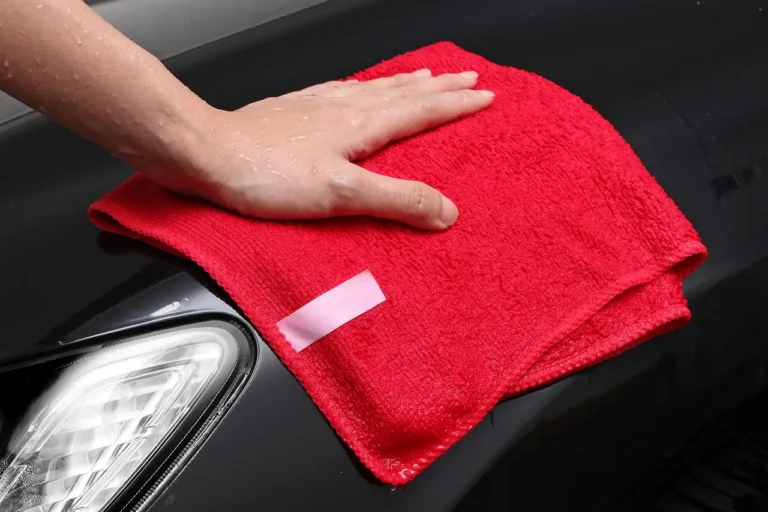
- Wipe with microfiber. Use clean microfiber towels and fold them as they load up. That gives you fresh surfaces and helps keep grit off the paint.
- Dry immediately. Follow each section with a dry microfiber drying towel or waffle-weave towel. Dry the panel right away, because that is the most effective basic step to avoid water spots.
Use waterless wash only for light dust
Waterless wash works best on a light layer of dust, not caked mud or heavy road film. It is a quick option when the car needs a minor cleanup and you want to use almost no water at all.
A common first-timer mistake is trying a waterless product on a dirty lower door panel after rain. That can drag grit across the finish and defeat the point of the low-water wash.
How do you avoid water spots?
Water spots form when wash water dries on the surface and leaves mineral residue behind. The safest way to avoid them is to wash in the shade or during cooler parts of the day, then dry the car promptly with microfiber before the water evaporates.
Wash in shade or cooler hours
Washing in a garage or shade gives you more time before water flashes off the paint. If the car stays outside, morning or evening is better than midday heat, and cooler panels dry more slowly.
Black paint heats up more than lighter colors, so it speeds evaporation and spotting. That is why black cars are especially prone to water spots after rinsing.
Dry panels right away
Drying the vehicle is the most effective basic step to avoid water spots. Work one panel at a time so water does not sit long enough to leave residue, and use a microfiber drying towel or waffle-weave towel to pull off the film quickly.
- Start at the top. Dry the roof, glass, and upper panels first. Those areas usually hold less grime, so they are easy to finish before water dries.
- Work one panel at a time. Wipe the panel fully, then move on. This keeps spot risk low because standing water does not get a chance to evaporate.
- Replace damp towels. Swap in a dry towel when the first one becomes saturated. A wet towel leaves more streaks and slows drying.
Use soft water or deionized water when possible
Soft water is perfectly fine and can be better for washing because it minimizes water spots. Hard water contains calcium and magnesium, which can leave spots after drying unless you dry faster or use a spot-prevention rinse.
A deionizer removes minerals from water and is described as the best way to prevent water spots. A deionizer can cost from a few hundred dollars to thousands of dollars, so it makes the most sense for frequent washing where spotless rinsing matters.
How do no-hose washes work?
No-hose washes usually mean rinseless wash or waterless wash. Rinseless wash is the more versatile choice because it can handle more dirt with little water, while waterless wash is best for light dust and quick touch-ups. Both are useful for apartment dwellers and anyone without an outdoor spigot.
Apartment and driveway setups
If you do not have a hose, keep a small wash bucket, a stack of microfiber towels, and a drying towel ready. A rinseless wash uses only a few gallons, so it fits garage bays, shared parking spaces, and driveways where water use must stay low.
- Pre-rinse mentally, not with water. Choose only lightly dirty panels. Do not use a waterless product on heavy grit.
- Mix a rinseless solution. Use the product label amount in a bucket or pump sprayer. Keep the mix small so you are not carrying more water than you need.
- Clean one panel. Wipe the panel with a damp microfiber towel, then follow with a dry towel. This keeps the wash controlled and reduces the chance of spotting.
- Save water for the worst areas. If the lower panels need more attention, clean them last.
What to do when the car is dirty
When the car has mud, road salt, or heavy grime, a waterless wash is the wrong tool. A rinseless wash can still work if the contamination is moderate, but a traditional hose-and-bucket wash may be safer when the paint is loaded with grit.
The tradeoff is simple: less water means more attention to towel technique and drying. More water can make the wash easier, but only if you keep it controlled and do not leave panels wet long enough to spot.
Water spot risks by water quality
| Water type | Spot risk | Practical note |
|---|---|---|
| Soft water | Lower | Better for washing because it minimizes water spots, but drying still matters. |
| Hard water | Higher | Minerals can dry on paint and leave visible residue, especially in heat. |
| Deionized water | Lowest | Best spot-prevention rinse option, though the setup can be expensive. |
Frequently asked questions
How much water does it take to hand wash a car?
A typical hand wash uses about 10 to 15 gallons with a two-bucket method, 40 to 80 gallons with a running hose, and 2 to 5 gallons with a rinseless wash. Larger vehicles need more. The biggest factor is not the car alone, but how much water you let run during the wash.
How much water does it take to wash a car at home?
At home, water use depends on the method. A hose wash can use 40 to 80 gallons, a standard bucket wash often uses 15 to 30 gallons, and a two-bucket wash can stay near 10 to 15 gallons. Rinseless wash is the low-water option when you want to cut usage further.
How much water is used when washing a car?
Water use ranges from under 1 gallon for waterless wash to 80 gallons or more for a hose-heavy wash. If the goal is to save water without risking the paint, a rinseless wash or a careful two-bucket wash is usually the better balance. Water use rises fast when the hose keeps running.
Does hand washing use less water than a hose wash?
Yes. Hand washing with buckets usually uses less water than a hose wash because you control the amount used for soap, rinse, and drying. A running garden hose often wastes the most water, especially when it stays on between panels or during long pre-rinses.
How can I reduce water spots while hand washing a car?
Wash in the shade or during cooler parts of the day, then dry the panels right away with a microfiber drying towel or waffle-weave towel. Soft water helps, hard water raises spot risk, and deionized water is the best spot-prevention rinse option. Do not let wash water air-dry on the paint.
How can I wash a car if I do not have a hose?
Use a rinseless wash. It needs only a small amount of water and works well with microfiber towels, which makes it practical for apartments and driveways without outdoor spigots. Save waterless wash for light dust only. If the car is heavily dirty, wait for a better wash setup.