Car Odor Bomb vs Odor Eliminator Spray: Which Works Better?
For most cars, odor eliminator spray works better for light, local, or repeatable smells, while an odor bomb works better for whole-cabin odors after you remove the source. Pick the wrong one, and the smell can come back fast or move through the HVAC instead of going away. This guide compares car odor bomb vs odor eliminator spray by smell type, source location, and when each one fits best.
| Option | Cabin coverage | Speed | Deep-odor effectiveness | Fragrance load | Safety burden | Maintenance value | Odor-type mapping |
|---|---|---|---|---|---|---|---|
| Car odor bomb | High. Reaches the cabin air space and can move into vents, seats, carpets, and headliner. | Moderate. It needs setup, closed-cabin dwell, and airing out. | High for embedded smoke and pet odors after the source is removed. | Can be fragrance-heavy depending on the product and formula. | Higher. Needs an empty vehicle and ventilation after use. | Low. It is usually used for deeper sessions, not upkeep. | Smoke, pet odor, stubborn cabin odors |
| odor eliminator spray | Low to moderate. Targets the surface you spray and nearby fabric. | High. Quick to apply on a spot, with little setup. | Moderate for light, localized smells or repeat treatment on a specific fabric or panel. | Varies by formula. Some neutralize odor, while others lean more on fragrance. | Lower, though overspray, residue, and fabric compatibility still matter. | High. Easy to repeat on recurring spots and lighter odors. | Food spills, light pet odor, sweat, localized mildew |
| Activated charcoal gel | Passive. Works in the cabin air space over time rather than on a single surface. | Slow. It works over days or weeks. | Low for heavy contamination, better for background freshness. | Fragrance-free. | Low. | High for upkeep between cleanings. | Maintenance, mild cabin freshness, parked-car odor control |
| Ozone generator | High in an empty vehicle, including the cabin air path. | Moderate. It requires a dedicated treatment window. | High for stubborn cabin odors when other methods have failed. | No fragrance, but it can leave a sharp treatment smell if not aired out. | Highest. Requires careful ventilation and strict empty-cabin use. | Low. It is a specialized deep-treatment tool. | Severe smoke, persistent cabin odor |
| Chlorine dioxide fogger | High in the cabin air space and around vents. | Moderate. It needs time to work and then full ventilation. | High for stubborn smoke and pet odors, but it is not a guaranteed fix for every embedded odor. | Low fragrance, though the treatment has its own strong chemical smell. | High. Precautions are required. | Low to moderate, depending on how severe the odor is. | Smoke, pet odor, stubborn cabin odor |
What each product is designed to do
The cleanest rule is simple: sprays fit targeted, lighter, or repeatable spot treatment, while odor bombs fit whole-cabin, embedded smells after the source has already been removed. Deep odors sink into the headliner, vents, fabric, and foam, so the right product depends on where the odor lives.
Source removal comes first either way. Spills, trash, wet mats, pet residue, and a clogged cabin air filter can keep feeding the odor after treatment, so any product can fall short if the source is still active.
How the job changes with odor severity
Fresh food drips, a mild gym bag odor, or a single damp seat patch usually respond well to a spray. Smoke that has spread into the headliner or a pet odor that has soaked into foam is a different problem, and that is where a fogger-style treatment has the edge after cleaning.
A common first-timer mistake is spraying the seats before removing the spilled milk under the floor mat. If the mat is still wet or the cabin air filter is holding odor, the smell can return even after a strong treatment.
Car odor
This decision matrix compares the main options by how they reach odor sources, how they act, and which odor types they fit best. It also separates deep-clean products from low-effort upkeep tools so you can match the treatment to the odor path instead of just the smell.
For whole-cabin odor that has spread beyond one surface, Car odor bomb is usually the stronger broad-reach option. For local, repeatable spot treatment, odor eliminator spray is usually the more precise first step.
Why the matrix leans toward each option
Car odor bomb wins cabin coverage because it reaches more of the car at once. That matters when the odor is spread through vents, fabric, foam, or the headliner.
odor eliminator spray wins speed and repeatability because you can apply it to one spot without turning the whole cabin into a treatment chamber. It is also the easier choice when the odor keeps coming back from one seat, mat, or cargo area.
Activated charcoal gel sits in a different category. It is a passive, fragrance-free absorber that helps over time, so it fits maintenance better than cure.
Does an odor bomb work better than a spray?
Yes, but only when the odor is spread through the cabin or has soaked into multiple materials. If the smell is local, light, or tied to one fabric panel, odor eliminator spray is usually the better tool because it is faster and easier to aim where the smell lives.
Light smells and repeat spot treatment
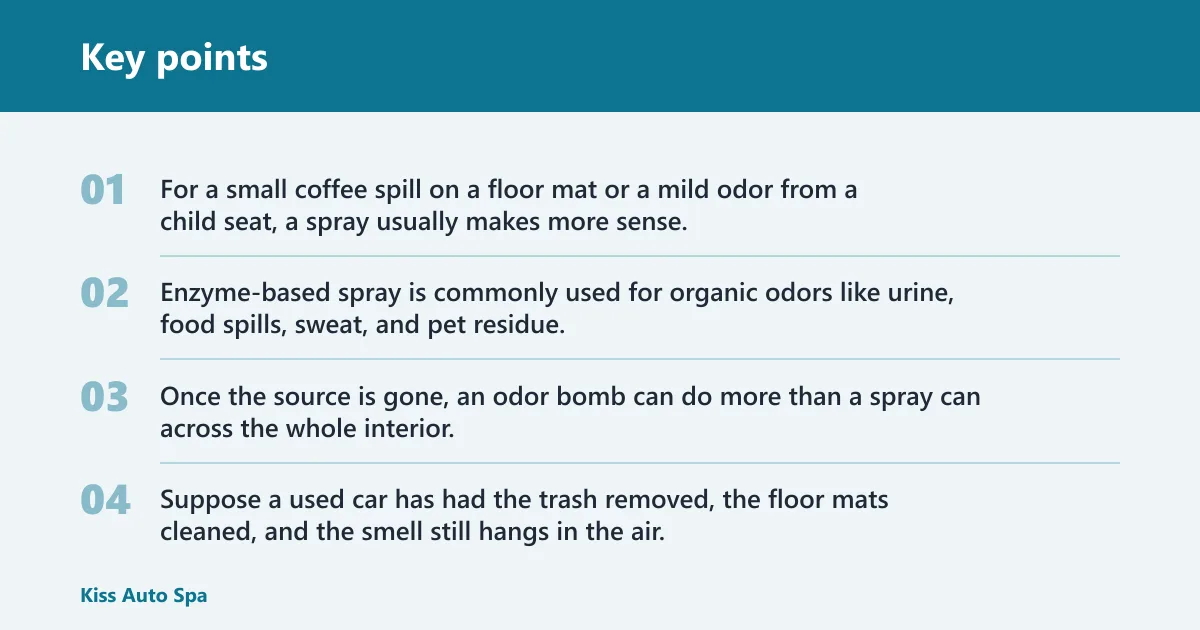
For a small coffee spill on a floor mat or a mild odor from a child seat, a spray usually makes more sense. You can treat the exact surface again if needed, and you avoid the cleanup and downtime that come with a full-cabin treatment.
Enzyme-based spray is commonly used for organic odors like urine, food spills, sweat, and pet residue. It breaks down odor-causing compounds at the source, which matters more than fragrance when the odor is organic.
Embedded smells after source removal
Once the source is gone, an odor bomb can do more than a spray can across the whole interior. That is why odor bombs are framed as a serious option for deep sessions, especially after smoke or pet odor has settled into the cabin materials.
Suppose a used car has had the trash removed, the floor mats cleaned, and the smell still hangs in the air. In that case, a fogger-style treatment is more likely to help than a quick surface spray, because the odor is no longer just sitting on one panel.
Which works better for smoke, pet, and food odors?
Smoke and pet odor usually push the answer toward a deeper treatment, while food spills often start as a spot job. Mildew and HVAC odor sit in between, because the source may be in fabric, foam, or the ventilation system rather than on a visible surface.
Smoke and tobacco odor
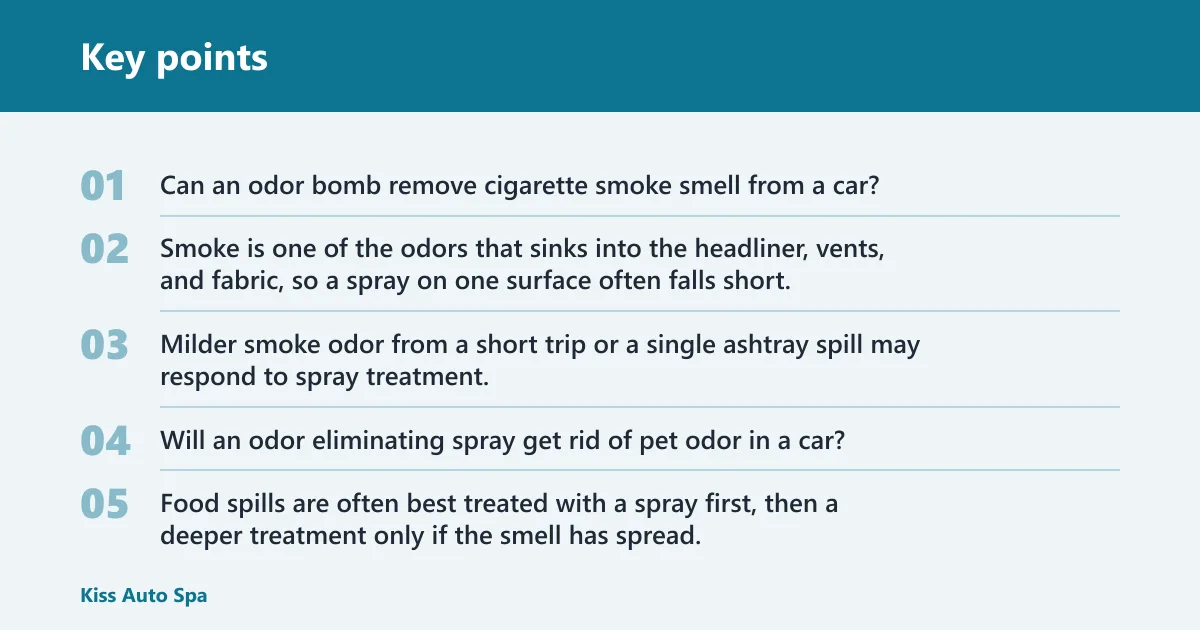
Can an odor bomb remove cigarette smoke smell from a car? It can help a great deal after the cabin is cleaned and the source of the smoke smell is gone. Smoke is one of the odors that sinks into the headliner, vents, and fabric, so a spray on one surface often falls short.
Milder smoke odor from a short trip or a single ashtray spill may respond to spray treatment. Heavy tobacco odor that has lived in the car for months is more likely to need an odor bomb, chlorine dioxide fogger, or even ozone-based treatment if the vehicle is empty and the safety steps are followed.
Pet odor and urine residue
Will an odor eliminating spray get rid of pet odor in a car? It can, if the odor is light or tied to one area and the spray is suited to organic residue. For heavier pet smell, especially if urine or dander has reached foam or carpet underlay, a fogger-style treatment is more likely to reach the hidden odor zones.
Biokleen Bac-Out is listed as enzyme-based for pet urine and organic odors, which is the kind of formula that fits this use better than a simple fragrance spray. If the seat foam is still contaminated, though, no cabin treatment will fully solve it until the source is cleaned or removed.
Food spills, mildew, and HVAC odor
Food spills are often best treated with a spray first, then a deeper treatment only if the smell has spread. Mildew is trickier because moisture can sit in carpet, foam, or the air path, so the cabin air filter should be checked or replaced if due.
HVAC odor deserves special attention because it can hide in the ventilation system. A whole-car air refresher works through the ventilation system, and a common use pattern is high recirculate for about 10 to 15 minutes; that suggests the vents matter when odor is moving through the air path.
How each product reaches odor sources
Different odor tools fail for different reasons. A spray cannot reach inside a contaminated vent box, and a bomb cannot fix a spill that is still sitting on the carpet.
-
Clean the source first. Remove trash, dry wet mats, wash or extract spills, and pull out any item holding odor. The guide says a car should be cleaned before odor elimination, and that order matters because lingering source material will keep feeding the smell.
-
Check hidden reservoirs. Inspect the headliner, vents, fabric, foam, and cabin air filter. Smoke and pet smells sink into those areas, so a visible-clean cabin can still smell bad if one of those reservoirs is contaminated.
-
Match the product to the path. Use a spray on the seat, mat, or panel when the odor seems local. Use a fogger-style treatment when the smell is broad, embedded, or moving through the cabin air space.
Cabin air filter and HVAC contamination
The cabin air filter can hold odor sources in the ventilation system, which may be one reason repeated treatment sometimes fails. If the smell changes when the fan turns on, the HVAC path deserves attention before you add more fragrance or another round of spray.
Foggers and ozone machines reach into vents and fabric, which is useful when the odor is moving through the cabin air path. That reach also means you should not skip ventilation after treatment.
When enzyme sprays fit better
Enzyme-based spray is the better fit when the odor comes from organic material rather than general stale air. Urine, food spills, sweat, and pet residue are the clearest examples, because the formula targets the source compounds instead of just covering the smell.
For a seat stain that smells only when the cabin warms up, an enzyme spray can be the more practical first step. If the smell lingers after cleaning, then a deeper treatment may be worth considering.
Safety, ventilation, and cleanup
Odor bombs, chlorine dioxide foggers, and ozone all need more caution than a surface spray. They are useful for deep odor sessions, but they are not casual in-cabin fresheners.
-
Empty the vehicle first. Remove people, pets, plants, and anything that should not be exposed. Ozone is commonly used only in an empty vehicle, and the same empty-cabin rule is often the safer default for fogger-style deep treatments.
-
Ventilate after treatment. Airing out is required after foggers and ozone, and the car should not be driven until the cabin is cleared of treatment residue. If the product leaves a strong lingering smell, continue airing out rather than adding more.
-
Watch fragrance sensitivity. Scented products can make a cabin smell cleaner while still bothering sensitive occupants. Fragrance-free options, such as Amazon Basics Activated Charcoal Gel, are a better maintenance choice when scent triggers headaches or irritation.
When odor bombs and ozone underperform
They underperform when the source is still present. A wet trunk liner, a soiled child seat, or a clogged filter can keep producing odor after treatment, so the smell comes back quickly.
Ozone is also not the default answer. It is a specialized deep-treatment method with safety burdens, and it should be reserved for cases where simpler cleaning and targeted treatment are not enough.
Choose Car odor bomb if… / Choose odor eliminator spray if…
Choose Car odor bomb if the odor is spread through the whole cabin, has sunk into headliner or foam, or remains after you have removed the source and cleaned the interior. It fits smoke, stubborn pet odor, and other embedded smells that need broad reach.
Choose odor eliminator spray if the smell is local, light, or likely to come back from one repeat spot such as a seat, mat, or cargo panel. It is also the better pick when you need fast, repeatable treatment with less cleanup.
Choose spray first for fresh spills, enzyme spray for organic residue, and a fogger-style treatment for deeper cabin odor after source removal. Choose charcoal gel for maintenance, not rescue work.
Frequently asked questions
Does an odor bomb work better than an odor eliminating spray?
Not always. An odor bomb works better for whole-cabin, embedded odors after the source is removed, while odor eliminator spray is better for lighter, localized, or repeatable spot treatment. If the smell lives in one seat or mat, spray usually wins. If it is everywhere, the bomb has the edge.
When should I use a car fogger instead of a spray?
Use a fogger when the odor has moved beyond one surface and into the cabin air space, vents, fabric, or headliner. Use a spray when the odor is still tied to a specific spot or when you want a quick repeat treatment without emptying the vehicle.
Can an odor bomb remove cigarette smoke smell from a car?
It can help a lot, especially after you clean the cabin and remove the source. Smoke odors sink into the headliner, vents, and fabric, so a spray on one panel rarely fixes the whole problem. For heavy smoke odor, a fogger-style deep treatment is usually the stronger choice.
Will an odor eliminating spray get rid of pet odor in a car?
It can, if the pet odor is light or localized and the formula is suited to organic residue. Enzyme-based spray is the better match for urine, food spills, sweat, and pet residue. If the odor has soaked into foam or carpet underlay, a spray may not be enough on its own.
Do sprays just mask car smells or actually eliminate them?
That depends on the formula. Some sprays neutralize odor, while others mainly mask it with fragrance. Read the label language closely, because a true odor eliminator is different from a scent cover-up. Fragrance-free absorbers and enzyme formulas are often better when you want less masking and more source control.
How long should I leave a car closed after using an odor bomb?
Follow the product directions exactly, then air the car out before driving. The key rule is not the closed time alone, but the full sequence: empty vehicle, treatment time, then ventilation. If the cabin still smells strongly of the treatment afterward, keep airing it out until the residue clears.
Is an ozone generator safer or better than a spray for car odors?
Neither is automatically better. Ozone is a specialized deep-treatment option for stubborn odors, but it must be used only in an empty vehicle and handled with care. A spray is safer and simpler for spot work, so it is the better first choice for lighter or localized smells.
What should I clean before using a car odor eliminator?
Clean spills, trash, wet mats, pet residue, and any dirty fabric or carpet first. Check the cabin air filter too, since it can hold odor in the ventilation system. If you treat the cabin before removing the source, the smell can return quickly or keep cycling through the HVAC.