How to Clean Stains From White Upholstery
Blot first, then clean with a barely damp microfiber cloth and a pH-neutral upholstery cleaner. Work in small sections, and dry quickly to avoid yellowing, rings, and dull patches. Bad chemistry, too much liquid, or heavy scrubbing can leave white fabric dingy and uneven. This guide focuses on home white upholstery first, then notes where car upholstery differs.
What to know before you clean white upholstery
White upholstery shows residue faster than darker fabric, so the main goal is residue control, not only stain removal. If cleaner, soil, or rinse water stays in the pile, the fabric can dry yellow, gray, or flat even after the stain is gone.
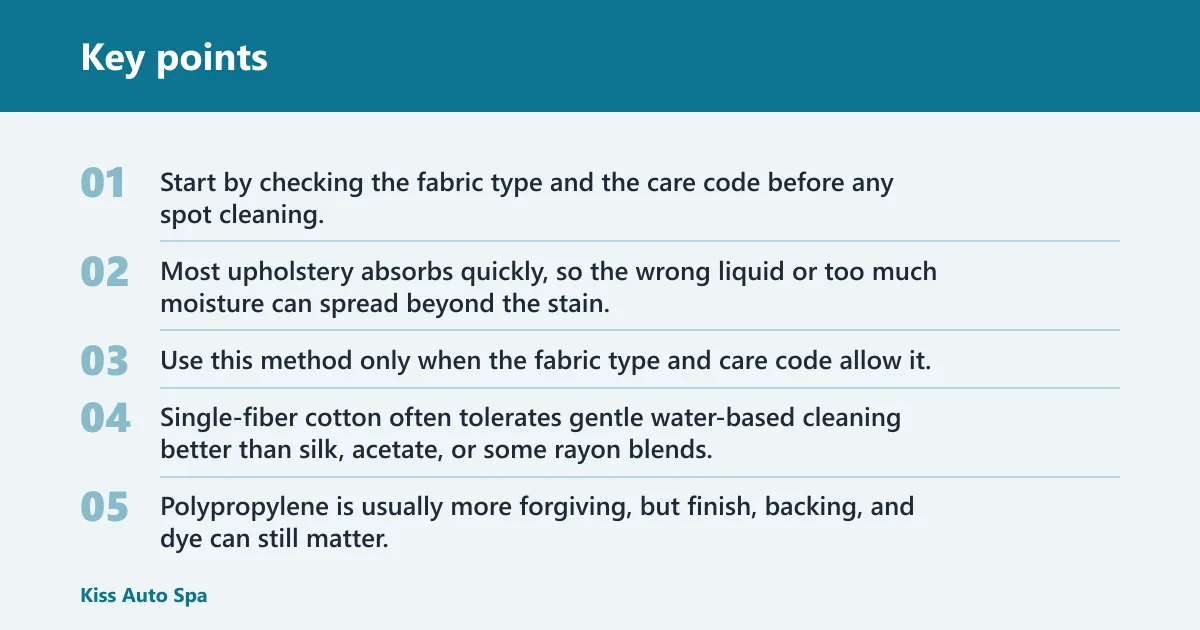
Start by checking the fabric type and the care code before any spot cleaning. Common fibers include cotton, wool, silk, acetate, acrylic, rayon, and polypropylene, and blends can react differently from single-fiber fabrics. Most upholstery absorbs quickly, so the wrong liquid or too much moisture can spread beyond the stain.
Which fabrics can you clean this way?
Use this method only when the fabric type and care code allow it. A water-safe code usually means a mild water-based cleaner is acceptable, while a dry-clean-only code means water-based spot cleaning should be avoided. On white fabric, that difference matters because excess moisture can leave rings that are easier to see than the original stain.
Single-fiber cotton often tolerates gentle water-based cleaning better than silk, acetate, or some rayon blends. Polypropylene is usually more forgiving, but finish, backing, and dye can still matter. A blend should be treated by the most sensitive fiber in the mix.
How the fabric care code changes the method
Check the manufacturer label or cleaning code before you start. Those codes determine whether you can use water, solvent, or only professional cleaning. If the code is missing, treat the piece as sensitive, because a wrong cleaner can set a stain or leave a visible ring on white upholstery.
Care code matrix for white upholstery
How car upholstery differs
Car upholstery usually needs the same residue-light approach, but airflow, foam padding, and sun exposure change how fast it dries. That can help a cleaned area dry faster, but it can also make a ring form quickly if cleaner residue is left behind. For car seats, keep the product light and the drying even.
What you’ll need
- Clean white microfiber cloths or absorbent white towels
- Residue-light upholstery cleaner that matches the care code
- Small bowl or spray bottle for dilution, if the label allows it
- Soft brush with gentle bristles
- Dry white towel for final blotting
- Fan or open-window airflow for drying
- Vacuum with upholstery attachment for loose debris
- Optional: white cotton swabs for tight seams
How do you clean stains without yellowing?
Use the least wet method that removes the stain, since yellowing is often linked to residue, over-wetting, or incomplete drying rather than the stain alone. If a spill is fresh, blot it at once with a clean white microfiber cloth. Check the cleaner on a hidden area first, then lift both soil and cleaner before the fabric dries. Keep the fabric damp, not soaked.
Identify the fabric first
Before any cleaning step, confirm the fiber and the care code. White cotton, microfiber, and some polypropylene fabrics can often tolerate a mild water-based cleaner, while silk, acetate, and some rayon blends need more caution. If the code is unclear, treat the fabric as sensitive and start with the least wet option.
Test the cleaner on a hidden spot
Put about a dime-sized amount on a hidden seam or under a cushion flap, then wait about 10 minutes and blot dry. If the spot darkens, browns, or leaves a film, stop and choose a different product. This is the safest way to catch fiber damage, dye movement, or residue before it shows on the face of the fabric.
Remove dry soil first
Vacuum the area before any liquid touches the fabric. Grit can act like sandpaper when you blot or brush, and on white upholstery it can also leave a gray cast in the pile.
Fresh spill method
-
Blot the stain.
Press with a clean white microfiber cloth or absorbent towel, then switch to a dry section of the cloth each time it lifts soil. Do not rub; rubbing spreads dye and pushes residue deeper. -
Apply cleaner lightly.
Mist the cloth, not the fabric, unless the label says otherwise. Use only enough to dampen the spot, because repeated overwetting can leave a water mark or a stiff patch after drying. -
Agitate gently.
Use a soft brush with light pressure only if the fabric can handle it. Short, careful strokes help lift soil from the pile, but hard scrubbing can fuzz fibers and make white fabric look dull. -
Lift residue again.
Blot with a dry cloth until the cleaner and loosened soil stop transferring. If the cloth keeps picking up color, repeat the light-cleaning cycle once more rather than flooding the area. -
Rinse by blotting.
If the label allows water, follow the cleaner with a barely damp cloth to reduce leftover surfactant. A residue-light finish matters on white upholstery because film often dries as a dull halo.
Old stain method
Old stains usually need slower lift, not more force. Clean in short cycles, let the area loosen, then blot again rather than scrubbing harder. If the stain is still visible after drying, repeat the light-cleaning process once more instead of soaking the fabric.
Rinse and residue control
Rinsing matters on white fabric because leftover cleaner can dry into a pale film or ring. Use only a lightly damp cloth when the care code allows water, then follow with a dry towel until the transfer slows. If the cleaner keeps returning to the cloth, the fabric still holds residue.
Say your white dining chair has a coffee spot about the size of a coaster. A light cleaner on a microfiber cloth may remove the stain in one pass, but the chair can still dry with a pale ring if the rinse step is skipped. The ring is residue or dried mineral content, not always leftover coffee.
Suppose a car seat has a greasy fingertip mark on the bolsters. A stronger cleaner is not the safest answer. A residue-light product, light blotting, and full drying usually beat repeated soaking, which can spread the oil and flatten the surrounding pile.
How do you dry white upholstery without rings?
Dry the area fully with airflow and ventilation, because trapped moisture is a common reason white upholstery turns yellow or looks flat after cleaning. Air drying is generally safer than heat. Heat can set some stains, leave a hard edge, or yellow sensitive fibers as they dry.
Airflow and ventilation
Open a window, point a fan across the room, or move a portable fan so air passes over the cleaned area without blasting it. For car seats, park in shade first, then use ventilation and cabin airflow. Direct hot air from a dryer is a poor choice on white fabric.
When to stop and let it dry fully
Stop adding liquid once the stain has lifted. If the fabric still feels wet beyond the cleaned spot, no more product is needed. Keep blotting with a dry towel until transfer slows, then let the fabric finish drying on its own. A slightly damp edge can dry into a visible halo.
Why heat can make stains worse
Heat can make protein-based stains harder to remove and can darken or yellow some fibers. It can also drive residue deeper into the pile, which leaves white upholstery looking dull even after the surface seems clean. Let time and air do the final drying.
White upholstery stain table
This table shows the most common yellowing and dulling failures, what usually causes them, and the safest next correction. Use the gentlest fix first. If the fabric care code is unknown, test in a hidden area before each correction step.
| Stain type or failure symptom | Likely cause of yellowing or dulling | Safest correction step |
|---|---|---|
| Coffee | Plant dye left in the pile or re-wet residue | Blot with a white microfiber cloth, then clean lightly and rinse by blotting if the code allows water. |
| Body oils | Oil film holds dust and turns the fabric gray-yellow | Use a residue-light upholstery cleaner and very light agitation with a soft brush. |
| Food grease | Grease spreads during rubbing and leaves a darker halo | Lift excess with a dry cloth first, then spot-clean in short cycles rather than soaking. |
| Water rings | Uneven drying, minerals, or leftover cleaner at the edge | Dampen the whole ring edge lightly, then blot and dry with strong airflow so the edge dries evenly. |
| Detergent residue | Too much cleaner left in the fiber attracts soil and dulls the surface | Blot repeatedly with a clean damp cloth, then finish with a dry cloth until transfer stops. |
| Over-wetting | Moisture wicks beyond the stain and dries into a tide mark | Stop adding liquid, blot dry, and use airflow until the panel is fully dry. |
| Heat-set stains | Dryer heat or hot air bonded the stain into the fiber | Do not reheat; switch to a cool, residue-light spot cleaning method and reassess. |
| Browning | Old soil or plant-based residue oxidized as it dried | Use the mildest cleaner that the fabric allows, then lift residue fully and dry fast. |
| Flat, dull patch | Fiber pile was crushed, brushed too hard, or coated with film | Brush only if the fabric allows it, then vacuum after drying to lift the pile. |
Common mistakes that cause dulling
White upholstery dulls when the cleaning process leaves something behind. The usual problems are excess product, hard scrubbing, skipped rinsing, and heat drying. A cleaner can work and still cause a problem if it leaves surfactant film or pushes soil deeper into the fabric.
- Using vinegar as a default fix. It can help with some residues, but it is not safe for every fiber and can leave a smell or spotting if overused.
- Using baking soda on the fabric pile. Dry powder can lodge in loops and seams, then show up as white film or a gritty dull patch.
- Using bleach on white upholstery. White does not mean bleach-safe. Bleach can weaken fibers and leave uneven color on many upholstery materials.
- Steam cleaning without code checks. Steam can distort some fibers, set stains, or leave rings if extraction and drying are not fast enough.
- Scrubbing with a colored cloth. Dye transfer from the cloth can stain white fabric while you are trying to clean it.
If that didn’t work, try this next: stop the wet-cleaning cycle, let the piece dry completely, then reassess the mark in daylight. If the spot still looks yellow or brown after full drying, the problem may be deep in the fiber or backing, and a professional cleaner is the safer next step.
How do you stop white upholstery from spotting after cleaning?
Stop spotting by cleaning the whole stained zone, not just the center, then drying it evenly from edge to edge. The cleaner should be residue-light, and the final pass should remove as much liquid as possible. Uneven wetting is what usually leaves the edge mark.
Can vinegar or baking soda yellow white upholstery?
They can, depending on the fabric and how much is left behind. Vinegar may leave a lingering residue or react poorly with some finishes, while baking soda can collect in the pile and dry into a visible film. Use only if the care code and fiber type support it, and remove all residue.
Does steam cleaning damage white upholstery fabric?
It can. Steam adds heat and moisture together, which increases the risk of set stains, browning, and shrinkage on sensitive fibers like silk, acetate, or some rayon blends. If the care code does not clearly allow it, choose a low-moisture spot clean instead.
Frequently asked questions
How do you clean white upholstery without leaving yellow stains?
Use the lightest effective cleaner, keep the fabric only barely damp, and dry it fast with airflow. Yellowing usually comes from residue, over-wetting, or heat, so the fix is controlled moisture plus full drying, not stronger scrubbing or repeated soaking.
What is the safest way to clean white fabric upholstery at home?
Check the care code, test the cleaner on a hidden seam or under a cushion flap, blot with a clean white microfiber cloth, and finish with air drying. If the fabric is a sensitive fiber or the label is unclear, use the least wet approach or skip to professional cleaning.
How do you remove old stains from white upholstery without dulling it?
Work in small sections, use a residue-light upholstery cleaner, and repeat light blotting rather than stronger scrubbing. Old stains often need a second pass after the first dries, because hidden residue can show up as a yellow or flat patch once the fiber is fully dry.
What should you not use on white upholstery?
Avoid bleach unless the label clearly allows it, and avoid heavy steam, strong scrubbing, colored cloths, or excess water. These choices can weaken fibers, leave dye transfer, or create the same dull ring you were trying to remove.
How often should white upholstery be deep cleaned?
Most furniture should be cleaned every 1 to 2 years, and sooner if you have children or pets. Spot cleaning between deep cleans helps keep soil from building up into a yellow film. Vacuuming often also reduces the amount of grit that gets ground into the pile.